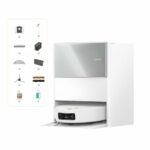
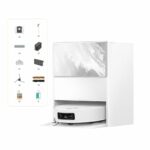
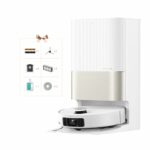
✨ VS Analyses · VacuumSpain comparison technology. Explanation created with AI from verified technical data.
Introduction
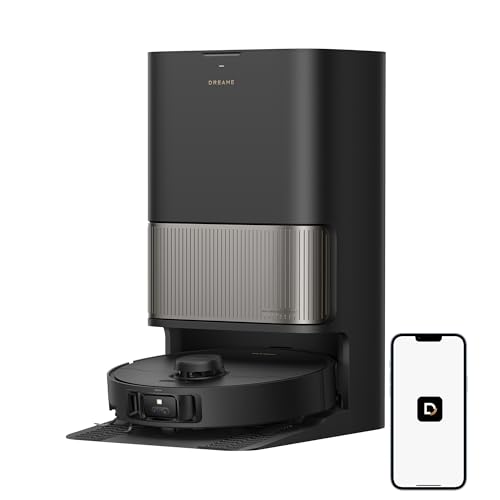
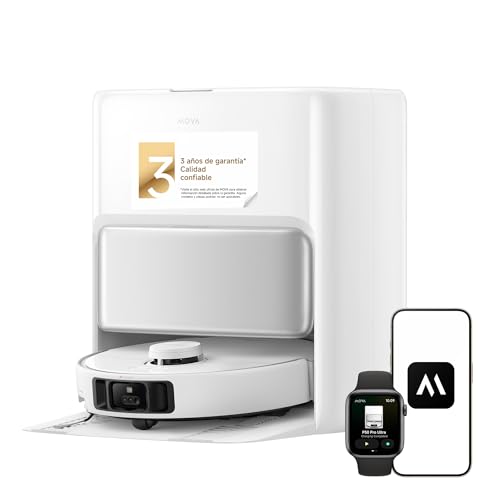
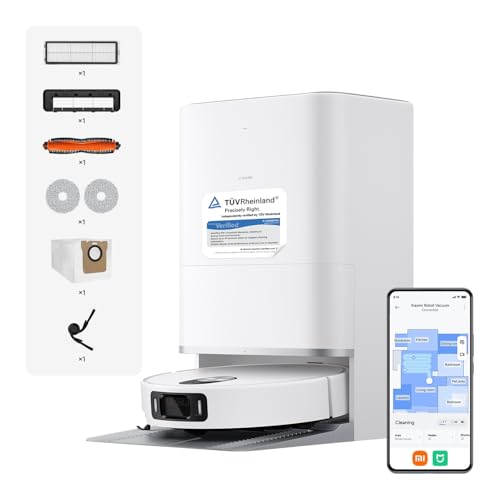
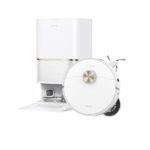
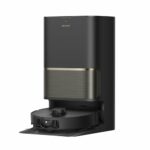
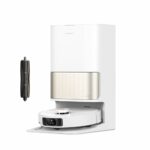
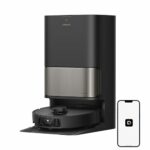
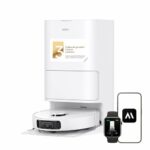
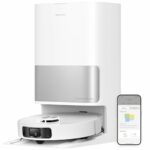
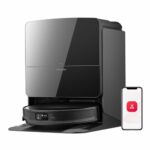
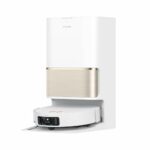
When looking at the latest releases for 2025, three high-end models stand out in the premium robot vacuum segment: the Dreame L40s Pro Ultra, the Mova P50 Pro Ultra, and the Xiaomi Robot Vacuum 5 Pro. All three arrive with multifunction bases that handle everything from auto-emptying dust to washing and drying mops, making them suitable for users who want minimal intervention in their cleaning routine.
These models target homeowners with medium to large properties who need powerful suction, advanced mopping capabilities, and intelligent navigation. The Dreame and Mova share much of their DNA—hardly surprising given the manufacturing relationships between these brands—whilst the Xiaomi brings its own take on the formula with some notable differences in navigation design and functionality.
Power and Suction
The Xiaomi Robot Vacuum 5 Pro edges ahead with 20,000 Pa suction power, giving it a slight advantage over the 19,000 Pa offered by both the Dreame L40s Pro Ultra and Mova P50 Pro Ultra. In practical terms, this difference might show up when tackling embedded dirt in carpets or handling heavier debris.
Where things get more interesting is the main brush design. The Dreame uses a dual-brush HyperStream system, which splits the workload across two independent brushes anchored at one end. This setup reduces hair tangling considerably. The Mova P50 Pro Ultra and Xiaomi Robot Vacuum 5 Pro both rely on TriCut 3.0 brushes, combining bristles with integrated cutting blades to slice through tangled hair as it accumulates.
All three models can lift their main brushes when mopping to avoid dragging a dirty roller across wet floors. The side brushes are extensible across the board, reaching into corners more effectively. However, the Xiaomi misses out on side brush elevation during mopping—a feature present in both the Dreame and Mova. This means the Xiaomi's side brush remains in contact with the floor even when mopping, which could potentially flick water or interfere with the mopping process.
Mopping
Each model uses dual rotating mops, and all three extend to reach edges more thoroughly. The Dreame L40s Pro Ultra and Mova P50 Pro Ultra both incorporate the RoboSwing movement, allowing the robot to wiggle slightly and push the mop under furniture edges and skirting boards. The Xiaomi simply extends its mops without this additional motion.
Mop lift height differs noticeably. The Xiaomi lifts its mops 15 mm, whilst the Dreame and Mova manage 10.5 mm. For homes with thick rugs or high-pile carpets, that extra clearance on the Xiaomi can prevent accidental dampening of soft furnishings.
The real separation comes with mop maintenance. Both the Dreame L40s Pro Ultra and Mova P50 Pro Ultra wash their mops with hot water at the base, breaking down grease and grime more effectively than cold water alone. The Xiaomi sticks with cold water washing. Drying follows a similar pattern: hot air drying on the Dreame and Mova speeds up the process and reduces the risk of unpleasant odours or bacterial growth, whereas the Xiaomi uses cold air drying.
The Dreame and Mova can automatically detach their mops at the base when you want to run a vacuum-only session. The Xiaomi lacks this feature, meaning you'd need to remove the mops manually if you want to avoid dragging them around during a dry clean. All three detect dirt on the mops and on the floor itself, triggering rewashes or additional passes as needed.
Navigation System
Navigation technology is sophisticated across all three. The Dreame L40s Pro Ultra and Mova P50 Pro Ultra use a traditional LiDAR turret combined with dual AI cameras and 3D laser sensors at the front. The Xiaomi Robot Vacuum 5 Pro opts for a retractable LiDAR system, which allows it to sit much lower—just 88 mm tall compared to 103.8 mm for the Dreame and Mova. This makes a tangible difference when navigating under low-clearance furniture.
Object recognition capabilities vary. The Xiaomi can identify up to 200 different obstacles, the highest count here. The Dreame recognises 180 objects, and the Mova 160. However, the Dreame and Mova go further by specifically detecting pets and curtains, adjusting their behaviour accordingly. The Xiaomi does not offer these specific recognitions, which might matter in homes with animals or floor-length drapes.
All three provide remote camera access and LED lighting for navigation in darker rooms, useful if you want to check on your home remotely or run cleaning sessions at night.
Battery and Autonomy
Battery capacity is identical at 5,200 mAh across all three models. Runtime tells a different story. The Dreame L40s Pro Ultra manages 220 minutes on a single charge, the Mova P50 Pro Ultra achieves 210 minutes, and the Xiaomi Robot Vacuum 5 Pro drops to 140 minutes. That's a significant gap—the Dreame runs for over an hour longer than the Xiaomi.
For larger homes, this difference becomes critical. The Dreame and Mova can cover more ground before needing to return to base, reducing the number of recharge cycles required to complete a full clean. The Xiaomi's shorter runtime may necessitate mid-clean top-ups in properties exceeding 100 square metres.
Smart Features
Obstacle-climbing ability varies slightly. The Dreame L40s Pro Ultra can handle single steps and thresholds, the Mova manages up to 22 mm, and the Xiaomi clears 20 mm obstacles. These differences are marginal in most homes, though the Mova has a slight edge if you have particularly high thresholds between rooms.
The Dreame and Mova both feature built-in voice assistants, allowing you to issue commands directly without relying on external smart home ecosystems. The Xiaomi does not include its own voice assistant but works with Alexa and Google Home, as do the other two models.
Multifunction Base
All three bases handle auto-emptying, mop washing, and mop drying. The Dreame L40s Pro Ultra and Mova P50 Pro Ultra both feature third-generation self-cleaning base trays, which scrub themselves to prevent buildup and odours. The Xiaomi's base also self-cleans, though the generation or specific mechanism isn't detailed.
The Dreame stands alone in offering a detergent dispenser within the base, automatically dosing cleaning solution during mop washes. The Mova and Xiaomi require manual addition of detergent if you want to use it at all.
Dust bag capacity is larger on the Dreame and Mova at 3.2 litres, compared to 2.5 litres on the Xiaomi. This translates to fewer bag changes over time. Clean water tanks measure 4.5 litres on the Dreame, 4 litres on the Mova, and 4 litres on the Xiaomi. Dirty water tanks are 4 litres, 3.5 litres, and 3.8 litres respectively. The Dreame's slightly larger tanks mean less frequent refilling and emptying.
The Dreame offers an optional pipe connection kit, sold separately, which allows the base to connect directly to household plumbing. This isn't a built-in feature and requires additional purchase, so it's worth noting but not a core differentiator. Neither the Mova nor Xiaomi offer this option at all.
Dimensions
All three robots share a 350 mm diameter, but height varies considerably. The Xiaomi sits at 88 mm, making it noticeably lower than the Dreame and Mova at 103.8 mm. That extra clearance means the Xiaomi can slip under sofas, beds, and cabinets that the other two cannot reach. If your furniture sits low to the ground, this becomes a decisive factor.
Base dimensions differ across all three. The Dreame's base measures 340 mm wide, 590.5 mm tall, and 456.7 mm deep. The Mova is wider at 420 mm but shorter at 470 mm, with a depth of 458 mm. The Xiaomi sits at 360 mm wide, 572 mm tall, and 470 mm deep. The Mova's wider footprint may require more floor space, whilst the Dreame's taller profile might not fit under certain shelving units.
Real-World Use
For homes with pets, the Dreame L40s Pro Ultra's dual HyperStream brushes reduce hair tangling, and its ability to recognise animals means it can adjust cleaning patterns around feeding areas or pet beds. The Mova offers similar pet recognition with the TriCut 3.0 brush doing a solid job on hair. The Xiaomi lacks pet-specific recognition but compensates with higher suction and a lower profile for reaching under furniture where pet hair accumulates.
In larger properties, the Dreame's 220-minute runtime and larger dust bag capacity reduce maintenance frequency. The Mova performs similarly, though its slightly shorter runtime and smaller dirty water tank mean marginally more intervention. The Xiaomi's 140-minute battery life suits smaller homes better, where a single charge suffices for a complete clean.
For households prioritising hygiene, hot water mop washing and hot air drying on the Dreame and Mova deliver cleaner mops and faster drying times. The Dreame's detergent dispenser further enhances mopping performance without manual dosing. The Xiaomi's cold water system still cleans effectively but won't tackle grease as thoroughly.
If low furniture dominates your home, the Xiaomi's 88 mm height becomes its standout feature, accessing spaces the others simply cannot. Conversely, if you have standard clearances, the Dreame and Mova's additional sensors and pet recognition offer more intelligent navigation.
Conclusion: Which One to Choose?
Choose the Dreame L40s Pro Ultra if you want the longest runtime, largest tank capacities, and the most comprehensive mopping system with hot water washing, hot air drying, and automatic detergent dispensing. It's ideal for large homes with pets, where the dual HyperStream brushes reduce hair tangling and the extended battery ensures complete coverage without recharging. The optional pipe connection kit adds future flexibility, though it's an extra purchase.
Choose the Mova P50 Pro Ultra if you're after similar performance to the Dreame at potentially better value. You get hot water mop washing, hot air drying, pet recognition, and solid battery life. The slightly wider base requires more floor space, but the overall feature set matches the Dreame closely. It's a strong choice for those who want premium functionality without the absolute top-tier price.
Choose the Xiaomi Robot Vacuum 5 Pro if your priority is fitting under low furniture and you have a smaller home where the 140-minute runtime suffices. The 20,000 Pa suction is the highest here, and the 15 mm mop lift handles thick rugs well. You'll miss out on hot water mop washing, pet recognition, and automatic mop removal, but the significantly lower profile opens up cleaning areas the others can't reach. It's best suited to compact spaces with lots of low-clearance furniture and users comfortable with slightly more hands-on maintenance.