✨ VS Analyses · VacuumSpain comparison technology. Explanation created with AI from verified technical data.
Introduction
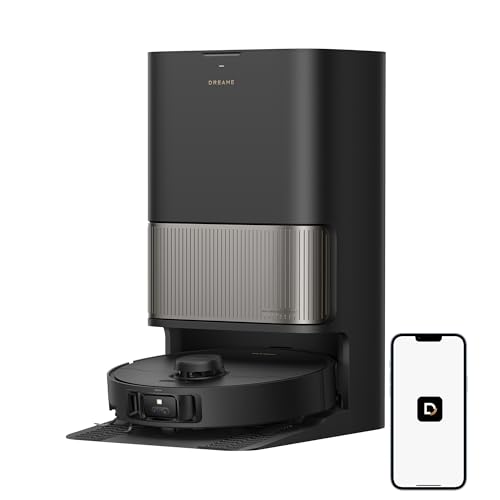
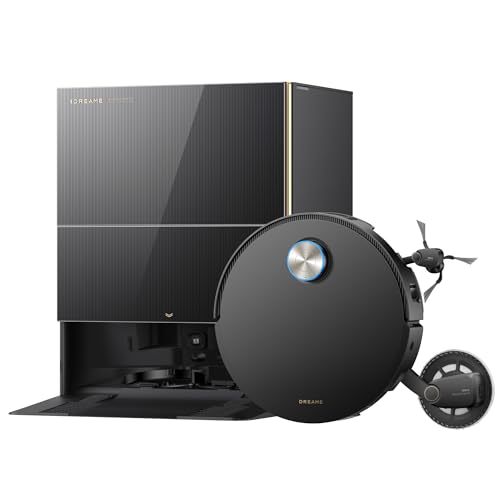
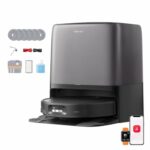
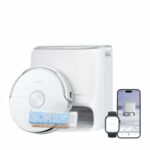
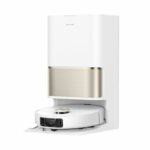
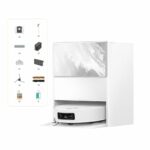
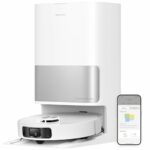
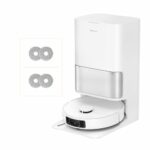
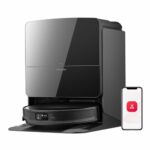
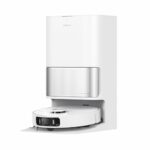
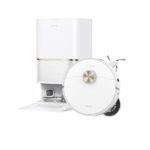
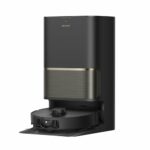
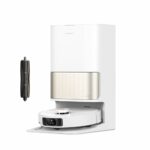
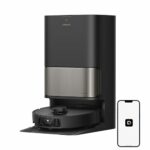
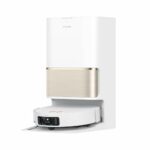
Dreame has positioned itself as a manufacturer capable of delivering advanced technology at competitive prices. The L40s Pro Ultra from 2025 and the X60 Pro Ultra launched in May 2026 represent two generations of premium robot vacuum cleaners with multifunction bases, both designed for users seeking comprehensive automated cleaning without daily intervention.
The L40s Pro Ultra established a solid foundation with its HyperStream anti-tangle brush system and hot water mop washing. The X60 Pro Ultra builds upon this legacy with significant upgrades in suction power, obstacle climbing capability, and cleaning precision. Both models target large homes requiring thorough vacuuming and mopping, though they differ substantially in technical specifications.
Understanding which features justify the generational leap helps determine whether the newer technology aligns with your specific cleaning challenges.
Power and Suction
The difference in suction power defines one of the clearest dividing lines between these models. With 42,000 Pa, the X60 Pro Ultra more than doubles the 19,000 Pa offered by the L40s Pro Ultra. This substantial increase translates into deeper extraction from carpets and more effective pickup of embedded debris on hard floors.
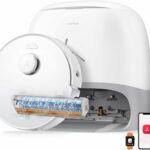
Both robots employ Dreame\'s dual HyperStream anti-tangle brush design, though the X60 Pro Ultra features the evolved 2.0 version. This dual-anchor system minimises hair wrapping around the main roller, particularly valuable in homes with long-haired residents or multiple pets. The brushes lift when mopping to prevent cross-contamination between vacuuming and wet cleaning.
The side brush configuration reveals further refinement. Whilst both models feature extendable, elevable anti-tangle side brushes, the X60 Pro Ultra specifies a 12 cm robotic extension and adds a dedicated skirting board brush absent on the L40s Pro Ultra. This additional brush targets the junction between floor and wall more effectively.
In practical terms, the L40s Pro Ultra handles typical household debris competently, but the X60 Pro Ultra\'s enhanced suction proves advantageous for deep-pile carpets, pet hair accumulation, and fine dust particles that settle into textured flooring.
Mopping
Both robots utilise dual rotating mops, though performance characteristics diverge significantly. The L40s Pro Ultra spins its mops at 180 RPM using the RoboSwing system to extend reach under furniture edges and into corners. The X60 Pro Ultra increases rotation to 280 RPM with 15N downward pressure and employs an 18 cm robotic mop extension for edge coverage.
Water temperature makes a measurable difference in dissolving grease and sticky residues. The X60 Pro Ultra heats mopping water to 40°C, whilst the L40s Pro Ultra applies cold water only. This heated approach improves cleaning efficacy on kitchen floors and high-traffic areas prone to stubborn marks.
Mop elevation reaches 10.5 mm on both models, sufficient to cross most standard door thresholds without dragging wet pads across carpets. The X60 Pro Ultra extends this capability further with chassis elevation, achieving up to 21.5 mm total lift when required.
Dirt detection sensors monitor mop cleanliness and floor soiling on both robots, triggering additional cleaning passes or returning to the base for mop washing when contamination exceeds preset thresholds. Both models automatically remove mops at the base when switching to vacuum-only mode.
For homes with mixed flooring and a preference for genuinely clean rather than merely damp floors, the X60 Pro Ultra\'s heated water and increased agitation offer tangible benefits.
Navigation System
The L40s Pro Ultra employs a traditional 360° LiDAR turret for spatial mapping and navigation. This proven technology creates accurate floor plans and enables efficient path planning. The X60 Pro Ultra introduces a retractable LiDAR system that lowers the robot\'s profile to 89 mm when the sensor retracts, improving clearance under low furniture.
Both models incorporate dual cameras for AI-powered obstacle recognition, though the X60 Pro Ultra specifies RGB cameras and expands the recognised object database from 180 to 320 items. This broader recognition helps the robot make more nuanced decisions about navigating around shoes, cables, pet toys, and other common household objects.
The X60 Pro Ultra adds proactive illumination to its obstacle avoidance system, improving performance in dim conditions. Both robots feature LED lighting for night vision, remote camera access for home monitoring, and 3D front-facing laser sensors for close-range detection.
Pet recognition, curtain detection, and Matter compatibility appear on both models. CleanGenius AI advances from version 2.0 on the L40s Pro Ultra to 3.0 on the X60 Pro Ultra, refining cleaning pattern optimisation based on room type and observed dirt levels.
The retractable LiDAR design proves particularly valuable in homes with furniture clearances between 89 mm and 103.8 mm, where the L40s Pro Ultra would become stuck whilst the X60 Pro Ultra navigates freely.
Battery and Autonomy
Battery capacity measures 5,200 mAh on the L40s Pro Ultra and 5,000 mAh on the X60 Pro Ultra. Despite the slightly smaller battery, the X60 Pro Ultra achieves 232 minutes runtime compared to 220 minutes on its predecessor, suggesting improved energy efficiency despite significantly higher suction power.
PowerMaster fast charging technology on the X60 Pro Ultra recovers 24% battery capacity in just 5.5 minutes. This rapid top-up capability allows the robot to resume cleaning large homes more quickly after partial recharges. The L40s Pro Ultra supports fast charging without specifying recharge rates.
In real-world use, both robots comfortably handle typical homes on a single charge. The extended runtime becomes relevant in properties exceeding 150 square metres or when performing intensive mopping routines that require multiple returns to the base for mop washing.
Intelligent Functions
Obstacle climbing capability shows dramatic improvement between generations. The L40s Pro Ultra manages 22 mm single steps and 40 mm double steps, adequate for standard door thresholds and some raised floor transitions. The X60 Pro Ultra climbs 52 mm single obstacles and 100 mm double steps, enabling it to navigate between rooms with substantial level changes and cross thick carpet edges that would strand the earlier model.
Both robots integrate their own voice assistant alongside compatibility with Alexa and Google Home. Matter protocol support ensures future-proofing as smart home ecosystems continue evolving.
The enhanced climbing ability on the X60 Pro Ultra particularly benefits homes with sunken living rooms, varied flooring heights, or thick entrance mats that create challenging transitions.
Multifunction Cleaning Base
Both bases provide automatic dustbin emptying into 3.2-litre bags, hot water mop washing, hot air mop drying, and detergent dispensing. The implementation differs in temperature and cleaning intensity.
The L40s Pro Ultra washes mops at 75°C and dries them with 45°C air. The X60 Pro Ultra increases washing temperature to 100°C and drying temperature to 50°C. Boiling water more effectively sanitises mop pads and dissolves dried-on grime, whilst hotter drying air accelerates the process and further inhibits bacterial growth.
Base tray self-cleaning operates at third-generation standard on the L40s Pro Ultra. The X60 Pro Ultra specifies 100°C water for tray cleaning, matching its mop washing temperature. This consistent high-temperature approach throughout the maintenance cycle reduces manual intervention.
Water tank capacities measure 4.5 litres clean and 4 litres dirty on the L40s Pro Ultra, compared to 4.2 litres clean and 3 litres dirty on the X60 Pro Ultra. The slight reduction reflects space reallocation within the redesigned base housing. Both models offer optional plumbing connection kits purchased separately.
For users prioritising minimal maintenance and maximum hygiene, the X60 Pro Ultra\'s boiling water cleaning represents a meaningful upgrade.
Dimensions
Both robots share a 350 mm diameter. Height differs substantially: 103.8 mm on the L40s Pro Ultra versus 89 mm when retracted on the X60 Pro Ultra. This 14.8 mm reduction expands the range of furniture the robot can clean beneath, including low-profile beds, sofas, and cabinets.
Base dimensions show the X60 Pro Ultra measures 390 mm wide, 499 mm tall, and 456 mm deep. The L40s Pro Ultra\'s base spans 340 mm wide, 590.5 mm tall, and 456.7 mm deep. The newer base trades height for width, creating a squatter footprint that may fit better in certain spaces whilst requiring slightly more floor area.
Robot dustbin capacity increases marginally from 300 ml to 310 ml. Water tank capacity remains 80 ml on both models, sufficient for the robots\' regular returns to base during mopping.
Real-World Usage Experience
The L40s Pro Ultra suits homes up to approximately 200 square metres with standard flooring transitions and moderate furniture clearances. Its 19,000 Pa suction handles typical household debris, pet hair, and daily dirt accumulation competently. The RoboSwing mopping system extends reach into corners and under cabinet toe kicks effectively, though cold water limits performance on greasy kitchen floors.
The X60 Pro Ultra targets larger properties and more demanding environments. The 42,000 Pa suction excels with thick carpets, heavy pet shedding, and fine dust. Heated mopping water tackles dried spills and sticky residues more effectively. The ability to climb 52 mm obstacles opens access to split-level homes and properties with varied floor heights that would require manual intervention with the L40s Pro Ultra.
Reduced height on the X60 Pro Ultra proves valuable in homes with low furniture, particularly platform beds and modern low-profile sofas where the 103.8 mm L40s Pro Ultra cannot reach. The 18 cm robotic mop extension provides more thorough edge cleaning than the RoboSwing system, though both approaches address the common problem of untouched floor perimeters.
Maintenance demands remain low on both models thanks to hot water mop washing and drying, automatic dustbin emptying, and anti-tangle brushes. The X60 Pro Ultra\'s 100°C washing temperature delivers more thorough sanitisation, reducing how frequently you need to manually clean mop pads and base components.
Conclusion: Which to Choose?
Choose the Dreame L40s Pro Ultra if: you have a single-level home under 200 square metres with standard door thresholds, furniture clearances above 104 mm, and predominantly hard floors or low-pile carpets. The model delivers thorough automated cleaning at a lower price point, with effective anti-tangle brushes for pet hair and a multifunction base that handles mopping maintenance. It suits users wanting hands-off cleaning without requiring maximum suction power or heated mopping.
Choose the Dreame X60 Pro Ultra if: you need superior suction for thick carpets or heavy pet shedding, have low furniture requiring sub-90 mm clearance, face significant floor level changes exceeding 22 mm, or prioritise maximum mopping performance with heated water and intensive agitation. The expanded obstacle recognition, faster charging, and boiling water base maintenance justify the investment for larger homes, complex layouts, or users seeking the most advanced cleaning technology currently available from Dreame. The combination of 42,000 Pa suction, 52 mm climbing ability, and comprehensive edge cleaning makes it particularly suited to demanding environments where the L40s Pro Ultra would encounter limitations.