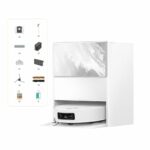
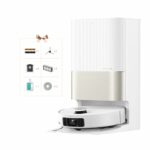
✨ VS Analyses · VacuumSpain comparison technology. Explanation created with AI from verified technical data.
Introduction
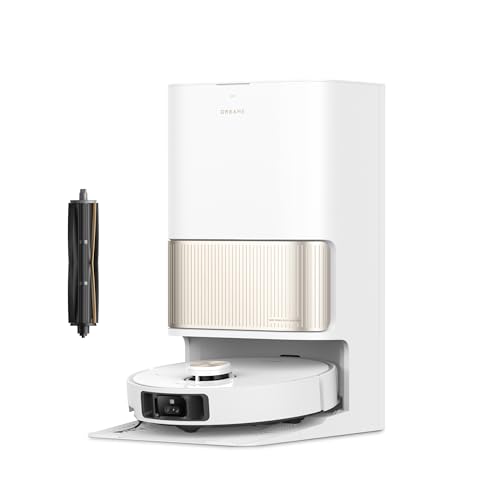
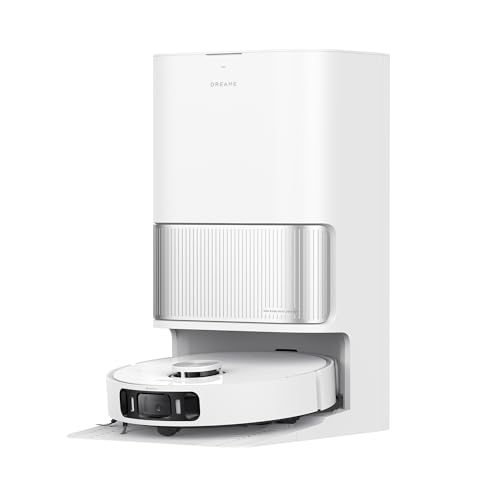
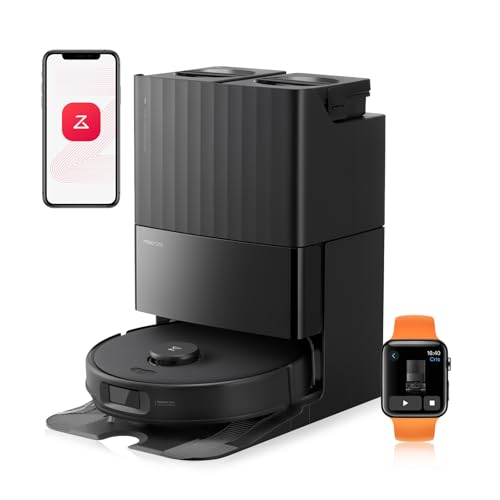
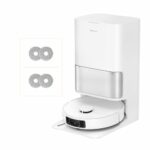
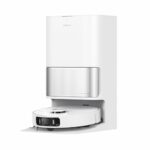
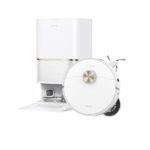
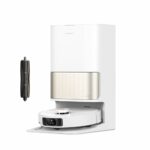
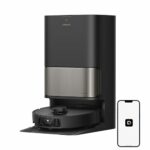
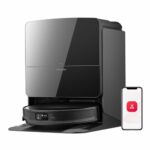
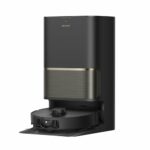
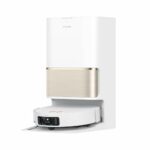
The Dreame L40 Ultra, the Dreame L40 Ultra AE and the Roborock Qrevo Edge S5A represent three high-end propositions within the robot vacuum cleaner market with multifunction base. The first arrived in 2024 as Dreame's flagship, whilst the L40 Ultra AE appeared in 2025 as a refined evolution of the original model. Roborock's Qrevo Edge S5A, also from 2024, competes directly in this premium segment with its own technical solutions.
These devices are designed for users seeking complete automation in home cleaning, with the capacity to manage large surfaces, pets and different types of flooring without manual intervention. The technical differences between them determine key aspects such as intelligent navigation capability, effectiveness on edges and corners, or maintenance autonomy.
Power and Suction
The most striking difference in suction power places the original Dreame L40 Ultra at 11,000 Pa, a figure that the L40 Ultra AE almost doubles with its 19,000 Pa. The Roborock Qrevo Edge S5A positions itself between both with 18,500 Pa, getting quite close to Dreame's most recent model. In practice, this difference can be especially noticeable on dense carpets or when there is pet hair accumulation.
The main brush system shows different philosophies. Both Dreame models mount the TriCut 3.0 brush, which combines bristles with blades to reduce hair tangles. Roborock opts for its DuoDivide Anti-Tangle technology, designed to push hairs towards the central suction gap. Both systems are effective against tangling, albeit with different mechanics.
An exclusive advantage of the L40 Ultra is that its side brush can lift during mopping and also incorporates anti-tangle technology. The L40 Ultra AE dispenses with this lifting and the anti-tangle system on the side brush, although it maintains the extension capability for corners. The Roborock offers an extendable and anti-tangle side brush, but without lifting. This can influence edge cleaning when mopping, as the liftable side brush avoids dragging wet dirt.
All three models lift the main brush during mopping, except the Roborock which does not have this function. This allows the Dreame models to optimise mopping without the main brush interfering with the mops.
Mopping
All employ a two rotating mop system, a common configuration in the high-end range that guarantees active mopping. Mop extension is present in all three, although the Dreame models also include the Roboswing system, which adds a lateral movement of the robot to introduce the mop under overhangs and furniture. The Roborock extends the mops without this additional movement.
Mop lifting reaches 10.5 mm on both Dreame models, slightly higher than the Roborock's 10 mm. It may seem a minimal difference, but that extra half millimetre facilitates passage over short-pile carpets without wetting them.
The Dreame L40 Ultra stands out for allowing automatic removal of mops at the base, a function absent in the L40 Ultra AE and the Roborock. This means the L40 Ultra can perform vacuum-only sessions without having the mops installed, avoiding dragging them unnecessarily through areas where mopping will not take place.
All three wash the mops with hot water at the base and dry them with hot air, guaranteeing hygiene and odour elimination. They detect dirt both on the mops and on the floor to adjust the cleaning process, although only the L40 Ultra incorporates specific stain recognition via AI to reinforce mopping on specific spots.
Navigation System
Significant differences appear here. The Dreame L40 Ultra mounts dual AI camera together with front 3D laser sensor, a combination that allows it to recognise up to 100 different types of obstacles. The L40 Ultra AE maintains AI camera (although it does not specify if it is dual) and 3D laser sensor, expanding recognition to 120 obstacles. The Roborock Qrevo Edge S5A lacks AI camera and front 3D laser sensor, relying on its LiDAR turret and obstacle avoidance system without specifying how many objects it recognises.
The presence of AI camera on the Dreame models enables functions such as remote access for home surveillance and night vision LED, absent on the Roborock. Pet recognition is also exclusive to the two Dreame models, which can be useful for homes with animals, as the robot adjusts its behaviour upon detecting them.
Only the L40 Ultra detects curtains, avoiding getting tangled in them. The L40 Ultra AE lost this specific function, although it maintains advanced obstacle recognition capabilities. Regarding processors, the L40 Ultra employs AI Sage 11.0, the Roborock uses RR Mason 11.0, and the L40 Ultra AE does not specify its CPU.
Autonomy and Battery
All three are equipped with a 5,200 mAh battery, a generous capacity for robots in this category. The Dreame L40 Ultra offers 194 minutes of autonomy, whilst the Roborock reaches 180 minutes. The L40 Ultra AE does not specify duration, although sharing the battery with the L40 Ultra, similar or superior performance is expected given its 2025 optimisation.
These figures allow coverage of large surfaces in a single session, especially considering that the multifunction base allows the robot to return to recharge and resume cleaning automatically if necessary.
Smart Functions
The ability to overcome obstacles varies slightly: the Dreame L40 Ultra reaches 22 mm, whilst the L40 Ultra AE and the Roborock remain at 20 mm. Those additional 2 mm of the L40 Ultra can make the difference with certain types of carpet or transitions between floors.
The built-in voice assistant is only present on the L40 Ultra, allowing commands to be given directly to the robot without going through the app. All three models are compatible with external assistants such as Alexa or Google Home.
Multifunction Cleaning Base
All three bases perform auto-emptying, hot water washing and hot air drying of the mops. Self-cleaning of the washing tray is present in all, with second-generation technology on the Dreame models (specified as "2nd generation") and version 2.0 on the Roborock.
An important difference: only the two Dreame models include a detergent tank in the base, dispensing product during mop washing. The Roborock dispenses with this function. For those seeking maximum automation in mopping hygiene, this may be relevant.
The dust bag capacity is 3.2 litres on both Dreame models versus 2.7 litres on the Roborock. The clean water tanks are 4.5 litres on the Dreame models and 4 litres on the Roborock; dirty water is stored in 4 litres (Dreame) and 3.5 litres (Roborock). These differences mean that the Dreame models can operate longer without manual intervention to refill or empty tanks.
Both Dreame models offer an optional plumbing connection kit, which must be purchased separately. The Roborock does not have this option. Whilst not an integrated function, it may interest those seeking to completely eliminate tank maintenance.
Dimensions
The diameter of the robots is practically identical: 350 mm on the Dreame models and 352 mm on the Roborock. Height shows more variation: the Dreame L40 Ultra measures 103.8 mm, the L40 Ultra AE reduces to 97 mm and the Roborock reaches 98 mm. Those almost 7 mm difference between the L40 Ultra and the L40 Ultra AE can facilitate access under low furniture on the more recent model.
The Dreame bases are taller (590.5 mm) than the Roborock's (521 mm), although the latter is deeper (487 mm versus 456.7 mm). This should be considered depending on the available space to install the base.
Real-World Usage Experience
For large homes, all three models offer sufficient autonomy and generous tanks in the base. The Dreame models have an advantage in dust bag capacity and water tanks, reducing maintenance frequency. The Roborock compensates with a more compact base in height.
In homes with pets, the specific animal recognition of the Dreame models adds value, together with their brush systems designed to reduce tangles. The Roborock's DuoDivide brush is also effective in this aspect. The greater suction power of the L40 Ultra AE and the Roborock can be noticeable when vacuuming accumulated hair.
For users seeking maximum autonomy, the Dreame L40 Ultra stands out for its ability to automatically remove mops, built-in voice assistant, detergent tank and advanced stain recognition. The L40 Ultra AE offers more power and expanded obstacle recognition, although it loses some functions of the original model. The Roborock opts for proven reliability by dispensing with AI camera, which simplifies the system but limits smart functions.
In spaces with low furniture, the L40 Ultra AE and the Roborock have an advantage due to their lower height. The Dreame models' Roboswing system helps improve cleaning under overhangs.
Conclusion: Which to Choose?
Choose the Dreame L40 Ultra if you seek the most complete set of smart functions: dual AI camera, pet and curtain recognition, automatic mop removal, built-in voice assistant and specific stain detection. It is ideal for those who prioritise total automation and do not mind sacrificing some suction power in exchange for versatility. Its ability to overcome 22 mm obstacles is the greatest of the three. Perfect for homes with pets and users who value remote control via camera.
Choose the Dreame L40 Ultra AE if you need the greatest suction power (19,000 Pa) and expanded obstacle recognition (120 types), but can dispense with automatic mop removal, curtain detection and built-in voice assistant. Its reduced height (97 mm) facilitates access under furniture. A good option for homes with demanding carpets or significant dirt accumulation, where raw power makes a difference.
Choose the Roborock Qrevo Edge S5A if you prefer a simpler system without AI camera, relying on LiDAR navigation and traditional obstacle avoidance. It offers high power (18,500 Pa), a more compact base in height and the DuoDivide Anti-Tangle brush system. Suitable for those who do not need remote surveillance or pet recognition, valuing Roborock's reliability and a generally more competitive price in terms of value for money. A good choice for homes without pets where simplicity and effectiveness in basic cleaning are priorities.