✨ VS Analyses · VacuumSpain comparison technology. Explanation created with AI from verified technical data.
Introduction
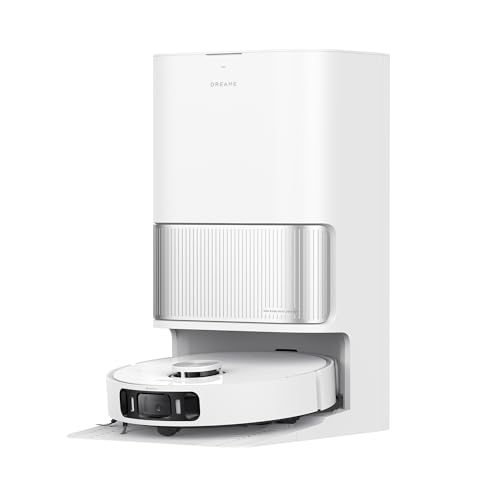
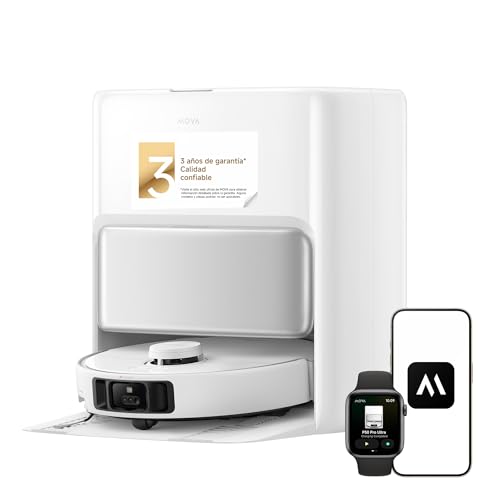
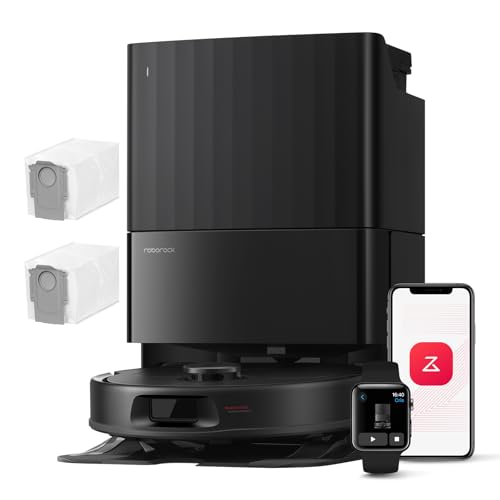
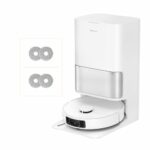
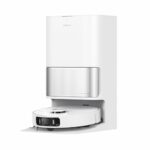
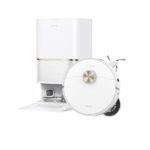
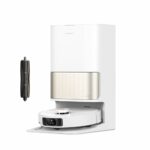
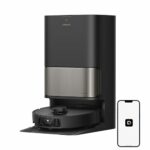
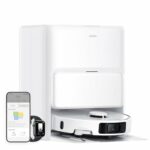
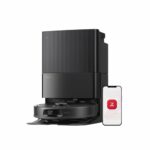
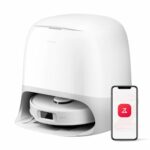
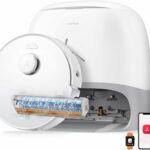
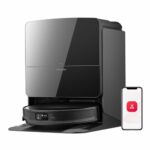
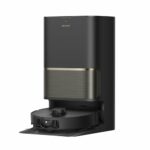
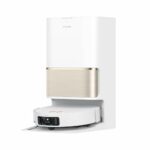
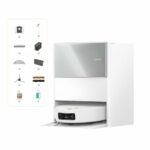
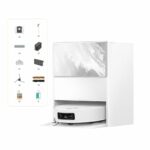
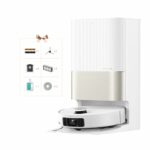
The Dreame L40 Ultra AE, Mova P50 Pro Ultra and Roborock QV 35A represent three distinct approaches to robot vacuum technology from the 2025 generation. Whilst Dreame and Mova share several design philosophies—hardly surprising given Mova operates as Dreame's secondary brand—Roborock charts its own course with different priorities and capabilities.
The Dreame and Mova models position themselves as high-powered cleaning machines with 19,000 Pa suction, comprehensive camera systems and extensive AI recognition. The Roborock QV 35A takes a more streamlined approach with 8,000 Pa suction but maintains solid fundamentals across navigation and mopping functions. These machines suit different household profiles: the Dreame and Mova appeal to those wanting maximum technological integration, whilst the Roborock offers proven reliability without excessive complexity.
Suction Power and Brushing
The Dreame L40 Ultra AE and Mova P50 Pro Ultra match each other with 19,000 Pa suction—a substantial figure that handles embedded dirt in carpets and deep cleaning tasks. The Roborock QV 35A operates at 8,000 Pa, which remains adequate for daily maintenance but won't match the raw extraction capability of its competitors.
All three models use TriCut 3.0 brushes—well, Dreame and Mova do. The Roborock employs a simplified brush design that still reduces hair tangles but lacks the hybrid blade-and-bristle approach of TriCut technology. In practice, this means the Dreame and Mova should require less frequent brush maintenance when dealing with long hair or pet fur.
Brush elevation during mopping appears on both the Dreame and Mova, preventing carpet contamination when the robot switches to wet cleaning. The Roborock doesn't lift its main brush, which limits its ability to protect carpets during mopping runs.
The side brush situation reveals more divergence. The Mova P50 Pro Ultra extends its side brush for corner cleaning and elevates it during mopping, whilst also incorporating anti-tangle design. The Dreame lacks extension and elevation but doesn't include anti-tangle features either. The Roborock provides anti-tangle design without extension or elevation capabilities. For homes with intricate floor plans and tight corners, the Mova's extendable side brush offers tangible advantages.
Mopping Systems
All three robots use dual rotating mops, but the execution differs considerably. The Dreame L40 Ultra AE and Mova P50 Pro Ultra both extend their mops outward with movement systems that push cleaning pads closer to walls and furniture edges. The Roborock QV 35A doesn't extend its mops, leaving a larger gap along perimeters.
Mop elevation reaches 10.5 mm on the Dreame and Mova, fractionally higher than the Roborock's 10 mm lift. These measurements determine whether the robot can transition onto thicker rugs without dragging wet mops across them.
The bases wash mops with hot water across all three models and dry them with heated air—essential for preventing bacterial growth and odours between cleaning sessions. The Mova distinguishes itself with third-generation tray self-cleaning, whilst the Dreame uses second-generation technology. The Roborock doesn't clean its own washing tray, requiring manual maintenance.
Automatic mop removal at the base appears only on the Mova P50 Pro Ultra. This allows the robot to vacuum without dragging mop pads around, then reattach them when mopping begins. The Dreame and Roborock require manual mop removal if you want vacuum-only operation.
Dirt detection on both mops and floors features on the Dreame and Mova, enabling these robots to identify soiled areas and adjust cleaning intensity or make additional passes. The Roborock lacks this sensing capability, relying instead on scheduled or manual cleaning patterns.
Navigation Systems
LiDAR navigation appears across all three models, providing accurate room mapping and efficient route planning. The differences emerge in visual intelligence and obstacle recognition.
The Mova P50 Pro Ultra carries dual AI cameras alongside 3D laser sensors, recognising 160 different objects including pets and curtains. The Dreame L40 Ultra AE uses a single camera with 3D sensors, identifying 120 objects and detecting pets but not curtains. The Roborock QV 35A operates without cameras or 3D sensors, relying on LiDAR and basic collision detection.
Remote camera access works on both Dreame and Mova models, letting you check on pets or monitor rooms through the app. LED lighting supports night vision on these two robots. The Roborock doesn't offer camera functionality.
For households with pets, the visual recognition on Dreame and Mova helps avoid accidents and navigate around animals. The Roborock takes a more traditional approach, learning layouts through repeated cleaning rather than real-time object identification.
Battery and Autonomy
All three robots pack 5,200 mAh batteries, but runtime data varies. The Mova P50 Pro Ultra manages 210 minutes on a single charge, whilst the Roborock QV 35A runs for 180 minutes. The Dreame L40 Ultra AE doesn't specify autonomy duration.
These figures translate to different coverage capabilities. The Mova's longer runtime suits larger properties where the robot needs to complete extensive cleaning cycles without returning to base. The Roborock's 180 minutes still covers substantial ground—typically sufficient for homes up to 150-180 square metres depending on floor complexity and furniture density.
Smart Features
Obstacle climbing reaches 22 mm on the Mova P50 Pro Ultra, slightly exceeding the 20 mm capability of both the Dreame L40 Ultra AE and Roborock QV 35A. That extra 2 mm can make the difference when crossing thicker door thresholds or transitioning between flooring types.
The Mova includes its own voice assistant, allowing direct voice commands to the robot without routing through Alexa or Google Home. The Dreame and Roborock support external voice assistants but don't incorporate proprietary systems. In practice, this matters less than it might seem—most users already have ecosystem preferences and will use existing assistants regardless.
Multifunction Cleaning Base
All three bases handle automatic dustbin emptying, mop washing with hot water, and heated air drying. The distinctions appear in maintenance automation and capacity.
The Mova's third-generation tray self-cleaning represents the most advanced system here, automatically maintaining the washing area between sessions. The Dreame's second-generation cleaning still automates this process, though with different technology. The Roborock requires manual tray cleaning, adding a maintenance task every few weeks.
Detergent dispensers feature on the Dreame and Mova bases, automatically adding cleaning solution during mop washing. The Roborock uses water only, which cleans adequately but won't tackle stubborn residues as effectively.
Dust bag capacity reaches 3.2 litres on both Dreame and Mova, versus 2.7 litres on the Roborock. Larger bags mean less frequent replacement—perhaps every two months instead of six weeks in typical households.
Clean water tanks measure 4.5 litres on the Dreame, 4 litres on the Mova and Roborock. Dirty water collection holds 4 litres in the Dreame, 3.5 litres in the Mova and Roborock. These differences rarely affect practical use unless you're mopping exceptionally large areas in single sessions.
The Dreame offers an optional plumbing connection kit, purchased separately, for continuous water supply. Neither the Mova nor Roborock provides this option.
Physical Dimensions
Robot height matters when cleaning beneath furniture. The Roborock QV 35A measures 96.5 mm tall, the Dreame L40 Ultra AE 97 mm, and the Mova P50 Pro Ultra 103.8 mm. That makes the Roborock the best choice for navigating under low-clearance sofas and beds, whilst the Mova's extra height accommodates its dual camera system but limits access to tighter spaces.
Diameter varies minimally: 350 mm on Dreame and Mova, 353 mm on Roborock. This won't affect manoeuvrability in any meaningful way.
Base dimensions reveal different footprints. The Dreame measures 340 mm wide, 590.5 mm tall, and 456.7 mm deep. The Mova spreads to 420 mm wide but only 470 mm tall, with 458 mm depth. The Roborock sits at 340 mm wide, 521 mm tall, and 487 mm deep. The Mova's wider but shorter profile might fit better under counters, whilst the Dreame's narrower footprint suits tighter alcoves.
Real-World Usage Scenarios
The Dreame L40 Ultra AE suits households wanting strong suction and advanced mopping without needing the absolute maximum in camera intelligence. Its 19,000 Pa power handles deep carpet cleaning, whilst the extending mops and dirt detection improve floor washing results. The second-generation base cleaning reduces maintenance compared to the Roborock, and the detergent dispenser enhances mopping effectiveness.
The Mova P50 Pro Ultra targets users who want every available feature. Its dual cameras and 160-object recognition excel in complex homes with pets, children's toys, and varied obstacles. The extendable side brush cleans corners more thoroughly, automatic mop removal simplifies vacuum-only sessions, and the third-generation base cleaning minimises hands-on maintenance. The 22 mm climbing ability and 210-minute runtime suit larger properties with multiple floor transitions.
The Roborock QV 35A appeals to those prioritising proven navigation and reliable mopping over cutting-edge camera systems. Its 8,000 Pa suction handles routine cleaning adequately, the 96.5 mm height accesses more under-furniture spaces, and the streamlined feature set reduces complexity. However, the lack of dirt detection, detergent dispenser, and mop extension means it won't match the deep-cleaning capabilities of its competitors.
Pet owners benefit most from the Dreame or Mova, where visual recognition helps avoid accidents and TriCut brushes resist hair tangles. Homes with thick carpets favour the 19,000 Pa models. Properties with low furniture suit the Roborock's slimmer profile.
Conclusion: Which to Choose?
Choose the Dreame L40 Ultra AE if you want powerful suction and intelligent mopping without paying for dual cameras and maximum object recognition. It balances advanced features with relative simplicity, suits medium to large homes, and handles pet hair effectively. The optional plumbing kit adds appeal for those wanting minimal water tank maintenance.
Choose the Mova P50 Pro Ultra if you demand the most comprehensive feature set available and don't mind the taller robot body. Its dual cameras, 160-object recognition, extendable side brush, automatic mop removal, and third-generation base cleaning create the most hands-off experience. Best for large homes with pets, complex layouts, and users who value maximum automation over simplicity.
Choose the Roborock QV 35A if you prefer proven reliability and can work within moderate suction power. Its slimmer profile accesses more spaces, the straightforward operation reduces learning curves, and the brand's reputation for dependable performance appeals to those who prioritise consistency over cutting-edge features. Suitable for smaller homes, daily maintenance cleaning, and users who don't require advanced dirt detection or camera monitoring.