✨ VS Analyses · VacuumSpain comparison technology. Explanation created with AI from verified technical data.
Introduction
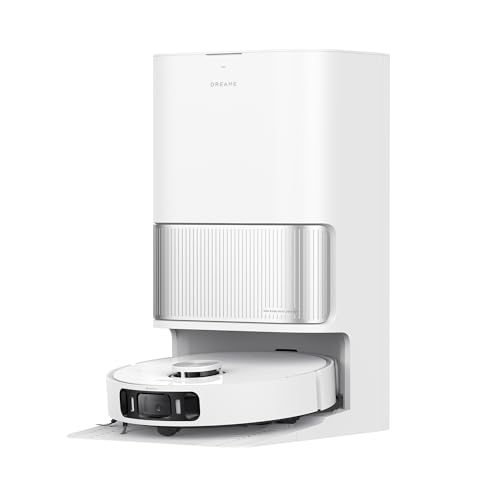
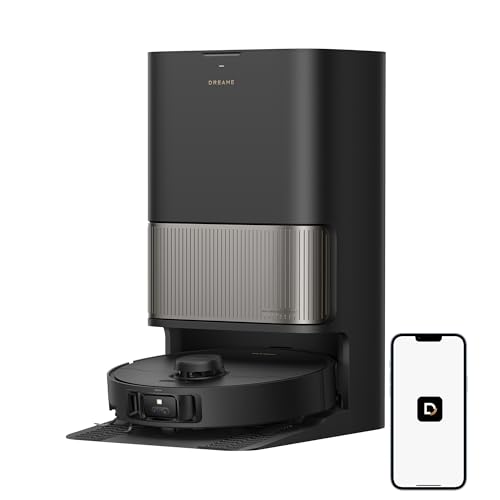
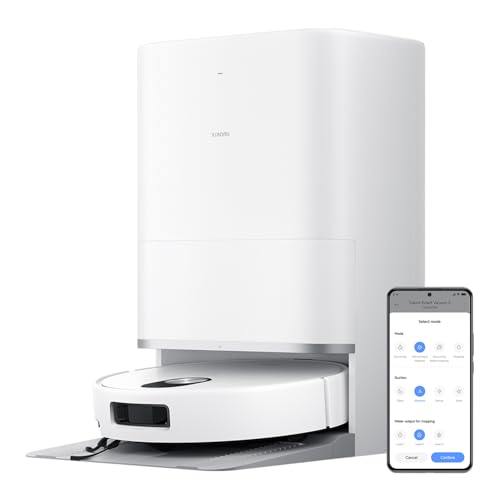
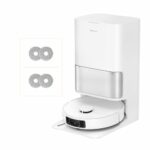
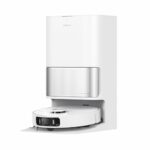
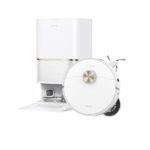
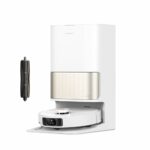
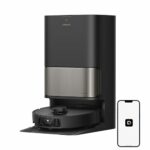
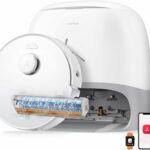
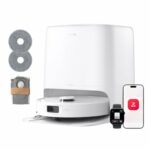
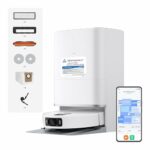
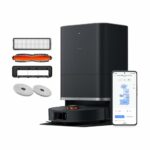
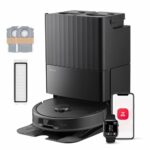
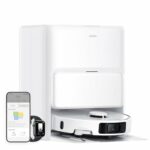
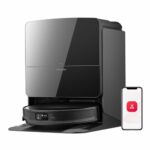
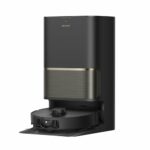
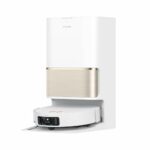
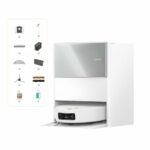
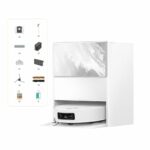
Dreame presents two of its most advanced robots from 2025: the L40 Ultra AE and the L40s Pro Ultra. Both units represent the brand's commitment to offering complete cleaning solutions with multifunctional bases that wash and dry the mops automatically. Xiaomi enters this battle with its Robot Vacuum 5, a model that shares the same launch year but adopts a different approach in several technical aspects.
We're talking about robots designed for users seeking to maximise home cleaning automation, especially in medium to large-sized homes where constant maintenance can be tedious. All three models integrate multifunctional bases, which guarantees real mopping and not merely symbolic.
Power and Suction
The Xiaomi Robot Vacuum 5 leads in raw power with 20,000 Pa of suction, slightly surpassing the 19,000 Pa shared by the Dreame L40 Ultra AE and the L40s Pro Ultra. This difference can be noticeable on medium-pile carpets or in situations where dirt is more ingrained.
Regarding the main brush, both the L40 Ultra AE and the Xiaomi feature the TriCut 3.0 system, which combines bristles with blades to cut long hairs and reduce tangles. The L40s Pro Ultra adopts a dual brush, a less common configuration that seeks to improve pickup efficiency. All three models raise the main brush during mopping, preventing it from getting unnecessarily wet.
The side brush marks important differences. The L40s Pro Ultra is the only one that can raise it during mopping and also extends it to better reach corners. It also incorporates anti-tangle technology in this component. The Xiaomi extends its side brush and makes it anti-tangle, but doesn't raise it. The L40 Ultra AE lacks these advantages in the side brush, something that may limit its effectiveness on edges and corners.
Mopping
All three robots mop with two rotating mops and can extend them to reach edges. The Dreame L40 Ultra AE and the L40s Pro Ultra add the Roboswing system, a lateral movement of the robot that helps to get the mops under overhangs and low furniture.
Mop lifting varies: the Xiaomi raises up to 15 mm, whilst the Dreame models reach 10.5 mm. Those extra 4.5 mm can make the difference when passing over thin carpets or floor transitions. The L40s Pro Ultra has an exclusive advantage: it can automatically remove the mops at the base when you only need to vacuum, preventing them from dragging dust unnecessarily.
In dirt detection, both Dreame models carry sensors on both the mops and the floor, allowing the robot to identify dirtier areas and act accordingly. The Xiaomi lacks this function, which means it always mops with the same intensity regardless of the actual state of the floor.
The bases of all three models wash the mops with hot water and dry them with hot air, guaranteeing hygiene and preventing bad odours. The L40 Ultra AE and the L40s Pro Ultra have an integrated detergent tank, something the Xiaomi doesn't offer. The tray self-cleaning generations also differ: the L40s Pro Ultra features the third generation, the L40 Ultra AE the second, and Xiaomi doesn't specify a version although it does include this function.
Navigation System
All use LIDAR to map the home, but with nuances. The Xiaomi integrates a retractable LIDAR that reduces the total height of the robot, whilst the Dreame models mount conventional LIDAR turret. All three incorporate a front 3D laser sensor to avoid obstacles at ground level.
The L40s Pro Ultra stands out with dual AI camera capable of recognising up to 180 types of obstacles, including pets and curtains. The L40 Ultra AE has a simple AI camera and recognises 120 obstacles, including pets but without curtain detection. The Xiaomi dispenses with AI camera, which limits its ability to identify specific objects beyond basic obstacle detection.
Only the two Dreame models allow remote access to the camera and have LED for night vision, useful functions if you want to monitor your home or check what the robot is doing in real time. For homes with pets, the L40 Ultra AE and the L40s Pro Ultra offer specific recognition that can help avoid accidents with toys or droppings.
Battery Life and Battery
All three robots feature 5,200 mAh batteries, a generous capacity for units in this category. The Dreame L40s Pro Ultra declares 220 minutes of battery life, sufficient to cover large homes in a single session. The Xiaomi indicates 140 minutes, a more modest figure that may require recharging in large houses. The L40 Ultra AE doesn't specify battery life in minutes, which makes it difficult to assess its real performance.
In practice, effective battery life depends on the cleaning mode and the type of floor. Vacuuming in turbo mode or mopping consumes more energy than a gentle pass in quiet mode.
Smart Functions
All three robots can overcome obstacles of 20 mm in height, although the L40s Pro Ultra adds the ability to climb simple steps, a function that can be useful in houses with small level differences between rooms.
The Dreame L40s Pro Ultra is the only one with its own voice assistant, allowing you to give it orders directly without going through Alexa or Google Home. All three are compatible with these external assistants, but having an integrated one streamlines interaction. None incorporates a robotic arm to pick up objects from the floor.
Multifunctional Cleaning Base
The Dreame bases share dimensions: 340 mm wide, 590.5 mm high and 456.7 mm deep. The Xiaomi's is slightly wider (360 mm) and lower (572 mm), with 470 mm depth. Small differences that may matter if available space is tight.
In capacities, the Dreame models offer a 3.2-litre dust bag, 4.5-litre clean water tank and 4-litre dirty water tank. The Xiaomi reduces these figures: 2.5 litres for dust, 4 litres of clean water and 3.8 litres of dirty water. For large houses or with pets that generate a lot of dirt, the Dreame's larger tanks mean fewer emptyings and refills.
Both Dreame models have an optional kit to connect the base to water pipes, although it must be purchased separately. The Xiaomi doesn't contemplate this option. This is worth considering if you're looking for total automation and don't want to deal with water.
Dimensions
All three robots have a 350 mm diameter, but the height varies significantly. The Xiaomi Robot Vacuum 5 measures only 88 mm high thanks to its retractable LIDAR, which allows it to slip under furniture and beds with little height. The Dreame L40 Ultra AE reaches 97 mm and the L40s Pro Ultra reaches 103.8 mm, being the tallest of the group. In homes with low furniture, this difference can determine which areas remain uncleaned.
The robot's dust bin also varies: the L40 Ultra AE has 395 ml, the L40s Pro Ultra 300 ml, and the Xiaomi doesn't specify capacity. More internal space means fewer trips to the base during cleaning, although with auto-emptying this difference loses relevance.
Real-World Experience
For large houses, the Dreame L40s Pro Ultra offers the longest declared battery life (220 minutes) and the largest tanks in the base, reducing interventions. Its dual camera and recognition of 180 obstacles provide peace of mind if you have many objects on the floor or loose pets.
The Xiaomi Robot Vacuum 5 stands out in homes with low furniture due to its 88 mm height. Its power of 20,000 Pa and the 15 mm mop lifting make it competent on carpets. However, the lack of dirt detection and detergent tank limits its ability to adapt to difficult stains.
The Dreame L40 Ultra AE positions itself as an intermediate option: it has AI camera and pet recognition, but without the advanced functions of the L40s Pro Ultra such as automatic mop removal or curtain detection. Its side brush doesn't extend or raise, which can be noticeable in corners and edges.
Conclusion: Which One to Choose?
Choose the Dreame L40 Ultra AE if you're looking for a complete robot with AI camera and pet recognition without needing the most advanced functions. It's a balanced option for medium-sized houses where the features-price ratio weighs more than having the latest technology.
Choose the Dreame L40s Pro Ultra if you want the maximum level of automation and intelligence: dual camera, 180 recognised obstacles, automatic mop removal, curtain detection and its own voice assistant. Ideal for large homes with pets and users who value not having to worry about anything. Its 220-minute battery life and third-generation self-cleaning reinforce this position.
Choose the Xiaomi Robot Vacuum 5 if you need to pass under very low furniture thanks to its 88 mm height and value the maximum power of 20,000 Pa. It's a solid option for those who prioritise the ability to access difficult areas and don't need advanced AI functions such as pet recognition or remote camera access. Its 15 mm mop lifting also helps in homes with thin carpets.