✨ VS Analyses · VacuumSpain comparison technology. Explanation created with AI from verified technical data.
Introduction
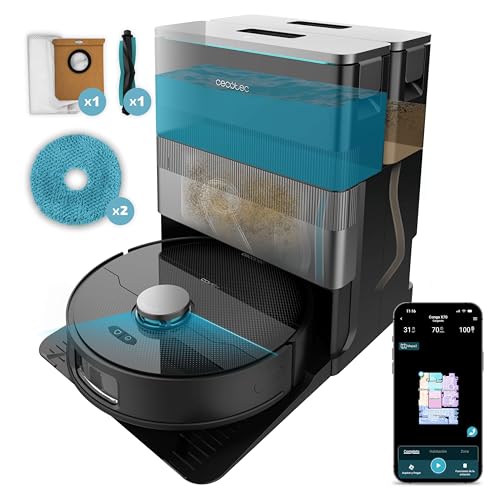
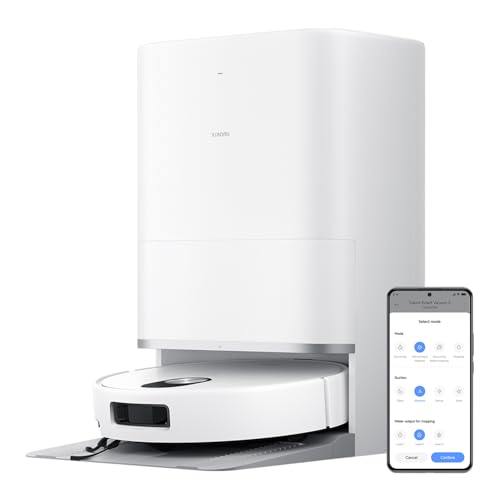
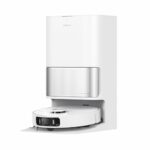
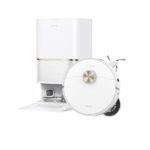
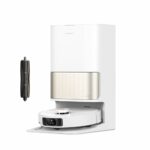
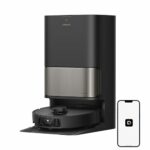
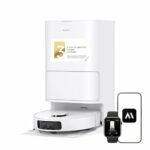
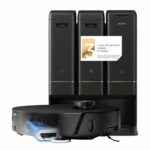
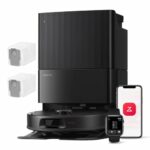
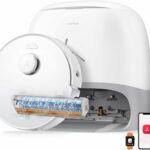
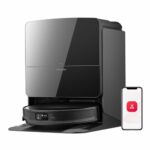
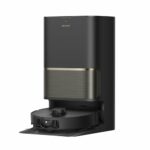
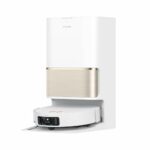
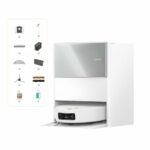
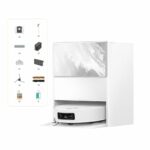
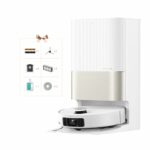
The Cecotec Conga X70 and the Xiaomi Robot Vacuum 5 arrive on the market in 2025 as two robot vacuum proposals with multifunctional base stations that focus on mopping automation. Both integrate mop washing and hot air drying systems, along with generous water tanks and automatic dust emptying. However, the technical differences between them mark distinct paths in terms of power, navigation and cleaning efficiency.
The Xiaomi model stands out in suction power and technical refinement, whilst the Conga X70 incorporates an AI camera and greater capacity to overcome obstacles. Both are designed for homes looking to maximise automation of cleaning tasks, although the ideal user profile varies according to each household's priorities.
Power and Suction
Suction power marks a notable difference in this robot vacuum comparison. The Xiaomi Robot Vacuum 5 reaches 20,000 Pa, exceeding the Cecotec Conga X70 by 5,000 Pa. This advantage translates into greater capacity to pick up ingrained dirt, especially on carpets or tile joints.
Where the difference becomes most evident is in the brushing system. The Xiaomi mounts a TriCut 3.0 brush, designed to combine bristles with blades that cut tangled hair, reducing maintenance. The Conga X70 is equipped with a traditional bristle brush, more prone to accumulating pet hair and human hair. For households with pets, this difference is decisive.
The Xiaomi's side brush also adds advantages: it's extendable to better reach corners and features anti-tangle technology. The Conga X70 lacks these functionalities. Neither of them lifts the main brush or side brush during mopping, but the Xiaomi compensates with a design more oriented towards minimising tangles from the outset.
Mopping
Both models employ two rotating mops and offer side extension to mop edges with greater precision. However, the Xiaomi Robot Vacuum 5 lifts the mops up to 15 mm, almost double the Conga X70's 8 mm. This allows the Xiaomi to tackle thicker carpets without wetting them during mopping.
Water temperature in mop washing introduces another relevant difference. The Xiaomi washes mops with hot water in the base, which helps to better eliminate grease and adhered residue. The Conga X70 performs this task with cold water, less effective against difficult stains. Both dry the mops with hot air, preventing bad odours and bacterial proliferation.
The Xiaomi's base incorporates self-cleaning of the washing tray, a function the Conga X70 doesn't include. In practice, this reduces the frequency with which manual intervention is needed to maintain the base in optimal hygienic conditions. Neither of them automatically removes the mops at the base for vacuum-only sessions, nor detects dirt on the mops or floor to adjust intensity.
Navigation System
The Cecotec Conga X70 mounts a LiDAR 3.0 turret, whilst the Xiaomi opts for a retractable LiDAR that reduces the robot's total height. Both integrate a front 3D laser sensor for obstacle avoidance, but the Conga X70 adds an AI camera that the Xiaomi doesn't have. This camera allows the Cecotec robot to visually recognise certain objects, although it doesn't offer remote access or night vision LED.
The Xiaomi compensates with AI-based intelligent cleaning, a function absent in the Conga X70. This allows it to optimise routes and adjust cleaning parameters according to room type or detected dirt level. Neither of them specifically recognises pets or curtains.
For homes with low light or that value visual monitoring, the Conga X70 may be more attractive. If navigation efficiency and reduced height are prioritised, the Xiaomi has the advantage.
Autonomy and Battery
Both robots are equipped with 5,200 mAh batteries, but we only know the autonomy of the Xiaomi Robot Vacuum 5: 140 minutes. This figure allows coverage of large homes in a single session, although the Conga X70's data isn't available to establish a direct comparison.
In any case, the battery capacity is identical, so similar performance can be expected if usage conditions are equivalent. The difference in suction power could influence actual consumption, but without concrete data it's not possible to state this with certainty.
Smart Features
The Cecotec Conga X70 overcomes obstacles up to 30 mm, compared to the Xiaomi Robot Vacuum 5's 20 mm. This additional capacity is useful in homes with thick carpets, raised door joints or small level differences between rooms. The Xiaomi, being lower, can slip under furniture of lesser height, but will have more difficulties with vertical obstacles.
The Xiaomi integrates compatibility with external voice assistants such as Alexa or Google Home, facilitating voice control. The Conga X70 lacks this function. Neither of them incorporates a robotic arm or proprietary voice assistant.
Multifunctional Cleaning Base
The bases of both robots share dust bag capacity (2.5 litres) and clean water tank (4 litres). The Xiaomi's dirty water tank is slightly larger: 3.8 litres compared to the Conga X70's 3.5. Although the difference is minimal, it can translate into one less intervention after several intensive mopping cycles.
The Xiaomi's washing tray self-cleaning marks distance from the Conga X70, which requires manual cleaning. Neither of them offers UV disinfection, automatic detergent dispenser or connection to water pipes. There's also no optional kit for pipe connection in either model.
Dimensions
The Xiaomi Robot Vacuum 5 measures 88 mm in height, 22 mm less than the Conga X70 (110 mm). This difference allows the Xiaomi to access under low furniture, sofas or beds with little separation from the floor. The diameter is similar: 350 mm in the Xiaomi and 340 mm in the Conga X70.
The Conga X70's base is more compact in height (450 mm compared to the Xiaomi's 572 mm) and depth (425 mm compared to 470 mm), but the Xiaomi wins in width (360 mm compared to 340 mm). If vertical space is limited, the Conga X70's base fits better under shelving or in reduced spaces.
Real-World User Experience
For households with pets, the Xiaomi Robot Vacuum 5 is more suitable thanks to the TriCut 3.0 brush and the anti-tangle functions of the side brush. The greater suction power also helps to pick up hair embedded in carpets. The Conga X70, with conventional bristle brush, will require more frequent maintenance in these scenarios.
In homes with thick carpets or transitions between floors, the Conga X70 overcomes obstacles of greater height. The Xiaomi, being lower, glides better under furniture and beds, ideal for homes with low-height furniture.
The Xiaomi's base, with hot water mop washing and tray self-cleaning, reduces manual intervention. The Conga X70 demands more attention in base maintenance, although its lower height can facilitate its integration in reduced spaces.
For those who value voice control, the Xiaomi offers compatibility with external assistants. If AI camera navigation is preferred, the Conga X70 is the only option between these two models.
Conclusion: Which to Choose?
Choose the Cecotec Conga X70 if: you're looking for a robot with an AI camera, you need to overcome obstacles up to 30 mm, you have limited vertical space for the base or you prefer a solution with lower station height. Also if you value visual navigation and don't have pets that generate many hair tangles.
Choose the Xiaomi Robot Vacuum 5 if: you prioritise high suction power (20,000 Pa), you have pets at home, you're looking for a low robot that accesses under narrow furniture, you value hot water mop washing and tray self-cleaning, or you need compatibility with voice assistants such as Alexa or Google Home. It's the most complete option for those seeking the best robot vacuum 2025 in terms of cleaning efficiency and maintenance automation.