✨ VS Analyze · VacuumSpain comparison technology. AI-generated explanation based on verified technical data.
Introduction
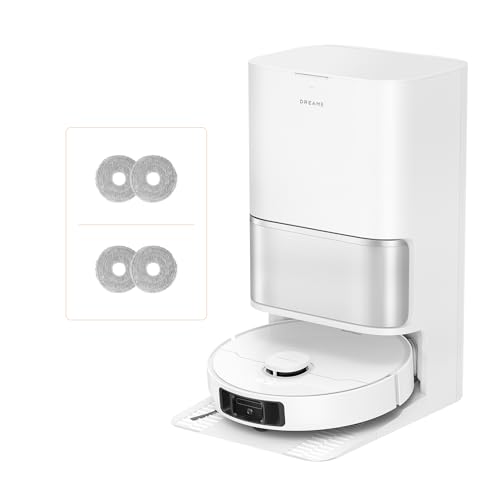
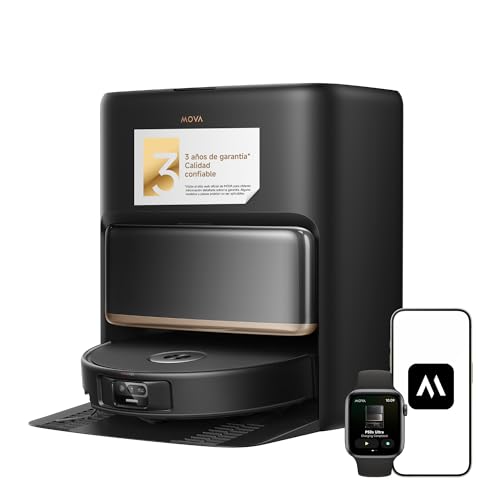
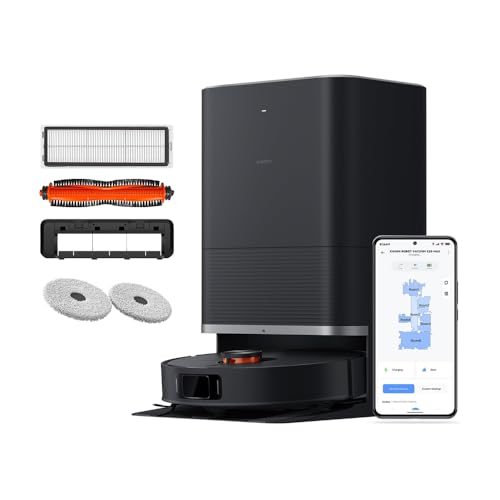
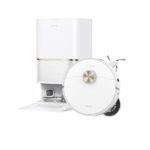
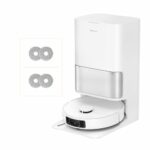
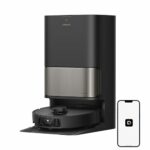
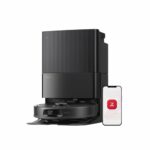
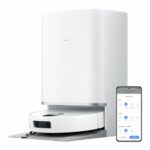
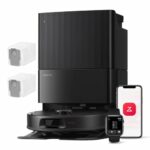
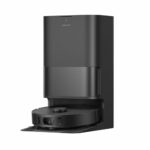
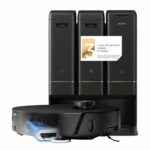
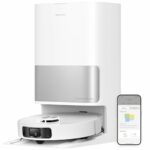
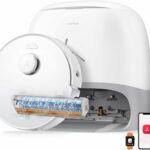
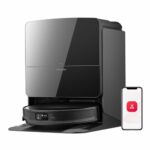
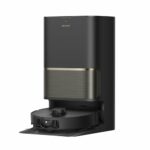
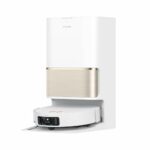
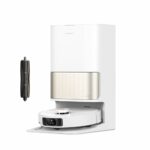
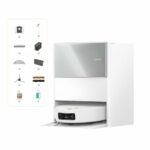
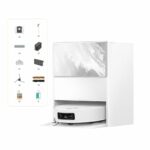
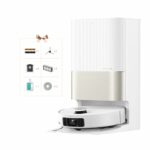
The Dreame L10s Ultra Gen 3, the Mova P50s Ultra and the Xiaomi X20 Max represent three distinct approaches within the robot vacuum segment with multifunction base. The Dreame model arrived on the market in November 2025, whilst the Mova P50s Ultra is also from 2025 and the Xiaomi X20 Max dates from 2024. All integrate mop washing and drying system in the base, although with notable differences in capabilities and advanced functions.
The Dreame L10s Ultra Gen 3 stands out for its suction power of 25,000 Pa, the highest of the trio. The Mova P50s Ultra incorporates dual camera technology with artificial intelligence and capacity to recognise up to 200 different obstacles. The Xiaomi X20 Max, with 8,000 Pa of suction, presents itself as a more basic option but with sufficient features for most homes.
Power and Suction
Suction power marks important differences in this robot vacuum comparison. The Dreame L10s Ultra Gen 3 reaches 25,000 Pa, followed very closely by the Mova P50s Ultra with 24,000 Pa. The Xiaomi X20 Max remains at 8,000 Pa, a figure that proves sufficient for daily maintenance but which may fall short on carpets or when there is accumulated dirt.
Regarding the brushing system, each manufacturer opts for different solutions. The Dreame mounts a SimpliCut brush, whilst the Mova equips a HyperStream dual brush system that significantly reduces hair tangles. The Xiaomi incorporates the TriCut 3.0, which combines bristles with blades to cut hairs that become tangled.
A notable advantage of the Mova P50s Ultra is the lifting of both the main and side brush during mopping. This prevents the brushes from getting wet and allows more effective mopping without dragging dry dirt. Neither the Dreame nor the Xiaomi have this function. Both, Dreame and Mova, include extendable side brush to improve cleaning in corners, something the Xiaomi X20 Max does not offer.
The Mova's side brush also incorporates anti-tangle technology, a detail that can make a difference in homes with pets or people with long hair.
Mopping
All three models use a two rotating mop system, a configuration that guarantees more uniform mopping than traditional drag mops. All can extend the mops to better reach edges: the Dreame and the Mova do so through Roboswing movement, whilst the Xiaomi simply extends the mops.
Mop lifting proves practically identical: 10.5 mm in Dreame and Mova, 10 mm in the Xiaomi. Sufficient to overcome thin carpets without wetting them.
Differences appear in the intelligent mopping functions. The Mova P50s Ultra can automatically detach the mops at the base when you only need to vacuum, avoiding having to do it manually. Furthermore, it detects the dirt level both on the mops and on the floor, adjusting mopping intensity or performing additional passes where necessary. Neither the Dreame nor the Xiaomi offer these capabilities.
At the base, both Dreame and Mova wash the mops with hot water at 70°C and dry them with hot air at 60°C. The Xiaomi also washes with hot water and dries the mops, although with cold air. Hot air drying accelerates the process and better prevents bad odours.
Navigation System
The Mova P50s Ultra clearly differentiates itself with its FlashPulse system that integrates dual camera with artificial intelligence. It can recognise up to 200 different types of obstacles, including pets and curtains. The cameras also allow remote access for home surveillance, a function that neither Dreame nor Xiaomi incorporate.
Both the Dreame and the Xiaomi use traditional LiDAR turret with frontal 3D laser sensor to avoid obstacles. The Xiaomi equips night vision LED, same as the Mova, whilst the Dreame does not include it.
Pet recognition is present in Dreame and Mova, but not in the Xiaomi X20 Max. This can prove relevant if you have dogs or cats, as the robot can identify them and adjust its cleaning behaviour.
All three models integrate intelligent cleaning systems through AI, although the Mova adds specific stain recognition to apply greater mopping intensity where it detects ingrained dirt.
Autonomy and Battery
The Mova P50s Ultra equips the largest battery with 6,400 mAh, versus the 5,200 mAh of the Dreame L10s Ultra Gen 3 and the Xiaomi X20 Max. In practice, the Dreame reaches 231 minutes of autonomy, whilst the Xiaomi remains at 120 minutes. We do not have the specific autonomy data for the Mova, although its greater battery capacity suggests prolonged operating times.
For medium or large-sized homes, the Dreame's autonomy proves especially interesting. The Xiaomi may need intermediate recharge on large surfaces.
Intelligent Functions
All three robots can overcome obstacles up to 20 mm in height, sufficient to transit between different types of flooring or small level differences. The Mova specifies capacity for "single step", although the maximum height coincides with the other two models.
The Mova P50s Ultra incorporates own voice assistant in addition to compatibility with Alexa and Google Home. Dreame and Xiaomi only work with external assistants. This allows the Mova to respond to voice commands without needing connection to other devices, although in practice most users prefer to use the assistants they already have configured at home.
Multifunction Cleaning Base
All three bases perform auto-emptying of the dust container, mop washing with hot water and drying. However, important differences exist in additional functions.
Both the Dreame L10s Ultra Gen 3 and the Mova P50s Ultra integrate third-generation tray self-cleaning, which keeps the area where the mops are washed clean. The Xiaomi X20 Max lacks this function, which implies greater need for manual maintenance.
The Mova adds UV disinfection, eliminating bacteria from the mops after washing. Neither Dreame nor Xiaomi include this technology.
Dreame and Mova incorporate detergent tank that is automatically dispensed during mop washing. The Xiaomi does not have this option, limiting itself to washing only with water.
The dust bag capacity reaches 3.2 litres in Dreame and Mova, versus 2.5 litres of the Xiaomi. In water tanks, the Dreame leads with 4.5 litres of clean water and 4 litres of dirty. The Mova has 4 litres of clean and 3.5 of dirty. The Xiaomi equips 4 litres of clean and 3.8 of dirty.
The Dreame L10s Ultra Gen 3 offers optional plumbing connection kit, which is purchased separately. It allows connecting the base directly to the drain and water supply, eliminating the need to refill and empty tanks manually. Neither Mova nor Xiaomi offer this possibility.
Dimensions
The Mova P50s Ultra stands out for its reduced height of 82.5 mm, the lowest of the three. The Dreame L10s Ultra Gen 3 and the Xiaomi X20 Max measure 97 mm in height. Those 14.5 mm of difference can prove decisive for passing under low furniture, beds or sofas. All three share the same diameter of 350 mm.
Regarding the bases, they present different configurations. The Dreame's measures 340 mm wide, 590 mm high and 457 mm deep. The Mova has a wider base (420 mm) but lower (470 mm), with 458 mm depth. The Xiaomi presents intermediate dimensions: 340 mm wide, 563 mm high and 420 mm deep.
The Mova's base, being wider and lower, can fit better in spaces with limited height. The Dreame's is narrower but taller, adapting better to narrow corners.
Real-world experience
For large homes, the Dreame L10s Ultra Gen 3 offers advantages for its autonomy of 231 minutes and power of 25,000 Pa. The possibility of adding the plumbing connection kit reduces maintenance to a minimum in houses over 150 m².
The Mova P50s Ultra proves especially interesting in homes with low furniture thanks to its 82.5 mm height. Its 6,400 mAh battery, dual camera with remote access and capacity to lift brushes during mopping make it the most technologically complete option. Dirt detection automatically adjusts cleaning intensity, reducing the need for manual intervention.
If you have pets, the Mova's HyperStream dual brush system minimises hair tangles, although both Dreame and Mova include pet recognition. The Xiaomi X20 Max does not specifically recognise animals.
On carpets, the superior power of the Dreame (25,000 Pa) and the Mova (24,000 Pa) makes a difference versus the 8,000 Pa of the Xiaomi. For hard floors, all three models offer satisfactory results.
Maintenance proves simpler in Dreame and Mova thanks to third-generation tray self-cleaning. The Xiaomi requires manually cleaning this area more frequently. The detergent tank in Dreame and Mova improves mopping results without additional effort.
Conclusion: Which to choose?
Choose the Dreame L10s Ultra Gen 3 if you seek maximum suction power (25,000 Pa) and have a large home where you can take advantage of its 231 minutes of autonomy. It proves especially interesting if you value the possibility of adding plumbing connection to completely forget about tank maintenance. Its narrower base facilitates placement in reduced spaces.
Choose the Mova P50s Ultra if you want the most advanced technology with dual camera, recognition of 200 obstacles and remote access for surveillance. Its height of 82.5 mm makes it ideal for passing under low furniture. Brush lifting during mopping, dirt detection on floor and mops, and UV disinfection make it the best robot vacuum of the three for those seeking maximum automation. Perfect for homes with pets thanks to its HyperStream anti-tangle brush and 6,400 mAh battery.
Choose the Xiaomi X20 Max if you need a robot with complete multifunction base at a presumably more competitive price. With 8,000 Pa of suction and 120 minutes of autonomy, it covers the needs of small or medium-sized flats without thick carpets. Although it lacks some advanced functions such as tray self-cleaning or detergent tank, it correctly performs the basic tasks of vacuuming and mopping.