✨ VS Analyses · VacuumSpain comparison technology. Explanation created with AI from verified technical data.
Introduction
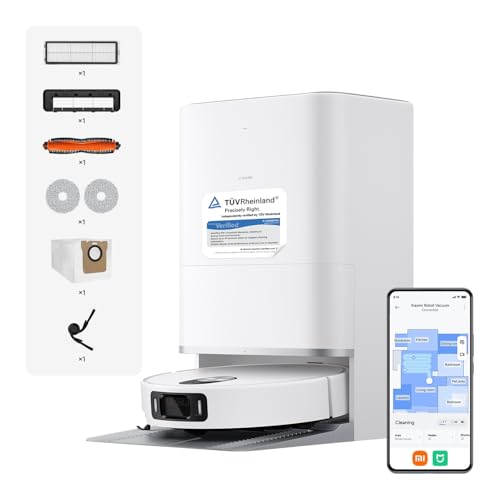
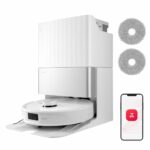
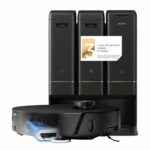
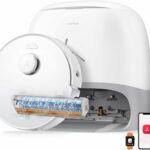
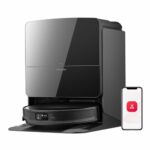
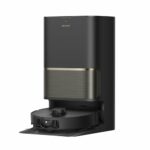
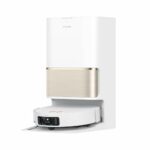
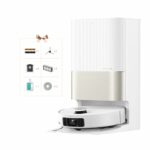
The robot vacuum market is advancing rapidly, and this comparison pits two very different approaches against each other: the Dreame L10s Ultra Gen 2 from 2024 and the newly arrived Xiaomi Robot Vacuum 5 Pro from 2025. Although they share a manufacturer of origin—Dreame produces many of Xiaomi's robots—their technical approaches mark distinct paths.
The Dreame focuses on extended autonomy and generous tank capacities in the base. The Xiaomi, on the other hand, doubles the suction power and adds artificial intelligence with a camera for obstacle and stain recognition. Both integrate a multifunction base with mop washing and drying, but differences in washing temperature, lifting capacity and intelligent cleaning systems may tip the balance depending on each household's needs.
Power and Suction
The most striking difference in suction capacity is immediately apparent: the Xiaomi Robot Vacuum 5 Pro reaches 20,000 Pa, whilst the Dreame L10s Ultra Gen 2 remains at 10,000 Pa. This means that Xiaomi's model can tackle medium or long-pile carpets more effectively, as well as dirt embedded in tile joints.
The brushing system also shows relevant differences. The Xiaomi features a TriCut 3.0 brush, which combines bristles with blades to cut tangled hair, reducing maintenance. The Dreame uses a simple brush which, although functional, requires more frequent manual cleaning if you live with pets.
Additionally, the Xiaomi can lift the main brush during mopping, preventing it from getting wet and facilitating the transition between modes. The Dreame doesn't have this function, which may require greater attention when configuring mixed vacuuming and mopping routines.
As for the side brush, the Xiaomi incorporates an extendable and anti-tangle design, improving corner sweeping and reducing hair tangles. The Dreame lacks these features. Neither lifts the side brush during mopping.
Mopping
Both units feature a dual rotating mop system, but the differences in implementation are notable. The Dreame L10s Ultra Gen 2 includes mop extension with Roboswing movement, which allows the mop to slightly reach under furniture overhangs through a lateral movement of the robot. The Xiaomi also extends the mops for edges, although without specifying the Roboswing system.
Mop lifting marks another important difference. The Xiaomi reaches 15 mm, sufficient to travel over medium-thickness carpets without wetting them. The Dreame remains at 10.5 mm, suitable for thin carpets but more limited in thickness. Neither automatically removes the mops at the base to perform vacuuming only.
The Xiaomi Robot Vacuum 5 Pro integrates dirt detection on both the mops and the floor, which activates automatic scrubbing in dirtier areas. The Dreame doesn't have this function, so mopping follows predefined patterns without adapting to actual detected dirt.
In practice, this can be especially noticeable in kitchens or high-traffic areas, where the Xiaomi will automatically persist until achieving an optimal result.
Navigation System
The Dreame L10s Ultra Gen 2 uses a traditional 3D LiDAR turret, which protrudes slightly from the robot's body. The Xiaomi Robot Vacuum 5 Pro features retractable LiDAR, which hides when not in use, reducing the robot's total height to 88 mm versus the Dreame's 97 mm. This facilitates access under low furniture.
The major difference lies in artificial intelligence. The Xiaomi incorporates an AI camera with remote access, LED for night vision and the ability to recognise up to 200 different obstacles. You can check the camera from your mobile, useful for occasional surveillance or locating lost objects. The Dreame lacks an AI camera and remote access.
The Dreame recognises pets thanks to its sensors, although without a camera. The Xiaomi, curiously, doesn't specify pet recognition despite having a camera. Both integrate a front 3D laser sensor for obstacle avoidance, and neither detects curtains.
Both models offer intelligent AI cleaning: CleanGenius on the Dreame and a proprietary system on the Xiaomi. However, only the Xiaomi recognises stains through AI to persist in specific areas.
Autonomy and Battery
Here the Dreame L10s Ultra Gen 2 takes a clear advantage. With 240 minutes of autonomy versus the Xiaomi's 140, it can cover large homes without needing intermediate recharges. Both feature 5,200 mAh batteries, but the Xiaomi's energy consumption is higher due to its greater suction power and AI processing with camera.
For homes over 150 m², the Dreame is more efficient by completing full cleans in a single run. The Xiaomi may require returns to the base in large areas, although its optimised navigation minimises this inconvenience.
Smart Features
Both robots overcome obstacles up to 20 mm in height, sufficient to travel between rooms with small level changes or thick carpets. Neither incorporates a robotic arm nor its own voice assistant, although both are compatible with Alexa and Google Home for external voice control.
Multifunction Cleaning Base
Both bases perform auto-emptying of the dust container, washing and drying of mops with hot air. However, the Xiaomi Robot Vacuum 5 Pro washes mops with hot water, improving the removal of grease and adhered dirt. The Dreame uses cold water, less effective on difficult stains.
The Xiaomi also integrates self-cleaning of the washing tray, reducing manual maintenance. The Dreame requires periodic manual cleaning of this area. Neither includes UV disinfection.
The Dreame incorporates a detergent tank that automatically dispenses during mop washing, providing better hygiene. The Xiaomi lacks this tank, limiting itself to water. The Dreame offers an optional plumbing connection kit that must be purchased separately, although neither comes with an integrated connection from the factory.
In storage capacities, the Dreame has the advantage: 3.2-litre dust bag versus 2.5 on the Xiaomi, 4.5-litre clean water tank versus 4, and 4-litre dirty water tank versus 3.8. These differences reduce the frequency of emptying and filling in large homes.
Dimensions
The Xiaomi Robot Vacuum 5 Pro measures 88 mm in height, 9 mm less than the Dreame's 97 mm. This facilitates access under sofas, low beds or radiators. Both have a 350 mm diameter.
The bases have similar dimensions: the Dreame measures 340 mm wide, 590.5 mm high and 456.7 mm deep. The Xiaomi reaches 360 mm wide, 572 mm high and 470 mm deep. The Dreame's base is slightly taller but less wide, whilst the Xiaomi's occupies slightly more depth.
Real-World Experience
The Dreame L10s Ultra Gen 2 fits better in large homes where extended autonomy avoids interruptions. Its more generous base tanks reduce weekly maintenance, ideal for those seeking convenience without monitoring the robot. The detergent tank adds a hygiene bonus in mop washing.
The Xiaomi Robot Vacuum 5 Pro shines in homes with thick carpets or persistent dirt thanks to its 20,000 Pa of suction. Dirt detection with automatic scrubbing is especially useful in kitchens or children's areas. Its camera with remote access provides additional surveillance, and the robot's lower profile facilitates cleaning under low furniture.
For homes with pets, the Xiaomi's TriCut 3.0 brush reduces hair tangles, although its lower autonomy can be a drawback in large houses. The Dreame requires more manual brush cleaning but compensates with greater continuous working capacity.
On hard floors, both work well, although the Xiaomi's hot water washing offers better results on grease stains. The Dreame maintains a good mopping level with the advantage of automatic detergent.
Conclusion: Which to Choose?
Choose the Dreame L10s Ultra Gen 2 if… you live in a large home (over 150 m²), prefer extended autonomy without recharges, value large tanks that reduce weekly maintenance, want automatic detergent dispensing in mop washing, or don't need extreme suction power or camera surveillance features.
Choose the Xiaomi Robot Vacuum 5 Pro if… you have thick carpets or pets requiring maximum suction power, seek the lowest robot to access under difficult furniture, need intelligent dirt detection with automatic scrubbing, value hot water mop washing for difficult stains, want remote camera access for occasional surveillance, or prefer 2025 technology with greater AI integration.