✨ VS Analyses · VacuumSpain comparison technology. Explanation created with AI from verified technical data.
Introduction
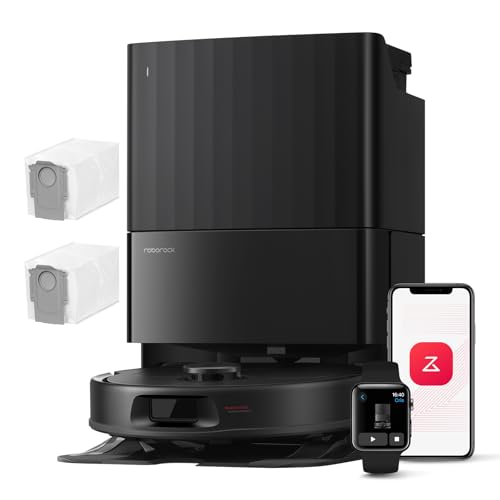
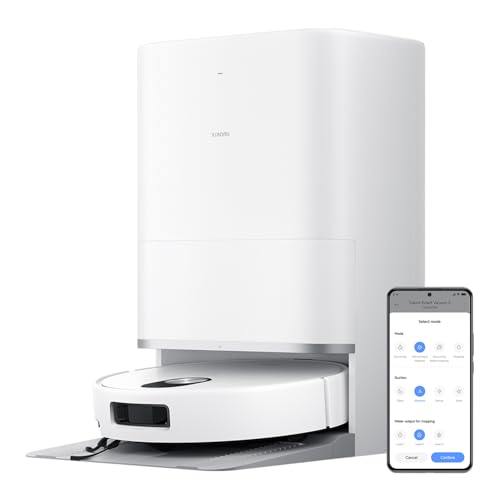
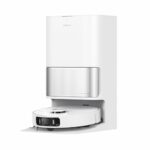
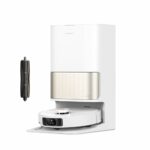
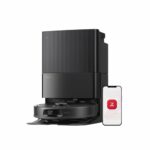
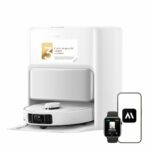
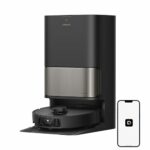
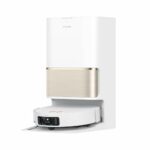
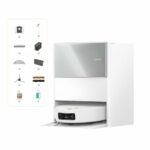
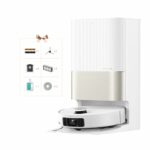
This comparison brings together three mid-to-high-end robots launched between 2024 and 2025, each with distinctive features that make them interesting for different user profiles. The Dreame L10s Ultra Gen 2 arrived on the market in 2024 with a balanced proposition, whilst the Roborock QV 35A and the Xiaomi Robot Vacuum 5 are 2025 newcomers that opt for different technical approaches. All three include a multifunction base with auto-empty, mop washing and drying, which clearly places them above basic models. They are particularly suitable for medium or large homes where genuine autonomy and effective mopping without constant intervention are sought.
Power and Suction
The most striking difference in this section is marked by the Xiaomi Robot Vacuum 5 with its 20,000 Pa of suction power, a figure that doubles the Dreame L10s Ultra Gen 2's 10,000 Pa and more than doubles the Roborock QV 35A's 8,000 Pa. In practice, this translates into greater capacity to pick up ingrained dirt and better results on medium-pile carpets.
Regarding the brushing system, the Xiaomi opts for the TriCut 3.0, which combines bristles with blades to reduce hair tangles, whilst the Dreame and the Roborock mount Simple-type brushes (probably silicone or similar). The Xiaomi also stands out for its extendable side brush, designed to better reach corners and edges. Both the Roborock and the Xiaomi incorporate an anti-tangle side brush, a feature that does not appear on the Dreame.
None of the three models lifts the main brush during mopping nor the side brush, which means they work with both systems active simultaneously.
Mopping
All three robots use a dual rotating mop system, but the differences appear in the details. The Dreame L10s Ultra Gen 2 integrates RoboSwing, a lateral movement that allows the mop to reach under overhangs and low furniture, a function that is also present in the Xiaomi Robot Vacuum 5. The Roborock QV 35A does not feature mop extension.
In terms of mop lift, the Xiaomi leads with 15 mm, followed by the Dreame with 10.5 mm and the Roborock with 10 mm. Those extra millimetres from the Xiaomi can make a difference when moving over short-pile carpets or mats, reducing the risk of wetting textiles.
All three models wash the mops in the base with hot water and dry them with hot air, guaranteeing hygiene and preventing bad odours. However, only the Dreame incorporates a detergent tank in the base, which facilitates washing the mops with specific product without needing to add it manually. The Xiaomi stands out for including self-cleaning of the washing tray, a function that keeps the base in better condition without manual intervention.
None of the three automatically removes the mops at the base nor detects dirt on mops or floor to adjust mopping.
Navigation System
The Dreame L10s Ultra Gen 2 and the Roborock QV 35A mount conventional LiDAR turrets, whilst the Xiaomi Robot Vacuum 5 opts for retractable LiDAR, which explains its lower height. All three avoid obstacles effectively, although the Dreame and the Xiaomi add a front 3D laser sensor to improve detection of low objects.
The Dreame incorporates pet recognition through its CleanGenius system, a feature absent in the Roborock and the Xiaomi. This can prove useful in homes with animals, as it allows the robot to adapt routes or avoid areas where it detects the presence of pets. All three integrate AI-based intelligent cleaning (CleanGenius on Dreame, SmartPlan on Roborock), although none offers remote camera access nor night vision LED.
Autonomy and Battery
All three robots share a 5,200 mAh battery, but energy management varies considerably. The Dreame L10s Ultra Gen 2 achieves 240 minutes of autonomy, sufficient for large homes of up to 250-300 m² in a single cycle. The Roborock QV 35A offers 180 minutes, a more than acceptable figure for most homes. The Xiaomi Robot Vacuum 5 remains at 140 minutes, probably due to the higher consumption demanded by its 20,000 Pa power.
For large houses, the Dreame presents a clear advantage. In medium-sized homes, all three perform without problems, although the Xiaomi will require more frequent recharges if used at maximum power.
Smart Functions
All three robots can overcome obstacles up to 20 mm in height, which allows them to move over thick carpets, door profiles or small level changes without getting stuck. All are compatible with external voice assistants such as Alexa or Google Home, facilitating control by voice commands.
Multifunction Cleaning Base
All three bases perform auto-emptying of the dust bin, mop washing with hot water and drying with hot air. The Dreame L10s Ultra Gen 2 stands out for its larger dust bag capacity at 3.2 litres, compared to 2.7 litres for the Roborock and 2.5 litres for the Xiaomi. This means longer intervals between bag changes.
In water tanks, the Dreame also leads with 4.5 litres of clean water and 4 litres of dirty water, followed by the Roborock with 4 and 3.5 litres, and the Xiaomi with 4 and 3.8 litres. The Dreame includes a detergent tank, which improves the quality of mop washing, and also offers an optional plumbing connection kit (purchased separately), although this option may only interest users seeking maximum autonomy.
The Xiaomi differentiates itself with its washing tray self-cleaning, reducing manual maintenance of the base. None of the three incorporates UV disinfection nor integrated plumbing connection as standard.
Dimensions
The Xiaomi Robot Vacuum 5 is the lowest at 88 mm in height, which allows it to access under furniture where the other two cannot enter. The Roborock measures 96.5 mm and the Dreame 97 mm. In diameter, the Roborock is slightly wider at 353 mm versus 350 mm for the Dreame and the Xiaomi.
Regarding the bases, the Roborock presents the lowest at 521 mm in height, followed by the Xiaomi at 572 mm and the Dreame at 590.5 mm. In width, the Xiaomi occupies more space at 360 mm versus 340 mm for Dreame and Roborock. The depth varies between 456.7 mm for the Dreame, 470 mm for the Xiaomi and 487 mm for the Roborock.
For homes with low furniture, the Xiaomi offers a clear advantage. As for space for the base, it's advisable to measure beforehand, especially if you have a tight space.
Real-World User Experience
In large houses, the Dreame L10s Ultra Gen 2 proves more practical thanks to its 240 minutes of autonomy and larger tank capacities in the base. The detergent tank also adds points for those seeking more complete mopping results without complications.
For homes with pets, the Dreame and the Xiaomi offer specific advantages: the Dreame for its pet recognition and the Xiaomi for its anti-tangle TriCut 3.0 brush and also anti-tangle side brush. The Xiaomi's 20,000 Pa power proves especially useful for vacuuming hair embedded in carpets.
In homes with low furniture, the Xiaomi Robot Vacuum 5 stands out for its 88 mm height, accessing spaces where the other two cannot reach. Its 15 mm mop lift also better protects carpets during mopping.
The Roborock QV 35A positions itself as a balanced option, with a compact base in height and sufficient autonomy for most homes. Its anti-tangle side brush reduces maintenance, although it lacks some functions present in its rivals such as mop extension or detergent tank.
Conclusion: Which One to Choose?
Choose the Dreame L10s Ultra Gen 2 if you have a large home and seek the greatest possible autonomy, you value the detergent tank for more effective mopping, and you're interested in pet recognition. Its RoboSwing system for extending mops under furniture and the option of a plumbing connection kit (although purchased separately) make it the most complete for users who prioritise autonomy and mopping features.
Choose the Roborock QV 35A if you seek proven reliability from a leading brand, you have limited height space for the base, and you don't need extra functions such as a detergent tank or mop extension. It's a solid and balanced option for medium-sized homes without special requirements, with sufficient autonomy and a good navigation system.
Choose the Xiaomi Robot Vacuum 5 if you prioritise maximum suction power for carpets or pet hair, you need the robot to pass under low furniture thanks to its 88 mm height, and you value details such as washing tray self-cleaning or greater mop lift. Its extendable side brush and anti-tangle system make it especially suitable for tricky corners and homes with animals, although its more limited autonomy may require recharges in very large houses.