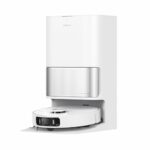
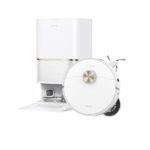
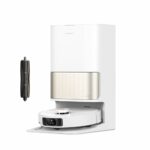
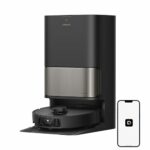
✨ VS Analyses · VacuumSpain comparison technology. Explanation created with AI from verified technical data.
Introduction
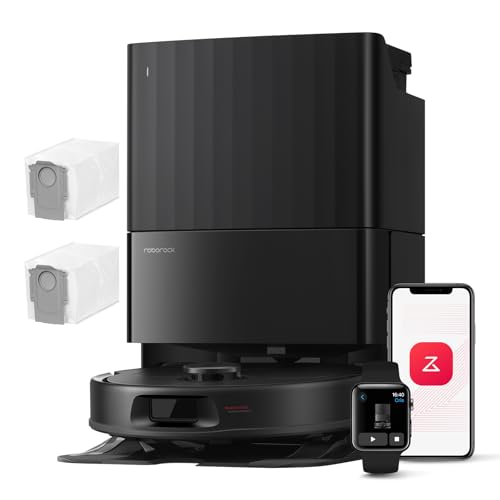
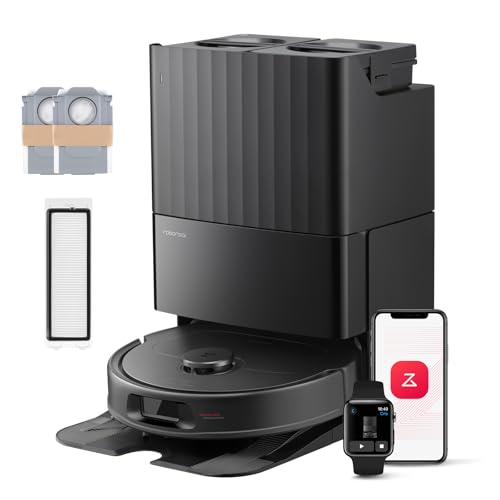
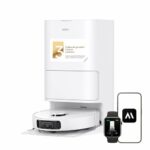
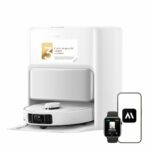
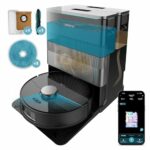
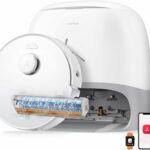
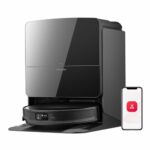
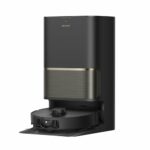
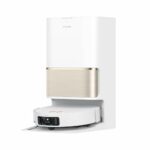
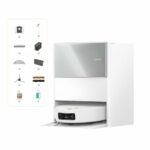
Choosing between the Dreame L10s Ultra Gen 2 and the Roborock QV 35A and QV 35S requires a detailed analysis of what each model offers. The first arrived on the market in 2024, whilst the two Roborock units are from 2025. All three incorporate a multifunction base with auto-emptying, mop washing and drying, which places them in a mid-to-high segment designed for users seeking complete automation in home cleaning.
The Dreame model positions itself as an alternative with differentiating features compared to the two Roborock options, which share much of their technical specifications. The choice between them will depend on the specific needs of each home, especially regarding suction power, battery life and navigation functions.
Power and Suction
Suction power marks an important difference between these models. The Dreame L10s Ultra Gen 2 develops 10,000 Pa, a figure that matches the Roborock QV 35S but significantly exceeds the 8,000 Pa of the QV 35A. This difference can be particularly noticeable on medium or long pile carpets, where the capacity to extract embedded dirt is crucial.
All three robots feature a SimpliCut main brush, designed to reduce hair tangles. However, none incorporates main brush lifting during mopping, something that some higher-end models do offer. As for the side brush, both Roborock models include anti-tangle technology that the Dreame lacks, which can be advantageous in homes with long-haired pets.
None of the three models has an extendable side brush or one that lifts during mopping, features that facilitate corner cleaning and prevent dragging dirt in mopping mode.
Mopping
The mopping system presents relevant differences. All three units use two rotating mops, but the Dreame L10s Ultra Gen 2 incorporates mop extension with Roboswing movement, which allows better reach to edges and slightly extends the mop under furniture or protrusions. The Roborock QV 35A and QV 35S do not have this function, which limits their mopping capacity in perimeter areas.
Mop lifting reaches 10.5 mm on the Dreame, half a millimetre more than the 10 mm of the Roborock models. Although it may seem a minimal difference, it can make a difference when passing over thin rugs or small uneven surfaces. All three models mop with cold water, both on the floor and when washing mops at the base.
None allows automatic mop removal at the base to perform vacuum-only tasks, nor incorporates dirt detection on mops or floor to adjust cleaning intensity. These are functions usually reserved for more premium ranges.
Navigation System
All three robots employ LiDAR turret with obstacle avoidance, but the Dreame L10s Ultra Gen 2 adds a front 3D laser sensor that improves detection of low and small objects. This feature is not present in the Roborock QV 35A or QV 35S, which can translate into more precise navigation by the Dreame in environments with multiple obstacles.
Pet recognition is another exclusive advantage of the Dreame. This function is useful for identifying and avoiding areas where animals rest or their accessories. Both Roborock models lack this capability, although their basic navigation system remains effective for most homes.
None of the three incorporates AI camera, curtain detection, remote camera access or night vision LED. The Dreame uses the CleanGenius system for intelligent cleaning, whilst the Roborock models employ SmartPlan. All are compatible with external voice assistants such as Alexa or Google Home, but none integrates its own assistant.
Battery Life and Battery
Battery capacity is identical across all three models: 5,200 mAh. However, battery life varies significantly. The Dreame L10s Ultra Gen 2 reaches 240 minutes of continuous operation, whilst the Roborock QV 35A and QV 35S remain at 180 minutes. This one-hour difference can be decisive in large homes or those with many rooms.
In practice, 240 minutes allow coverage of larger surfaces without the need for intermediate recharging, which speeds up the complete cleaning process. The 180 minutes of the Roborock models are still sufficient for most homes, but in spaces exceeding 150 square metres with multiple rooms, the Dreame offers greater margin.
Smart Functions
All three robots can overcome thresholds of up to 20 mm, sufficient capacity to navigate most domestic uneven surfaces such as door joints or small rugs. This function facilitates navigation between rooms without manual intervention.
None of the models includes a robotic arm or its own voice assistant, features that remain reserved for higher price segments. All are compatible with external assistants, which allows integration into smart home routines.
Multifunction Cleaning Base
All three bases perform auto-emptying of the dust bin, mop washing with cold water and drying with hot air. Thermal drying helps reduce bacterial proliferation and bad odours, an advantage shared by all three units.
The most significant difference lies in the detergent tank, present only in the Dreame L10s Ultra Gen 2. This function allows the base to automatically add cleaning product during mop washing, improving mopping effectiveness. The Roborock QV 35A and QV 35S do not offer this option.
The dust bag capacity is larger in the Dreame: 3.2 litres compared to the 2.7 litres of the Roborock models. The water tanks are also larger in the Dreame model, with 4.5 litres of clean water and 4 litres of dirty water, compared to 4 litres and 3.5 litres respectively in the Roborock models. This translates into fewer manual refills and emptying.
The Dreame includes an optional plumbing connection kit, which is purchased separately and allows automation of water filling and emptying. Neither of the Roborock models offers this possibility. It should be noted that none of the three bases incorporates tray self-cleaning, UV disinfection or integrated plumbing connection as standard.
Dimensions
The diameter of the Dreame L10s Ultra Gen 2 is 350 mm, slightly smaller than the 353 mm of the Roborock QV 35A and QV 35S. The height also presents minimal differences: 97 mm on the Dreame compared to 96.5 mm on the Roborock models. These additional 0.5 mm barely influence the ability to pass under furniture, although in borderline situations it may make a difference.
The base dimensions show more noticeable variations. The Dreame's base measures 590.5 mm in height, 456.7 mm in depth and 340 mm in width. The Roborock bases are lower (521 mm) but deeper (487 mm), maintaining the same width of 340 mm. This means that the Dreame's base occupies more vertical space but less depth, an aspect to consider depending on the home's layout.
Real-World User Experience
For large homes, the Dreame L10s Ultra Gen 2 offers clear advantages thanks to its 240 minutes of battery life and larger base tanks. The reduced frequency of manual intervention is especially useful in multi-storey houses or those with many rooms. The mop extension with Roboswing improves edge mopping, something noticeable in kitchens and bathrooms where wall joints tend to accumulate dirt.
In homes with pets, the balance evens out. The Dreame features specific animal recognition and greater suction power in the case of the QV 35S, but the Roborock models incorporate an anti-tangle side brush that facilitates maintenance. The choice will depend on whether intelligent navigation or reduction of hair tangles is prioritised.
The Dreame's detergent tank makes a difference in mopping, especially on floors requiring regular disinfection. The Roborock models maintain a good level of cleaning, but without automatic product addition. For users seeking maximum automation, including optional plumbing connection, the Dreame is the only option.
Conclusion: Which to Choose?
Choose the Dreame L10s Ultra Gen 2 if you have a large home requiring greater battery life, you value edge mopping with mop extension, you want an automatic detergent tank and you're interested in the future option of plumbing connection. Also if you live with pets and prefer a navigation system that specifically recognises them. The larger tanks reduce manual maintenance.
Choose the Roborock QV 35A if you're looking for a more economical option within this robot vacuum comparison, your home is less than 120 square metres and 180 minutes of battery life is sufficient. The anti-tangle side brush facilitates maintenance if you have pets, although the 8,000 Pa power may fall short on thick carpets.
Choose the Roborock QV 35S if you want to match the 10,000 Pa power of the Dreame but prefer Roborock's reliability and don't need mop extension or detergent tank. It's the intermediate option: more powerful than the QV 35A, with the same anti-tangle side brush, but without the additional features of the Dreame. Ideal for medium-sized homes with good suction requirements but without needing maximum battery life.