✨ VS Analyses · VacuumSpain comparison technology. Explanation created with AI from verified technical data.
Introduction
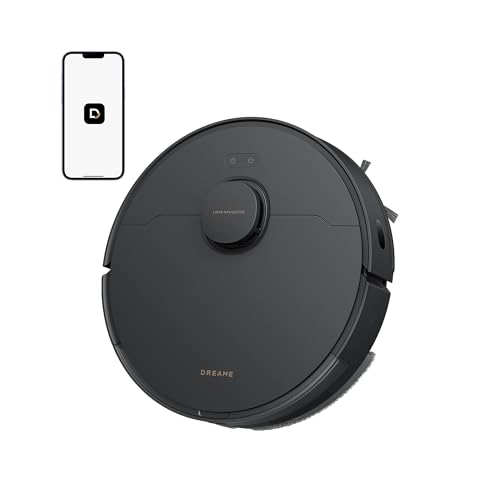
The Dreame D20 and Dreame L10s Ultra Gen 2 represent two distinct approaches within the same manufacturer's catalogue. The D20, launched in 2025, positions itself as a more straightforward model with enhanced suction power and larger onboard tanks. The L10s Ultra Gen 2, released in 2024, takes the opposite route with a full multifunctional base station that handles both dust disposal and mop maintenance automatically.
These models cater to quite different user profiles. The D20 suits those who prefer hands-on control over cleaning cycles and don't mind emptying bins regularly. The L10s Ultra Gen 2 appeals to anyone seeking maximum automation, particularly useful in larger homes where frequent manual intervention becomes tiresome.
Power and Suction
Suction strength tilts decisively towards the D20, which generates 13,000 Pa compared to the 10,000 Pa delivered by the L10s Ultra Gen 2. This 30% increase translates into noticeably better performance on carpets and when tackling embedded dirt in grouting or textured flooring.
The brushing systems diverge considerably. The D20 employs a dual-brush HyperStream configuration, where two brushes anchor at one end and rotate independently. This design minimises hair tangles, making it particularly valuable in homes with long-haired occupants or shedding pets. The L10s Ultra Gen 2 relies on a single traditional brush, which can still perform well but requires more frequent maintenance to clear wrapped hair.
Neither model offers brush elevation during mopping, nor do they feature extendable or elevating side brushes. Both handle 20 mm obstacles equally well, so navigating thresholds or thick rugs presents no advantage either way.
Mopping
Here the tables turn completely. The D20 uses a static mop attachment with cold water only, no elevation mechanism, and no edge extension. This limits mopping to light maintenance rather than deep cleaning, and the mop drags across carpets unless manually removed.
The L10s Ultra Gen 2 integrates dual rotating mopads that lift 10.5 mm to clear low-pile rugs and extend outwards to reach skirting boards more effectively. The base station washes these mopads with cold water during cleaning cycles and dries them with hot air afterwards, preventing odours and bacterial growth. A detergent dispenser adds cleaning solution automatically, though you'll need to refill it periodically.
The base holds 4.5 litres of clean water and 4 litres of dirty water, meaning weeks can pass between manual refills in typical homes. A plumbing connection kit is available separately, though it's not essential unless you want truly hands-free operation over extended periods.
Navigation System
Both models navigate using a 360-degree LiDAR turret combined with frontal 3D laser sensors for obstacle avoidance. This dual-sensor approach maps rooms accurately and prevents collisions with furniture legs or stray shoes.
The L10s Ultra Gen 2 adds pet recognition and CleanGenius AI, which adjusts cleaning patterns based on room usage and dirt levels. In practice, this means the robot may make extra passes in high-traffic areas or around pet feeding zones. The D20 lacks these AI enhancements, sticking to systematic coverage without adaptive behaviour.
Neither includes a front-facing camera, LED lighting for night vision, or remote camera access. Both respond to Alexa and Google Home voice commands, but don't feature proprietary voice assistants.
Battery and Autonomy
Identical 5,200 mAh batteries power both robots. The L10s Ultra Gen 2 delivers 240 minutes of runtime, though the D20's autonomy figure isn't specified. Given the D20's higher suction and simpler mopping system, runtime likely falls within a similar range, though maximum power modes will drain the battery faster.
Charging times aren't detailed for either model, but both return to base automatically when power runs low and resume cleaning once recharged.
Smart Features
Both robots clear 20 mm obstacles without issue, managing door thresholds and thick carpet edges comfortably. Neither incorporates a robotic arm for object manipulation.
The L10s Ultra Gen 2's CleanGenius AI represents the main intelligence gap, tailoring cleaning intensity and frequency to actual usage patterns. This can reduce wear on flooring in low-traffic areas whilst ensuring thorough attention where it's needed most. The D20 maintains consistent cleaning across all zones regardless of actual dirt levels.
Multifunctional Base Station
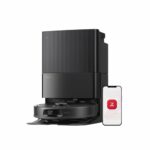
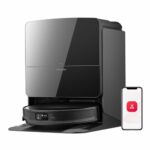
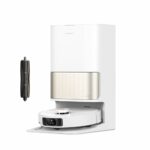
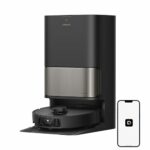
The D20 ships with a simple charging dock measuring 126 mm wide, 130 mm deep, and 92.6 mm tall. It occupies minimal floor space but offers no automated maintenance functions.
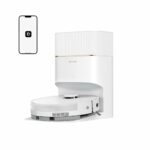
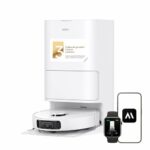
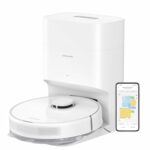
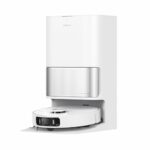
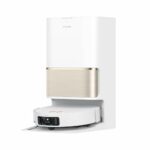
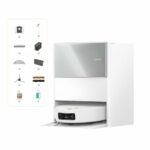
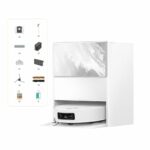
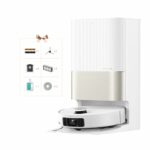
The L10s Ultra Gen 2's base station dominates by comparison: 340 mm wide, 456.7 mm deep, and 590.5 mm tall. This substantial footprint accommodates a 3.2-litre dust bag, 4.5-litre clean water reservoir, and 4-litre dirty water tank. The station empties the robot's dustbin after each session, washes the mopads with cold water during cleaning, and dries them with hot air once finished. A detergent dispenser adds cleaning solution automatically.
The optional plumbing kit allows permanent water supply and drainage connections, though most users find the large tanks sufficient for several weeks between manual refills. Neither base offers UV disinfection or automatic mop pad replacement.
Dimensions
Both robots measure 350 mm in diameter. The D20 stands 96.8 mm tall, whilst the L10s Ultra Gen 2 reaches 97 mm—a negligible 0.2 mm difference that won't affect clearance under furniture.
Base dimensions tell a different story. The D20's compact charging dock tucks neatly into corners or behind doors. The L10s Ultra Gen 2's multifunctional station demands dedicated floor space, ideally in a utility room or kitchen corner where its size won't obstruct movement. You'll want to measure your intended location carefully before committing to the larger base.
Real-World Experience
The D20 excels in smaller homes where its 700 ml dustbin and 350 ml water tank provide adequate capacity between manual interventions. The dual HyperStream brushes handle pet hair remarkably well, reducing the tedious task of cutting tangled fur from brush rollers. Higher suction makes it the better choice for homes with multiple carpets or high-pile rugs where embedded dirt requires aggressive extraction.
Manual mop removal before vacuuming carpeted rooms adds a step that some users find inconvenient, though the static mop performs adequately on hard floors with light soiling. Expect to empty the dustbin and refill the water tank after each full-home clean in properties exceeding 80 square metres.
The L10s Ultra Gen 2 suits larger properties where automation justifies the space occupied by the multifunctional base. The 3.2-litre dust bag typically lasts four to six weeks in average homes, whilst the 4.5-litre water reservoir supports multiple mopping sessions before requiring attention. Hot air mop drying prevents the musty odours that plague robots with damp pads left sitting in the dock.
Pet owners benefit from the recognition feature, which helps the robot navigate around feeding bowls and resting areas more intelligently. The rotating mopads with edge extension deliver noticeably better results along skirting boards compared to static designs, though the 10.5 mm lift won't clear medium-pile rugs—you'll still need to define no-mop zones for those areas.
Conclusion: Which to Choose?
Choose the Dreame D20 if: you live in a flat or smaller home under 100 square metres, prefer straightforward operation without a bulky base station, prioritise maximum suction for carpets and embedded dirt, or have pets that shed heavily and want the tangle-resistant dual-brush system. The larger onboard tanks reduce refill frequency compared to the L10s Ultra Gen 2, and the compact charging dock fits anywhere.
Choose the Dreame L10s Ultra Gen 2 if: you want genuine hands-off cleaning for weeks at a time, have hard floors that benefit from regular mopping with rotating pads, own a larger property where manual bin emptying becomes tiresome, or value AI-driven cleaning adjustments based on room usage. The multifunctional base transforms this into a low-maintenance solution, though you'll need to accommodate its substantial footprint and accept slightly lower suction power.