✨ VS Analyses · VacuumSpain comparison technology. Explanation created with AI from verified technical data.
Introduction
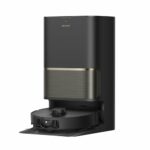
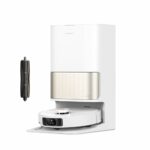
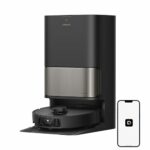
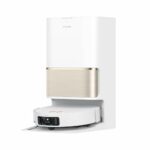
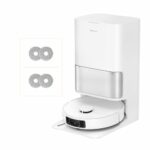
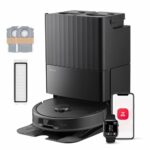
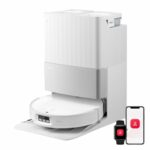
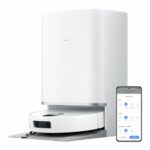
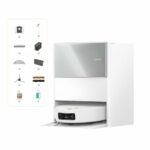
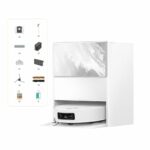
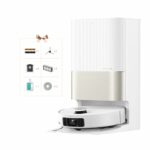
We're looking at three high-end robots launched in 2024 that share many advanced features, but with important differences in their capabilities. The Dreame L10s Ultra Gen 2 and the Dreame L40 Ultra represent two levels within the Dreame family, whilst the Roborock Qrevo Slim is positioned as a compact alternative from the sector's leading brand.
All three units feature a multifunctional base that washes and dries the mops, laser navigation system and suction power exceeding 10,000 Pa. However, differences in visual navigation, battery life and brush design create distinct usage profiles. The Qrevo Slim stands out particularly for its reduced height, whilst the L40 Ultra incorporates dual camera technology and more developed artificial intelligence functions.
Power and Suction
The 1,000 Pa difference between the L10s Ultra Gen 2 and its competitors may seem minor on paper, but in practice it's noticeable especially on medium or high-pile carpets. Both the Dreame L40 Ultra and the Roborock Qrevo Slim reach 11,000 Pa, a figure that allows them to tackle floors with carpets and significant dirt accumulation with confidence.
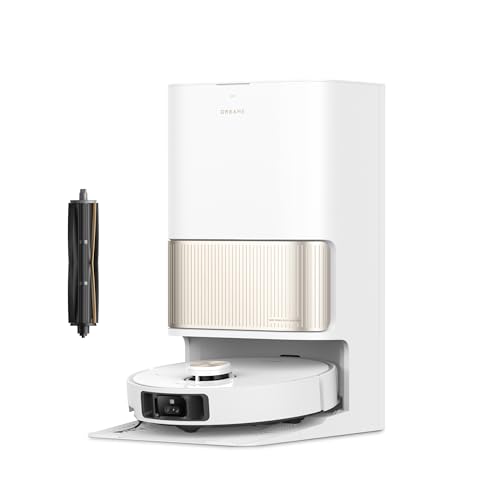
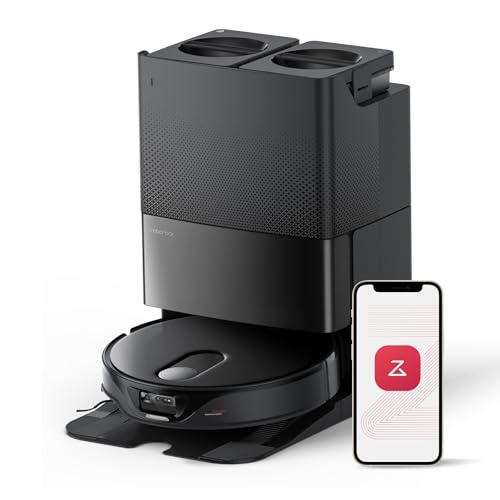
The brushing system varies significantly between the three models. The L10s Ultra Gen 2 features a SimpleDirect brush, whilst the L40 Ultra incorporates the TriCut 3.0 which combines bristles with blades to cut tangled hair. The Qrevo Slim opts for Roborock's DuoDivide system, specifically designed to push hair towards the central gap and prevent tangles.
As for the side brush, the L40 Ultra is the only one of the three that can lift it during mopping, as well as extending it to better reach corners. The Qrevo Slim also features side extension, but cannot lift it. The L10s Ultra Gen 2 lacks both functions. This makes the L40 Ultra more versatile in homes with scattered carpets, as it can lift both the main brush and the side brush when detecting them during mopping.
Mopping
All three robots feature a dual rotating mop system and can extend them to better reach edges. The L10s Ultra Gen 2 and the L40 Ultra also use the Roboswing system, a swinging movement that allows the mop to slightly reach under furniture or protrusions. Mop lift is practically identical: 10.5 mm on both Dreame models and 10 mm on the Roborock.
The most relevant difference lies in dirt detection. The L40 Ultra and the Qrevo Slim can detect both dirt on the floor and on the mops themselves, adjusting mopping accordingly. The L10s Ultra Gen 2 lacks this function, which means more uniform but less adaptive mopping.
Only the Dreame L40 Ultra can automatically remove the mops at the base when you only want to vacuum. This function is convenient to avoid dragging dry mops unnecessarily, although the other two models lift the mops sufficiently so they don't touch the floor during vacuuming.
The bases of all three units wash the mops with hot water and dry them with hot air, which helps prevent bad odours. However, self-cleaning of the washing tray is only present on the L40 Ultra (second generation) and on the Qrevo Slim (version 1.0). The L10s Ultra Gen 2 requires manual cleaning of this area.
Navigation System
Here we find one of the most important differences between these models. The L10s Ultra Gen 2 relies solely on LiDAR turret and front 3D laser sensor, without vision camera. This system works well for mapping and navigation, but limits precise object recognition.
The Dreame L40 Ultra incorporates dual AI camera and can recognise up to 100 different types of obstacles, including curtains, something neither of the other two can do. It also features front LED for night vision and allows remote camera access. The Roborock Qrevo Slim also features dual camera, LED and remote access, although its obstacle database is limited to 73 items.
For homes with many objects on the floor, cables or toys, the difference between having a camera or not is notable. The L10s Ultra Gen 2 relies more on physical contact with 3D sensors, whilst the other two can identify and avoid objects before touching them.
All three models recognise pets, but only the L40 Ultra and the Qrevo Slim can send alerts with images when they detect them. The L40 Ultra also adds its own voice assistant, as does the Qrevo Slim, whilst the L10s Ultra Gen 2 is limited to compatibility with Alexa and Google Home.
Autonomy and Battery
All three robots feature 5,200 mAh batteries, but battery life varies considerably. The Dreame L10s Ultra Gen 2 reaches 240 minutes of continuous operation, a remarkable figure that allows covering large surfaces without needing intermediate recharges. The L40 Ultra manages 194 minutes and the Qrevo Slim 180 minutes.
This difference makes sense when we consider that the L40 Ultra consumes more energy managing cameras, image processing and higher suction power. The Qrevo Slim, despite also having 11,000 Pa and dual camera, offers the tightest battery life of the three.
In practice, for homes up to 150-180 m² any of the three completes cleaning without problems. On larger surfaces, the L10s Ultra Gen 2 has a clear advantage, especially if the home has a complex layout that forces the robot to travel greater distances.
Smart Functions
The ability to overcome obstacles is similar across all three models: 20 mm on the L10s Ultra Gen 2 and the Qrevo Slim, 22 mm on the L40 Ultra. These figures allow easily crossing typical door thresholds and small level changes between rooms.
The built-in voice assistant on the L40 Ultra and the Qrevo Slim allows giving commands directly to the robot without going through the mobile or external speakers. This can be convenient for starting quick cleans or sending the robot to specific areas using voice commands.
Multifunctional Cleaning Base
All three bases perform auto-emptying of the dust bin, mop washing with hot water and drying with hot air. The dust bag has a capacity of 3.2 litres on both Dreame models and 2.7 litres on the Roborock, a difference that translates to somewhat more frequent changes with the Qrevo Slim.
Water tanks also vary: 4.5 litres of clean water and 4 litres of dirty water on the Dreame models, compared to 4 and 3.5 litres respectively on the Roborock. For large homes with lots of surface to mop, the Dreame models offer greater autonomy between refills.
Both Dreame models include a detergent tank that dispenses during mop washing, something the Qrevo Slim doesn't incorporate. This doesn't prevent good mopping, but requires manually adding detergent to the water tank if you want to use it.
Self-cleaning of the washing tray makes a difference in maintenance. The L40 Ultra features the second generation of this system, the Qrevo Slim version 1.0, and the L10s Ultra Gen 2 doesn't have it. This means with the L10s you'll need to manually clean the tray periodically to prevent dirt accumulation.
Both Dreame models offer an optional kit for connection to water pipes, which must be purchased separately. The Qrevo Slim doesn't have this option. It's an accessory that may be of interest in permanent installations where you want to completely forget about refilling and emptying tanks.
Dimensions
The Roborock Qrevo Slim justifies its surname with a height of just 82 mm, which allows it to slip under furniture where the other two can't reach. The Dreame L10s Ultra Gen 2 measures 97 mm and the L40 Ultra reaches 103.8 mm. In homes with sofas, beds or low furniture, the Qrevo Slim has an obvious advantage.
The diameter is practically identical across all three: 350 mm on both Dreame models and 353 mm on the Roborock. This means their ability to navigate between chair legs or tight spaces is equivalent.
The Dreame bases share measurements: 340 mm wide, 590.5 mm high and 456.7 mm deep. The Qrevo Slim base is lower (521 mm) but somewhat deeper (487 mm). It's worth considering these figures when positioning the base, especially the depth which determines how much it protrudes from the wall.
Real-world usage experience
For homes with pets, the Dreame L40 Ultra and the Roborock Qrevo Slim start with an advantage thanks to their anti-tangle brush systems (TriCut 3.0 and DuoDivide respectively) and higher suction power. The L10s Ultra Gen 2, with its SimpleDirect brush, may require more manual maintenance to remove tangled hair.
In houses with low furniture or limited spaces under beds and sofas, the Qrevo Slim makes a clear difference. Its 82 mm height allows it to access areas that the other two models cannot clean, which is especially noticeable in dust accumulation under furniture.
For large surfaces exceeding 200 m², the 240-minute battery life of the L10s Ultra Gen 2 is more reassuring. Although all three robots return to charge automatically if necessary, greater autonomy reduces interruptions and speeds up the complete cleaning process.
Camera navigation on the L40 Ultra and the Qrevo Slim provides real value in homes with young children where toys are usually scattered, or in households with many cables and objects on the floor. The L10s Ultra Gen 2 works well in tidy spaces, but may have more contact with small obstacles.
The easiest maintenance is offered by the L40 Ultra thanks to its second-generation tray self-cleaning and the ability to automatically remove mops. The Qrevo Slim occupies an intermediate position with basic tray self-cleaning, whilst the L10s Ultra Gen 2 requires somewhat more manual attention in base cleaning.
Conclusion: Which one to choose?
Choose the Dreame L10s Ultra Gen 2 if you have a large home where battery life is a priority, you're looking for a reliable robot without complications and you don't need advanced visual obstacle recognition. It's a good option for tidy spaces where laser navigation is sufficient, and if you don't mind doing somewhat more manual maintenance on the base. Its price-to-performance ratio is usually tighter than the L40 Ultra's.
Choose the Dreame L40 Ultra if you want the maximum technology available in the Dreame range, with recognition of up to 100 obstacles, curtain detection, camera with remote access and the most advanced self-cleaning system. It's especially suitable for homes with pets thanks to its TriCut 3.0 brush and anti-tangle side brush, and for homes