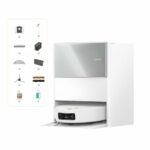
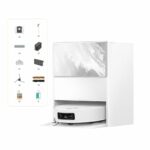
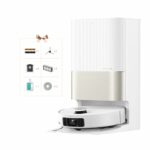
✨ VS Analyses · VacuumSpain comparison technology. Explanation created with AI from verified technical data.
Introduction
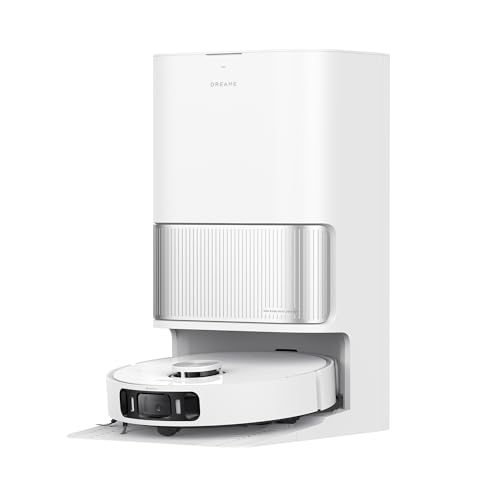
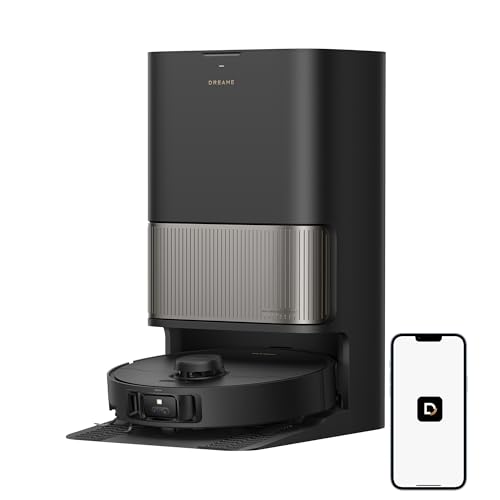
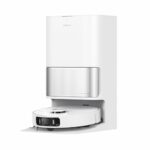
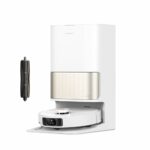
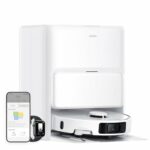
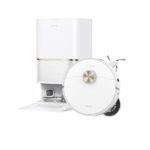
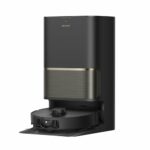
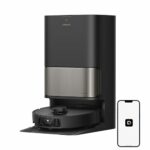
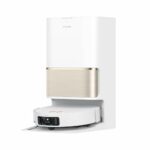
Dreame presents three high-end models that share the same philosophy but differ in technical specifications and level of automation. The Dreame L10s Ultra Gen 2 arrived in 2024 as a balanced proposition with a complete multifunction base, whilst the Dreame L40 Ultra AE and the Dreame L40s Pro Ultra landed in 2025 with significant improvements in power, artificial intelligence and environmental recognition capability.
All three units are designed for users seeking total automation in home cleaning, with bases that wash and dry the mops automatically. However, the differences in suction power, navigation systems and intelligent functions mark quite distinct usage profiles.
Power and Suction
The most evident difference in this robot vacuum comparison is in suction power. The Dreame L10s Ultra Gen 2 reaches 10,000 Pa, a respectable figure for most domestic surfaces. However, the jump to the L40 Ultra AE and the L40s Pro Ultra is notable: both practically double that figure up to 19,000 Pa. In practice, this translates into better extraction of ingrained dirt in carpets and greater capacity to drag heavy particles or dry food debris.
The type of main brush also evolves between generations. The L10s Ultra Gen 2 mounts a simplified brush, whilst the L40 Ultra AE incorporates the TriCut 3.0 system, designed to cut hair and reduce tangles. The L40s Pro Ultra goes further with a double brush that improves coverage and efficiency on large surfaces.
Something that makes a real difference is the lifting of the main brush during mopping. Neither does the L10s Ultra Gen 2 have this function, but the L40 Ultra AE and the L40s Pro Ultra do. This allows the robot to mop without dragging dirt from the brush onto the wet floor, which notably improves the final result.
As for the side brush, the L40s Pro Ultra stands out with an extendable, liftable and anti-tangle design. This allows it to sweep corners better, lift the brush when passing over carpets in mopping mode and prevent long hairs from tangling. The other two models do not include these improvements in the side brush.
Mopping
All three robots use two rotating mops and feature edge extension through the Roboswing system, which allows the robot to make a slight lateral movement to get the mop under overhangs or furniture. Mop lifting is identical in all three cases: 10.5 mm, sufficient to pass over thin carpets without wetting them.
The water with which they mop the floor is cold in all three models. However, the bases wash the mops with hot water, which helps to better eliminate grease and adhered dirt. Drying is also carried out with hot air in all cases, speeding up the process and reducing the risk of bad odours.
An exclusive function of the L40s Pro Ultra is the automatic detachment of the mops at the base. This means that the robot can leave the mops at the station and carry out vacuum-only sessions without dragging the mopping modules, something useful for quick cleans or in areas where only vacuuming is required.
Dirt detection on mops and on the floor is present on the L40 Ultra AE and on the L40s Pro Ultra, but not on the L10s Ultra Gen 2. These two more recent models can identify when the mops are dirty and return to the base to wash them, or detect particularly dirty areas on the floor and reinforce mopping in those areas.
Navigation System
All three models mount a LiDAR turret with front 3D laser sensor, which guarantees precise mapping and smooth navigation even in low light conditions. The difference lies in the artificial intelligence and visual recognition of the environment.
The L10s Ultra Gen 2 does not include an AI camera, which limits its capacity to identify specific objects. It recognises pets through sensors, but cannot visually distinguish types of obstacles nor offer remote camera access.
The L40 Ultra AE incorporates an AI camera capable of recognising up to 120 different types of obstacles. Additionally, it includes LED for night vision and allows remote access to the camera from the app, a useful function for home surveillance or to check what the robot is doing in real time.
The L40s Pro Ultra raises the stakes with dual AI camera and recognition of up to 180 obstacles. It also adds specific curtain detection, preventing the robot from getting tangled or staining them during mopping. AI stain recognition is exclusive to this model, allowing the robot to visually identify localised dirt and adjust its cleaning behaviour.
Autonomy and Battery
Battery capacity is identical in all three cases: 5,200 mAh. However, the declared autonomy varies. The L10s Ultra Gen 2 reaches 240 minutes of continuous operation, whilst the L40s Pro Ultra remains at 220 minutes. This difference may be due to the higher energy consumption of the AI systems, the cameras and the greater suction power.
For the L40 Ultra AE, autonomy in minutes is not specified, although sharing the battery with the L40s Pro Ultra, it is reasonable to expect similar figures. In medium or large-sized homes, all three models can complete cleaning sessions without problems, and the base allows intermediate recharges if the robot needs more time to finish.
Intelligent Functions
All three robots can overcome thresholds of up to 20 mm, although the L40s Pro Ultra adds the ability to climb simple thresholds of greater height thanks to improvements in its traction system and geometry. This can make a difference in houses with uneven levels between rooms or with doors at different levels.
The L40s Pro Ultra is the only one with its own voice assistant, which allows giving orders directly to the robot without needing to use the app or external assistants. All three models are compatible with Alexa and Google Home, but having an integrated assistant adds convenience in day-to-day use.
Multifunction Cleaning Base
All three bases perform auto-emptying of the dust container, washing of mops with hot water and drying with hot air. They also have a detergent tank to add product during the washing of the mops. The capacities are identical: 3.2 litre dust bag, 4.5 litre clean water tank and 4 litre dirty water tank.
The difference lies in the self-cleaning of the washing tray. The L10s Ultra Gen 2 does not include this function, which requires manually cleaning the tray from time to time to avoid accumulation of dirt and bad odours. The L40 Ultra AE incorporates second generation self-cleaning, whilst the L40s Pro Ultra mounts the third generation, which improves the efficiency of the process and further reduces manual maintenance.
All three models allow the purchase of an optional kit for direct connection to water pipes, although none include it as standard. This accessory eliminates the need to refill and empty tanks manually, but it is worth remembering that it is an extra that is purchased separately.
Dimensions
The diameter is identical in all three cases: 350 mm. Height is where differences appear. The L10s Ultra Gen 2 and the L40 Ultra AE measure 97 mm, whilst the L40s Pro Ultra reaches 103.8 mm. Those almost 7 mm additional may be relevant if you have low furniture or sofas with little clearance underneath. In practice, the L10s Ultra Gen 2 and the L40 Ultra AE access confined spaces more easily.
The bases have identical dimensions in all three models: 340 mm wide, 590.5 mm high and 456.7 mm deep. They occupy considerable space, something to bear in mind if the home is small or if you are looking to locate the base in a discreet corner.
Real-World Usage Experience
For homes with pets, the L40 Ultra AE and the L40s Pro Ultra offer clear advantages. The greater suction power facilitates the extraction of hair embedded in carpets, and the improved brush systems reduce tangles. The L40s Pro Ultra adds an anti-tangle side brush, which minimises maintenance in houses with long-haired animals.
In homes with carpets, the lifting of the main brush during mopping (present on the L40 Ultra AE and L40s Pro Ultra) avoids dragging dirt onto the wet floor. The L10s Ultra Gen 2 does not have this function, which can result in less clean mopping if the robot passes from carpet to hard floor without lifting the brush.
For large houses, the autonomy of the L10s Ultra Gen 2 is slightly superior, although the differences are not decisive. All three models can manage large surfaces thanks to automatic recharging and resumption of cleaning.
Maintenance is more convenient on the L40 Ultra AE and especially on the L40s Pro Ultra, which include tray self-cleaning. This reduces the frequency of manual cleaning of the base, something that is appreciated if you are seeking the greatest possible autonomy.
Conclusion: Which to Choose?
Choose the Dreame L10s Ultra Gen 2 if you are looking for a Dreame robot vacuum with complete multifunction base at a more competitive price. It is suitable for homes without great power demands, with mainly hard floors and without the need for advanced visual recognition. The 240-minute autonomy is a point in favour for large houses. However, you will have to manually clean the base tray and you will not have dirt detection or AI camera.
Choose the Dreame L40 Ultra AE if you want a significant leap in suction power and navigation capabilities. The 19,000 Pa are ideal for carpets and homes with pets, whilst the AI camera with recognition of 120 obstacles and remote access adds versatility. The second generation tray self-cleaning reduces maintenance. It is a balanced option between advanced specifications and price.
Choose the Dreame L40s Pro Ultra if you are looking for the best robot vacuum in this comparison between Dreame models. The extendable, liftable and anti-tangle side brush improves corner cleaning and reduces tangles. The automatic detachment of mops allows vacuum-only sessions without manual intervention. The dual AI camera with recognition of 180 obstacles, curtain detection and stain recognition make it the most intelligent. The built-in voice assistant and third generation tray self-cleaning complete a package designed for those who want to completely forget about cleaning. The slight loss of autonomy and the 6.8 mm additional height are minor concessions compared to the improvements in automation and cleaning capability.