✨ VS Analyses · VacuumSpain comparison technology. Explanation created with AI from verified technical data.
Introduction
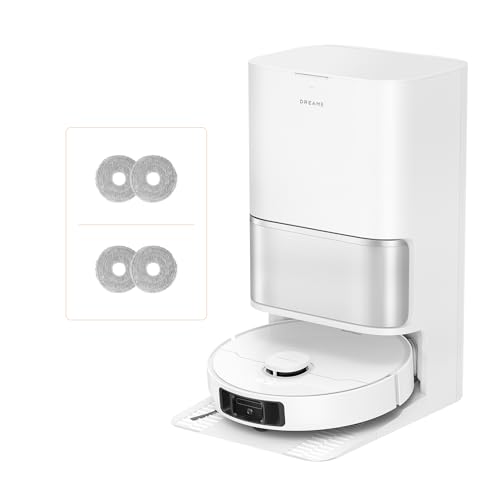
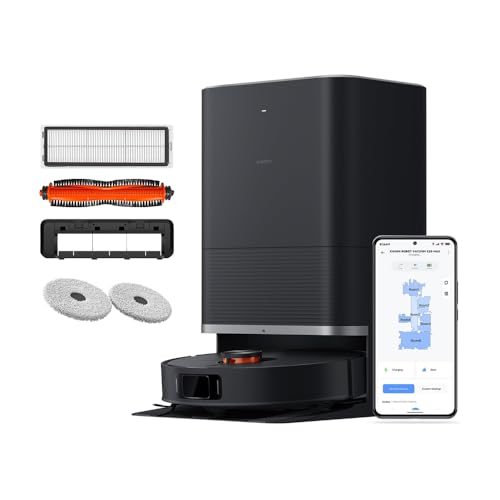
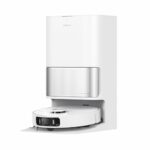
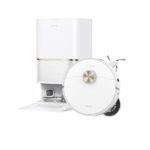
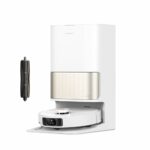
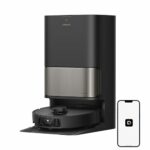
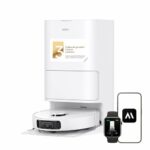
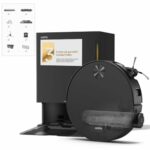
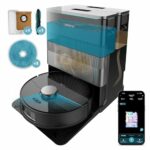
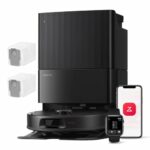
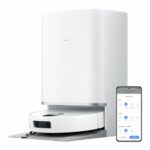
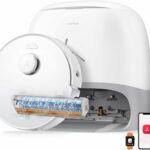
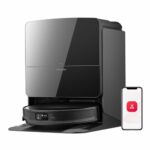
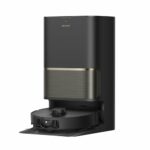
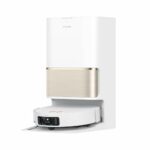
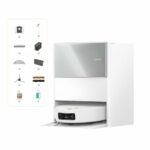
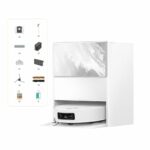
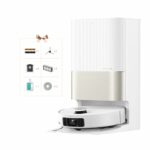
This comparison pits three models against each other that share more similarities than they appear to at first glance. The Dreame L10s Ultra Gen 2 arrived on the market in 2024 as a balanced proposition within the brand's high-end range. Its successor, the Dreame L10s Ultra Gen 3, was introduced in November 2025 with specific improvements that we'll examine in detail. The Xiaomi X20 Max, also from 2024, completes this analysis as a direct alternative manufactured largely by the same industrial ecosystem.
All three units feature a multifunction base that washes and dries the mops, which marks a substantial difference compared to models with simple auto-emptying. They're designed for users seeking complete maintenance automation, although their capabilities vary in key aspects that may tip the balance depending on the type of home.
Power and Suction
The most noticeable difference is found in suction power. The Dreame L10s Ultra Gen 3 multiplies the Gen 2's capacity by 2.5, going from 10,000 to 25,000 Pa. This leap isn't merely numerical: in practice it translates to better pickup of particles embedded in carpets and greater effectiveness with pet hair. The Xiaomi X20 Max sits at 8,000 Pa, a figure that may prove insufficient for homes with long-pile carpets or pets that shed a lot of hair.
As for the main brush system, both the Gen 2 and Gen 3 mount the SimpliCut brush, designed to reduce tangles. The Xiaomi opts for the TriCut 3.0 system, which combines bristles with blades to cut wrapped hairs. None of the three raises the main brush during mopping.
The side brush marks another important distinction. The Dreame L10s Ultra Gen 3 incorporates side extension, which allows better sweeping of corners by projecting the brush outwards. Neither the Gen 2 nor the Xiaomi have this feature. None of the three models offers side brush lifting or specific anti-tangle technology in this component.
Mopping
All three robots use a dual rotating mop system, which guarantees active mopping compared to passive dragging systems. Both the Dreame L10s Ultra Gen 2 and Gen 3 include the Roboswing system, which performs an oscillating movement to introduce the mop under overhangs and furniture. The Xiaomi X20 Max also features mop extension, although it doesn't specify whether it uses the same swinging mechanism.
Mop lifting reaches 10.5 mm in both Dreame models, whilst the Xiaomi stays at 10 mm. Millimetric differences that in practice prove almost imperceptible, although the additional 0.5 mm can help with very short-pile carpets.
All three bases wash the mops with hot water and dry them with hot air, fundamental elements to prevent bad odours and bacterial proliferation. None automatically removes the mops at the base for vacuum-only sessions, nor incorporates dirt detection in mops or floor for automatic re-mopping.
Navigation System
All models employ LiDAR turret for mapping and navigation, complemented with front 3D laser sensor for obstacle avoidance. The most striking difference appears in pet recognition: both the Dreame L10s Ultra Gen 2 and Gen 3 identify domestic animals, something the Xiaomi X20 Max doesn't offer according to available data.
The Xiaomi incorporates night vision LED, absent in both Dreame models. This function proves useful if the robot cleans at night and needs to identify objects in low light, although in practice the LiDAR and 3D sensor already guarantee effective navigation without ambient light.
All three units feature AI-powered intelligent cleaning: CleanGenius in the Dreame models and a proprietary system in the Xiaomi. None has a front camera with remote access or specific curtain recognition.
Autonomy and Battery
Battery capacity is identical in all three models: 5,200 mAh. However, effective autonomy varies considerably. The Dreame L10s Ultra Gen 2 reaches 240 minutes, the highest figure in this comparison. The Gen 3 drops slightly to 231 minutes, probably due to the higher energy consumption of its 25,000 Pa motor. The Xiaomi X20 Max stays at 120 minutes, exactly half that of the Gen 2.
For homes over 150 square metres, this difference may force the Xiaomi to perform intermediate recharges during complete cleaning, whilst the Dreame models would complete the session without interruptions. In medium or small-sized flats, the Xiaomi's 120 minutes prove sufficient.
Smart Functions
All three robots overcome obstacles up to 20 mm in height, sufficient capacity to navigate most door frames and transitions between floors. None incorporates a robotic arm or its own voice assistant, although all three are compatible with Alexa and Google Home for control via external voice commands.
Multifunction Cleaning Base
Here we find differences that directly affect maintenance. The Dreame L10s Ultra Gen 3 incorporates third-generation auto-cleaning of the washing tray, a function absent in both the Gen 2 and the Xiaomi X20 Max. This reduces the need for manual cleaning of the tray where the mops are washed, a point that can prove annoying as the weeks pass.
Both Dreame models include a detergent tank in the base, which is dispensed during mop washing to improve cleaning. The Xiaomi lacks this option, forcing the use of water only. The difference is especially noticeable on floors with grease or stuck-on stains.
Dust bag capacity reaches 3.2 litres in the Dreame models, compared to 2.5 litres for the Xiaomi. This translates to less frequent emptying, something to value in homes with pets or high dust generation. Clean water tanks are 4.5 litres in the Dreame models and 4 litres in the Xiaomi; dirty water tanks reach 4 litres and 3.8 litres respectively. Differences that in practice are barely perceptible except in very large homes.
Both the Gen 2 and Gen 3 offer an optional kit for connection to water pipes, although it must be purchased separately. The Xiaomi doesn't have this possibility. None integrates the connection as standard.
Dimensions
The robot itself shares exact measurements in all three models: 350 mm diameter and 97 mm height. This uniformity makes it easy for any of them to pass under furniture with a plinth of 10 cm or more.
The bases present slight variations. Those of the Dreame models measure 340 mm wide, 590-590.5 mm high and 456.7-457 mm deep. The Xiaomi X20 Max's is somewhat more compact: 340 mm wide, 563 mm high and 420 mm deep. If the space for placing the base is tight, those 27 mm less in height and 37 mm less in depth of the Xiaomi may make the difference.
Real-World Usage Experience
For large homes, over 120 square metres, the autonomy of the Dreame L10s Ultra Gen 2 proves more generous than that of the Gen 3, and clearly superior to that of the Xiaomi X20 Max. In small or medium-sized flats, this advantage loses relevance.
If you live with pets, the Gen 3's power jump to 25,000 Pa makes a notable difference compared to the Gen 2's 10,000 Pa and the Xiaomi's 8,000 Pa. The specific pet recognition that both Dreame models offer also adds points, although the Xiaomi partly compensates with its night LED if the animal moves at night.
The Gen 3's extendable side brush system improves corner sweeping, something noticeable in kitchens or bathrooms where dirt tends to accumulate in corners. The Gen 2 and Xiaomi depend more on repeated passes to achieve the same result.
The Gen 3's tray auto-cleaning reduces manual maintenance, an aspect that may prove decisive for those seeking maximum automation. The detergent tank present in the Dreame models improves mopping results compared to the Xiaomi, especially on kitchen floors with grease residue.
Conclusion: Which to Choose?
Choose the Dreame L10s Ultra Gen 2 if you're looking for the greatest possible autonomy and your home exceeds 120 square metres. Also if you value having a complete multifunction base with detergent tank, but don't need the extreme power of the Gen 3 or its extendable side brush. Its price-to-performance ratio is usually competitive as it's the previous model.
Choose the Dreame L10s Ultra Gen 3 if you prioritise the maximum suction power available in this comparison, especially if you have carpets or pets that shed a lot of hair. The third-generation tray auto-cleaning and extendable side brush justify the investment if you're looking to minimise manual maintenance and improve corner sweeping.
Choose the Xiaomi X20 Max if your home doesn't exceed 80-90 square metres and the 120-minute autonomy proves sufficient. The more compact base can be an advantage if space is limited. The night LED provides an extra if the robot cleans at night and there are objects that may move. Mind you, you'll have to do without the detergent tank and settle for lower dust bag capacity.