Introduction
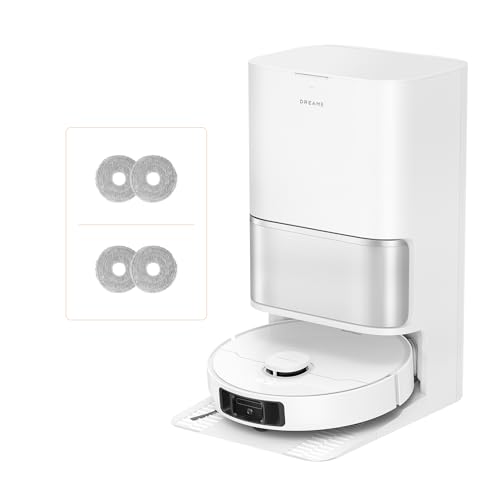
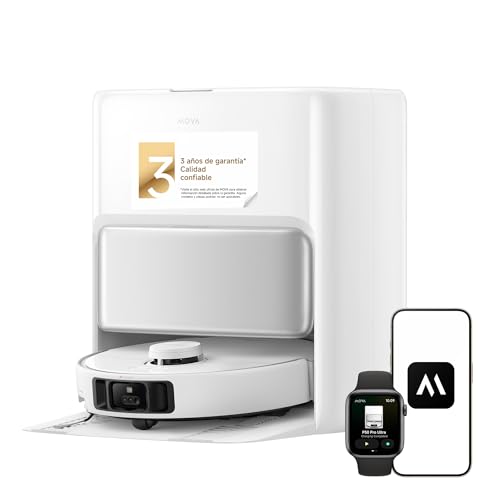
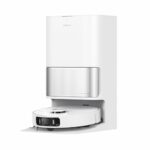
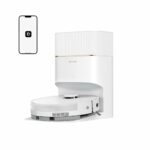
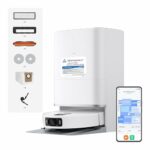
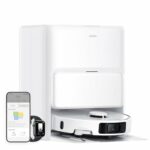
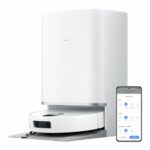
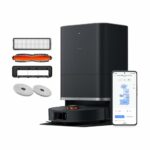
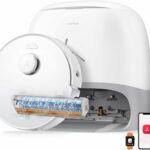
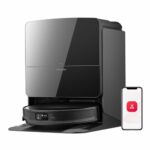
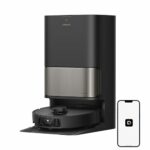
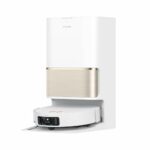
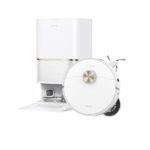
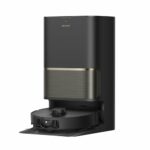
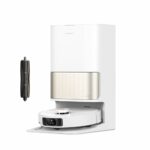
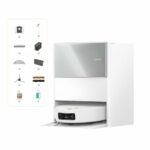
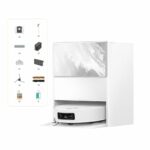
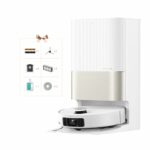
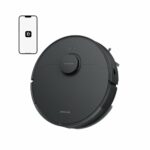
Dreame presents two generations of its L10s Ultra series that share a surname but hide relevant technical differences. The L10s Ultra Gen 2 arrived in 2024 as a balanced model with a complete multifunction base, whilst the L10s Ultra Gen 3 landed in November 2025 with specific improvements in power and cleaning of the station itself. Alongside them, we analyse the Mova P50 Pro Ultra from 2025, a robot from Dreame's second brand that incorporates dual camera technology and more advanced artificial intelligence functions.
All three units include a multifunction base with mop washing and drying, automatic dust emptying and detergent tank. They are designed for those seeking total autonomy in home maintenance, although each offers different nuances in navigation, power and environmental analysis capability.
Power and Suction
The evolution between Dreame generations is evident in suction power. The L10s Ultra Gen 2 offers 10,000 Pa, a decent figure for most domestic situations but which falls far short of the Gen 3's 25,000 Pa. This 15,000 Pa jump marks a notable difference on dense carpets or when extracting ingrained dirt from tile joints.
The Mova P50 Pro Ultra sits at an intermediate point with 19,000 Pa, sufficient for homes with pets or medium-pile carpets. In practice, the difference between 19,000 and 25,000 Pa can be especially noticeable on long-pile carpets or in deep vacuuming after building work or renovations.
Regarding the brushing system, both Dreame models feature the SimpleCut, a design that reduces hair tangles through integrated blades. The Mova opts for the TriCut 3.0, which combines bristles with three cutting edges to better manage long hair. Both systems work well, although the TriCut usually requires less manual maintenance when there are pets at home.
An important functional difference: the Mova P50 Pro Ultra raises the main brush during mopping, preventing it from getting wet and dragging wet dirt across already clean areas. The Dreame L10s Ultra Gen 2 and Gen 3 do not include this function, which may require going over very dirty areas twice if you want to vacuum and mop in the same session.
The side brush also presents variations. The Gen 2 does not have side extension, whilst the Gen 3 and the Mova do incorporate it to better sweep corners. Additionally, the Mova raises its side brush during mopping and adds anti-tangle technology to this component, something the Dreame do not offer. For homes with pet hair, these details can translate into fewer manual cleaning interventions of the brush.
Mopping
All three robots use two rotating mops with extension capability to reach edges and skirting boards. All include Dreame's Roboswing system, which performs a lateral movement to introduce the mop under furniture overhangs or radiators. Mop lifting reaches 10.5 mm in all three models, sufficient height to pass over thin carpets without wetting them.
The mopping water is cold in all three cases. None heats the water inside the robot's tank to mop the floor, although the bases do wash the mops with hot water, which helps to better eliminate grease and stains adhered to the mops themselves.
The Mova P50 Pro Ultra introduces two functions absent in the Dreame: automatic mop removal at the base and dirt detection. Automatic removal allows the robot to leave the mops at the station when it only needs to vacuum, avoiding dragging them dry across the floor. Dirt detection analyses both the state of the mops and floor dirt, adjusting mopping intensity or repeating passes in areas that require it.
These two functions mark a real difference in the final mopping result. In homes with high-traffic areas or kitchens where grease accumulates, the Mova can adapt better without manual intervention. The Dreame maintain more linear cleaning patterns, effective but less reactive to changes in dirt level.
Navigation System
All three units feature a LiDAR turret to map the environment and a front 3D laser sensor that detects low obstacles. They recognise pets and allow integration with external voice assistants such as Alexa or Google Home.
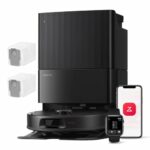
The fundamental difference lies in the AI camera. The Mova P50 Pro Ultra incorporates a dual camera with remote access, night vision LED and recognition of 160 different obstacles. This allows it to identify socks, cables, slippers or toys with greater precision. It also detects curtains, avoiding tangles that other robots do not anticipate.
Remote access to the camera turns the Mova into an occasional home surveillance tool. You can connect from the app and see what's happening at home, something the Dreame L10s Ultra Gen 2 and Gen 3 do not allow as they lack an integrated camera.
The Mova's night vision LED improves obstacle detection in dark rooms or during night-time cleaning. The Dreame rely exclusively on the laser, which works well but may have limitations with very dark or low-height objects in low-light conditions.
Regarding intelligent cleaning, all three models integrate CleanGenius, Dreame's system that adjusts power and water flow according to floor type and detected dirt level. The Mova adds stain recognition through AI, allowing the robot to visually identify a stain on the floor and reinforce cleaning at that specific point.
Autonomy and Battery
Battery capacity is identical in all three models: 5,200 mAh. However, declared autonomy varies slightly. The Dreame L10s Ultra Gen 2 reaches 240 minutes, the Gen 3 drops to 231 minutes and the Mova remains at 210 minutes.
This difference can be explained by the higher energy consumption of the Mova's dual camera and AI processing, as well as the Gen 3's greater suction power. In practice, all three robots cover homes of up to 200 square metres without problems on a single charge, returning to the base to continue if necessary.
Intelligent Functions
The ability to overcome obstacles is very similar: 20 mm in the Dreame L10s Ultra Gen 2 and Gen 3, versus 22 mm in the Mova P50 Pro Ultra. Those additional two millimetres can make the difference with certain types of thick carpets or transitions between floors with raised metal profiles.
The Mova P50 Pro Ultra integrates its own voice assistant, allowing direct interaction with the robot without needing to go through Alexa or Google Home. You can give it voice commands to start, pause or direct it to a specific room. The Dreame L10s Ultra Gen 2 and Gen 3 require prior configuration with external assistants for voice control.
Multifunction Cleaning Base
All three bases include automatic emptying of the dust container, mop washing with hot water and drying with hot air. They also incorporate a detergent tank that dispenses during mop washing. The dust bag has a capacity of 3.2 litres in all three cases, sufficient for several weeks without changing it.
Self-cleaning of the washing tray differentiates the Gen 3 and the Mova from the Gen 2. This third-generation function automatically cleans the tray where the mops are washed, reducing the accumulation of dirt and bad odours. The Gen 2 requires periodic manual cleaning of this tray, something that can be inconvenient if not done regularly.
Clean water tanks are 4.5 litres in the Dreame and 4 litres in the Mova. Dirty water is stored in 4-litre tanks in the Dreame and 3.5 litres in the Mova. These differences are minimal and do not significantly affect mopping autonomy in medium-sized homes.
The Dreame L10s Ultra Gen 2 and Gen 3 offer an optional plumbing connection kit, which is purchased separately and allows the base to fill and empty automatically without intervention. The Mova P50 Pro Ultra does not have this option, not even as an additional accessory. For those seeking total automation, this detail may be relevant, although it should be remembered that the kit is not included as standard in any of the Dreame.
Dimensions
All three robots share a diameter of 350 mm, standard in most models on the market. Height varies: 97 mm in the Dreame L10s Ultra Gen 2 and Gen 3, versus 103.8 mm in the Mova P50 Pro Ultra. Those almost 7 additional millimetres can limit access under some low furniture, sofas or beds with little ground clearance. In homes with low-design furniture, it's advisable to measure beforehand to ensure the robot passes without problems.
The bases present more notable differences. The Dreame measure 340 mm wide, 590 mm high and 456-457 mm deep. The Mova P50 Pro Ultra is considerably wider (420 mm) but lower (470 mm), with a similar depth of 458 mm. The Mova's base occupies more horizontal space but less vertical space, which may fit better in certain corners or under low shelving. The Dreame require more free height but are more compact in width.
Real-world experience
For large homes of over 150 square metres, all three models work well thanks to their 5,200 mAh batteries. The Dreame L10s Ultra Gen 3 may prove more effective in houses with thick carpets or high-traffic areas thanks to its 25,000 Pa of power. The Mova P50 Pro Ultra compensates with dirt detection and automatic cleaning adjustment, which optimises battery consumption in less frequented areas.
In homes with pets, the Mova's TriCut 3.0 brush and its anti-tangle side brush reduce manual maintenance. The Dreame with SimpleCut also manage hair well, although they may require more frequent checks of the side brush. The Gen 3's 25,000 Pa power helps extract hair embedded in carpets, something where the Gen 2 may fall short in extreme cases.
For those who prioritise mopping, the Mova P50 Pro Ultra offers clear advantages: automatic mop removal, real-time dirt detection and stain recognition through AI. This translates into fewer manual passes and more uniform results in kitchens or bathrooms. The Dreame mop correctly, but without the ability to adapt to changes in dirt level during the session.
The Mova's dual camera with remote access may interest those who value occasional home surveillance or want to supervise pets. The Dreame lack this function, focusing exclusively on cleaning without adding video surveillance capabilities.
If the base must be located in a space with little free height, the Mova P50 Pro Ultra fits better with its 470 mm height. The Dreame require almost 120 mm more height, which can be a problem under certain furniture or in fitted wardrobes adapted for robots.
Conclusion: Which to choose?