✨ VS Analyze · VacuumSpain comparison technology. AI-generated explanation based on verified technical data.
Introduction
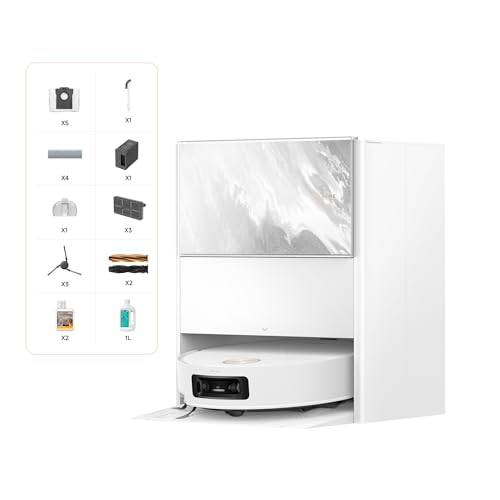
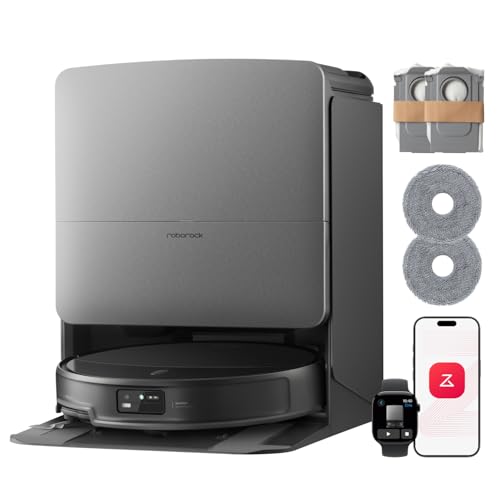
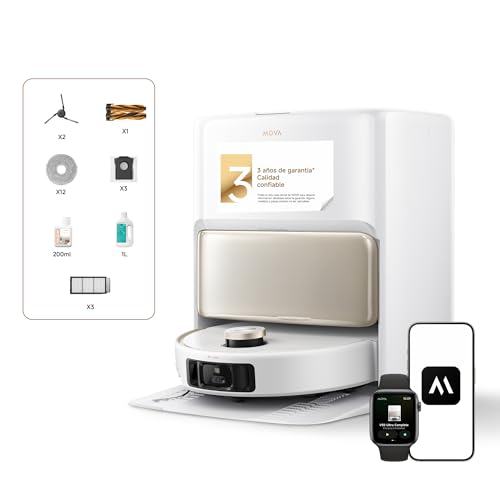
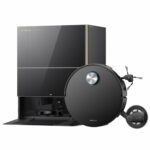
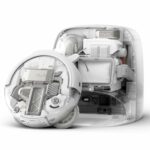
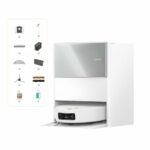
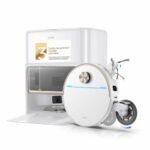
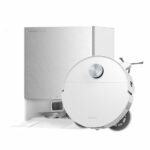
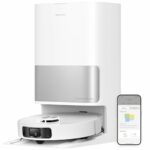
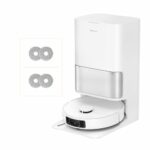
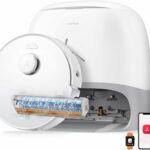
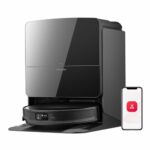
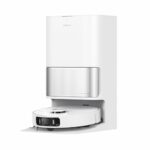
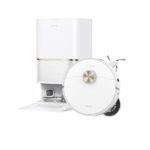
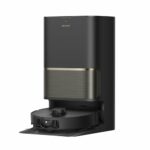
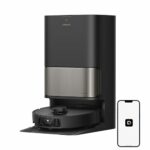
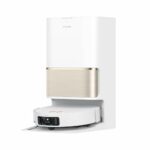
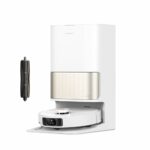
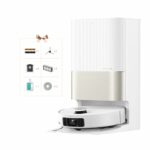
We're looking at three robots from the 2025-2026 generation that represent different approaches to premium home cleaning. The Dreame Aqua10 Ultra Track Complete arrives as a 2025 model with some distinctive features, whilst the Roborock Saros 20 launches in February 2026 with the latest StarSight 2.0 technology. The Mova V50 Ultra, also from 2025, completes this trio as Dreame's sister brand offering competitive specifications at a different price point.
All three models feature multifunctional bases that wash and dry their mops, making them suitable for households wanting a genuinely hands-off cleaning experience. They're designed for medium to large homes where both vacuuming power and proper mopping matter.
Power and Vacuuming Performance
The suction power differences here are substantial and worth considering carefully. The Roborock Saros 20 delivers 36,000 Pa, which represents a significant advantage over the Dreame Aqua10 Ultra Track Complete's 25,000 Pa and the Mova V50 Ultra's 24,000 Pa. In practical terms, this extra power helps with embedded dirt in carpets and pet hair that's worked its way into textile fibres.
The brush design philosophy differs between manufacturers. Roborock equips the Saros 20 with its DuoDivide anti-tangle system, which pushes hair towards the central suction gap to minimise tangling. Meanwhile, both the Dreame and Mova models feature dual HyperStream brushes—a design with two brushes anchored at one end that naturally resists hair wrap-up.
All three models lift their main brushes during mopping and feature extendable side brushes that reach into corners more effectively. The side brushes also elevate when mopping to avoid interfering with the wet cleaning process. Every model includes anti-tangle technology for the side brush, which matters if you've got long hair or pets shedding around the house.
Mopping Systems
This is where the approaches diverge quite noticeably. The Dreame Aqua10 Ultra Track Complete uses a wide roller mop system, whilst both the Roborock Saros 20 and Mova V50 Ultra employ twin rotating mops. Each system has its merits: rollers provide consistent contact across their width, whilst dual rotating mops can apply more targeted pressure.
All three extend their mops to reach edges and skirting boards better. The Mova specifically mentions a movement system alongside its extension, which helps it tackle borders more thoroughly. Mop lift heights tell an interesting story: the Roborock Saros 20 raises its mops highest at 12-22 mm, the Dreame manages 7-17 mm, and the Mova sits at 10.5 mm. Higher lift capability means better carpet protection when the robot transitions between hard floors and rugs.
Temperature matters when mopping. The Dreame and Mova both use hot water for floor cleaning, whilst the Roborock Saros 20 employs warm water. Hot water generally shifts stubborn marks more effectively. All three detect dirt on their mops and on the floor itself, adjusting their cleaning intensity accordingly.
One feature unique to the Roborock Saros 20: it automatically dismounts its mops at the base when you want vacuum-only sessions. The Dreame and Mova require manual removal if you're just vacuuming. For homes with mixed flooring where you regularly switch between modes, this automation saves hassle.
Navigation Systems
Each robot uses retractable LiDAR for mapping—the Roborock calls its system StarSight 2.0, whilst Dreame and Mova use their own implementations. All three feature dual RGB cameras for artificial intelligence-based obstacle recognition, complemented by frontal 3D laser sensors that detect low-lying hazards.
The number of recognisable objects varies: the Roborock Saros 20 identifies 300 different obstacles, the Dreame Aqua10 Ultra Track Complete handles 280, and the Mova V50 Ultra recognises 200. In real-world use, this translates to how reliably the robot navigates around shoes, cables, pet toys and other floor clutter without getting stuck or requiring rescue.
All three spot pets, detect curtains to avoid tangling, and include LED lighting for navigation in dim conditions. Remote camera access is available across the range, letting you check on your home through the robot's cameras when you're out. The Dreame specifies its AI Sage 15.0 processor with HyperMind 2.0 algorithms, though processor details aren't provided for the Roborock and Mova models.
Battery and Autonomy
Battery capacity is identical across all three: 6,400 mAh. The Mova V50 Ultra specifies 220 minutes of runtime, whilst the Dreame and Roborock don't provide autonomy figures. In practice, actual runtime depends heavily on suction settings, floor types and whether you're mopping simultaneously—maximum times typically occur in eco mode on hard floors.
None of the models list charging times, though batteries of this capacity generally need three to four hours for a complete charge. The identical battery size suggests comparable operational ranges when used at similar power levels.
Smart Features
All three robots manage simple step climbing, which helps them transition over door thresholds and small level changes between rooms. Each model includes its own voice assistant alongside compatibility with external systems like Alexa and Google Home, giving you flexibility in how you control them.
The intelligent cleaning systems differ in name but offer similar functionality: Dreame calls its AI CleanGenius, Roborock uses SmartPlan, and Mova also employs CleanGenius. These systems learn your home's layout and adjust cleaning strategies based on room type, dirt levels and previous cleaning results. All three recognise stains and concentrate effort on stubborn marks.
Multifunctional Base Station
Every base empties the robot's dust container automatically and both washes and dries the mops. The washing process uses hot water on all three models, which helps dissolve grease and sanitise the mops more effectively than cold water would.
Mop drying approaches show some variation. The Dreame Aqua10 Ultra Track Complete heats air to 50°C for drying, whilst the Roborock Saros 20 and Mova V50 Ultra use hot air without specifying exact temperatures. Faster, hotter drying prevents musty odours and bacterial growth between cleaning sessions.
Base tray self-cleaning is where differences become more pronounced. The Roborock Saros 20 cleans its washing tray with hot water, the Mova V50 Ultra features third-generation autoclean technology, but the Dreame doesn't include automatic tray cleaning. This matters for long-term hygiene—bases that don't self-clean their trays require manual scrubbing every week or two to prevent grime buildup.
The Dreame and Mova include UV disinfection for additional sanitisation, whilst the Roborock omits this feature. All three have detergent dispensers—the Dreame and Mova specifically mention dual detergent tanks, useful if you want separate solutions for different floor types or cleaning tasks.
Dust bag capacity differs: the Dreame and Mova hold 3.2 litres, whilst the Roborock manages 2.5 litres. Larger bags need emptying less frequently, though 2.5 litres still provides several weeks of use in typical homes. Water tank sizes are 4 litres clean and 3.5 litres dirty for Dreame and Mova, whilst Roborock offers 4 litres clean but only 3 litres for dirty water.
The Dreame Aqua10 Ultra Track Complete mentions an optional plumbing connection kit available separately. This isn't a built-in feature and requires additional purchase, so it's worth noting but doesn't significantly influence the core comparison.
Physical Dimensions
Robot height makes a real difference if you've got low-clearance furniture. The Roborock Saros 20 measures just 79.8 mm tall, allowing it to clean under sofas and beds that the taller Dreame (97.5 mm) and Mova (89.5 mm) cannot reach. That nearly 18 mm difference between Roborock and Dreame often determines whether a robot can access under-furniture spaces or leaves them as manual cleaning zones.
Diameter varies slightly: Roborock at 353 mm is marginally wider than the Dreame and Mova at 350 mm, though this 3 mm difference rarely affects navigation in practice.
The robots carry different onboard capacities. The Mova V50 Ultra has the largest dust bin at 300 ml, followed by Roborock at 270 ml and Dreame at 220 ml. For water, the Dreame holds 160 ml, Mova carries 80 ml, and Roborock manages just 69 ml. Larger onboard tanks matter less with multifunctional bases since the robots return regularly to refill and empty, but they can influence how long the robot operates before needing to dock mid-session.
Base dimensions show variation too. The Dreame and Mova bases measure 420 mm wide, whilst Roborock is more compact at 381 mm. Heights range from 500 mm (Dreame) to 488 mm (Roborock) and 470 mm (Mova). Depths vary from 440 mm (Dreame) to 458 mm (Mova) and 475 mm (Roborock). These measurements matter when planning where to position the base—you'll want to ensure adequate clearance and easy robot access.
Real-World Usage Considerations
For homes with pets that shed heavily, the Roborock Saros 20's superior 36,000 Pa suction and DuoDivide brush design offer clear advantages in lifting embedded fur from carpets and preventing brush tangles. The Dreame and Mova models provide respectable performance, but that extra suction power becomes noticeable when dealing with golden retriever-level shedding on deep-pile carpets.
If you've got furniture with tight clearances—think platform beds or modern low-profile sofas—the Roborock's 79.8 mm height opens up cleaning areas the other two simply cannot access. This can be the deciding factor if significant floor space sits beneath low furniture.
The Dreame's roller mop system suits larger open-plan areas where consistent wide coverage matters, whilst the twin rotating mops on the Roborock and Mova work well in homes with more complex layouts and varied room sizes. The Roborock's automatic mop dismounting proves particularly convenient if you regularly alternate between mopping the kitchen and vacuuming carpeted bedrooms.
Base maintenance differs notably. The Roborock and Mova self-clean their washing trays, reducing your involvement to occasional deep cleans. The Dreame requires more frequent manual tray cleaning to maintain hygiene. If minimal maintenance is a priority, this matters.
All three handle the basics well: they'll map your home accurately, avoid obstacles reliably, and return to their bases when needed. The 6,400 mAh batteries provide sufficient runtime for homes up to around 200 square metres, though the Roborock's higher suction may drain faster at maximum power.
Conclusion: Which Should You Choose?
Choose the Dreame Aqua10 Ultra Track Complete if you want the wide roller mopping system and appreciate the dual detergent tanks for different cleaning solutions. The UV disinfection and larger 3.2-litre dust bag add value, though be prepared for manual base tray cleaning. The 50°C mop drying temperature is clearly specified, which some users prefer. This model suits medium-sized homes without extremely low furniture, where the 97.5 mm height won't limit access.
Choose the Roborock Saros 20 if you need maximum suction power for deep carpets and heavy pet hair, or if low-profile furniture demands the 79.8 mm height. The automatic mop dismounting saves hassle for mixed-floor homes, and the self-cleaning base tray reduces maintenance. The 300-object recognition capability represents the most advanced obstacle avoidance here. Accept the smaller 2.5-litre dust bag and lack of UV disinfection as trade-offs for these advantages. This is the premium option launching in February 2026.
Choose the Mova V50 Ultra if you want specifications similar to the Dreame but potentially at a different price point as Dreame's sister brand. The 300 ml dust bin is the largest onboard capacity, and you get third-generation base tray autoclean plus UV disinfection. The 89.5 mm height splits the difference between the other two, offering better under-furniture access than Dreame whilst being more substantial than Roborock. The dual detergent tanks and hot water mopping match the Dreame's capabilities. This model works well for households wanting strong all-round performance without necessarily needing the Roborock's maximum suction or ultra-low profile.