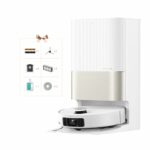
✨ VS Analyses · VacuumSpain comparison technology. Explanation created with AI from verified technical data.
Introduction
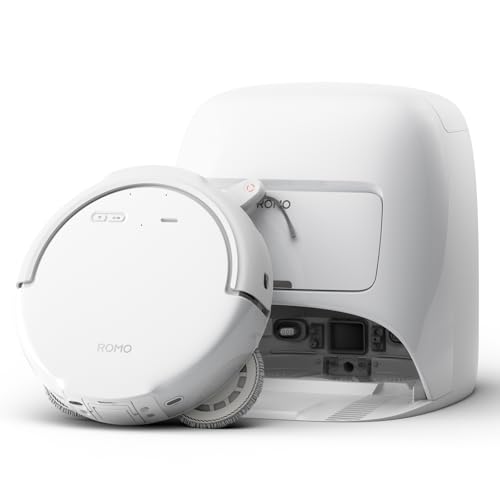
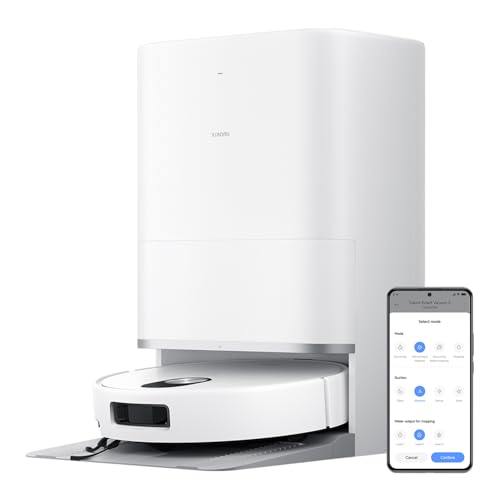
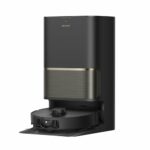
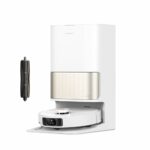
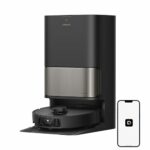
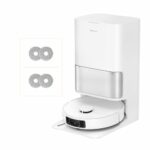
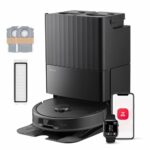
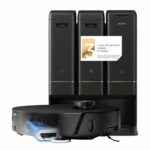
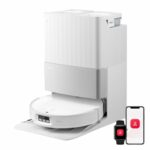
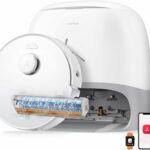
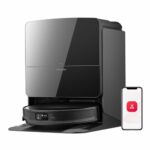
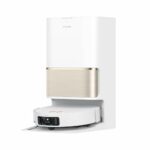
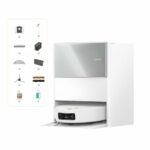
The Xiaomi Robot Vacuum 5 and the DJI Romo S represent two fresh entries in the 2025 robot vacuum market, each bringing distinct approaches to automated home cleaning. Xiaomi continues refining its established formula with the Robot Vacuum 5, whilst DJI—better known for drones and cameras—applies its imaging expertise to floor cleaning with the Romo S in white.
Both models feature multifunctional bases with mop washing and hot air drying, rotating dual mops that extend for edge cleaning, and advanced navigation systems. The Xiaomi model targets users seeking a compact, streamlined solution with hot water mop washing, whilst DJI's offering appeals to those wanting camera-based intelligence and higher suction power. Understanding which features matter most for your home makes all the difference.
Power and Suction
The DJI Romo S generates 25,000 Pa of suction power, giving it a noticeable edge over the Xiaomi Robot Vacuum 5's 20,000 Pa. In practice, this extra power proves useful on carpets and for extracting embedded dirt from textured flooring.
Where brush design differs significantly, DJI employs a divided brush system—similar in concept to designs that channel hair towards the suction inlet—whilst Xiaomi opts for its TriCut 3.0 brush combining bristles with cutting blades to tackle tangled hair. The DJI model can lift its main brush during mopping, preventing wet carpet contact when transitioning between hard floors and rugs. Xiaomi's brush remains fixed regardless of cleaning mode.
Both models feature extensible side brushes that swing outward to reach corners more effectively. DJI equips a dual side brush system with anti-tangle properties, and Xiaomi likewise includes anti-enredos technology in its side brush. Neither lifts the side brush when mopping, which means both continue sweeping debris even during wet cleaning passes.
Mopping Performance
Both robots use rotating dual mopas that extend outward to clean along skirting boards—a feature that genuinely improves edge coverage compared to fixed mop designs. The Xiaomi Robot Vacuum 5 lifts its mopas 15 mm when encountering carpets, and whilst DJI also lifts its mopas, the exact height isn't specified in the data.
The washing process reveals a meaningful difference. Xiaomi's base washes mopas with hot water, which typically loosens grease and dried-on marks more effectively than cold water alone. DJI washes with cold water but compensates with dirt detection sensors on the mopas themselves, triggering additional washing cycles when contamination is detected. This same dirt detection extends to the floor, allowing the DJI Romo S to identify heavily soiled areas and adjust cleaning intensity accordingly—something the Xiaomi model cannot do.
Both bases dry mopas using hot air, accelerating the process and reducing odour development. DJI includes a self-cleaning nozzle for its washing tray, and Xiaomi also features automatic tray cleaning. Only the DJI Romo S provides a detergent tank, dispensing cleaning solution during mopa washing for enhanced results.
Navigation System
Navigation approaches differ substantially. The Xiaomi Robot Vacuum 5 uses a retractable LiDAR unit combined with a 3D laser sensor at the front for obstacle detection. This setup maps efficiently and avoids collisions, but lacks visual recognition capabilities.
DJI equips its Romo S with solid-state LiDAR alongside a front-facing AI camera, 3D laser sensors, and LED lighting for night vision. The camera enables object recognition and allows remote access through the app, effectively turning the robot into a mobile home monitor. This visual intelligence also powers the dirt detection features mentioned earlier, spotting stains and adjusting cleaning patterns in real time.
For households with pets, DJI's camera-based system may offer advantages, though specific pet recognition isn't confirmed in the data. Neither model detects curtains specifically. Both support external voice assistants like Alexa and Google Home, making routine control straightforward.
Battery and Autonomy
Xiaomi fits a 5,200 mAh battery delivering 140 minutes of runtime, whilst DJI's 5,000 mAh cell achieves 180 minutes—a curious outcome suggesting more efficient power management in the DJI model despite slightly lower capacity. For larger homes, that extra 40 minutes translates to fewer mid-clean recharging interruptions.
Both robots handle 20 mm obstacles with equal capability, useful for transitioning between rooms with threshold strips or slightly uneven flooring. Neither includes a robotic arm, and neither features a proprietary voice assistant, relying instead on third-party integrations.
Multifunctional Base
Both bases auto-empty the robot's dust bin, wash and dry mopas, and store clean and dirty water separately. The Xiaomi base holds a 2.5-litre dust bag versus DJI's 2.4 litres—virtually identical. Clean water tanks match at 4 litres each, but Xiaomi's dirty water tank offers slightly more capacity at 3.8 litres compared to DJI's 3.2 litres.
As mentioned, DJI includes a detergent dispenser whilst Xiaomi does not. Neither base supports UV disinfection, automatic mopa changing, or plumbed water connections (either integrated or via optional kit). Both clean their washing trays automatically, with DJI specifically using a dedicated nozzle for this purpose.
Dimensions
Height matters when cleaning under furniture. The Xiaomi Robot Vacuum 5 measures 88 mm tall, allowing it to slip beneath lower sofas and cabinets more easily than the DJI Romo S at 98 mm. That 10 mm difference can determine whether a robot reaches certain spaces or leaves them untouched.
Diameters are nearly identical—350 mm for Xiaomi, 351 mm for DJI—so both navigate tight spaces equally well. Base footprints differ more noticeably. Xiaomi's base stands taller at 572 mm versus DJI's 440 mm, but DJI's base spreads wider at 453 mm compared to Xiaomi's 360 mm. Depth measurements show Xiaomi at 470 mm and DJI at 425 mm. In practice, Xiaomi's base suits narrower alcoves whilst DJI's lower profile fits better under wall-mounted cabinets.
Real-World Use
For homes with multiple floor types—hard floors, parquet, and area rugs—the DJI Romo S adapts better thanks to its liftable main brush and dirt detection. It recognises when extra suction or repeated passes are needed, and the camera provides visual confirmation of cleaning progress through the app.
Xiaomi's hot water mopa washing proves particularly effective in kitchens and dining areas where grease and food residue accumulate. The lower profile helps in homes with furniture clearance below 90 mm, accessing spaces the taller DJI model cannot reach.
Both handle pet hair reasonably well—Xiaomi with its cutting blades in the TriCut 3.0 brush, DJI with its divided brush design and dual anti-tangle side brushes. The longer runtime on the DJI Romo S suits larger properties, whilst Xiaomi's slightly higher battery capacity provides a reserve that may maintain performance over many charge cycles.
Maintenance convenience leans towards DJI with its self-cleaning washing nozzle and detergent dispenser, reducing manual intervention. Xiaomi requires more hands-on refilling but compensates with simpler, proven technology.
Conclusion: Which to Choose?
Choose the Xiaomi Robot Vacuum 5 if: you need a slimmer robot to reach under low furniture, prefer hot water mopa washing for tackling greasy marks, want a narrower base that fits tighter spaces, and don't require camera-based monitoring or advanced dirt detection. It suits smaller to medium homes where navigation simplicity and effective hot water cleaning matter most.
Choose the DJI Romo S if: you value higher suction power, want AI-driven dirt detection that adapts cleaning intensity automatically, appreciate remote camera access for home monitoring, prefer a detergent dispenser for enhanced mopa washing, and have a larger property where the 180-minute runtime prevents recharging interruptions. The camera and intelligent sensors make this the better option for tech-focused households wanting visual feedback and adaptive cleaning strategies.