✨ VS Analyses · VacuumSpain comparison technology. Explanation created with AI from verified technical data.
Introduction
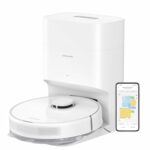
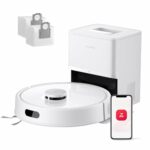
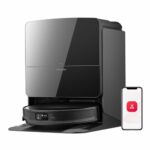
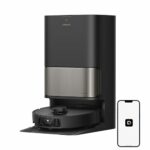
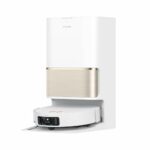
The Cecotec Conga X70 and the Dreame D20 Pro Plus represent two distinct approaches to robotic cleaning from the 2025 generation. The Conga X70 positions itself as a complete solution with rotating mops and a full multifunctional base, whilst the Dreame D20 Pro Plus opts for a more streamlined design focused on suction performance and self-emptying capabilities. Both models share the same 5,200 mAh battery capacity, though they differ significantly in their cleaning methodologies and overall feature sets.
These robots cater to different user priorities. The Cecotec model targets those seeking an all-in-one solution with automated mop maintenance, whereas the Dreame appeals to users who prioritise powerful suction and straightforward operation without the complexity of mop washing systems.
Power and Suction
Suction power differs notably between these models. The Cecotec Conga X70 generates 15,000 Pa, providing a tangible advantage over the Dreame D20 Pro Plus's 13,000 Pa. In practical terms, this translates to better performance on carpets and when dealing with embedded dirt in floor crevices.
The brush systems reveal contrasting philosophies. The Conga X70 employs a traditional bristle brush, which can be effective but may require more frequent maintenance due to hair tangles. The Dreame counters with its HyperStream dual brush design, engineered specifically to minimise hair entanglement through its twin-brush configuration anchored at one end. For households with pets or long-haired occupants, this design difference matters considerably.
Regarding side brushes, the D20 Pro Plus features an extensible mechanism that reaches into corners more effectively, coupled with anti-tangle technology. The Conga X70 uses a standard side brush without these enhancements. Neither model offers elevating side brushes during mopping, meaning both will have their side brushes active throughout the cleaning cycle.
Mopping
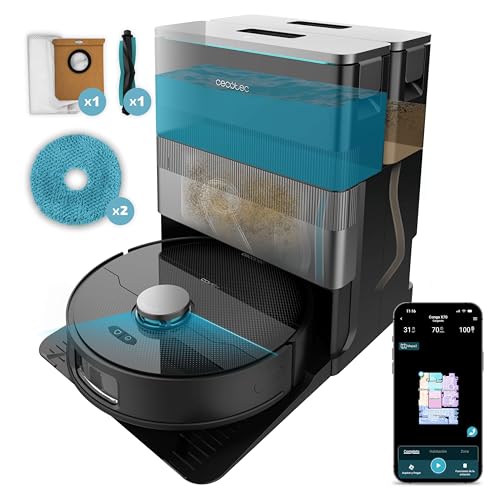
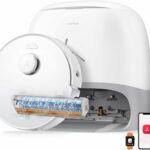
The mopping capabilities represent perhaps the most significant divide in this robot aspirador comparison. The Cecotec Conga X70 employs dual rotating mops that can extend to reach edges more thoroughly. These mops elevate 8 mm when carpets are detected, preventing unwanted moisture on soft surfaces. The multifunctional base automatically washes the mops with cold water during cleaning sessions and applies hot air drying afterwards to prevent odours and bacterial growth.
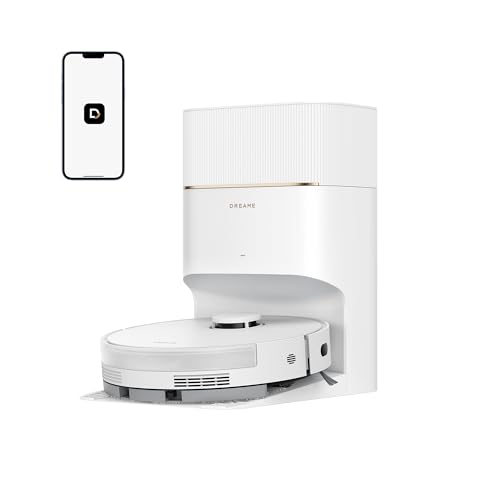
The Dreame D20 Pro Plus takes a minimalist approach with a static mop and no mop extension. Crucially, it lacks both mop washing and drying functions in its base. This means manual intervention is required to maintain the mop between cleaning sessions. The mops don't elevate either, which limits its versatility in mixed-floor environments.
Neither model offers heated floor mopping, soil detection for targeted re-cleaning, or automatic mop removal at the base. The water tanks on the Conga X70's base hold 4 litres of clean water and 3.5 litres of dirty water, providing substantial capacity for extended mopping sessions without refills.
Navigation System
Both robots utilise 3D LiDAR turret navigation combined with frontal 3D laser sensors for obstacle avoidance. This dual-sensor approach ensures reliable room mapping and efficient cleaning patterns. The Cecotec Conga X70 adds an AI camera to the mix, enhancing its object recognition capabilities beyond what laser sensors alone can achieve. The Dreame D20 Pro Plus relies solely on its laser-based systems without camera assistance.
Neither model includes pet recognition, curtain detection, remote camera access, or night vision LEDs. They also lack AI-driven intelligent cleaning modes or stain recognition algorithms. The navigation systems are competent but not cutting-edge in terms of smart features.
Battery and Autonomy
Both robots share identical 5,200 mAh batteries. The Dreame D20 Pro Plus specifies 285 minutes of runtime, which should comfortably handle large homes in a single session. The Conga X70 doesn't provide autonomy figures in the available data, though the battery capacity suggests comparable performance.
Charging times aren't specified for either model. In practice, these battery capacities typically support homes up to approximately 250-300 square metres, depending on floor type and cleaning modes selected.
Smart Features
The Cecotec Conga X70 demonstrates superior obstacle-climbing ability, managing steps up to 30 mm compared to the Dreame's 20 mm threshold. This 10 mm difference can prove meaningful when navigating thicker rugs, bathroom thresholds, or uneven flooring transitions.
The Dreame D20 Pro Plus integrates with external voice assistants like Alexa and Google Home, allowing voice control through existing smart home ecosystems. The Conga X70 lacks this compatibility. Neither robot includes a proprietary voice assistant or robotic arm functionality.
Multifunctional Base
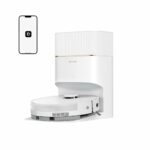
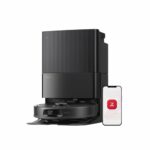
The base stations differ dramatically. The Cecotec Conga X70 provides comprehensive maintenance: automatic dust collection into a 2.5-litre bag, cold water mop washing, and hot air mop drying. This configuration minimises user intervention and ensures the robot returns to cleaning with fresh mops each session.
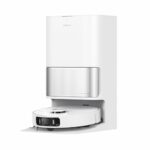
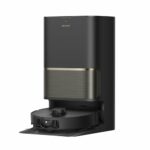
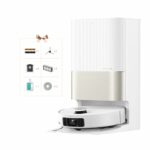
The Dreame D20 Pro Plus offers only auto-emptying functionality with a larger 5-litre dust bag capacity—double that of the Cecotec. However, it completely omits mop washing and drying, bandeja auto-cleaning, UV disinfection, and detergent dispensing. Neither base supports plumbing connections or offers kits for permanent water supply integration.
The Conga X70's base measures 340 mm wide, 450 mm tall, and 425 mm deep. The D20 Pro Plus base is slightly narrower at 298 mm but marginally taller (452 mm) and deeper (440 mm). The dimensional differences are minimal and unlikely to significantly impact placement options.
Dimensions
The robot aspirador Dreame measures 350 mm in diameter and stands just 96.8 mm tall, making it the slimmer option for navigating under low-clearance furniture. The Cecotec Conga X70 has a slightly smaller 340 mm diameter but sits taller at 110 mm. That 13.2 mm height difference can determine whether the robot fits beneath certain sofas, beds, or cabinets.
For homes with furniture clearances around 10-11 cm, the Dreame presents the safer choice. The Cecotec's narrower diameter offers negligible practical advantage given the small difference.
The Dreame D20 Pro Plus specifies a 500 ml onboard dust bin and 350 ml water tank. The Conga X70 doesn't provide these figures, though the presence of its multifunctional base with substantial water reservoirs means the robot's internal capacity matters less for mopping operations.
Real-World Usage Experience
For larger homes prioritising comprehensive automated maintenance, the Cecotec Conga X70 delivers a more hands-off experience. The mop washing and drying system means you can schedule regular cleaning without worrying about mop hygiene between sessions. The 4-litre clean water reservoir supports extensive mopping coverage before requiring attention.
The Dreame D20 Pro Plus suits users who primarily need strong vacuuming performance with occasional mopping. Its HyperStream brush system makes it particularly appropriate for pet owners, whilst the 5-litre dust bag extends intervals between bag changes. The lower profile helps in homes with restrictive furniture clearances.
The Conga X70's superior obstacle-climbing capability proves valuable in homes with varied flooring levels or thick rugs. Its rotating mops and edge extension provide more thorough floor washing, though this comes at the cost of a bulkier robot body.
Voice control enthusiasts will appreciate the D20 Pro Plus's compatibility with Alexa and Google Home. The Conga X70's AI camera offers enhanced object recognition but doesn't translate to remote viewing or advanced smart features in this implementation.
Conclusion: Which to Choose?
Choose the Cecotec Conga X70 if: you want genuinely automated mopping with base-station mop washing and hot air drying; you have varied floor surfaces requiring the 8 mm mop lift; your home includes significant obstacles up to 30 mm that the robot must climb; you prioritise maximum suction power at 15,000 Pa; and you're willing to accept a taller robot profile in exchange for comprehensive cleaning automation.
Choose the Dreame D20 Pro Plus if: you need a low-profile robot at 96.8 mm to access tight spaces under furniture; pet hair management is a priority and the HyperStream anti-tangle brush appeals; you prefer a larger 5-litre dust bag for extended maintenance intervals; voice control through existing Alexa or Google Home systems matters to you; and you're comfortable with manual mop maintenance in exchange for a more straightforward, competitively specified robot aspirador.
The mejor robot aspirador between these depends entirely on your cleaning priorities. The Conga X70 represents the fuller-featured package with its multifunctional base, suited to those seeking maximum automation despite Cecotec's historically less refined app experience. The D20 Pro Plus offers solid fundamentals from Dreame's more established reputation, particularly strong for vacuuming performance, but requires more manual involvement for mopping tasks.