✨ VS Analyze · VacuumSpain comparison technology. AI-generated explanation based on verified technical data.
Introduction
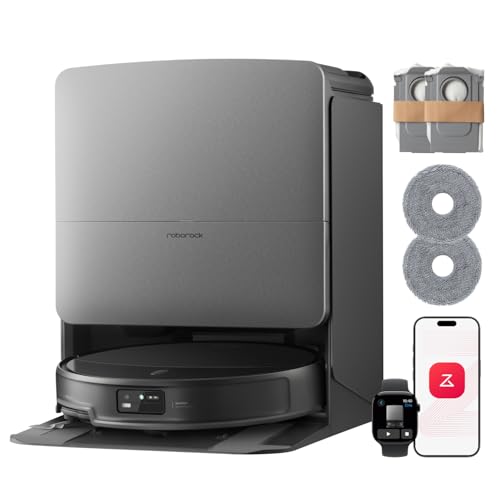
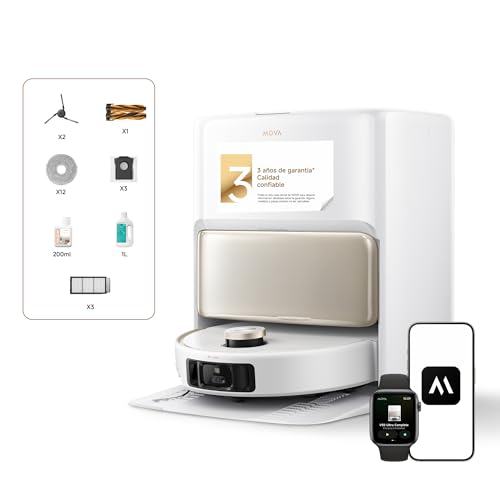
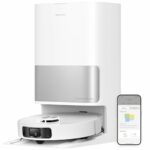
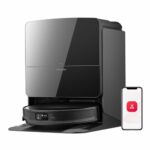
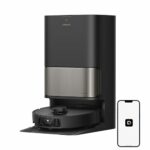
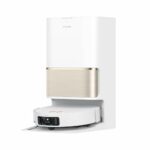
The Roborock Saros 20 and Mova V50 Ultra represent two distinct approaches to premium robot vacuum technology. The Saros 20, launching in February 2026, is Roborock's latest flagship model, whilst the Mova V50 Ultra arrived in 2025 as part of Dreame's secondary brand lineup. Both feature comprehensive multifunctional bases with hot water washing and hot air drying, making them suitable for households demanding thorough mopping alongside powerful vacuuming. The Saros 20 pushes boundaries with exceptional suction power, whilst the Mova V50 Ultra brings competitive specifications at what's typically a more accessible price point.
These aren't entry-level devices. Both models target users who want minimal intervention—automated mop washing, hot air drying to prevent odours, and intelligent navigation that adapts to different floor types and obstacles. The choice between them depends largely on specific performance priorities and how much emphasis you place on cutting-edge suction versus additional features like UV disinfection.
Suction Power and Brushing
The gap in suction power is substantial. At 36,000 Pa, the Roborock Saros 20 stands amongst the most powerful robot vacuums available, significantly outpacing the Mova V50 Ultra's 24,000 Pa. In practical terms, this translates to superior performance on carpets, better extraction of embedded dirt, and more effective pickup of larger debris in a single pass.
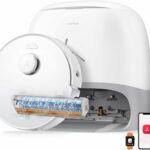
Both models employ advanced anti-tangle brush designs. The Saros 20 uses Roborock's DuoDivide system, which channels hair towards the central suction point rather than wrapping it around the brush bar. The V50 Ultra features a dual-brush anti-tangle configuration. Either system reduces the tedious task of cutting away tangled hair, particularly valuable for homes with pets or long-haired residents.
Side brush functionality is identical: both extend to reach corners more effectively and lift when mopping to avoid dragging dirty water across cleaned areas. The anti-tangle properties extend to the side brushes too, maintaining consistent edge cleaning without constant maintenance.
Mopping Performance
Both robots use dual rotating mopas that spin to scrub floors rather than simply dragging damp pads across surfaces. The Saros 20 offers adjustable mopa elevation between 12 and 22 mm, providing greater clearance over taller carpets or thicker rugs. The V50 Ultra's 10.5 mm lift works well for most standard carpets but may struggle with deeper pile.
Where the Mova distinguishes itself is through RoboSwing—a subtle swaying motion that pushes the mopa slightly under furniture edges and skirting boards. The Saros 20 extends its mopas but without this additional movement. For homes with lots of furniture legs or tight corners, this can make a noticeable difference in coverage.
Water temperature during floor mopping differs: the Saros 20 uses warm water whilst the V50 Ultra heats water to 55°C. Hotter water generally dissolves grease and stubborn marks more effectively, though both approaches deliver competent results on typical household dirt.
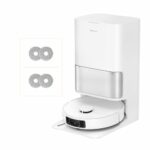
Both bases wash mopas with hot water and dry them with hot air, preventing mildew and odours. The Saros 20 cleans its washing tray with hot water; the V50 Ultra uses third-generation tray cleaning technology. Both detect when mopas are excessively dirty and when floor areas require additional passes, adjusting their cleaning routines accordingly. Mopas can be automatically removed at the base when you want vacuuming only.
Navigation Systems
The Roborock Saros 20 employs StarSight 2.0 navigation, recognising up to 300 different obstacle types. The Mova V50 Ultra uses retractable LiDAR alongside dual AI cameras, identifying 200 obstacle categories. Both systems include front-facing 3D laser sensors, dual cameras for object recognition, and LED lighting for navigation in darkness.
In real-world use, this means both robots navigate complex environments competently, avoiding cables, shoes, pet toys, and other floor clutter. The Saros 20's broader obstacle database potentially offers finer distinction between objects, though the V50 Ultra's capabilities remain highly effective for typical households.
Pet owners benefit from dedicated pet recognition on both models, allowing the robots to navigate around animals and avoid disturbing them. Curtain detection prevents the robots becoming entangled in floor-length drapes. Remote camera access lets you check on your home whilst away, adding a security dimension beyond cleaning.
Battery and Autonomy
Both models pack identical 6,400 mAh batteries. The Mova V50 Ultra specifies 220 minutes of runtime, though the Saros 20 doesn't publish equivalent figures. Given similar battery capacity, expect comparable endurance, with actual runtime varying based on power settings, floor types, and whether the robot is vacuuming only or simultaneously mopping.
For most homes under 200 square metres, either robot completes cleaning on a single charge. Larger properties may require the robot to return mid-clean for recharging before resuming—a process both handle automatically.
Smart Features
Both robots climb obstacles up to 4 cm high, managing door thresholds, thick rugs, and minor floor transitions without assistance. Neither includes a robotic arm for moving objects—they navigate around obstacles rather than attempting to shift them.
Each model features its own voice assistant alongside compatibility with Alexa and Google Home. The Saros 20 uses SmartPlan 3.0 for AI-driven cleaning strategies; the V50 Ultra employs CleanGenius AI. Both systems analyse room layouts, identify floor types, and adjust suction and water flow accordingly. Stain recognition prompts both robots to concentrate on heavily soiled areas.
Multifunctional Base Stations
The bases handle dust collection, mopa washing with hot water, and hot air drying. The Mova V50 Ultra adds UV disinfection, using ultraviolet light to sanitise components—a feature absent from the Saros 20. Whether this matters depends on your household's hygiene priorities; hot water washing already eliminates most bacteria.
Detergent dispensing differs: the Saros 20 has a single detergent tank, whilst the V50 Ultra offers dual tanks. This allows the Mova to use different cleaning solutions for various floor types or separate detergents for washing mopas versus floor mopping.
Dust bag capacity favours the V50 Ultra at 3.2 litres versus 2.5 litres, meaning slightly longer intervals between bag replacements. Clean water tanks match at 4 litres, but the V50 Ultra's dirty water reservoir holds 3.5 litres compared to 3 litres, reducing the frequency of emptying after mopping large areas.
Neither base offers integrated water pipe connections, and no optional kits are available for either model. You'll refill and empty tanks manually.
Physical Dimensions
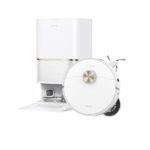
The Roborock Saros 20 measures 79.8 mm tall—a full centimetre lower than the Mova V50 Ultra's 89.5 mm height. This seemingly small difference expands access under furniture. Sofas, beds, and cabinets with 80-85 mm clearance accommodate the Saros 20 but block the V50 Ultra.
Diameter is nearly identical: 353 mm for the Saros 20 versus 350 mm for the V50 Ultra. Both navigate standard doorways and furniture arrangements without difficulty.
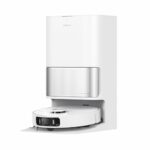
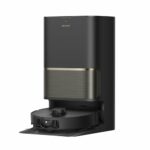
Base dimensions vary more noticeably. The Saros 20's base measures 381 mm wide, 488 mm tall, and 475 mm deep. The V50 Ultra's base spans 420 mm wide, 470 mm tall, and 458 mm deep—wider but shorter and slightly shallower. Consider your available floor space when positioning either base, ensuring the robot can dock without obstruction.
Real-World Usage Scenarios
For larger homes exceeding 150 square metres, the Saros 20's superior suction tackles expansive floor areas more efficiently, particularly if you have a mix of hard floors and carpets. The lower profile proves advantageous in homes with low-clearance furniture.
Pet owners benefit from either model's anti-tangle brushes, though the Saros 20's higher suction extracts more embedded pet hair from carpets and rugs. Both handle pet recognition and work quietly enough not to startle most animals.
The Mova V50 Ultra suits households prioritising comprehensive hygiene features—UV disinfection and dual detergent tanks appeal to families with young children or allergy sufferers. The larger dust bag and dirty water tank reduce maintenance frequency in busy homes.
Homes with extensive hard flooring and minimal carpeting may prefer the V50 Ultra's hotter mopping water and RoboSwing edge cleaning. Conversely, properties with thick carpets or varied floor heights benefit from the Saros 20's greater suction and adjustable mopa lift range.
Conclusion: Which Should You Choose?
Choose the Roborock Saros 20 if: Maximum suction power matters for deep carpet cleaning, you need the lowest possible profile to reach under furniture, or you prefer Roborock's established reputation and refined app experience. The adjustable mopa lift handles varied floor transitions better, and SmartPlan 3.0 represents the latest in AI cleaning strategy.
Choose the Mova V50 Ultra if: UV disinfection and dual detergent tanks align with your hygiene priorities, you want the largest dust bag capacity for extended intervals between changes, or you appreciate RoboSwing's enhanced edge mopping. The hotter 55°C floor mopping water tackles stubborn grease more aggressively, and the slightly larger dirty water tank suits homes with extensive hard flooring.
Both represent excellent choices within the premium robot vacuum segment. The Saros 20 excels through raw power and refined engineering; the V50 Ultra counters with thoughtful features and practical capacity advantages. Your decision ultimately rests on whether you prioritise outright performance or comprehensive convenience features.