✨ VS Analyses · VacuumSpain comparison technology. Explanation created with AI from verified technical data.
Introduction
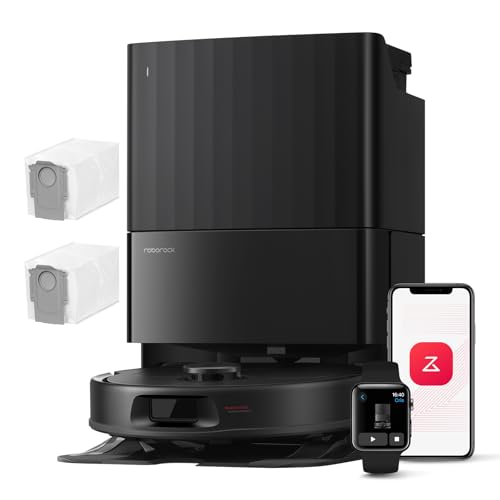
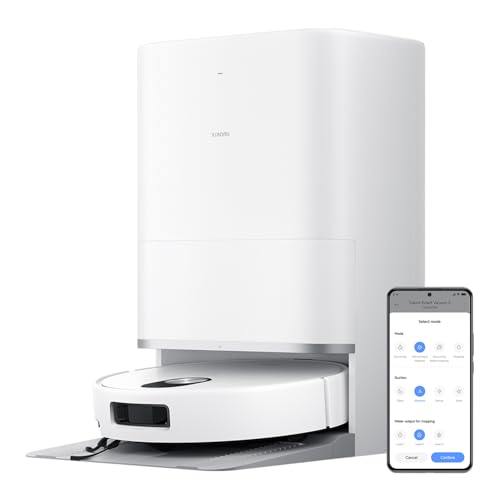
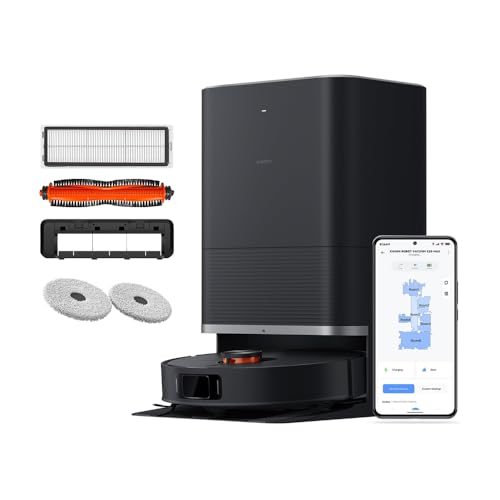
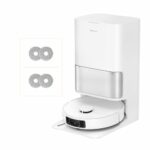
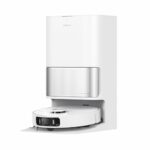
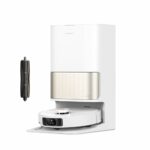
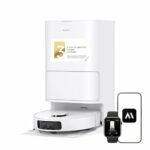
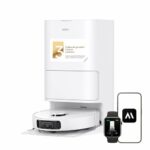
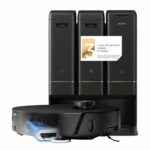
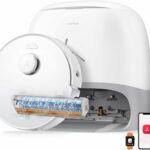
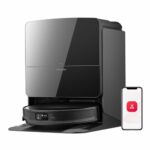
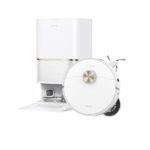
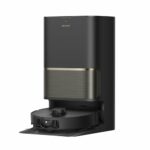
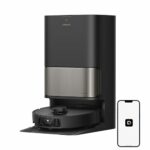
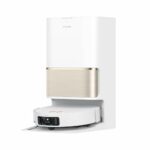
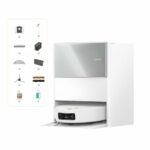
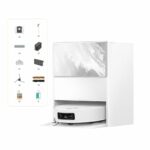
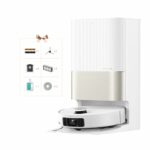
When it comes to choosing a reliable robot vacuum in 2025, the decision often comes down to balancing suction power, mopping capabilities, and intelligent navigation. The Roborock QV 35A represents Roborock's latest entry for 2025, whilst Xiaomi counters with two compelling options: the brand-new Robot Vacuum 5 from 2025 and the X20 Max from their 2024 catalogue. Each brings distinct advantages to the table, making this a particularly interesting comparison for anyone searching for the best robot vacuum 2025 has to offer.
The Roborock model positions itself as a straightforward, efficient cleaning solution. The Xiaomi Robot Vacuum 5 arrives with impressive specifications that push the boundaries of suction power, whilst the X20 Max serves as a proven option from the previous year. Understanding which suits your home depends heavily on your priorities—whether that's raw cleaning power, longer battery life, or specific navigation features.
Suction Power and Brushing System
The most striking difference in this comparison lies in suction capability. The Xiaomi Robot Vacuum 5 delivers an extraordinary 20,000 Pa of suction power—more than double what the Roborock QV 35A and Xiaomi X20 Max offer at 8,000 Pa each. This substantial gap translates into noticeably different cleaning performance, particularly on carpets or when dealing with embedded dirt and pet hair.
Brush technology takes different approaches across these models. The Roborock QV 35A employs a SimpleBrush system, whilst both Xiaomi options utilise the TriCut 3.0 brush. The TriCut design combines bristles with integrated blades that actively cut through tangled hair, reducing maintenance frequency. This matters considerably for households with long-haired occupants or pets.
Regarding side brushes, the Xiaomi Robot Vacuum 5 stands alone with an extendable side brush that reaches further into corners and along edges. The Roborock QV 35A and Robot Vacuum 5 both feature anti-tangle side brushes, but the X20 Max lacks this refinement. None of these models offer elevating side brushes during mopping, which means they remain active throughout wet cleaning cycles.
Mopping Performance
All three robots employ dual rotating mops for floor washing, but the implementation varies in meaningful ways. The Xiaomi Robot Vacuum 5 lifts its mops 15 mm when encountering carpets or rugs, whilst the Roborock QV 35A and X20 Max manage 10 mm of elevation. That extra 5 mm can make the difference between successfully clearing medium-pile rugs or leaving damp patches.
Mop extension for edge cleaning appears on both Xiaomi models but is absent from the Roborock. This feature allows the mops to reach closer to skirting boards and wall edges, addressing one of the traditional weak points of robot mopping. In practice, this means more thorough coverage along room perimeters without requiring manual intervention.
Each robot includes a multifunctional base station that washes mops with cold water and dries them using cold air. Whilst none offer heated water washing or warm air drying, the systems prove adequate for maintaining mop hygiene between cleaning sessions. The Xiaomi Robot Vacuum 5 adds automatic tray self-cleaning, reducing the maintenance burden further—something neither the Roborock nor the X20 Max provide.
None of these models can automatically detach mops at the base station for vacuum-only runs, nor do they feature dirt detection systems that trigger rewashing or refregado of particularly soiled areas.
Navigation Systems
Navigation technology separates these models in subtle but important ways. The Roborock QV 35A and Xiaomi X20 Max both use traditional LiDAR turrets that protrude from the top surface, whilst the Xiaomi Robot Vacuum 5 employs a retractable LiDAR system. The retractable design contributes to the Robot Vacuum 5's lower profile, helping it slip beneath furniture more easily.
Both Xiaomi models incorporate 3D laser sensors for enhanced obstacle detection, a feature the Roborock lacks. These sensors provide additional spatial awareness, particularly useful for identifying low-lying obstacles that might escape LiDAR detection. The X20 Max goes further with LED lighting for night vision capability, allowing it to navigate effectively in complete darkness—something neither the Roborock nor the standard Robot Vacuum 5 can claim.
All three robots feature intelligent cleaning systems, though none include AI cameras, pet recognition, curtain detection, or remote camera access. This positions them as privacy-conscious options that rely on spatial mapping rather than visual identification.
Battery Life and Autonomy
Battery capacity remains consistent across all three models at 5,200 mAh, but runtime tells a different story. The Roborock QV 35A achieves 180 minutes of operation—a full three hours that makes it particularly well-suited to larger homes. The Xiaomi Robot Vacuum 5 manages 140 minutes, whilst the X20 Max runs for 120 minutes before requiring recharge.
The disparity likely stems from power consumption differences. The Robot Vacuum 5's exceptional 20,000 Pa suction demands more energy, naturally reducing runtime. For homes under 150 square metres, any of these durations suffices. Larger properties benefit from the Roborock's extended autonomy, reducing the likelihood of mid-clean charging interruptions.
Smart Features
All three models can climb obstacles up to 20 mm high, handling standard door thresholds and minor floor transitions without difficulty. Each integrates with external voice assistants like Alexa and Google Home, though none include proprietary voice assistants or robotic arms for advanced object manipulation.
The Roborock QV 35A features SmartPlan intelligent cleaning, whilst both Xiaomi models offer their own AI-driven cleaning strategies. These systems learn room layouts, optimise cleaning routes, and adapt to household patterns over time.
Multifunctional Base Station
Each robot comes with a comprehensive base station handling auto-emptying, mop washing, and mop drying. Dust bag capacity differs slightly: 2.7 litres for the Roborock versus 2.5 litres for both Xiaomi models. In practical terms, this translates to roughly the same interval between bag changes—typically several weeks for average households.
Water tank capacities show minor variations. Clean water tanks hold 4 litres across all models, but dirty water collection differs: 3.5 litres for the Roborock QV 35A versus 3.8 litres for both Xiaomi robots. The Xiaomi Robot Vacuum 5's automatic tray cleaning represents the only significant functional advantage here, keeping the washing mechanism itself hygienic without manual scrubbing.
None of these base stations include UV disinfection, detergent dispensers, or plumbing connection capabilities. Optional connection kits aren't available either, meaning you'll need to manually refill and empty tanks.
Physical Dimensions
Height becomes crucial for navigating under furniture. The Xiaomi Robot Vacuum 5 measures just 88 mm tall—the slimmest of the three—making it ideal for low-clearance sofas and beds. The Roborock QV 35A stands at 96.5 mm, whilst the X20 Max reaches 97 mm. That 9 mm difference between the Robot Vacuum 5 and X20 Max might determine whether a robot can clean beneath certain furniture pieces or must work around them.
Diameter varies minimally: 353 mm for the Roborock versus 350 mm for both Xiaomi models. This negligible difference won't meaningfully affect manoeuvrability in tight spaces.
Base station footprints deserve consideration if floor space is limited. The Roborock's base measures 340 mm wide, 521 mm tall, and 487 mm deep. The Robot Vacuum 5's base is slightly wider at 360 mm and taller at 572 mm, but shallower at 470 mm depth. The X20 Max base sits at 340 mm wide, 563 mm tall, and notably compact at 420 mm deep—the shallowest option here.
Real-World Usage Scenarios
For larger homes exceeding 120 square metres, the Roborock QV 35A's 180-minute runtime provides valuable insurance against mid-clean charging stops. Its SimpleBrush system requires slightly more maintenance than TriCut alternatives but still performs reliably for general household debris.
The Xiaomi Robot Vacuum 5 excels in homes requiring maximum suction power—think households with multiple pets, high-pile carpets, or heavy foot traffic. That 20,000 Pa capability tackles embedded dirt that lesser vacuums might leave behind. The extendable side brush and mop extension ensure thorough edge cleaning, whilst the 88 mm height grants access beneath more furniture. The trade-off comes in reduced runtime at 140 minutes.
The X20 Max serves as a balanced middle option from 2024, offering TriCut brushes and mop extension at a potentially lower price point than the newer 2025 models. Its LED night vision proves genuinely useful for households that prefer running cleaning cycles during evening hours. The 120-minute runtime suits smaller to medium-sized homes comfortably.
All three handle hard floors, tiles, and parquet effectively. None provide specific carpet detection beyond mop elevation, so deep carpet cleaning relies primarily on suction power—where the Robot Vacuum 5 holds a commanding advantage.
Conclusion: Which Should You Choose?
Choose the Roborock QV 35A if extended battery life matters most to you. Homes approaching or exceeding 150 square metres benefit from that 180-minute runtime, reducing the frequency of charging interruptions. It's also the sensible choice if you prefer Roborock's established reputation for reliability and app quality, even if it means sacrificing some raw suction power and edge-cleaning refinements.
Choose the Xiaomi Robot Vacuum 5 if you need the absolute best suction performance available in this comparison. Those 20,000 Pa make it the clear winner for homes with pets, thick carpets, or particularly demanding cleaning requirements. The extendable side brush, mop extension, 15 mm mop lift, and automatic base tray cleaning add up to the most feature-complete package here. The 88 mm height grants access beneath furniture that taller robots simply can't reach. Accept the shorter 140-minute runtime as a reasonable trade-off for superior cleaning capability.
Choose the Xiaomi X20 Max if you want proven 2024 technology with LED night vision at what may be a more attractive price point than the newer 2025 releases. It delivers solid performance with TriCut brushes and mop extension, handling most homes under 100 square metres comfortably within its 120-minute runtime. The compact base depth of 420 mm suits tighter installation spaces. Consider this the value-oriented option that doesn't sacrifice essential features.
Ultimately, this comparison between robot vacuums reveals no outright winner—just different priorities. Match your choice to your home's specific demands, and any of these three will serve you well.