✨ VS Analyses · VacuumSpain comparison technology. Explanation created with AI from verified technical data.
Introduction
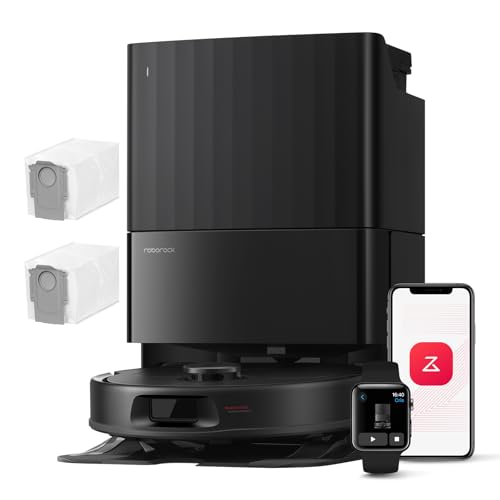
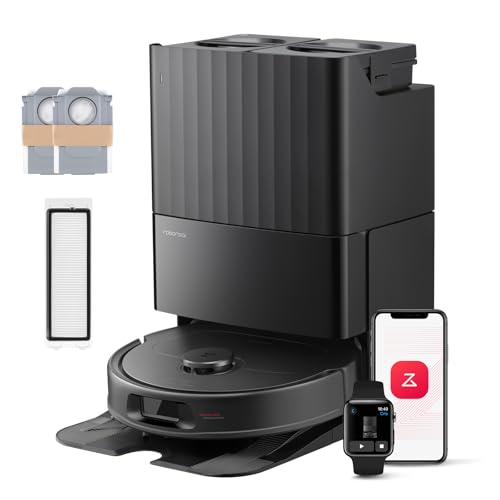
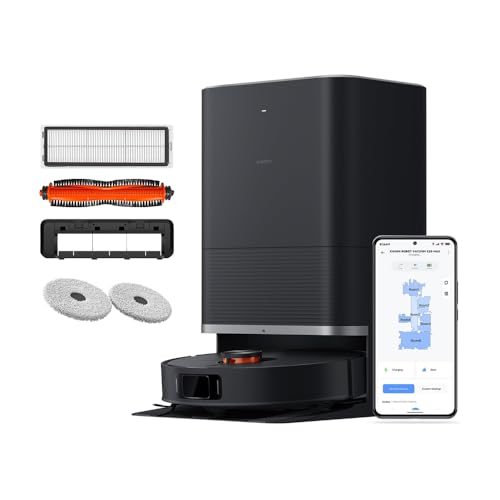
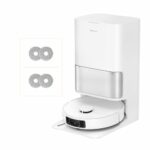
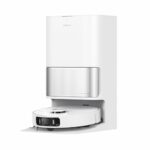
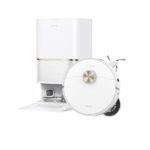
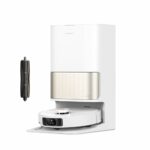
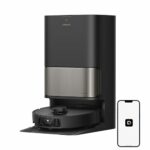
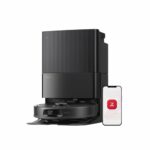
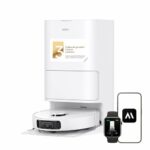
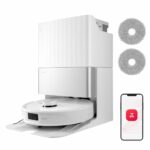
We are looking at three vacuuming and mopping proposals that share a philosophy but present interesting nuances. The Roborock QV 35A and the Roborock QV 35S are two 2025 models that arrive to position themselves in the brand's mid-to-high range, whilst the Xiaomi X20 Max, launched in 2024, represents a competitive alternative manufactured under the technological umbrella of Dreame. All three units integrate a multifunction base with mop washing and drying, which makes them complete solutions for those seeking to automate both vacuuming and mopping without constant manual intervention.
These robots are designed for homes that demand comprehensive cleaning with minimum maintenance. The presence of bases that automatically wash and dry the mops is fundamental to achieving effective mopping, as the mops are cleaned during the process and dried upon completion, preventing bad odours and ensuring that each cleaning session is carried out in optimal conditions.
Power and Suction
Suction power marks a clear difference between the two Roborock models. The QV 35S develops 10,000 Pa, a figure that places it in the upper part of the market and which is especially useful on carpets or when there are pets at home. The QV 35A remains at 8,000 Pa, a figure identical to that of the Xiaomi X20 Max. In practice, these additional 2,000 Pa of the QV 35S can make a difference on medium or long pile carpets, where the capacity to extract embedded dirt is decisive.
Regarding the brushing system, the two Roborock robots are equipped with the SimpleSmart brush, whilst the Xiaomi X20 Max opts for the TriCut 3.0. The latter combines bristles with blades that cut tangled hair, something that can be advantageous in homes with pets. However, the Roborock models compensate for this difference with an anti-tangle side brush, a feature that the Xiaomi does not incorporate. None of the three models offers main brush lifting during mopping or an extendable side brush.
Mopping
All three units use a two rotating mop system, a configuration that guarantees deeper mopping than traditional drag mops. All lift the mops 10 mm when they detect carpets, sufficient to avoid wetting them in most cases. The water used to mop the floor is cold in all three models.
The most relevant difference in this section is provided by the Xiaomi X20 Max with its extendable mop system for edges. This function allows the mops to project laterally to better reach skirting boards and corners, a real advantage in perimeter mopping. The Roborock QV 35A and QV 35S do not include this extension, which can translate into less effective mopping at the edges of rooms.
Regarding mop maintenance, all three bases wash with hot water and dry with hot air. This detail is fundamental: hot water cleans the mops better during the process, whilst hot air accelerates drying and reduces bacterial proliferation. None of the three models automatically removes the mops at the base or incorporates dirt detection for re-mopping.
Navigation System
All employ a LiDAR turret for mapping and navigation, which guarantees precision in route plotting and efficiency in coverage. All three integrate obstacle avoidance systems and intelligent cleaning with AI, although none mounts a front camera with artificial intelligence for advanced object recognition.
The Xiaomi X20 Max differentiates itself by incorporating a front 3D laser sensor and night vision LED. The 3D sensor improves real-time obstacle detection, especially useful with small or low-height objects. The night LED allows the robot to operate with greater safety in low-light conditions, although its practical usefulness depends on whether you schedule night-time cleaning. The Roborock QV 35A and QV 35S dispense with both elements, relying exclusively on LiDAR and conventional sensors.
None of the three models offers specific pet recognition, curtain detection or remote camera access.
Battery Life and Battery
All three robots mount 5,200 mAh batteries, but performance varies significantly. The Roborock QV 35A and QV 35S achieve 180 minutes of battery life, whilst the Xiaomi X20 Max remains at 120 minutes. This one-hour difference can be decisive in large homes or complex layouts where the robot needs to complete long cycles without returning to recharge.
In practice, 180 minutes allow covering large surfaces in a single session, reducing interruptions and shortening the total cleaning time. The Xiaomi, with its 120 minutes, may require intermediate recharges in homes exceeding 100-120 m², which lengthens the process although the final result is equivalent.
Smart Functions
All three robots can overcome obstacles up to 20 mm in height, sufficient capacity to navigate most transitions between rooms, thick cables or small level differences. This function is especially useful in homes with level differences between rooms or with carpets of a certain thickness.
All are compatible with external voice assistants such as Alexa or Google Home, allowing voice control and integration into home automation ecosystems. None incorporates a robotic arm or its own voice assistant.
Multifunction Cleaning Base
All three bases perform auto-emptying of the dust container, mop washing with hot water and drying with hot air. This configuration guarantees minimum maintenance: it is only necessary to empty the dirty water tanks and refill the clean water tank from time to time, in addition to changing the dust bag when it fills up.
The clean water tanks are identical in all three cases: 4 litres. As for dirty water, the Xiaomi X20 Max offers 3.8 litres compared to the 3.5 litres of the Roborock models. The difference is minimal and barely influences emptying frequency. The dust bag reaches 2.7 litres in the Roborock models and 2.5 litres in the Xiaomi, similar capacities that can last between 4 and 8 weeks depending on the level of dirt.
None of the bases includes tray self-cleaning, UV disinfection, detergent tank or plumbing connection. Nor do they offer an optional kit for plumbing connection.
Dimensions
The diameter of the robots is practically identical: 353 mm in the Roborock models and 350 mm in the Xiaomi. The height is also similar, with 96.5 mm in the QV 35A and QV 35S compared to 97 mm for the X20 Max. These measurements are standard and allow all three models to slide under most furniture with legs of more than 10 cm.
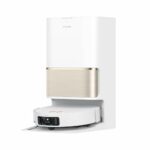
The bases present more marked differences. The Roborock models measure 340 mm wide, 521 mm high and 487 mm deep. The Xiaomi X20 Max maintains the same width, but increases the height to 563 mm and reduces the depth to 420 mm. In practice, the Xiaomi base occupies less depth but requires more vertical space, something to consider if you plan to place it under a worktop or in a space with limited height.
Real-World Usage Experience
For large homes, the Roborock QV 35A and QV 35S start with an advantage thanks to their 180 minutes of battery life. They can complete full cleans on large surfaces without interruptions, something that the Xiaomi X20 Max, with its 120 minutes, may not achieve in a single session. If your home exceeds 100 m², this difference is noticeable.
In homes with pets, the Roborock QV 35S stands out for its 10,000 Pa power, more effective at extracting embedded hair from carpets and upholstery. The Xiaomi's TriCut 3.0 brush is also effective at cutting tangled hair, although it lacks an anti-tangle side brush, present in the Roborock models. If you live with long-haired animals, the QV 35S offers the most balanced combination.
For edge and skirting board mopping, the Xiaomi X20 Max has an advantage with its extendable mops. If you're looking for more complete perimeter mopping, this function makes a difference. The Roborock models compensate with greater battery life and, in the case of the QV 35S, with greater suction power.
The Xiaomi's front 3D laser sensor and night LED provide additional safety in navigation, especially if you have small objects on the floor or schedule night-time cleaning. The Roborock models dispense with these elements but offer the reliability and ecosystem of an established brand in the sector.
Conclusion: Which to Choose?
Choose the Roborock QV 35A if you're looking for a balanced Roborock robot vacuum with a complete multifunction base, extended battery life of 180 minutes and a presumably more competitive price than the QV 35S. It's ideal for medium-to-large homes where you don't need maximum suction power but do want to guarantee complete cleaning cycles without recharges. The anti-tangle side brush facilitates maintenance.
Choose the Roborock QV 35S if you prioritise suction power and have carpets or pets at home. Its 10,000 Pa makes a real difference in extracting hair and embedded dirt. You maintain the 180 minutes battery life of the QV 35A and add muscle to the vacuuming. It's the best robot vacuum in this comparison for those who need maximum suction performance without giving up automatic mopping with mop washing and drying.
Choose the Xiaomi X20 Max if you value extendable mops for more complete perimeter mopping and appreciate the front 3D laser sensor with night LED. The TriCut 3.0 brush works well with pet hair, although it lacks an anti-tangle side brush. Bear in mind that its 120 minutes battery life may require recharges in large homes. It's a competitive option if your priority is edge mopping and you don't need extreme battery life. The base occupies less depth, useful in tight spaces.
The differences between these models are not vast, but each has its profile. Battery life and power favour the Roborock models, especially the QV 35S. The Xiaomi counters with specific functions such as extendable mops and additional sensors. Evaluate the size of your home, the presence of pets and whether you prioritise battery life or perimeter mopping to make the most appropriate decision in this robot vacuum comparison.