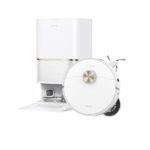
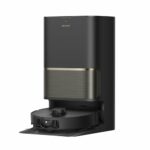
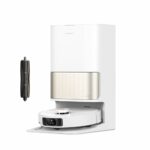
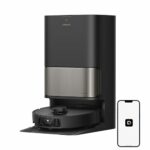
✨ VS Analyses · VacuumSpain comparison technology. Explanation created with AI from verified technical data.
Introduction
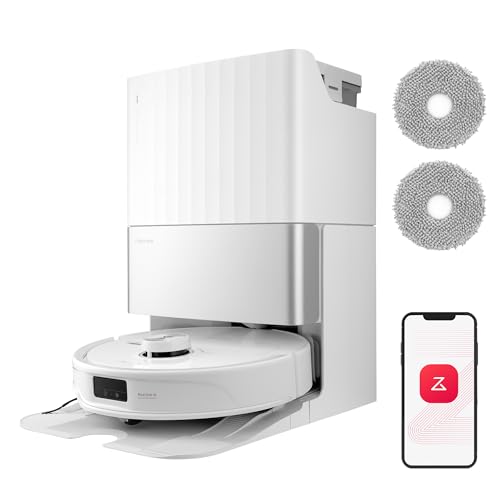
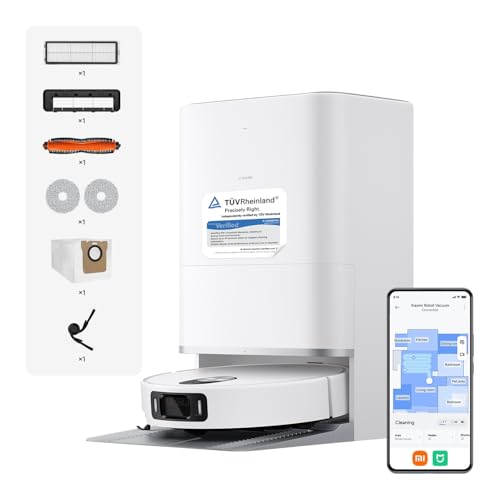
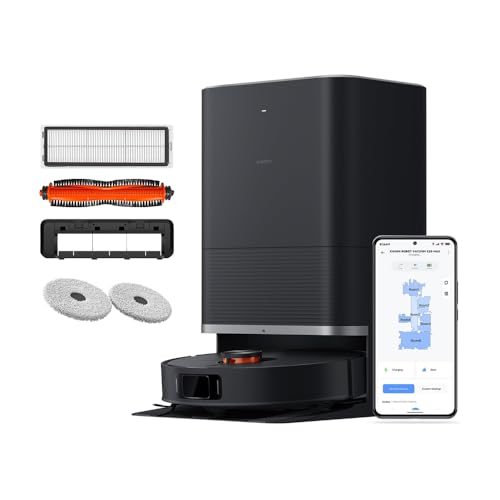
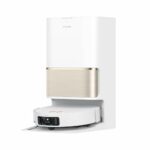
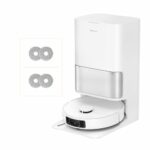
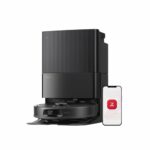
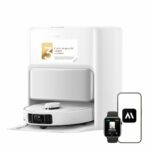
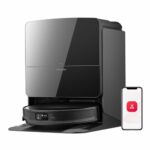
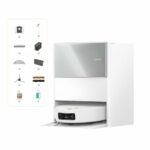
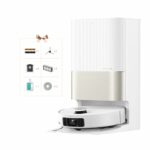
Choosing between these three models means weighing up different priorities. The Roborock Qrevo Master arrived in 2024 as a premium option from the world's leading robot vacuum brand, bringing dual rotating mops and advanced navigation to the table. Xiaomi countered with two distinct approaches: the Robot Vacuum 5 Pro launched in 2025 with impressive 20,000 Pa suction, whilst the X20 Max from 2024 offers a more streamlined feature set at a different price point.
All three come with multifunctional bases that handle emptying, mop washing and drying. The Roborock model suits those wanting proven reliability and pet-focused features. The Xiaomi Robot Vacuum 5 Pro appeals to anyone prioritising raw power and extensive object recognition. The X20 Max works well for straightforward cleaning needs without the extras.
Suction and Brushing
The Xiaomi Robot Vacuum 5 Pro dominates here with 20,000 Pa suction—double the Roborock's 10,000 Pa and significantly ahead of the X20 Max's 8,000 Pa. In practice, this translates to better performance on carpets and deeper pile rugs, where embedded dirt requires more force to extract.
The brush configuration tells an interesting story. Roborock opts for its dual brush system, which pushes debris towards the central suction point and reduces hair tangles. Both Xiaomi models use TriCut 3.0, combining bristles with cutting blades to slice through tangled hair. Each approach works, though the Roborock design typically requires less manual cleaning.
When mopping, the Roborock Qrevo Master and Xiaomi Robot Vacuum 5 Pro lift their main brushes clear of the floor. This prevents the brush from interfering with the mop pads and stops dirty water from splashing onto a rotating brush. The X20 Max doesn't lift its brush, which can compromise mopping results on hard floors.
The side brush situation matters for edge cleaning. All three extend their side brushes to reach into corners, but only the Xiaomi Robot Vacuum 5 Pro features anti-tangle technology on this component. Hair wrapping around side brushes is a common annoyance, so this feature reduces maintenance frequency.
Mopping Performance
All three use dual rotating mop pads and extend them to reach skirting boards. The key difference lies in how high they lift those mops when encountering carpet. The Xiaomi Robot Vacuum 5 Pro raises its mops 15 mm, whilst the Roborock and X20 Max manage 10 mm. That extra 5 mm helps avoid dragging damp mops across low-pile rugs.
Dirt detection separates the premium models from the X20 Max. The Roborock Qrevo Master and Xiaomi Robot Vacuum 5 Pro both monitor mop cleanliness and floor condition, automatically returning to the base when mops need washing or increasing passes over stubborn marks. The X20 Max follows a fixed cleaning pattern without this adaptive behaviour.
All three bases wash mops with cold water and dry them with warm air. The Roborock specifies its base self-cleaning as version 1.0, the Xiaomi Robot Vacuum 5 Pro includes the function without version details, and the X20 Max lacks automatic tray cleaning entirely. Over weeks of use, this affects how often you need to manually clean the base components.
Navigation Systems
The Roborock Qrevo Master and X20 Max use traditional LiDAR turrets on top of the robot. The Xiaomi Robot Vacuum 5 Pro employs a retractable LiDAR system, which contributes to its lower 88 mm height. All three include front-facing 3D laser sensors for close-range obstacle detection.
Camera intelligence varies considerably. The Roborock features dual AI cameras, the Xiaomi Robot Vacuum 5 Pro has a single AI camera, and the X20 Max relies purely on laser sensors without camera assistance. This impacts object recognition capabilities: the Xiaomi Robot Vacuum 5 Pro identifies 200 different objects, the Roborock recognises 62, and the X20 Max doesn't specify a number.
Pet owners should note that only the Roborock Qrevo Master actively recognises pets, allowing it to adjust cleaning patterns around animals or even capture photos. The Xiaomi Robot Vacuum 5 Pro's broader object library doesn't specifically highlight pet recognition.
Remote camera access works on the Roborock and Xiaomi Robot Vacuum 5 Pro, letting you check on your home through the robot's camera. The X20 Max doesn't offer this feature. All three include LED lighting for navigation in dark spaces.
Battery and Coverage
Each model packs a 5,200 mAh battery, but runtime differs substantially. The Roborock Qrevo Master runs for 180 minutes, the Xiaomi Robot Vacuum 5 Pro manages 140 minutes, and the X20 Max lasts 120 minutes. The Xiaomi Robot Vacuum 5 Pro's shorter runtime likely reflects its higher suction power drawing more current.
For larger homes, that extra hour from the Roborock matters. It can cover more ground before returning to recharge, which becomes important in properties above 150 square metres. The X20 Max's two-hour limit suits smaller flats and apartments where a full clean fits comfortably within that window.
Smart Features
All three clear 20 mm obstacles—standard for modern robots dealing with door thresholds and thick rugs. None includes a robotic arm for moving objects.
The Roborock Qrevo Master stands alone with its own voice assistant, allowing direct voice commands without external smart speakers. The Xiaomi models work with Alexa and Google Home but lack built-in assistants. This matters in homes without existing smart speaker infrastructure.
The Roborock runs RR Mason 11.0 processing, though neither Xiaomi model specifies its CPU or algorithm. All three offer AI-driven cleaning optimisation, but only the Xiaomi Robot Vacuum 5 Pro explicitly mentions AI-based stain recognition.
Docking Station
Each base empties the robot's dustbin, washes mops and dries them with warm air. Dust bag capacity sits at 2.7 litres for the Roborock versus 2.5 litres for both Xiaomi models—a minor difference that means emptying the bag roughly once every two months rather than seven weeks.
Water tanks measure 4 litres for clean water across all three. Dirty water capacity varies slightly: 3.5 litres (Roborock) versus 3.8 litres (Xiaomi models). In practice, this rarely impacts daily use since the base typically needs attention for other reasons before tanks run dry.
None of these models includes detergent dispensers or UV disinfection. None offers plumbed water connections, though none provides an optional kit for adding this later either.
Physical Dimensions
The Xiaomi Robot Vacuum 5 Pro measures just 88 mm tall thanks to its retractable LiDAR. The X20 Max reaches 97 mm, and the Roborock Qrevo Master stands 103 mm high. That 15 mm difference determines whether the robot fits under certain sofas and cabinets. Measure your furniture clearance before choosing—many sofas sit around 90-100 mm off the floor.
Diameter stays consistent at 350-353 mm across all three, so they navigate similar spaces equally well. Weight isn't specified for any model.
Base dimensions matter if space is tight. The Roborock base measures 340 mm wide, 521 mm tall and 487 mm deep. The Xiaomi Robot Vacuum 5 Pro base is 360 mm wide, 572 mm tall and 470 mm deep. The X20 Max base is 340 mm wide, 563 mm tall and 420 mm deep. The X20 Max base has the smallest footprint, whilst the Xiaomi Robot Vacuum 5 Pro base is tallest.
Real-World Use
For homes with pets, the Roborock Qrevo Master's dual brush system and pet recognition make life easier. Its longer battery life suits larger properties, and the dual cameras provide better spatial awareness. The built-in voice assistant adds convenience if you haven't invested in smart speakers.
The Xiaomi Robot Vacuum 5 Pro excels in homes with thick carpets or multiple rugs, where its 20,000 Pa suction extracts more embedded dirt. Its ability to recognise 200 objects helps it navigate cluttered rooms, and the 15 mm mop lift better protects carpets from moisture. The slimmer profile gets under more furniture.
The X20 Max works well in smaller flats without pets, where advanced features become less important. Its lower suction and shorter battery suit single-level apartments under 100 square metres. The lack of camera features and dirt detection keeps costs down without severely impacting basic cleaning performance.
Maintenance requirements differ. The Roborock's dual brush system typically needs less hair removal. The Xiaomi Robot Vacuum 5 Pro's anti-tangle side brush reduces one maintenance point. Only the X20 Max requires manual cleaning of the base tray, which adds a weekly task.
Conclusion: Which to Choose?
Choose the Roborock Qrevo Master if you own pets and want recognition features, need the longest battery life for large homes, value dual cameras for better navigation and remote viewing, or prefer a built-in voice assistant. Its proven reliability and comprehensive feature set justify the premium positioning.
Choose the Xiaomi Robot Vacuum 5 Pro if maximum suction power matters for deep carpet cleaning, you want the most advanced object recognition, need the slimmest profile to fit under low furniture, or value AI-based stain detection. The 15 mm mop lift and anti-tangle side brush add practical benefits.
Choose the Xiaomi X20 Max if you live in a smaller property where 120-minute battery life suffices, don't need camera features or remote viewing, prefer straightforward operation without advanced AI, or want to spend less whilst still getting multifunctional base benefits. Just accept that you'll clean the base tray manually and won't get adaptive dirt detection.