✨ VS Analyses · VacuumSpain comparison technology. Explanation created with AI from verified technical data.
Introduction
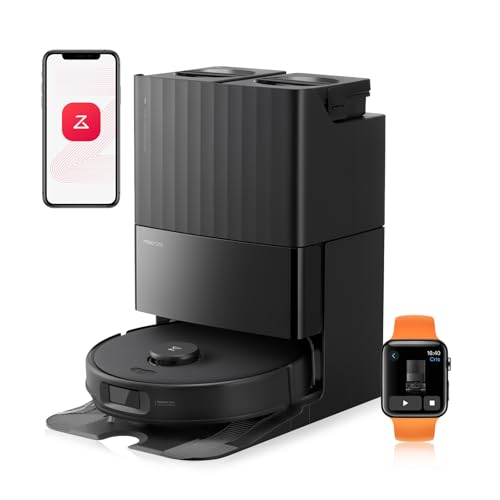
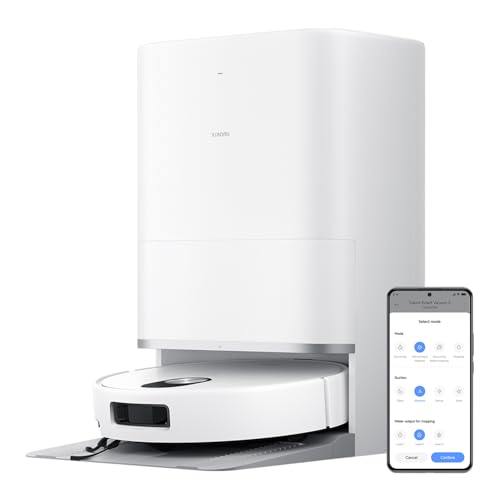
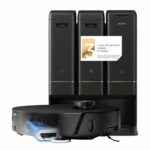
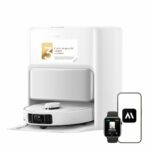
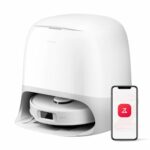
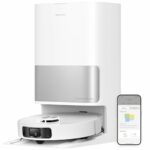
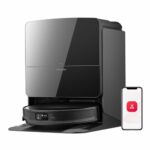
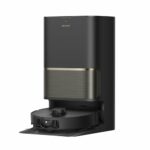
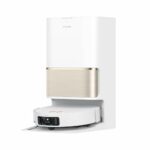
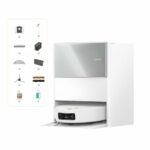
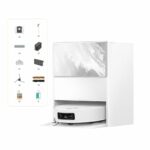
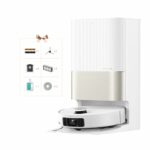
The Roborock Qrevo Edge S5A and the Xiaomi Robot Vacuum 5 represent two high-end proposals launched just months apart. The former arrived in 2024 as part of Roborock's renowned Qrevo line, whilst Xiaomi's model landed in 2025 with notable technical improvements. Both devices are designed for homes seeking complete automation: they vacuum with great power, mop with rotating pads that wash and dry at the base, and navigate with advanced laser systems.
These robots are designed for users who value absolute convenience and don't want to worry about daily maintenance. The multifunctional bases take care of washing the mops during mopping and upon completion, as well as drying with hot air to prevent unpleasant odours. In practice, this makes the difference between superficial mopping and truly effective cleaning.
Power and Suction
The Xiaomi Robot Vacuum 5 starts with an advantage in raw power: 20000 Pa compared to the Roborock Qrevo Edge S5A's 18500 Pa. That 1500 Pa difference can be particularly noticeable on medium-pile carpets or when there's accumulated dirt in tile joints. For homes with pets or high-traffic areas, those extra pascals help capture more embedded hair and dust.
The main brush system marks another important difference. The Roborock features the DuoDivide brush, designed with two sections that push hairs towards the central suction gap, drastically reducing tangles. The Xiaomi opts for TriCut 3.0, which combines bristles with integrated blades to cut long hairs whilst sweeping. Both systems work well with pets, but the DuoDivide requires less manual maintenance.
Regarding side brushes, both models share characteristics: they're extendable to better reach corners and feature anti-tangle design. This proves practical in homes with pet hair or textile fibres, as it makes cleaning the brush itself easier. Neither lifts the side brush during mopping, something that some higher-end models do incorporate.
Mopping
Both devices mop with two rotating pads that wash automatically at the base during cleaning and upon completion. The Xiaomi lifts the mops up to 15 mm when it detects carpets, whilst the Roborock reaches 10 mm. Those additional 5 mm can make a difference if you have thick carpets or tall doormats, although for conventional carpets both systems work correctly.
Both models extend the mops to clean room edges. The Roborock uses its FlexiArm technology, which extends the mop sideways to cover skirting boards and corners. The Xiaomi also features mop extension, although without a specific commercial designation. In practice, both solutions notably improve perimeter mopping.
Mop washing features high temperatures in both cases. The Roborock washes at 75°C and dries with hot air at 45°C, whilst the Xiaomi goes up to 80°C for washing and also dries with hot air. Those extra degrees from the Xiaomi help better eliminate greasy stains and bacteria. Hot air drying on both models speeds up the process and prevents unpleasant odours.
Dirt detection is exclusive to the Roborock Qrevo Edge S5A. This robot analyses both the mops and the floor to detect dirtier areas and automatically re-mops until they're clean. The Xiaomi doesn't incorporate this function, so it performs standard mopping without adapting to the actual dirt level. For kitchens or areas prone to stains, this difference can be relevant.
Navigation System
The Roborock features a traditional Lidar 3.0 turret, which protrudes slightly at the top of the robot. The Xiaomi opts for retractable Lidar that hides when not in use, reducing the device's total height. Additionally, the Xiaomi incorporates an additional front 3D laser sensor that improves detection of low obstacles. The Roborock doesn't include this front laser sensor.
Both robots feature obstacle avoidance, but neither has a camera with artificial intelligence. They don't recognise pets or curtains specifically, nor do they allow remote camera access because they simply don't have one. This differentiates them from more premium models that do integrate RGB cameras to identify specific objects.
The Roborock highlights its SmartPlan 2.0 system and RR Mason 11.0 algorithm, which optimise cleaning routes and efficiently manage multiple rooms. The Xiaomi also boasts AI-powered intelligent cleaning, although it doesn't specify the algorithm's name. In practice, both robots map accurately and allow configuration of zones, schedules and customised cleaning modes from their respective apps.
Battery Life and Battery
Both devices feature 5200 mAh batteries, but performance differs notably. The Roborock Qrevo Edge S5A offers up to 180 minutes of battery life, whilst the Xiaomi Robot Vacuum 5 manages 140 minutes. That 40-minute difference can be decisive in large homes or flats over 120 square metres.
For spacious homes with several rooms, the Roborock's battery life allows complete cleaning cycles without needing to recharge mid-cycle. The Xiaomi, with its 140 minutes, remains sufficient for most medium-sized homes, but in extensive areas it might need to return to base before finishing.
Smart Features
Both robots overcome obstacles up to 20 mm in height, allowing them to navigate thick cables, door thresholds or small level changes without getting stuck. Neither incorporates a robotic arm nor its own voice assistant, features only found in ultra-premium range models.
Multifunctional Cleaning Base
Both bases feature self-cleaning systems for the tray where mops are washed. The Roborock specifies that it uses version 2.0 of this system, whilst the Xiaomi simply confirms its inclusion. This function prevents you from having to manually clean the washing tray, something that in older bases generated dirt accumulation and unpleasant odours.
Neither model integrates UV disinfection nor detergent reservoir. They don't offer plumbing connection kits either, so you'll need to manually refill the clean water tank and empty the dirty water one.
Regarding capacities, the Roborock has a 2.7-litre dust bag compared to the Xiaomi's 2.5 litres. Clean water tanks are identical: 4 litres in both cases. Dirty water is stored in 3.5 litres in the Roborock and 3.8 litres in the Xiaomi. These differences are minimal and in practice barely affect maintenance frequency.
Dimensions
The diameter is practically identical: 352 mm for the Roborock, 350 mm for the Xiaomi. The key difference lies in height. The Roborock measures 98 mm, whilst the Xiaomi stands at 88 mm. Those 10 millimetres less on the Xiaomi allow it to slip under lower furniture, such as some sofas or beds with short legs. If you have furniture with little clearance, the Xiaomi has a clear advantage.
The bases also present different measurements. The Roborock's is more compact in width (340 mm compared to 360 mm) but taller (521 mm compared to 572 mm on the Xiaomi) and slightly deeper (487 mm compared to 470 mm). Ultimately, both bases occupy considerable space, so it's advisable to have a corner with socket access planned.
Real-World Usage Experience
For large homes or those over 100 square metres, the Roborock Qrevo Edge S5A proves more suitable thanks to its 180 minutes of battery life. It can complete full cleaning cycles without interruptions. The Xiaomi, with 140 minutes, works perfectly in medium or small-sized flats.
If you have pets, the Roborock's DuoDivide brush notably reduces maintenance because it pushes hairs towards the centre without tangling them. The Xiaomi's TriCut 3.0 also works well, but may require slightly more attention. The Xiaomi's greater power (20000 Pa) helps capture more embedded hair in carpets.
In homes with thick carpets, the Xiaomi's 15 mm lift offers more clearance than the Roborock's 10 mm. For hard floors and parquet, both mop effectively, although the Roborock adds the advantage of detecting dirt and automatically re-mopping more stained areas.
If you value getting under low furniture, the Xiaomi with its 88 mm height accesses spaces where the 98 mm Roborock can't reach. For kitchens with lots of grease or areas requiring intensive mopping, the Roborock's dirt detection system makes the difference.
Conclusion: Which to Choose?
Choose the Roborock Qrevo Edge S5A if: You have a large home that needs more battery life, you value the DuoDivide brush that minimises tangles, you want dirt detection so the robot automatically re-mops the dirtiest areas, or you prefer the reliability and app ecosystem of Roborock, a global leader in robot vacuums.
Choose the Xiaomi Robot Vacuum 5 if: You're looking for maximum suction power (20000 Pa) for carpets or pet hair, you need the robot to fit under very low furniture thanks to its 88 mm height, you prefer greater mop lift (15 mm) for thick carpets, or you value the higher washing temperature (80°C) for difficult stains. It's an excellent option for medium-sized flats that prioritise raw power and access under furniture.