✨ VS Analyze · VacuumSpain comparison technology. AI-generated explanation based on verified technical data.
Introduction
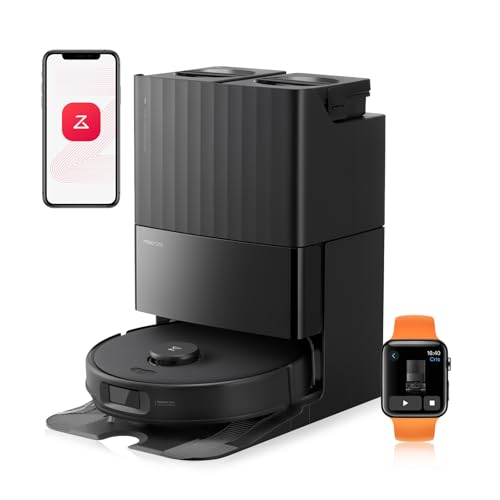
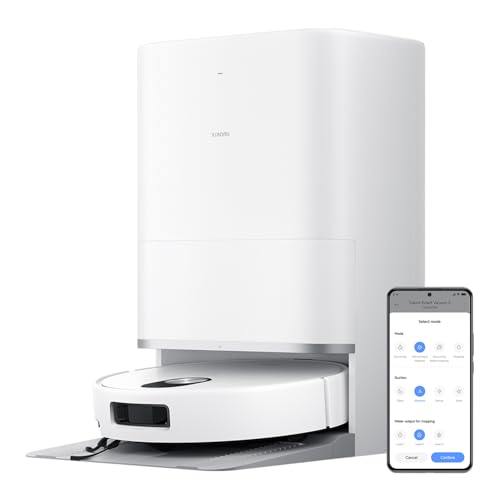
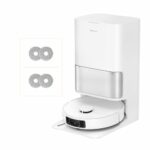
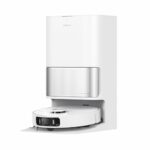
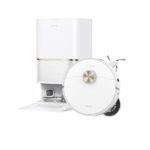
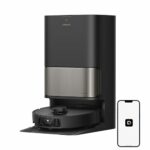
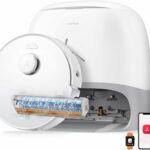
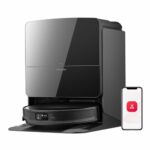
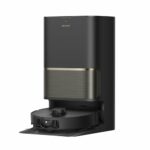
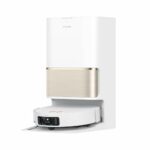
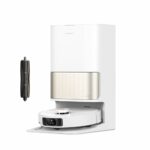
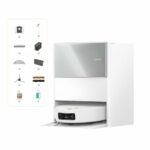
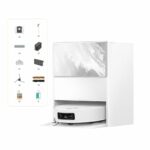
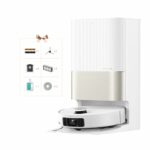
The Roborock Qrevo Edge S5A from 2024 goes up against two newly arrived models from Xiaomi: the Robot Vacuum 5 and the Robot Vacuum 5 Pro, both from 2025. We're looking at a comparison of robot vacuum cleaners with multifunction bases, devices designed for those seeking to fully automate home cleaning without constant manual intervention. All three include auto-emptying of dust, mop washing and drying, which makes the difference between mediocre mopping and truly effective mopping.
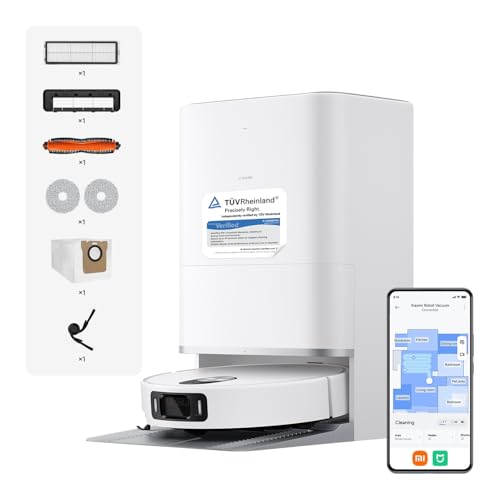
The Roborock robot vacuum represents the experience of an established brand as a world leader, whilst the Xiaomi models arrive with competitive specifications and some important differences between them. The Xiaomi Robot Vacuum 5 Pro positions itself as the most complete version of the family, incorporating artificial intelligence functions that we don't find in its siblings.
Power and Suction
Both Xiaomi models start with an advantage in suction figures: 20,000 Pa compared to the 18,500 Pa of the Roborock Qrevo Edge S5A. A difference that can be particularly noticeable on carpets or when there's ingrained dirt, although in practice both figures guarantee solid results in most domestic scenarios.
Where things do change is in the main brush design. The Roborock robot vacuum incorporates the DuoDivide anti-tangle system, which pushes hairs towards the central gap to facilitate their suction and minimise tangles. The Xiaomi models opt for TriCut 3.0, which combines bristles with blades to cut hairs as they wind around. Both approaches work, but the DuoDivide tends to require less manual maintenance.
An important difference: the Xiaomi Robot Vacuum 5 Pro can lift its main brush during mopping, something that neither the standard Xiaomi model nor the Roborock offer. This allows cleaner mopping by preventing the brush from touching the wet floor or dragging damp dirt.
All three devices share an extendable and anti-tangle side brush, a detail that improves corner cleaning and reduces maintenance. None lifts the side brush during mopping.
Mopping
All feature a two rotating mop system with extension to better reach edges. The main difference lies in the lift: the Qrevo Edge S5A raises the mops up to 10 mm, whilst both Xiaomi models reach 15 mm. Those extra 5 mm can make the difference when passing over thin carpets or floor transitions.
The Roborock and the Xiaomi Robot Vacuum 5 Pro detect dirt both on the mops and on the floor, which allows them to automatically insist on dirtier areas or rewash the mops when necessary. The standard Xiaomi Robot Vacuum 5 doesn't include these functions, which limits its ability to adapt to different dirt levels.
The bases of all three models wash the mops with hot water and dry them with hot air, fundamental features for keeping mops hygienic and avoiding bad odours. The Roborock robot vacuum stands out with its tray self-cleaning system 2.0, an evolution that keeps the area where the mops are washed cleaner. The Xiaomi models also include tray self-cleaning, although without specifying the version.
None automatically removes the mops at the base when you only want to vacuum, which means doing it manually if you don't want to drag dry mops across the floor.
Navigation System
The Qrevo Edge S5A uses traditional LiDAR turret with RR Mason 11.0 algorithm, whilst both Xiaomi models feature retractable LiDAR, which contributes to their lower height. All three include obstacle avoidance, but with important differences in their capabilities.
The Xiaomi Robot Vacuum 5 and the Pro incorporate a front 3D laser sensor, absent in the Roborock. This technology improves detection of low and small objects. But where the Xiaomi Robot Vacuum 5 Pro really stands apart is in its AI camera, capable of recognising up to 200 different types of obstacles, with remote camera access and LED for night vision. This allows you to monitor your home from your mobile whilst the robot cleans.
The standard Xiaomi model goes without AI camera, without remote access and without LED, although it maintains the 3D sensor. The Roborock also doesn't include camera or LED, depending exclusively on its LiDAR and sensors to navigate.
All three feature intelligent AI cleaning to optimise routes and cleaning patterns. Only the Xiaomi Robot Vacuum 5 Pro adds AI stain recognition, which allows it to visually identify particularly dirty areas and act accordingly.
Autonomy and Battery
Here the Roborock Qrevo Edge S5A takes a clear advantage: 180 minutes of battery life compared to the 140 minutes of both Xiaomi models. All three feature 5,200 mAh batteries, so the difference comes from energy consumption and system optimisation.
Those extra 40 minutes of the Roborock translate into capacity to clean larger homes in one go, or fewer interruptions to recharge in medium-sized homes. For flats up to 100-120 m², any of the three robots will work without problems. In larger homes, the Roborock robot vacuum offers greater margin.
Smart Functions
All three robots overcome obstacles up to 20 mm, sufficient to navigate most cables, thick carpets or small level changes between rooms. None incorporates a robotic arm or own voice assistant, although all are compatible with Alexa and Google Home for voice control via external assistants.
Multifunction Cleaning Base
All three bases include auto-emptying of dust, mop washing with hot water and drying with hot air. The Qrevo Edge S5A features a 2.7-litre dust bag, slightly larger than the 2.5 litres of the Xiaomi models. In practice, this can mean one or two more weeks between bag changes.
Regarding water tanks, all have 4 litres of clean water. The Roborock stores 3.5 litres of dirty water, whilst the Xiaomi models offer 3.8 litres. Minimal differences that don't affect real use.
The Roborock's tray self-cleaning 2.0 represents a point in favour for maintenance, although the Xiaomi models also clean their tray automatically. None includes detergent tank, UV disinfection or plumbing connection.
Dimensions
The diameter is practically identical: 352 mm for the Roborock, 350 mm for the Xiaomi models. The important difference is in height: 98 mm for the Qrevo Edge S5A compared to 88 mm for the Xiaomi models. Those 10 mm can determine whether the robot passes or not under certain furniture, sofas or low beds.
The bases also vary. The Roborock's measures 340 mm wide, 521 mm high and 487 mm deep. The Xiaomi's are wider (360 mm), taller (572 mm) but less deep (470 mm). It's worth measuring the available space before deciding, especially the height if you're thinking of placing the base under furniture or shelving.
Real-World Experience
For large homes, the Roborock Qrevo Edge S5A offers greater autonomy, which reduces interruptions. Its DuoDivide brush requires less maintenance if you have pets or long hair at home. The slightly larger dust bag also spaces out maintenance tasks.
The standard Xiaomi Robot Vacuum 5 works well in medium-sized flats without special needs. Its reduced height allows it to slip under more furniture, although it loses the dirt detection functions that its competitors do have.
The Xiaomi Robot Vacuum 5 Pro stands out in homes where technology is valued: camera with remote access, recognition of 200 obstacles, AI stain detection and liftable main brush. Its lower height is a real advantage in homes with low furniture. The 15 mm mop lift also works better with thin carpets than the Roborock's system.
In homes with pets, both the Roborock's DuoDivide and the Xiaomi's TriCut 3.0 minimise tangles, although the former usually requires slightly less manual intervention. The Xiaomi's extra power helps with hair embedded in carpets.
Conclusion: Which to Choose?
Choose the Roborock Qrevo Edge S5A if... you're looking for maximum autonomy for large homes, you value a brand with an established reputation and you prefer a brush that requires less maintenance. Its tray self-cleaning system 2.0 and larger bag capacity reduce maintenance tasks. Ideal for those who prioritise reliability and durability over cutting-edge specifications.
Choose the Xiaomi Robot Vacuum 5 if... you have a medium-sized flat, low furniture that you need the robot to pass under and you're looking for a competent option without paying for advanced functions you might not use. It's the most budget-friendly alternative in this robot vacuum comparison, although you forgo dirt detection and AI camera.
Choose the Xiaomi Robot Vacuum 5 Pro if... you want the most advanced technology: camera with remote access for surveillance, recognition of up to 200 obstacles, intelligent stain detection and liftable main brush. Its 88 mm height and 15 mm mop lift make it especially versatile in homes with low furniture and thin carpets. It's the best robot vacuum of the three if you're looking for applied artificial intelligence and you don't mind sacrificing some autonomy.