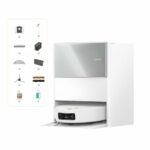
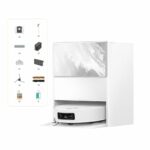
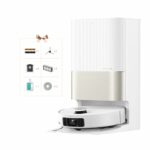
✨ VS Analyses · VacuumSpain comparison technology. Explanation created with AI from verified technical data.
Introduction
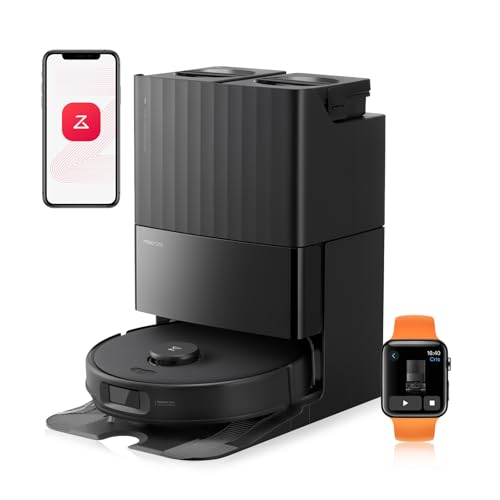
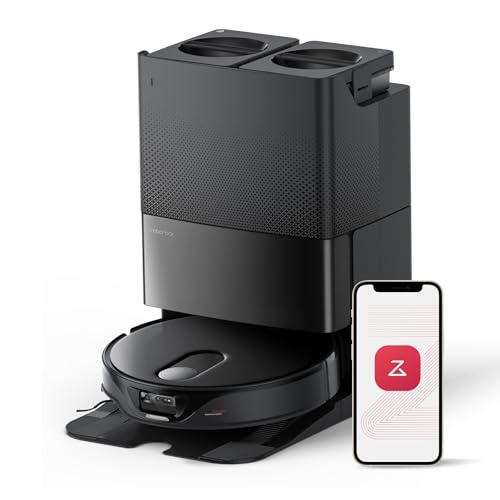
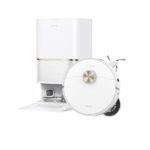
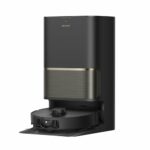
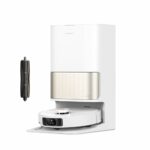
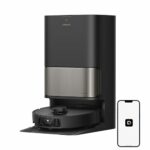
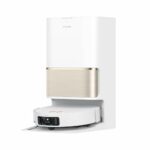
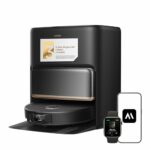
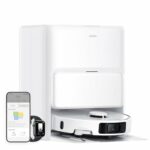
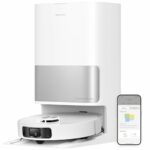
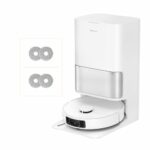
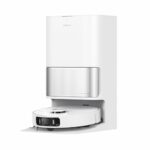
Roborock introduced two models in 2024 within its Qrevo series that share a surname but target quite different user profiles. The Roborock Qrevo Edge S5A opts for raw power and a classic navigation system based on a laser turret, whilst the Roborock Qrevo Slim sacrifices height and opts for artificial intelligence and a compact design that promises to slip under the lowest furniture. Both units include a multifunction base with mop washing and drying using hot water and air, but the differences in navigation, power and height mark clearly differentiated territories.
This robot vacuum comparison analyses which model is best suited to each type of home, from dwellings with low furniture to houses with pets or maximum suction power requirements.
Power and Suction
The most evident difference appears in suction power. The Roborock Qrevo Edge S5A reaches 18,500 Pa, a figure that places it amongst the most powerful robots on the market in 2025. The Qrevo Slim remains at 11,000 Pa, a power more than sufficient for typical domestic use but clearly inferior when dealing with thick carpets or ingrained dirt.
The brushing system also presents interesting differences. The Edge S5A mounts Roborock's DuoDivide anti-tangle brush, designed to push hair and strands towards the central suction gap and reduce tangles. The Qrevo Slim uses a dual silicone brush, a material that also minimises tangles but with a different approach. In practice, both systems work well with pet hair, although the DuoDivide usually shows better performance in homes with several animals.
An important functional difference: the Qrevo Slim can raise its main brush during mopping, preventing it from dragging wet dirt or staining carpets. The Edge S5A lacks this function, which may be an inconvenience if you alternate mopping zones and carpets in the same cycle.
The side brush shows another divergence. The Edge S5A incorporates anti-tangle technology in its extendable side brush, something the Qrevo Slim does not offer. For dwellings with long-haired pets, this can make a difference in weekly maintenance.
Mopping
Both models share a two rotating mop system with side extension to reach edges and 10 mm elevation. Both options mop with cold water and detect dirt both on the mops and on the floor, activating re-mopping when necessary.
The multifunction base washes the mops with hot water in both cases and dries them with hot air, guaranteeing hygiene and preventing bad odours. However, the Edge S5A boasts 2.0 tray self-cleaning, whilst the Qrevo Slim mounts version 1.0. In practice, this translates to a more efficient cleaning system for the washing tray itself in the Edge model, reducing manual interventions.
Neither can automatically detach the mops at the base to perform vacuum-only cycles without wearing the mops, a function that some higher-end models do offer.
Navigation System
Here we find the most important conceptual leap between both Roborock robot vacuums. The Qrevo Edge S5A uses LiDAR 3.0 turret, Roborock's traditional system that maps using a rotating laser. It works with millimetre precision, plots efficient routes and does not depend on ambient light. The disadvantage is height: that turret adds millimetres that prevent passing under certain furniture.
The Qrevo Slim opts for StarSight 1.0, a system that combines laser navigation without an elevated turret with dual AI camera and front 3D laser sensor. This robot vacuum recognises up to 73 types of obstacles, identifies pets and offers remote camera access for home surveillance. It also integrates night vision LED to navigate in total darkness.
The absence of a camera on the Edge S5A means it cannot recognise specific objects nor offer video surveillance functions. It also lacks a front LED. For users who value privacy or simply do not need these functions, it may even be an advantage.
The Qrevo Slim incorporates SmartPlan 1.0 whilst the Edge S5A mounts SmartPlan 2.0, suggesting greater intelligent planning capacity in the latter despite lacking a camera. Both operate with the RR Mason 11.0 processor.
Autonomy and Battery
Both units mount a 5,200 mAh battery with declared autonomy of 180 minutes. In practice, this autonomy can vary considerably depending on usage mode. The Edge S5A, with its 18,500 Pa, will consume more battery in maximum mode than the Qrevo Slim.
With 180 minutes of autonomy, either model can cover medium-large sized dwellings in a single cycle, returning to the base for auto-emptying and mop washing when necessary.
Smart Functions
Both robots can overcome obstacles up to 20 mm in height, sufficient to clear most transitions between rooms, medium thickness carpets or small level changes.
The Qrevo Slim adds its own voice assistant, allowing commands to be given directly to the robot without going through Alexa or Google Home. The Edge S5A lacks this function, although both are compatible with external assistants.
Multifunction Cleaning Base
The bases share identical dimensions: 340 mm wide, 521 mm high and 487 mm deep. Both include a 2.7 litre dust bag, 4 litre clean water tank and 3.5 litre dirty water tank. They are bulky bases that require space, but offer autonomy of several weeks without intervention.
Mop washing with hot water and drying with hot air are present in both models, guaranteeing efficient mopping with clean mops throughout the process. The difference lies in tray self-cleaning: the Edge S5A's 2.0 system cleans the tray where the mops are washed better, reducing dirt accumulation.
Neither offers a detergent tank, UV disinfection nor plumbing connection. There is also no optional kit for plumbing connection on these models.
Dimensions
The diameter is practically identical: 352 mm on the Edge S5A compared to 353 mm on the Qrevo Slim. The crucial difference is in height. The Qrevo Slim measures 82 mm, making it one of the lowest robots on the market. The Edge S5A reaches 98 mm due to its LiDAR turret.
Those 16 mm of difference determine whether the robot can or cannot pass under sofas, low beds, kitchen furniture or radiators. In dwellings where dust accumulates under low-height furniture, the Qrevo Slim accesses areas that the Edge S5A simply cannot reach.
Real-World Experience
The Roborock Qrevo Edge S5A excels in homes with carpets, long-haired pets or maximum suction power requirements. Its 18,500 Pa makes a difference on high-pile carpets or when there is much accumulated dirt. The DuoDivide anti-tangle brush and side brush with the same technology reduce maintenance in households with several animals. LiDAR 3.0 navigation works with millimetre precision without depending on light or cameras.
The Qrevo Slim is better suited to dwellings with low furniture, users who value artificial intelligence and object recognition, or those seeking integrated video surveillance functions. Its 82 mm height allows it to access spaces forbidden to other robots. The dual AI camera with recognition of 73 obstacles and pets offers more detailed maps and more precise object avoidance. Its own voice assistant adds convenience for those who prefer not to use external assistants.
Regarding tank capacity, the Edge S5A has the advantage with 325 ml dust compared to 220 ml, and 80 ml water compared to 72 ml. For large or heavily trafficked homes, this can translate to fewer robot tank emptyings between cycles.
Conclusion: Which to Choose?
Choose the Roborock Qrevo Edge S5A if... you have thick carpets, several long-haired animals, need maximum suction power or prefer a traditional navigation system without cameras. Also if you value 2.0 tray self-cleaning and greater capacity in the robot's tanks. It is the best robot vacuum 2025 for those who prioritise raw power and reduced maintenance in demanding environments.
Choose the Roborock Qrevo Slim if... you have low furniture, beds with little height or sofas where dust accumulates inaccessible to conventional robots. Also if you seek intelligent pet recognition, remote camera access for home surveillance or integrated voice assistant. Its ability to raise the main brush during mopping makes it more versatile in homes that mix carpets and hard floors. It is the ideal option for dwellings where robot height makes the difference between cleaning or not cleaning certain areas.
The differences between these two Roborock models demonstrate that there is no universal perfect robot, but rather options adapted to specific needs. Power and tradition versus compactness and artificial intelligence: the choice depends on your home and priorities.