✨ VS Analyses · VacuumSpain comparison technology. Explanation created with AI from verified technical data.
Introduction
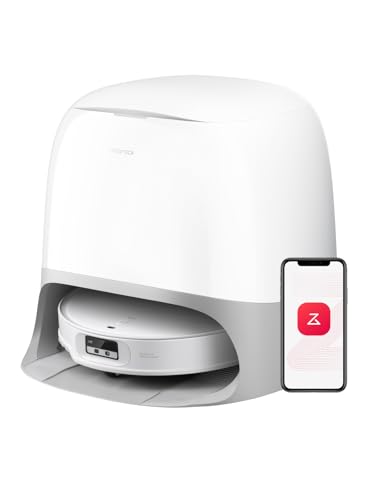
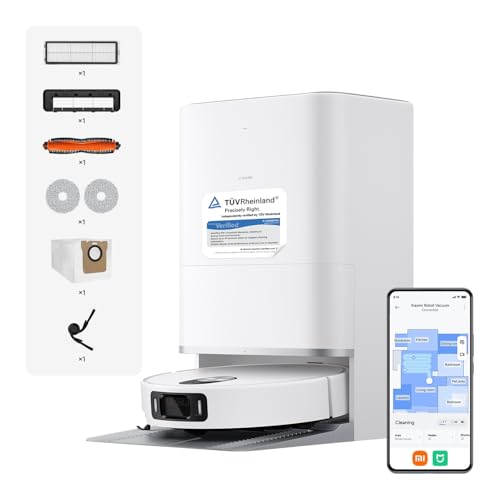
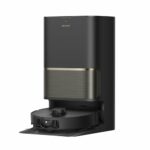
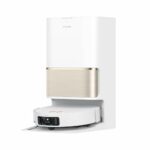
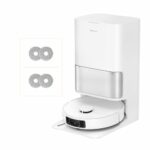
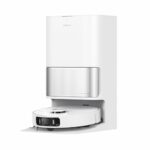
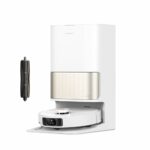
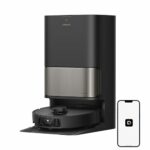
The Roborock Qrevo CurvX and the Xiaomi Robot Vacuum 5 Pro represent two high-end propositions launched in 2025 that compete directly in the premium segment. We're looking at robot vacuum cleaners with complete multifunctional bases, capable of vacuuming, mopping, washing their own mops with hot water and drying them to maintain hygiene without user intervention.
The Roborock model focuses on maximum power and extended autonomy, whilst the Xiaomi device excels in visual recognition capabilities. Both are designed for medium-to-large homes where total automation of floor maintenance is sought, especially useful in households with pets or high cleaning frequency.
Power and Suction
The 2000 Pa difference may seem minor on paper, but in practice it's noticeable especially on medium-pile carpets or when there's accumulated sand. The Roborock Qrevo CurvX with its 22000 Pa offers that extra brute force that makes the difference in deep vacuuming.
Regarding the brushing system, we find different philosophies. The Roborock is equipped with its DuoDivide anti-tangle brush, specifically designed to push hair and strands towards the central suction channel, drastically reducing tangles. The Xiaomi features the TriCut 3.0, which combines bristles with blades that cut hair during operation.
Both raise the main brush during mopping to avoid dragging wet dirt, and both incorporate an extendable side brush to better reach corners. The side brushes on both models are anti-tangle and remain active throughout the process, although neither raises them during mopping.
Mopping
Here the similarities are notable. Both devices use a dual rotating mop system, wash those mops with water at 80°C in the base and subsequently dry them. Washing with hot water is essential for removing grease and adhered stains that cold water doesn't dissolve well.
The Roborock Qrevo CurvX dries the mops with hot air at 45°C, whilst the Xiaomi also uses hot air although without specifying the exact temperature. This thermal drying speeds up the process and prevents the appearance of bad odours.
An interesting difference: the Roborock features its FlexiArm system to extend the mops and reach edges, whilst the Xiaomi also includes mop extension although without a specific commercial designation. Mop lifting varies: the Qrevo CurvX offers a range of 7-17 mm, the Xiaomi model reaches a fixed 15 mm. This lifting allows the robots to pass over carpets without wetting them when mopping other areas.
Both detect dirt on the mops as well as on the floor, automatically adjusting cleaning intensity. Neither allows leaving the mops at the base to perform vacuuming-only tasks, something that some competing models do incorporate.
Navigation System
Both robots are equipped with retractable LIDAR, which reduces the overall height of the device and facilitates access under low furniture. The laser system is complemented with artificial intelligence cameras and front 3D sensors for obstacle avoidance.
The major difference lies in recognition capability: the Xiaomi Robot Vacuum 5 Pro identifies up to 200 different objects, almost double the 108 of the Roborock Qrevo CurvX. This translates into greater precision for dodging toys, cables, slippers or any everyday household object.
The Roborock incorporates specific pet recognition, a function that the Xiaomi doesn't have. This allows the Roborock robot to adjust its behaviour when it detects dogs or cats, avoiding startling them or following them unnecessarily. The Qrevo CurvX's SmartPlan 2.0 algorithm manages these decisions autonomously.
Only the Xiaomi includes AI stain recognition, which allows it to identify particularly dirty areas and reinforce cleaning in those specific spots. Both models offer remote camera access and feature LED for night vision, useful when the robot works in low light.
Autonomy and Battery
Here the Roborock Qrevo CurvX clearly stands out. With 6400 mAh it can work for up to 220 minutes continuously, sufficient to clean homes of over 200 square metres in a single session. The Xiaomi, with 5200 mAh, reaches 140 minutes of autonomy.
This 80-minute difference is decisive in large houses or entire floors. The Roborock can complete thorough cleans without needing to return to recharge mid-job, whilst the Xiaomi may need an intermediate recharge on large surfaces, especially if combining intensive vacuuming and mopping.
Smart Functions
The ability to overcome obstacles marks another relevant difference. The Roborock Qrevo CurvX can climb obstacles between 30 and 40 mm in height, ideal for passing over thick carpets, sliding door guides or small level changes without problems. The Xiaomi reaches 20 mm, sufficient for most situations but more limited with long-pile carpets or pronounced transitions.
The Qrevo CurvX integrates its own voice assistant, although described as simple. It allows giving basic commands directly to the robot without going through the app. The Xiaomi model doesn't include this function, relying exclusively on the mobile application or compatible external assistants.
Multifunctional Cleaning Base
The bases of both devices are practically equivalent in features. Both incorporate self-cleaning of the washing tray, with the Roborock specifying its 3.0 system. This function keeps the area where the mops are washed clean, preventing dirt accumulation and bad odours.
The tanks are almost identical: 2.5-litre dust bag, 4-litre clean water tank. The only difference is in the dirty water tank, where the Xiaomi offers 3.8 litres compared to the Roborock's 3 litres. In practice, this difference is barely noticeable in daily use.
Neither includes a detergent tank, UV disinfection nor the possibility of connection to water pipes. There's also no optional kit for this connection. They are complete bases but without the most premium functions that some direct competitors do incorporate.
Dimensions
The Roborock Qrevo CurvX measures 79.8 mm in height, which allows it to slip under furniture, beds or sofas with 8 centimetres of clearance. The Xiaomi, at 88 mm, needs slightly more space. This difference of almost a centimetre can be decisive in homes with low furniture or beds with low-height storage bases.
In diameter there's barely any variation: 353 mm for the Roborock, 350 mm for the Xiaomi. Both manoeuvre without problems in tight spaces.
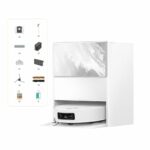
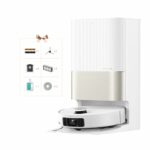
The bases present different profiles. The Roborock's is more square with 450 mm in all dimensions, occupying an almost perfect cube. The Xiaomi's base is narrower in width (360 mm) but taller (572 mm) and slightly deeper (470 mm). It's advisable to measure the available space before deciding, especially if the robot will be located in a specific recess.
Real-World Usage Experience
In homes of over 120-150 square metres, the autonomy of the Roborock Qrevo CurvX makes a real difference. Being able to complete the entire house without intermediate recharges streamlines cleaning routines and reduces the total time invested. The Xiaomi may need pauses on large surfaces.
For households with pets, the Roborock's specific recognition and its DuoDivide brush offer practical advantages. The robot identifies animals and adapts its behaviour, whilst the brushing system reduces manual maintenance by preventing hair tangles. The Xiaomi, with its TriCut 3.0, also manages hair well but without that specific intelligence for pets.
If there are thick carpets or complicated transitions between rooms, the Qrevo CurvX's ability to overcome up to 40 mm proves more versatile. The Xiaomi may get stuck on very long-pile carpets or pronounced level changes.
In homes with many small obstacles, cables or toys, the Xiaomi with its 200 recognised objects and its stain detection system may prove more precise in navigation and in identifying areas that need extra attention.
Conclusion: Which to Choose?
Choose the Roborock Qrevo CurvX if you live in a large house exceeding 120-150 square metres, have pets at home and need a robot that completes all the cleaning without recharging. Also if there are thick carpets, complicated transitions or very low furniture that the robot must pass under. The greater suction power and extended autonomy justify the investment in these scenarios.
Choose the Xiaomi Robot Vacuum 5 Pro if your home is medium-sized (up to 100-120 square metres), you particularly value precision in object and stain recognition, and you're looking for a more compact base in width. The saving compared to the Roborock may be interesting if you don't need that extreme autonomy nor the ability to climb high obstacles. Its AI stain detection system provides an extra benefit in homes with young children where localised stains are frequent.