✨ VS Analyses · VacuumSpain comparison technology. Explanation created with AI from verified technical data.
Introduction
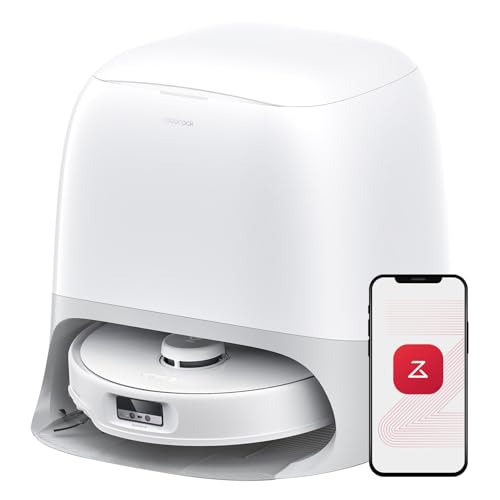
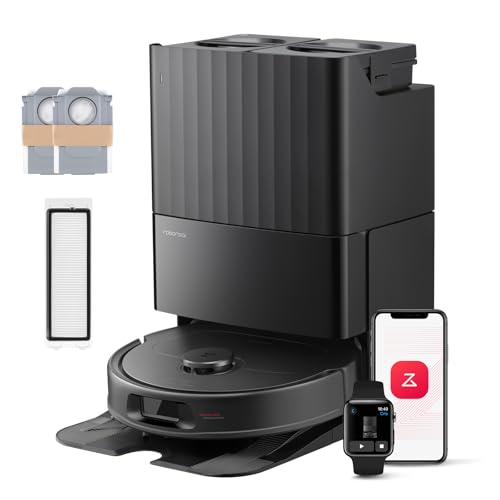
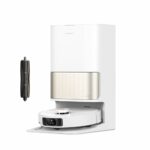
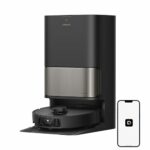
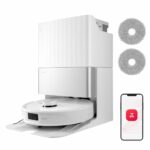
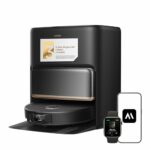
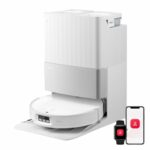
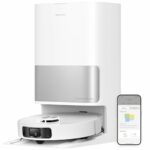
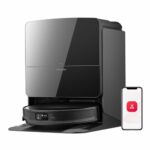
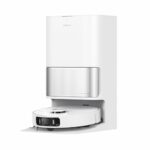
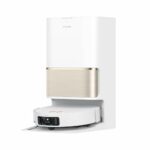
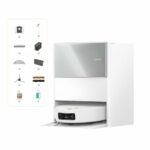
Roborock presents two very different propositions within its catalogue. The Qrevo Curv arrived in 2024 as a premium model designed for demanding users seeking maximum technology without compromise. Facing it, the QV 35S appears in 2025 as a more accessible alternative, but without sacrificing the essential functions that make a robot vacuum effective.
The difference in approach is noticeable from the first glance at the specifications. We're looking at a high-end robot with exceptional capabilities versus a more balanced one that prioritises the fundamentals. Both share Roborock's reliability, but each adapts to different needs and budgets.
Power and Suction
The difference in suction power is considerable. The Roborock Qrevo Curv reaches 18,500 Pa, a figure that places it amongst the most powerful robots on the market. The QV 35S remains at 10,000 Pa, more than sufficient power for day-to-day use in most homes, but with less margin for dense carpets or ingrained dirt.
The brushing system marks another important difference. The Qrevo Curv incorporates the DuoDivide anti-tangle brush, a design that pushes hair and strands towards the central suction gap avoiding tangles. Additionally, this brush lifts automatically during mopping, something the QV 35S cannot do with its simple brush. In practice, this means the premium model manages pet hair better and avoids dragging dirt from the dry floor whilst mopping.
The side brush also presents notable differences. The Qrevo Curv features an extendable side brush that deploys to better reach corners, whilst the QV 35S maintains a conventional design. Both include anti-tangle technology in the side brush, but neither offers lifting in this component.
Mopping
Both models use Roborock's twin rotating mop system, effective for uniform mopping. However, the Qrevo Curv's capabilities go further. Its mops extend to better mop edges and corners, a function the QV 35S doesn't incorporate.
Mop lifting also varies between both. The Qrevo Curv lifts between 10 and 20 mm, compared to the QV 35S's 10 mm. That difference may seem minimal, but proves crucial for overcoming medium-pile carpets without wetting them.
Where they really differ is in dirt detection. The Qrevo Curv identifies dirt both on the mops and on the floor, adjusting the cleaning process to go over dirtier areas again. The QV 35S lacks this capability and maintains a standard cleaning pattern. For households with young children or pets, this can mark the difference between basic mopping and truly deep cleaning.
Neither automatically removes the mops at the base to vacuum without mopping, although both allow manual removal if we only want to vacuum.
Navigation System
Both units use 3D LiDAR turret for precise mapping and navigation. The difference lies in the additional layers of intelligence. The Roborock Qrevo Curv incorporates dual AI camera and front 3D laser sensor, allowing it to recognise up to 62 different types of obstacles. Additionally, it identifies pets and features LED for night vision.
The QV 35S dispenses with AI camera and front 3D laser sensor, limiting itself to the basic LiDAR system with obstacle avoidance. It works well in tidy environments, but doesn't recognise specific objects or pets. Neither does it offer remote camera access, a function the Qrevo Curv does include for home monitoring.
Regarding processing, the Qrevo Curv uses the RR Mason 11.0 algorithm with SmartPlan 2.0, whilst the QV 35S remains on SmartPlan 1.0. This translates into more optimised routes and more intelligent decisions about how to approach each room in the premium model.
Autonomy and Battery
The Qrevo Curv features a 6,400 mAh battery that provides up to 240 minutes of continuous autonomy. The QV 35S carries 5,200 mAh with 180 minutes of operation. The one-hour difference can be decisive in large homes where the robot needs to complete the entire clean without intermediate recharges.
In practice, the Qrevo Curv can cover larger surfaces in a single session, especially if we combine vacuuming and mopping, which consume more battery than vacuuming alone. The QV 35S proves sufficient for medium-sized flats, but may need additional recharges in houses over 120 square metres with mopping included.
Smart Functions
The ability to overcome obstacles also differs. The Qrevo Curv can climb simple steps effectively, whilst the QV 35S is limited to 20 mm. This directly affects the ability to move between rooms with small level changes or floor transitions.
The Qrevo Curv includes its own voice assistant, a function that allows direct interaction with the robot without needing the app. The QV 35S doesn't have this feature, although both are compatible with Alexa and Google Home for external voice control.
Multifunction Cleaning Base
Both bases offer auto-emptying of the dust bin, mop washing and drying. The difference lies in how they do it. The Qrevo Curv's base washes the mops with hot water, which better removes grease and adhered dirt, and dries them with hot air for faster and more effective drying that prevents bad odours.
The QV 35S uses cold water and cold air, a system that works but requires more drying time and may not eliminate difficult stains with the same effectiveness. Additionally, the Qrevo Curv's base incorporates 2.0 self-cleaning of the washing tray, whilst the QV 35S lacks this function and requires periodic manual cleaning.
The dust bag capacity is similar: 2.5 litres in the Qrevo Curv and 2.7 litres in the QV 35S. The clean water tanks are identical at 4 litres, but the dirty water one varies slightly: 3 litres in the Qrevo Curv versus 3.5 litres in the QV 35S. Neither includes a detergent tank nor allows connection to plumbing.
Dimensions
The Roborock QV 35S measures 96.5 mm in height, allowing it to slip under low furniture more easily than the Qrevo Curv, which reaches 103 mm. Those 6.5 mm may seem irrelevant, but determine whether the robot accesses under sofas, beds or kitchen units or not.
The diameter is practically identical: 352 mm in the Qrevo Curv and 353 mm in the QV 35S. Both navigate equally well through narrow spaces.
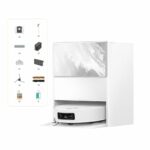
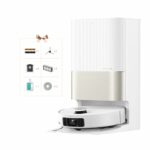
The bases present more notable differences. The Qrevo Curv's is more compact in square format: 450 x 450 x 450 mm. The QV 35S's is taller and deeper: 340 x 521 x 487 mm. It's worth measuring the available space before deciding, especially if we're planning to place it in a cupboard or specific recess.
Real-World Experience
The Roborock Qrevo Curv is designed for large homes with pets, carpets and users seeking maximum autonomy without intervening. Its power, extended battery and dirt detection system make it a complete solution that adapts to any situation. The dual camera and pet recognition provide peace of mind if we have animals at home.
The QV 35S fits better in medium-sized flats without thick carpets or long-haired pets. Its lower height allows it to access more spaces under furniture, something useful if we have low furniture. The base with cold water and air requires somewhat more attention in maintaining the washing tray, but performs perfectly in standard use.
For those who value absolute convenience, the Qrevo Curv minimises interventions thanks to its base with 2.0 self-cleaning and hot water. The QV 35S demands somewhat more periodic attention, but nothing particularly bothersome.
Conclusion: Which to Choose?
Choose the Roborock Qrevo Curv if: you live in a large house over 120 m², you have long-haired pets, you need maximum power for thick carpets, you value intelligent dirt detection and object recognition, you want a base that washes with hot water and dries with hot air, or you're looking for the best robot vacuum 2025 without performance compromises.
Choose the Roborock QV 35S if: you have a medium-sized flat, there are no long-haired pets at home, your floors are mainly hard or with thin carpets, you need a robot that passes under furniture less than 10 cm in height, you're looking for an effective solution at a more contained price, or you prefer to prioritise the essentials without paying for advanced technology you might not use daily.