✨ VS Analyses · VacuumSpain comparison technology. Explanation created with AI from verified technical data.
Introduction
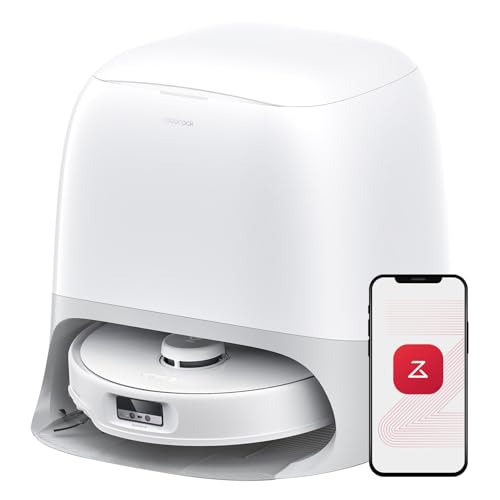
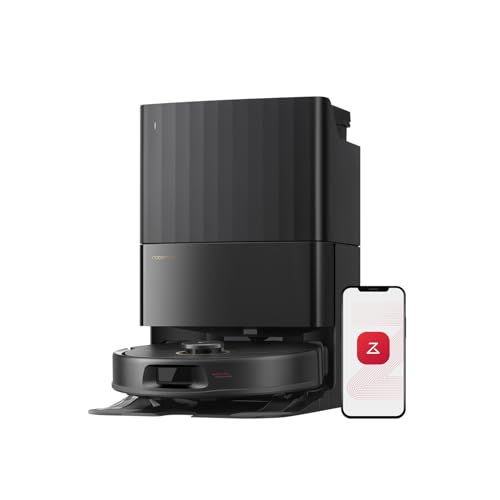
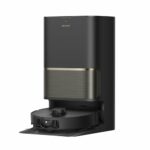
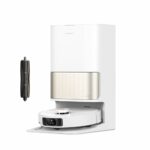
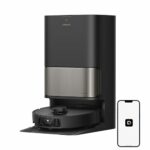
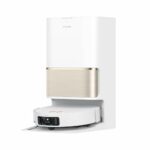
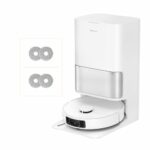
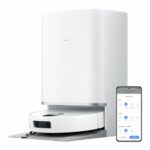
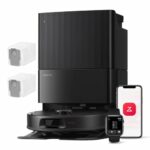
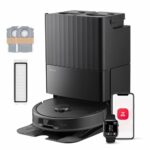
The Roborock Qrevo Curv and Roborock Qrevo S5V represent two distinct generations within Roborock's premium robot vacuum range. The Qrevo Curv arrived in 2024 as a flagship model packed with advanced features, whilst the S5V launched in 2025 as a more streamlined alternative. Both models come equipped with multifunctional bases that handle automatic emptying, mop washing, and drying—essential features for anyone seeking a genuinely hands-off cleaning experience.
These aren't entry-level devices. Both robots feature dual rotating mops, extendable components for edge cleaning, and Roborock's signature DuoDivide anti-tangle brush system. The differences lie primarily in suction power, navigation intelligence, and specific automated functions. Understanding these distinctions becomes crucial when choosing between a feature-rich flagship and a more accessible yet capable model.
Suction Power and Brushing
The Roborock Qrevo Curv delivers 18,500 Pa of suction—a substantial figure that places it amongst the most powerful robot vacuums available. The S5V offers 12,000 Pa, which remains perfectly adequate for most households but represents a noticeable gap when tackling deep-pile carpets or ingrained dirt.
Both models use Roborock's DuoDivide anti-tangle main brush, a design that channels hair towards the central suction point rather than wrapping it around bristles. This proves particularly valuable in homes with pets or long-haired occupants. The Qrevo Curv takes things further with a liftable main brush that elevates during mopping, preventing carpet contamination. The S5V lacks this feature.
The side brush configuration differs significantly. Whilst both include anti-tangle side brushes, only the Qrevo Curv features an extendable side brush that reaches deeper into corners and along skirting boards. This makes a tangible difference when cleaning room edges where dust accumulates.
Mopping Performance
Both robots employ dual rotating mops with edge extension capabilities, allowing them to reach right up to walls and furniture legs. Mop elevation differs slightly: the Qrevo Curv lifts between 10-20 mm, whilst the S5V manages 10 mm. This extra lift on the Curv helps when transitioning onto thicker rugs.
The base stations handle mop washing automatically, but the Qrevo Curv uses hot water for this process, whilst the S5V relies on cold water. Hot water proves more effective at breaking down grease and stubborn residue, resulting in cleaner mops and, consequently, better floor cleaning over time. Both bases dry the mops using hot air, which helps prevent odours and bacterial growth.
A standout feature of the Qrevo Curv is its dual dirt detection system. It identifies when mops become excessively soiled and returns to the base for rewashing. It also detects particularly dirty floor areas and automatically re-mops them. The S5V lacks both these intelligent functions, relying instead on standard programmed cleaning patterns.
Navigation System
Both models use 3D LiDAR navigation housed in the top turret, enabling precise room mapping and efficient route planning. The Qrevo Curv, however, adds a dual AI camera system and a frontal 3D laser sensor. This combination allows it to recognise 62 different obstacle types, including pets, and navigate around them intelligently.
The cameras on the Qrevo Curv support remote access, effectively turning the robot into a mobile home monitoring device. LED night vision ensures it can navigate and stream video even in complete darkness. The S5V offers none of these visual capabilities, relying solely on LiDAR and basic obstacle avoidance sensors.
Processing power differs as well. The Qrevo Curv runs SmartPlan 2.0 on the RR Mason 11.0 chip, whilst the S5V uses SmartPlan 1.0 with an unspecified processor. In practical terms, this translates to faster decision-making and more sophisticated cleaning strategies on the Curv.
Battery and Autonomy
The Qrevo Curv houses a 6,400 mAh battery providing up to 240 minutes of runtime. The S5V contains a 5,200 mAh unit good for 180 minutes. That extra hour of operation on the Curv becomes relevant in larger properties where a single cleaning cycle might otherwise require mid-session recharging.
For most homes under 150 square metres, the S5V's battery proves sufficient. Larger properties, particularly those with multiple floors or extensive hard flooring requiring mopping, benefit from the Curv's extended capacity.
Smart Features
The Qrevo Curv can climb obstacles up to 40 mm high using its adaptive climbing system, whilst the S5V manages 20 mm. This difference matters when dealing with thick door thresholds, certain types of carpet edges, or uneven flooring transitions common in older properties.
Voice control works differently between the models. The S5V supports external assistants like Alexa and Google Home. The Qrevo Curv includes these integrations but also features its own built-in voice assistant, allowing direct voice commands without requiring a separate smart speaker.
Multifunctional Base Station
Both bases automatically empty the robot's dust bin into 2.5-litre bags (Curv) or 2.7-litre bags (S5V)—a negligible difference in practice. Water tank capacities are similar: 4 litres of clean water and either 3 litres (Curv) or 3.5 litres (S5V) for dirty water.
The critical distinction lies in the self-cleaning base tray. The Qrevo Curv features version 2.0 of this system, which automatically cleans the washing tray where mops are scrubbed. The S5V lacks this function entirely, meaning the tray requires manual cleaning to prevent residue build-up and odours. Over weeks of use, this becomes a noticeable maintenance difference.
Neither model includes detergent dispensers, UV disinfection, or integrated plumbing connections. Optional plumbing kits aren't available for either device.
Dimensions and Footprint
The robots themselves measure nearly identically in diameter—352 mm versus 353 mm—but height differs meaningfully. The Qrevo Curv stands 103 mm tall, whilst the S5V measures 96.5 mm. That 6.5 mm reduction allows the S5V to slip under lower furniture, potentially accessing spaces the Curv cannot reach.
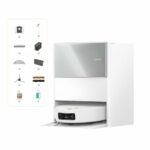
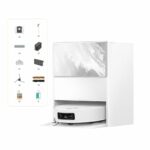
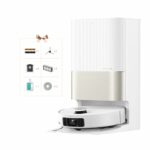
Base station footprints vary considerably. The Qrevo Curv's base forms a compact 450 × 450 × 450 mm cube. The S5V base measures 340 mm wide but extends to 521 mm high and 487 mm deep, creating a taller, narrower profile. The Curv's square design may suit corner placement better, whilst the S5V's shape works well against walls.
Real-World Usage Considerations
For homes with pets, the Qrevo Curv's superior suction, pet recognition, and dirt detection deliver tangible benefits. The dual cameras identify animals and adjust cleaning patterns accordingly, whilst the enhanced suction handles embedded fur more effectively.
In properties with varied flooring—mixing carpets, tiles, and hardwood—the Curv's liftable main brush and superior obstacle climbing prove advantageous. The S5V handles these situations adequately but requires more manual intervention with particularly thick rugs or pronounced thresholds.
The S5V's lower profile becomes its standout practical advantage in homes with low-clearance furniture. That extra 6.5 mm clearance can determine whether a robot cleans beneath beds, sofas, or cabinets or simply avoids them entirely.
Maintenance routines differ primarily around the base station. The Qrevo Curv's self-cleaning tray reduces manual intervention, whilst S5V owners need to periodically scrub the washing tray—not arduous, but worth considering for those seeking maximum automation.
Conclusion: Which to Choose?
Choose the Roborock Qrevo Curv if: you want the most capable robot vacuum Roborock offers, with maximum suction power for deep carpet cleaning and pet hair removal. The dual camera system, dirt detection, hot water mop washing, and self-cleaning base tray justify the premium for larger homes, multi-pet households, or anyone prioritising minimal maintenance. The extended battery suits properties over 150 square metres, and the advanced AI navigation handles complex floor plans with numerous obstacles.
Choose the Roborock Qrevo S5V if: you need a lower-profile robot that fits under more furniture, or you're working with a tighter budget whilst still wanting core premium features like automatic mop washing and drying. The 12,000 Pa suction handles typical household debris effectively, and the 180-minute battery suffices for most properties. You'll sacrifice some intelligent features and hot water mop cleaning, but the fundamentals remain solid for everyday cleaning in homes without excessive pet hair or particularly challenging layouts.