✨ VS Analyses · VacuumSpain comparison technology. Explanation created with AI from verified technical data.
Introduction
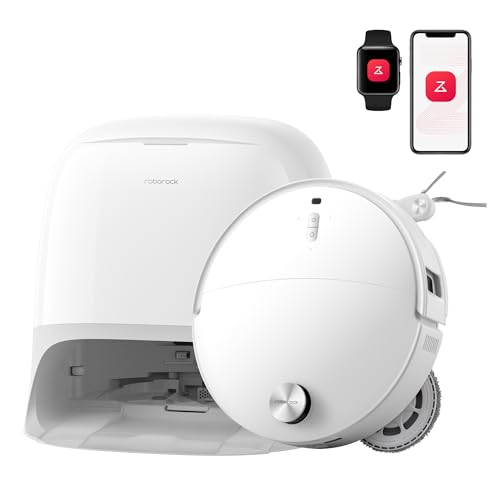
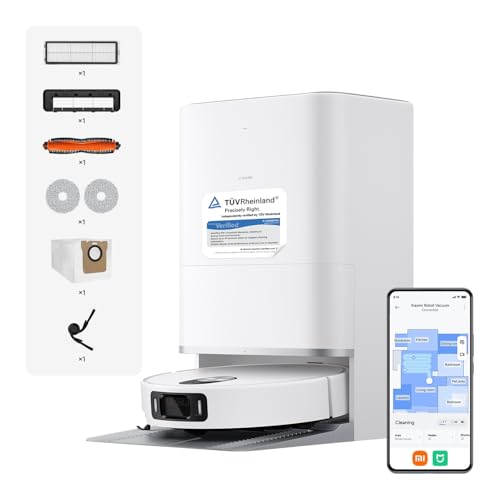
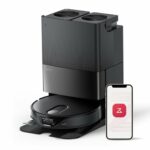
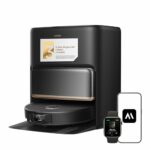
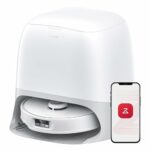
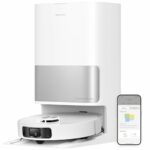
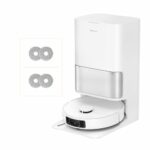
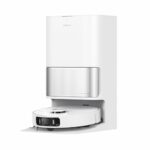
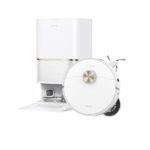
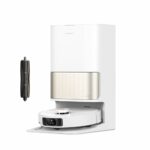
The Roborock Qrevo Curv 2 Pro and the Xiaomi Robot Vacuum 5 Pro represent two high-end propositions launched in 2025 that share many technological similarities, but with nuances that mark different user experiences. Both units are designed for homes seeking complete cleaning automation, with multifunction bases that wash and dry the mops, advanced navigation with artificial intelligence and the ability to overcome obstacles.
The choice between these two models will depend on aspects such as the size of your home, whether you live with pets, the height of your furniture and the level of autonomy you need. Whilst the Roborock model opts for greater power and autonomy, the Xiaomi unit offers a more compact base design.
Power and Suction
Suction power marks an important difference in this robot vacuum comparison. The Roborock robot vacuum reaches 25,000 Pa, which represents 25% more force than the Xiaomi robot vacuum's 20,000 Pa. In practice, this translates into better performance on thick carpets and greater capacity to drag ingrained dirt.
The brushing system also differs. The Roborock Qrevo Curv 2 Pro mounts the DuoDivide anti-tangle brush, designed to push hairs towards the central suction gap and minimise tangles. The Xiaomi Robot Vacuum 5 Pro uses the TriCut 3.0 system, which combines bristles with blades that cut tangled hairs during operation.
Both models raise the main brush during mopping and feature an extendable, anti-tangle side brush. Neither raises the side brush when mopping, but both extend it to improve cleaning in corners. If you live with long-haired pets, the Roborock's DuoDivide design may prove more effective at avoiding frequent maintenance.
Mopping
Both units employ two rotating mops with extension capability to better reach edges. Mop lifting presents differences: the Roborock can raise them between 7 and 17 mm depending on the surface, whilst the Xiaomi raises them up to 15 mm. This flexibility of the Roborock model allows better adaptation to carpets of different thicknesses.
A clear advantage of the Roborock Qrevo Curv 2 Pro is its ability to automatically remove the mops at the base when you only need to vacuum. The Xiaomi Robot Vacuum 5 Pro does not include this function, which means you will have to remove them manually if you want to do a vacuum-only session.
The bases of both robots wash the mops with hot water and dry them with hot air, guaranteeing hygienic maintenance and avoiding bad odours. Both models detect dirt both on the mops and on the floor, activating rewashing or rescrubbing cycles when necessary. The Roborock incorporates the 3.0 tray self-cleaning system, whilst the Xiaomi also features self-cleaning although without specifying version.
Navigation System
Both robots integrate retractable LiDAR to map the home with precision. The Roborock Qrevo Curv 2 Pro stands out for incorporating dual AI camera, compared to the Xiaomi's single camera. This dual configuration improves spatial detection and obstacle recognition from different angles.
Both models recognise up to 200 types of obstacles and feature front 3D laser sensor, LED for night vision and remote camera access. However, the Roborock includes specific pet recognition, a function the Xiaomi does not offer. If you have dogs or cats at home, the Roborock model will be able to identify them and adjust its cleaning behaviour accordingly.
The Roborock uses the SmartPlan 3.0 system for intelligent route planning, whilst the Xiaomi also integrates intelligent cleaning with AI. Neither detects curtains, but both recognise stains thanks to their artificial vision algorithms.
Autonomy and Battery
Here we find one of the most significant differences between these two models. The Roborock robot vacuum mounts a 6,400 mAh battery that provides up to 290 minutes of continuous operation. The Xiaomi, with 5,200 mAh, reaches 140 minutes of autonomy.
This difference is decisive for large homes. With almost double the autonomy, the Roborock can clean large surfaces in a single session without the need for intermediate recharges. For small or medium-sized flats, the Xiaomi's 140 minutes may be sufficient, but in houses of more than 150 square metres the Roborock's advantage is evident.
Smart Functions
The Roborock Qrevo Curv 2 Pro can overcome simple steps thanks to its terrain adaptation system, although it does not specify the exact height. The Xiaomi Robot Vacuum 5 Pro overcomes obstacles up to 20 mm, sufficient for transitions between rooms, thick carpets or small level changes.
A relevant difference is in the voice assistant. The Roborock integrates its own voice assistant in addition to compatibility with Alexa and Google Home. The Xiaomi only works with external assistants. This can be useful if you prefer to control the robot with specific commands without depending on third-party ecosystems.
Multifunction Cleaning Base
Both bases are complete multifunction: they auto-empty the dust container, wash the mops with hot water and dry them with hot air. Neither incorporates UV disinfection nor detergent tank, and neither offers direct connection to pipes nor optional kit for this.
The dust bag capacity is identical: 2.5 litres in both cases. The clean water tanks also match at 4 litres. The difference is in the dirty water tank: the Roborock has 3 litres and the Xiaomi 3.8 litres. This greater capacity of the Xiaomi can slightly reduce the frequency of emptying after intensive mopping sessions.
The Roborock robot's dust container is 245 ml, whilst the Xiaomi does not specify this data. The Roborock's water tank is 67 ml; the Xiaomi confirms it has a water tank but without detailing capacity.
Dimensions
The diameter of both robots is practically identical: 352 mm for the Roborock and 350 mm for the Xiaomi. Height marks a difference: the Roborock measures 79.8 mm compared to the Xiaomi's 88 mm. Those 8.2 mm of difference can be decisive if you have low furniture, sofas or beds with little clearance. The Roborock model will access more easily areas that the Xiaomi might not reach.
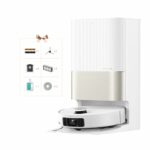
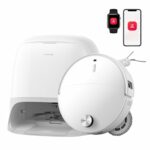
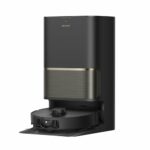
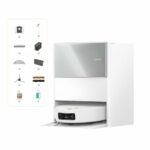
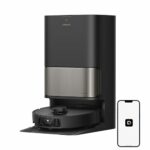
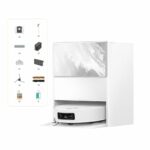
The bases present different design philosophies. The Roborock's forms a cube of 450 mm wide, tall and deep. The Xiaomi's is narrower (360 mm) but considerably taller (572 mm) with 470 mm depth. If you have limited horizontal space, the Xiaomi's base will occupy less width. If the problem is height, the Roborock will be more discreet.
Real-World User Experience
For large homes, the Roborock Qrevo Curv 2 Pro offers clear advantages: greater autonomy, more suction power and lower height to access under furniture. Its ability to automatically remove the mops makes it easy to alternate between vacuuming and mopping sessions without manual intervention.
If you live with pets, the Roborock adds specific animal recognition and a brush designed to reduce hair tangles. The dual AI camera also improves obstacle detection, something useful in homes with toys, cables or feeding bowls on the floor.
The Xiaomi Robot Vacuum 5 Pro is more suitable for small or medium-sized homes where autonomy is not critical. Its narrower base fits better in reduced spaces, and the larger dirty water tank can be practical if you mop large surfaces at once. The robot's height, however, may limit its access under certain furniture.
Both models mop with hot water at the base and dry the mops with hot air, guaranteeing hygiene and convenience. Both recognise dirt and adjust cleaning, and neither requires excessive maintenance thanks to their self-cleaning systems.
Conclusion: Which to Choose?
Choose the Roborock Qrevo Curv 2 Pro if: you live in a large house that requires extended autonomy, you have long-haired pets, you need to pass under low furniture frequently, you value the convenience of automatically removing the mops for vacuum-only sessions, or you prefer an integrated voice assistant without depending on third parties. The greater suction power and dual AI camera also make it the best option for complex environments with many obstacles.
Choose the Xiaomi Robot Vacuum 5 Pro if: your home is small or medium-sized and 140 minutes of autonomy is sufficient, you have little horizontal space for the base and prefer a narrower design, you do not have pets or animal recognition is not a priority for you, and you are looking for a model with a good balance between features and price. The larger dirty water tank can be a plus if you mop large surfaces at once.
In the end, this comparison between the Roborock Qrevo Curv 2 Pro and the Xiaomi Robot Vacuum 5 Pro shows two high-level robots with different approaches. The Roborock opts for autonomy, power and advanced functions for demanding homes. The Xiaomi offers solid performance in a more compact format, ideal for more contained spaces. Choosing the best robot vacuum will depend on the specific characteristics of your home and your cleaning priorities.