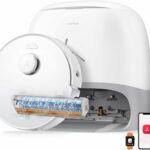
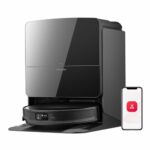
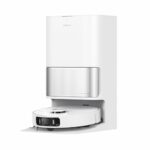
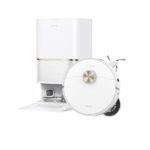
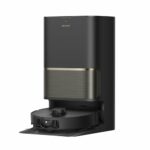
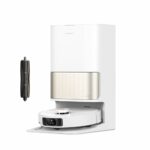
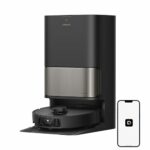
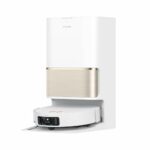
✨ VS Analyses · VacuumSpain comparison technology. Explanation created with AI from verified technical data.
Introduction
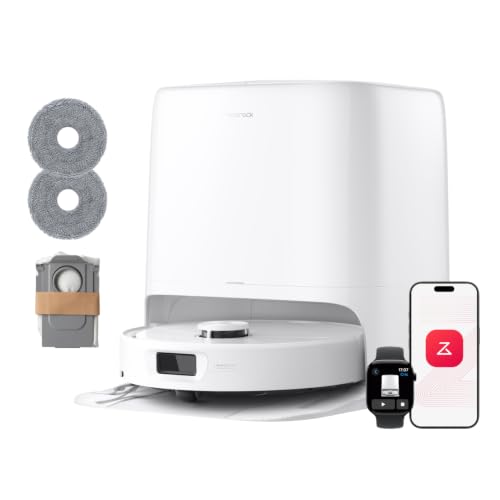
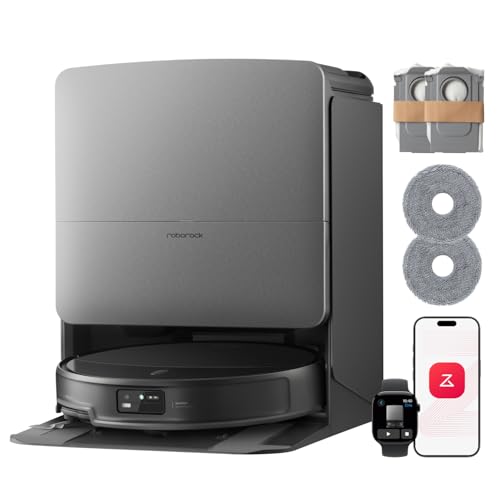
Roborock offers two high-end models that share the same family name and philosophy but feature different technical capabilities. The Qrevo 2 Pro, launched in August 2026, is positioned as a robust option with balanced specifications. The Saros 20, introduced in February of the same year, incorporates more advanced navigation and obstacle-crossing technology, representing a significant step forward within the range.
Both models feature a multifunction dock with hot-water mop washing and heated-air drying, an extendable rotating mop system and the DuoDivide anti-tangle brush. The main differences lie in suction power, battery capacity, navigation systems and smart functions related to dirt detection and visual recognition of the environment.
Power and Suction
The difference in suction power is significant. The Saros 20 delivers 36,000 Pa, allowing it to deal with dense carpets and accumulated dirt more effectively. The Qrevo 2 Pro, with 25,000 Pa, remains capable on hard floors and short-pile carpets, although it may show more limitations on thicker textiles.
Both use the DuoDivide anti-tangle brush, a design that pushes hair towards the central suction channel to minimise tangles. In practice, this reduces weekly maintenance and is particularly useful in homes with long hair or fine-haired pets.
The Saros 20 features main brush lifting, allowing it to raise the roller when carpets are detected while mopping or when moving through areas where intensive brushing is not required. The Qrevo 2 Pro does not offer this capability and keeps the brush fixed at all times.
For the side brush, the Qrevo 2 Pro uses a reversible system that changes its rotation direction to improve corner cleaning. The Saros 20 uses an extendable side brush that pushes the bristles outward when approaching skirting boards, reaching corners more precisely. In addition, the Saros 20 lifts the side brush when it is not needed, while the Qrevo 2 Pro keeps it in contact with the floor at all times.
Mopping
Both models use rotating mops at 200 RPM with extension capability to reach edges. The Saros 20 adds 13 N of pressure to the mops, increasing friction against the floor and improving the removal of stuck-on stains. The Qrevo 2 Pro does not specify additional pressure, relying on rotation and the weight of the robot.
Both models use warm water for floor mopping, helping to soften dirt without the need for aggressive chemicals. Mop lifting differs: the Qrevo 2 Pro lifts up to 15 mm, enough to cross medium-thickness carpets without wetting them, while the Saros 20 offers an adjustable range from 12 to 22 mm, making it better suited to high-pile carpets or more complex transitions.
The Saros 20 includes dirt detection on both the mops and the floor. When the sensors identify persistent dirt, the robot cleans the area again or returns to the dock to wash the mops before continuing. This results in more consistent mopping and fewer manual touch-ups afterwards. The Qrevo 2 Pro does not have these sensors and performs standard mopping without automatically adjusting to the level of dirt.
Both models can leave their mops at the dock for vacuum-only sessions, preventing unnecessary moisture from being dragged around the home.
Navigation System
The Qrevo 2 Pro uses a 360° LiDAR turret and a front 3D structured-light sensor. This system enables accurate mapping and basic obstacle avoidance, although it does not provide visual recognition of specific objects.
The Saros 20 uses StarSight 2.0, combining dual AI cameras, a front 3D laser sensor and night-vision LED. It recognises up to 300 types of obstacles, identifies pets in real time, detects curtains to avoid getting tangled and adapts its navigation according to the type of object. The dual-camera system also enables remote access, allowing the robot to act as a mobile monitoring device when it is not cleaning.
The Saros 20 also features AI stain recognition, visually analysing the floor to focus its efforts on areas with spills or marks. The Qrevo 2 Pro does not offer this feature and distributes cleaning intensity evenly.
Both include SmartPlan 3.0, an algorithm that optimises routes according to floor type and cleaning history. In practice, the Saros 20 can take greater advantage of the system thanks to the additional visual information provided by its cameras.
Runtime and Battery
The Saros 20 features a 6,400 mAh battery, providing enough capacity for large homes or intensive cleaning without intermediate returns to the dock. The Qrevo 2 Pro has a 5,200 mAh battery and claims 253 minutes of runtime, enough to cover areas of up to 200 m² in standard mode.
The larger battery capacity of the Saros 20 is particularly useful when high-consumption functions are activated, such as maximum suction power, high-pressure mopping or navigation with the cameras active. The Qrevo 2 Pro may require intermediate charging in large homes when powerful vacuuming and mopping are used simultaneously.
Smart Features
Obstacle-crossing capability marks a major difference. The Qrevo 2 Pro can handle up to 20 mm, allowing it to cross thick cables, thin rugs or small floor transitions. The Saros 20 can overcome single steps of 45 mm and double obstacles of 88 mm, enabling it to climb onto raised platforms, cross high thresholds or access areas with significant height differences without manual intervention.
The Saros 20 includes its own voice assistant, allowing commands to be given directly to the robot without using the app or external assistants. Both models are compatible with Alexa and Google Home for integration into smart-home ecosystems.
Multifunction Cleaning Dock
Both docks automatically empty the dustbin and wash and dry the mops using hot water and heated air. The Qrevo 2 Pro washes its mops at 75°C and dries them with air at 45°C. The Saros 20 raises these temperatures to 100°C for washing and 55°C for drying, helping remove bacteria more quickly and reducing the time required for complete drying.
The Qrevo 2 Pro has a removable wash tray, making periodic manual cleaning easier but requiring user intervention. The Saros 20 automatically cleans the tray with water at 100°C after each cycle, minimising maintenance.
Only the Saros 20 includes a detergent tank in the dock, automatically dispensing cleaning solution during mop washing. This improves cleaning and helps eliminate odours without requiring liquid to be added manually each time. The Qrevo 2 Pro relies solely on water.
The Qrevo 2 Pro dust bag has a capacity of 2.7 litres, compared with 2.5 litres on the Saros 20. This is a minor difference that in practice may provide one or two additional weeks before the bag needs replacing, depending on the usual level of dirt.
The clean and dirty water tanks are identical: 4 and 3 litres respectively, enough for several mopping sessions in medium-sized homes.
Dimensions
The Saros 20 is 79.8 mm high, allowing it to clean underneath low furniture, beds with short legs or tight spaces that the Qrevo 2 Pro, at 96.6 mm, cannot access. This difference of almost 17 mm can be decisive in homes with low-profile furniture or storage space beneath sofas.
The diameter is almost identical: 352 mm for the Qrevo 2 Pro and 353 mm for the Saros 20. Neither model has a significant advantage in narrow spaces or tight corridors.
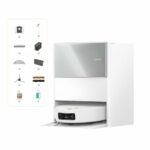
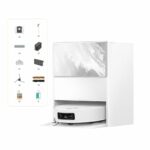
The docks differ in configuration. The Qrevo 2 Pro dock measures 402 mm wide, 450 mm high and 494 mm deep. The Saros 20 dock measures 381 mm wide, 488 mm high and 475 mm deep. The Qrevo 2 Pro is wider and deeper but lower, while the Saros 20 is more compact horizontally but taller. It is advisable to measure the available space before choosing, especially if the dock will be placed under a worktop or inside low furniture.
Real-world user experience
The Saros 20 is better suited to large homes thanks to its larger battery and ability to overcome significant height differences. If the home has internal steps, raised platforms or difficult transitions, this model can handle them without manual intervention. Dirt detection and stain recognition also reduce the need for repeat cleaning, optimising overall cleaning time.
In homes with pets, the Saros 20 adds visual recognition that allows it to avoid food bowls, toys or animals lying on the floor, while also adjusting its navigation so it does not disturb them. The Qrevo 2 Pro, although effective at handling hair thanks to the DuoDivide brush, does not identify pets and may come too close or startle them during cleaning.
For homes with low furniture, the reduced profile of the Saros 20 makes a real difference. It reaches areas the Qrevo 2 Pro leaves uncleaned, helping prevent dust build-up under beds or cabinets.
The Qrevo 2 Pro is well suited to medium-sized homes without complex height differences, where its 253 minutes of runtime comfortably covers the available floor area. Its removable tray also makes manual cleaning easier for users who prefer direct control over dock maintenance.
Both models handle hard floors and parquet without difficulty. The Saros 20, with greater suction power and mopping pressure, performs better on thick carpets and difficult stains. The Qrevo 2 Pro remains effective on short-pile carpets and moderate dirt.
Conclusion: Which one should you choose?
Choose the Roborock Qrevo 2 Pro if you are looking for a high-end robot with a complete multifunction dock at a presumably lower price, your home is medium-sized without significant height differences, you do not need visual object recognition or advanced dirt detection, and you prefer a removable wash tray for manual cleaning. It performs well on hard floors and short-pile carpets, with enough runtime for most homes.
Choose the Roborock Saros 20 if you have a large home or significant height differences such as raised platforms or high thresholds, live with pets and value visual recognition for avoiding living obstacles, need maximum suction power for dense carpets, want the robot to detect and re-clean stains automatically without supervision, want remote camera access for monitoring, or have low furniture that requires a slim-profile robot. The 100°C wash-tray self-cleaning system and detergent tank also minimise maintenance.