✨ VS Analyze · VacuumSpain comparison technology. AI-generated explanation based on verified technical data.
Introduction
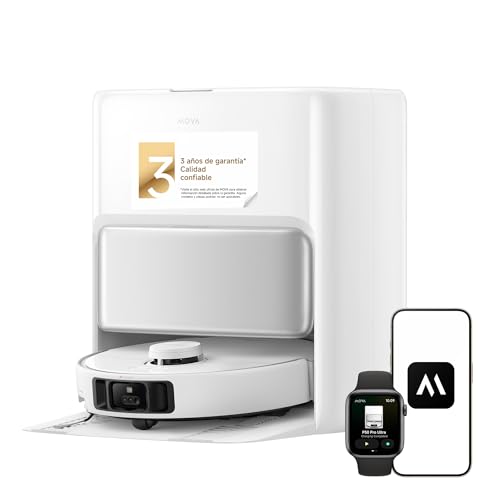
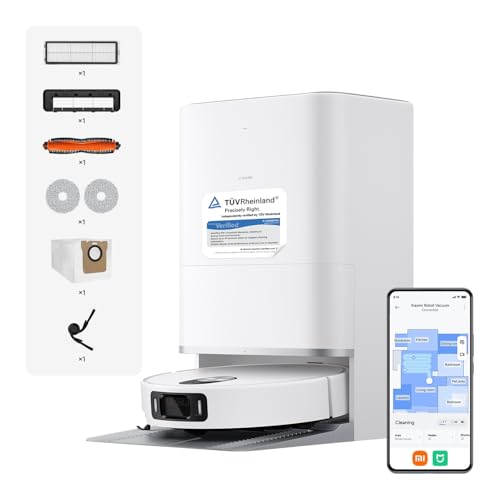
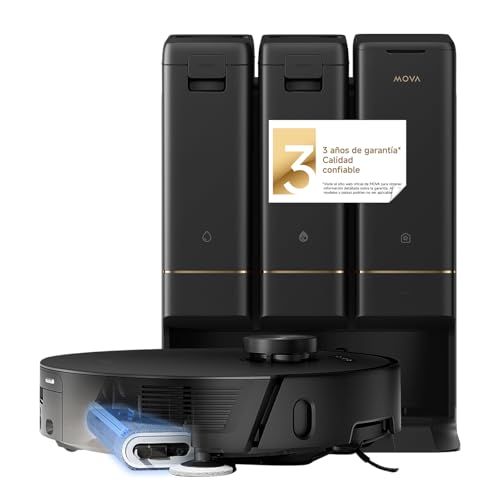
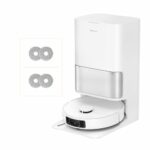
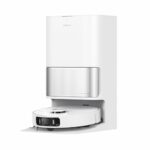
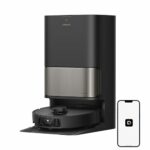
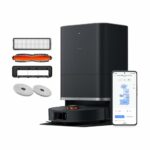
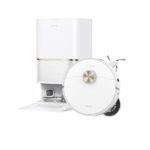
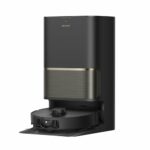
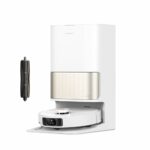
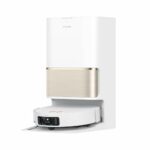
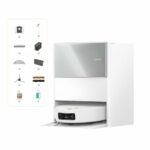
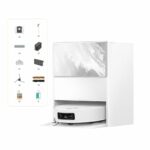
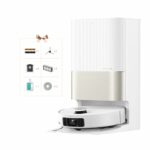
These three robots represent Mova's latest offerings for 2025, alongside Xiaomi's flagship model from the same year. The Mova P50 Pro Ultra and Xiaomi Robot Vacuum 5 Pro sit in similar price brackets, whilst the Mova Z50 Ultra positions itself as a premium alternative with some distinctive features. All three come equipped with multifunctional bases that handle the complete cleaning cycle, from vacuuming to mopping and drying, making them suitable for users seeking minimal intervention in their daily cleaning routines.
The Mova P50 Pro Ultra delivers 19,000 Pa of suction with a 5,200 mAh battery offering 210 minutes of autonomy. The Xiaomi Robot Vacuum 5 Pro steps up to 20,000 Pa but drops to 140 minutes of runtime despite sharing the same battery capacity. The Z50 Ultra takes a different approach with a larger 6,400 mAh battery and introduces hot water mopping through a wide roller system rather than dual rotating mops.
Power and Vacuuming
The Xiaomi Robot Vacuum 5 Pro edges ahead with 20,000 Pa of suction power, a 1,000 Pa advantage over the 19,000 Pa delivered by both Mova models. In practical terms, this translates to slightly better performance on carpets and when dealing with embedded dirt, though all three sit comfortably in the high-performance bracket for 2025.
All three robots use the TriCut 3.0 brush system, which combines bristles with integrated blades to slice through tangled hair as it cleans. The main brush lifts during mopping on all models, preventing wet debris from transferring back onto cleaned floors.
Where the Mova models pull ahead is with their retractable side brushes during mopping. The P50 Pro Ultra and Z50 Ultra lift their side brushes when the mops are active, preventing wet flicking along skirting boards. The Xiaomi lacks this feature, which can occasionally leave damp streaks on walls during mopping passes. All three extend their side brushes for improved corner coverage during vacuuming and include anti-tangle designs.
Mopping
The mopping approach splits these robots into two camps. The Mova P50 Pro Ultra and Xiaomi Robot Vacuum 5 Pro both use dual rotating mops that spin against the floor, whilst the Z50 Ultra adopts a wide roller system that covers more ground in a single pass.
Mopa extension works differently across the range. The P50 Pro Ultra combines mop extension with Roboswing, a feature that creates a slight swaying motion to push the mop under furniture edges and along skirting boards more effectively. The Xiaomi extends its mops but without the swaying action. The Z50 Ultra deploys a mini side mop that reaches into edges, a different solution to the same problem.
Mopa elevation tells an interesting story. The Xiaomi lifts its mops 15 mm when transitioning to carpets or rugs, the highest of the three. The P50 Pro Ultra manages 10.5 mm, whilst the Z50 Ultra's roller lifts just 7 mm. For homes with thick rugs, the Xiaomi offers the safest approach to avoid dragging damp mops across fabric.
The Z50 Ultra stands alone with hot water mopping. The base heats water before sending it to the robot, which helps break down stubborn marks and dried-on spills more effectively than cold water. The P50 Pro Ultra and Xiaomi both mop with cold water, which works well for daily maintenance but requires more passes on tougher stains.
Only the P50 Pro Ultra automatically removes its mops at the base when you want a vacuum-only session. The other two require manual removal if you want to avoid unnecessary mopping. All three detect dirt on their mops and on the floor, triggering additional cleaning passes when needed.
Navigation System
The Xiaomi uses a retractable LiDAR system, which drops below the robot's surface when not actively mapping, contributing to its slim 88 mm height. Both Mova models feature traditional LiDAR turrets that sit proud of the body, adding to their overall height but providing reliable room mapping and navigation.
All three include dual cameras for AI-powered obstacle recognition and 3D laser sensors at the front for close-range detection. LED lighting enables night-time operation without relying solely on infrared sensors.
The Xiaomi recognises 200 different obstacle types, outpacing the 160 objects identified by both Mova models. In daily use, this means slightly better decision-making around unusual items left on the floor. However, the Mova robots specifically identify pets and curtains, allowing them to adjust behaviour around animals and avoid tangling in drapes. The Xiaomi lacks these specific recognitions.
All three offer remote camera access through their apps, letting you check on your home whilst the robot cleans. The CleanGenius AI system on both Mova models provides intelligent cleaning suggestions based on detected dirt levels and room types, a feature the Xiaomi matches with its own AI cleaning mode.
Battery and Autonomy
The Mova P50 Pro Ultra runs for 210 minutes on its 5,200 mAh battery, the longest runtime of the three. The Xiaomi Robot Vacuum 5 Pro uses an identical battery capacity but delivers just 140 minutes of operation, suggesting less efficient power management or higher consumption during cleaning. The Z50 Ultra packs a larger 6,400 mAh battery, though Mova hasn't published runtime figures for this model.
For larger homes, the P50 Pro Ultra's extended runtime means fewer interruptions for recharging during whole-house cleaning sessions. The Xiaomi's shorter autonomy may require a mid-clean top-up in properties above 100 square metres, particularly when using maximum suction.
Smart Features
All three robots handle obstacles up to 20-22 mm in height. The Mova models clear 22 mm thresholds, whilst the Xiaomi manages 20 mm. This matters when transitioning between rooms with raised door bars or moving onto thick rugs.
The P50 Pro Ultra and Z50 Ultra include built-in voice assistants, allowing you to issue commands directly to the robot without needing a smart speaker. The Xiaomi relies on external assistants like Alexa or Google Home, which all three support.
Multifunctional Base
All three bases handle automatic dust emptying, mop washing, and mop drying. The washing process uses hot water on the P50 Pro Ultra and Xiaomi, whilst the Z50 Ultra washes with cold water despite heating water for floor mopping. Drying happens with hot air across the range, speeding up the process and reducing odour risk.
The P50 Pro Ultra features third-generation tray self-cleaning, the most advanced system here. The Xiaomi includes tray cleaning but without specifying the generation. The Z50 Ultra doesn't clean its tray automatically, requiring occasional manual rinsing.
Detergent dispensers appear on both the P50 Pro Ultra and Z50 Ultra, automatically adding cleaning solution during mop washing. The Xiaomi lacks this feature, relying on water alone.
Dust bag capacity varies significantly. The Z50 Ultra holds 4 litres, the P50 Pro Ultra stores 3.2 litres, and the Xiaomi manages 2.5 litres. Larger bags mean fewer changes, particularly useful in homes with pets or high dust levels.
Water tank sizes remain fairly consistent. The Z50 Ultra leads with 4.5 litres of clean water and 4 litres for dirty water. The P50 Pro Ultra and Xiaomi both carry 4 litres of clean water, with dirty water tanks at 3.5 and 3.8 litres respectively.
Dimensions
The Xiaomi Robot Vacuum 5 Pro measures just 88 mm tall, making it the clear winner for slipping under low furniture. The P50 Pro Ultra stands 103.8 mm high, whilst the Z50 Ultra reaches 111 mm. If you have sofas, beds, or cabinets with limited clearance, the Xiaomi accesses spaces the Mova models cannot reach.
All three share a 350 mm diameter, standard for modern robot vacuums. Base dimensions vary more noticeably. The Xiaomi's base measures 360 mm wide, 572 mm tall, and 470 mm deep. The P50 Pro Ultra's base spans 420 mm wide, 470 mm tall, and 458 mm deep. The Z50 Ultra sits at 390 mm wide, 545 mm tall, and 463.3 mm deep. The Xiaomi's narrower footprint suits tighter spaces, though its extra height may limit placement under counters or shelving.
Real-World Use
For homes with multiple rooms and larger floor areas, the P50 Pro Ultra's 210-minute runtime provides the stamina to complete full cleaning cycles without recharging breaks. The Xiaomi's 140 minutes suits smaller properties or those happy with room-by-room cleaning across multiple sessions.
Pet owners benefit from the specific animal recognition on both Mova models, which helps avoid disturbing sleeping pets or following them around unnecessarily. The TriCut 3.0 brush system across all three handles pet hair well, though the larger dust bags on the Mova models reduce emptying frequency.
The Xiaomi's slim profile makes it ideal for homes with low-clearance furniture, reaching areas the taller Mova robots miss. This matters particularly under beds, sofas, and kitchen cabinets where dust accumulates.
The hot water mopping on the Z50 Ultra delivers noticeably better results on sticky spills and dried-on marks, though the roller system requires more frequent cleaning than spinning mops. The P50 Pro Ultra's ability to detach its mops automatically suits users who want vacuum-only sessions without manual intervention.
Conclusion: Which to Choose?
Choose the Mova P50 Pro Ultra if you want the longest battery life, automatic mop detachment for vacuum-only cleaning, and third-generation base tray cleaning. The 210-minute runtime handles large homes comfortably, whilst the detergent dispenser and pet recognition add convenience. The retractable side brush during mopping prevents wall streaks, and the Roboswing feature improves edge cleaning.
Choose the Xiaomi Robot Vacuum 5 Pro if you need to clean under low furniture regularly. The 88 mm height accesses spaces the Mova models cannot reach, whilst the 15 mm mop lift provides the best carpet protection. The 20,000 Pa suction offers a slight edge on deep cleaning, and the 200-object recognition handles unusual obstacles well. The narrower base fits tighter spaces, though you'll miss out on detergent dispensing and pet-specific recognition.
Choose the Mova Z50 Ultra if you prioritise hot water mopping for stubborn stains and want the largest dust bag capacity at 4 litres. The 6,400 mAh battery suggests strong autonomy potential, whilst the wide roller mop system covers more ground per pass. The mini side mop tackles edges effectively, and the detergent dispenser adds cleaning power. However, the 111 mm height limits access under furniture, and the lack of automatic tray cleaning requires occasional manual maintenance.