✨ VS Analyze · VacuumSpain comparison technology. AI-generated explanation based on verified technical data.
Introduction
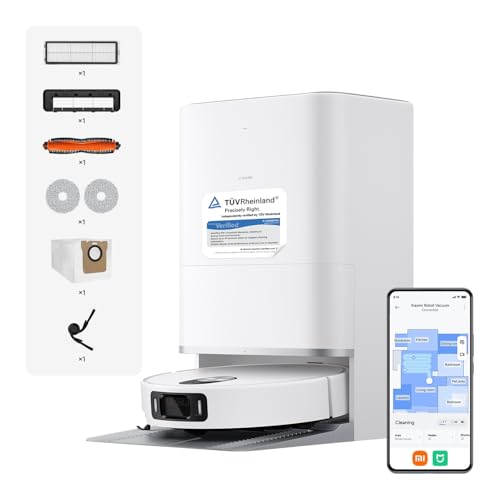
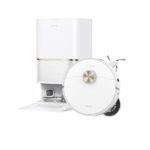
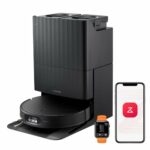
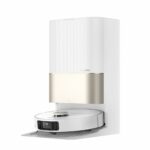
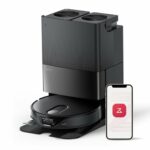
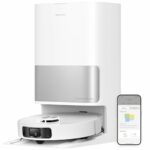
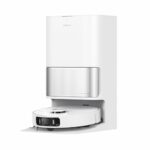
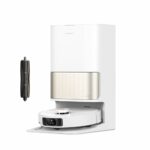
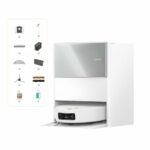
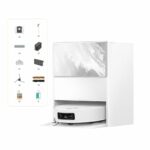
The Xiaomi Robot Vacuum 5 Pro and the Dreame X50 Ultra Blanca represent two compelling entries in the 2025 robot vacuum market. Both devices combine powerful suction with advanced mopping capabilities, supported by multifunction bases that handle much of the maintenance automatically. These aren't entry-level models—they're designed for users who want comprehensive floor cleaning without constant manual intervention.
The Xiaomi offering brings the established reputation of a brand known for balancing features with competitive pricing, whilst Dreame positions itself as a manufacturer willing to pack in extra technology at attractive price points. Understanding the differences between these two can help determine which suits your home better, particularly if you have pets, large floor areas, or specific layout challenges.
Power and Suction
Both models deliver 20,000 Pa of suction power, placing them firmly in high-performance territory. This level of suction handles everything from fine dust on hard floors to embedded dirt in rugs without difficulty.
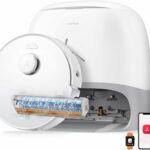
Where they diverge is the brush technology. The Xiaomi Robot Vacuum 5 Pro employs a TriCut 3.0 brush, which combines bristles with integrated cutting blades to slice through tangled hair as it cleans. The Dreame X50 Ultra Blanca opts for a Dual HyperStream brush system—two brushes anchored at one end that actively resist hair entanglement through their design. In practice, both approaches reduce maintenance compared to traditional bristle-only brushes, though the dual-brush configuration tends to push hair more effectively toward the suction inlet.
Both robots lift their main brushes when mopping to avoid dragging dirt across wet floors. The side brushes also extend to reach into corners more effectively, and both include anti-tangle features. However, the Dreame takes this further by lifting its side brush during mopping operations, preventing it from flicking water or interfering with the mop pads. The Xiaomi keeps its side brush active throughout mopping.
Mopping Performance
Each robot uses dual rotating mop pads that spin against the floor rather than simply dragging across it. This mechanical action helps break up dried-on marks rather than just spreading moisture around.
The Xiaomi Robot Vacuum 5 Pro lifts its mops 15 mm when crossing carpets or returning to the base, whilst the Dreame X50 Ultra Blanca achieves 10.5 mm of lift. The extra clearance on the Xiaomi provides more confidence when dealing with thicker rugs or raised thresholds. Both extend their mops to reach closer to skirting boards, though the Dreame adds a swinging motion that helps the pads work slightly under furniture edges and overhangs.
A notable distinction emerges in how they handle the transition between vacuuming and mopping. The Dreame can automatically detach its mop pads at the base when you only want to vacuum, saving you from manual removal. The Xiaomi requires you to remove the mops yourself if you're planning a vacuum-only session.
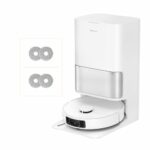
Both bases wash mop pads with hot water and dry them with heated air to prevent odours and bacterial growth. They also detect when mops are particularly dirty and adjust their cleaning routines accordingly, rewashing or reflooring areas that need extra attention. The Dreame base includes third-generation self-cleaning for its washing tray, and adds UV disinfection to sanitise the mops after cleaning. It also features a detergent dispenser that automatically adds cleaning solution during mop washing—something the Xiaomi lacks.
Navigation System
Both robots use retractable LiDAR for mapping and navigation, creating detailed floor plans that they update as they clean. Each employs 3D laser sensors at the front to detect obstacles in real time, and both recognise up to 200 different object types to avoid collisions.
The camera setup differs between them. The Xiaomi Robot Vacuum 5 Pro has a single AI camera, whilst the Dreame X50 Ultra Blanca features dual cameras. This dual-camera configuration provides better depth perception and more accurate object identification. In practical terms, this shows up in how confidently the Dreame navigates around complex furniture arrangements or scattered floor clutter.
The Dreame specifically recognises pets and curtains, adjusting its behaviour to avoid startling animals or getting tangled in drapes. The Xiaomi doesn't list these specific recognition capabilities. Both include LED illumination for night-time navigation and allow remote camera access through their apps, useful for checking on your home when you're away.
The Dreame runs on an AI Sage 13.0 octa-core processor with CleanGenius AI for intelligent cleaning decisions. The Xiaomi's processor isn't specified, though it clearly handles AI-based spot recognition and adaptive cleaning.
Battery and Autonomy
Battery capacity creates one of the clearer dividing lines between these models. The Xiaomi packs a 5,200 mAh battery delivering approximately 140 minutes of runtime, whilst the Dreame's 6,400 mAh cell extends this to around 180 minutes. That extra 40 minutes matters in larger homes or when running intensive cleaning modes that drain power faster.
The longer runtime means the Dreame can cover more ground in a single session before returning to recharge, reducing interruptions in multi-room cleaning cycles. For homes under 100 square metres, the Xiaomi's battery proves perfectly adequate. Push beyond that, especially with multiple mopping cycles that require frequent base returns for mop washing, and the Dreame's stamina becomes more valuable.
Intelligent Features
Both robots can climb obstacles, though their capabilities differ. The Xiaomi Robot Vacuum 5 Pro manages 20 mm steps—sufficient for standard door thresholds and low carpet edges. The Dreame X50 Ultra Blanca handles simple 20 mm steps but also tackles more complex obstacles, suggesting more sophisticated wheel and suspension systems that adapt to uneven transitions.
The Dreame includes its own voice assistant in addition to working with Alexa and Google Home, allowing direct commands without routing through external services. The Xiaomi relies entirely on external voice assistants. This built-in assistant can be convenient for quick commands or in smart home setups where you prefer not to depend on cloud services.
Multifunction Base
Both bases handle auto-emptying of the dust bin, mop washing with hot water, and heated air drying. The self-maintenance these bases provide transforms the user experience compared to robots with simple charging docks.
Storage capacity favours the Dreame across the board. Its dust bag holds 3.2 litres versus 2.5 litres in the Xiaomi base, meaning less frequent bag changes—typically extending the interval by several weeks in average homes. The clean water tank measures 4.5 litres compared to 4 litres, whilst dirty water capacity is 4 litres versus 3.8 litres. These differences seem modest but accumulate over time, particularly in larger homes where the robot makes multiple mopping passes.
The Dreame base includes UV disinfection to sanitise mop pads after washing, and a detergent dispenser that automatically doses cleaning solution. The Xiaomi base lacks both features—you'll be washing mops with water only unless you manually add detergent to the tank, which isn't the intended design.
The Dreame offers an optional plumbing connection kit that you can purchase separately to eliminate manual water tank filling and emptying. The Xiaomi doesn't offer this option at all. Neither comes with integrated plumbing connections as standard.
Dimensions
The robots themselves measure identically: 350 mm diameter and nearly the same height—88 mm for the Xiaomi, 89 mm for the Dreame. This single millimetre difference is negligible. Both should fit under furniture with at least 9 cm clearance, though measuring your specific furniture remains wise before assuming they'll squeeze underneath.
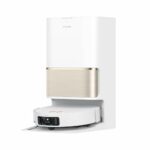
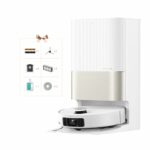
Base dimensions vary more noticeably. The Xiaomi base measures 360 mm wide, 572 mm tall, and 470 mm deep. The Dreame comes in at 340 mm wide, 590.5 mm tall, and 456.7 mm deep. The Dreame base is narrower and slightly shallower but stands taller—consider your available floor space and any overhead cabinets when planning placement.
Real-World Use
For homes with pets, the Dreame X50 Ultra Blanca brings specific advantages. Its dual HyperStream brushes resist hair tangles effectively, the dual cameras help it navigate around animals, and it actually recognises pets to modify its behaviour accordingly. The larger battery means it can cover more ground between charges, useful when pet hair accumulates quickly across large areas.
The Xiaomi Robot Vacuum 5 Pro suits users who prioritise mop lift height—that 15 mm clearance provides more confidence over thicker rugs and higher thresholds. If your home has varied floor levels or you prefer not to create no-go zones around every carpet, this extra lift helps. The TriCut brush handles hair reasonably well, though you'll likely find yourself cleaning it slightly more often than the Dreame's system.
For larger homes, the Dreame's extended battery life and larger base capacities reduce maintenance frequency. You'll empty bags less often, refill water tanks less frequently, and experience fewer mid-clean returns to recharge. The automatic mop removal also streamlines switching between vacuum-only and combined cleaning sessions.
The Xiaomi appeals to those who want solid performance without necessarily needing every advanced feature. It handles the core tasks—vacuuming, mopping, auto-emptying, mop washing—very capably. You miss out on UV disinfection, automatic detergent dispensing, and some navigation refinements, but the fundamentals work well.
Conclusion: Which to Choose?
Choose the Xiaomi Robot Vacuum 5 Pro if you want effective cleaning performance without paying for every possible feature. It works well in medium-sized homes where the 140-minute runtime suffices, and the 15 mm mop lift proves particularly useful if you have thicker carpets or higher door thresholds. The TriCut brush handles hair adequately, and the base performs all essential maintenance tasks. This represents solid value in the robot aspirador category without unnecessary complications.
Choose the Dreame X50 Ultra Blanca if you have a larger home where the extended 180-minute battery life prevents cleaning interruptions. Pet owners benefit from the dual cameras, specific pet recognition, and superior anti-tangle brushes. The automatic mop removal saves hassle when switching between cleaning modes, whilst UV disinfection and automatic detergent dispensing enhance hygiene and convenience. The larger base capacities mean less frequent maintenance, and the optional plumbing kit provides an upgrade path if you want to eliminate manual water management entirely. This delivers a more comprehensive package for those who want maximum automation.
When weighing up differences between these robot aspirador models, consider your home size first. Battery life matters more than any single feature if your robot can't complete a full clean without recharging. Pet owners should lean toward the Dreame for its specific animal-related features. If you value simplicity and don't need every enhancement, the Xiaomi provides excellent core performance. For those wanting the most advanced and automated experience available, the Dreame justifies its additional features through reduced maintenance and smarter operation.