✨ VS Analyses · VacuumSpain comparison technology. Explanation created with AI from verified technical data.
Introduction
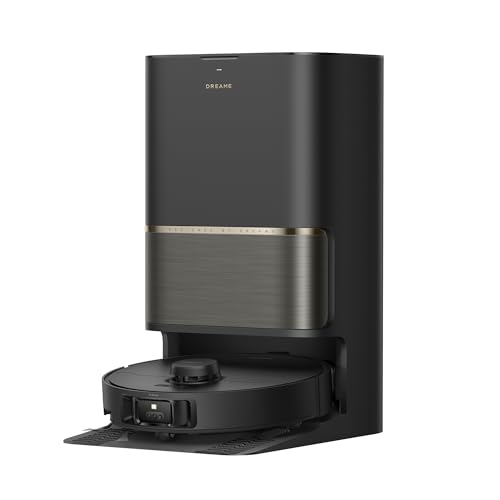
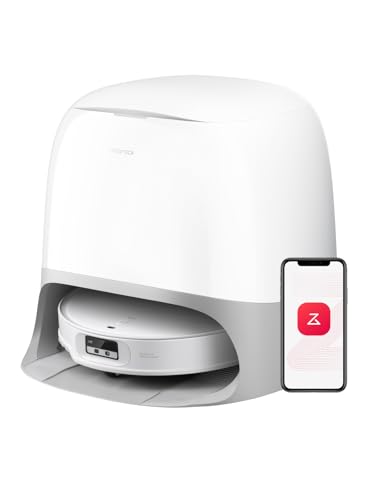
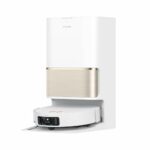
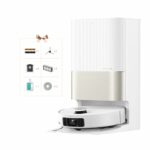
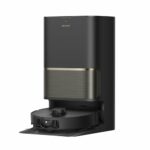
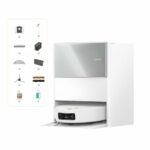
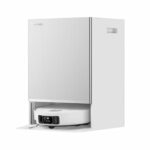
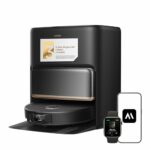
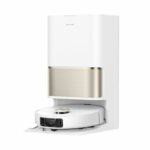
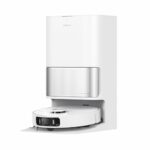
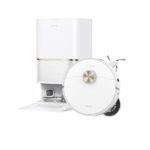
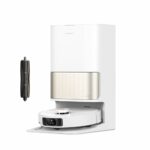
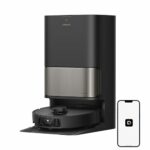
The Dreame L50s Pro Ultra and the Roborock Qrevo CurvX represent two high-end propositions with different approaches. The Dreame model, launched in 2026, stands out for its suction power reaching 30,000 Pa, whilst the Roborock, available since 2025, opts for a more compact design with its retractable LiDAR navigation system. Both units integrate a complete multifunction base with mop washing and drying using hot water and air, which guarantees efficient mopping without manual intervention.
These are robots designed for users seeking total autonomy in medium or large-sized homes, with the capacity to manage pet hair and adapt to different floor types. The choice between one or the other will depend on priorities such as available height under furniture, necessary suction power or the base's tank capacity.
Power and Suction
The 8,000 Pa difference between both models is not insignificant. The Dreame L50s Pro Ultra reaches 30,000 Pa, a figure that translates into better performance on thick carpets and in capturing ingrained dirt. The Roborock Qrevo CurvX, with 22,000 Pa, remains powerful for most domestic situations, although the difference may be noticeable on dense textiles or in homes with heavy dust accumulation.
Regarding brushing, the Dreame features a HyperStream anti-tangle dual brush system, designed to minimise hair tangles thanks to its two brushes anchored at one end. The Roborock uses its DuoDivide brush, which pushes hairs towards the central suction gap, also effective against tangles. Both systems work well in homes with pets, albeit with different design philosophies.
The side brush presents a clear advantage in the Dreame: besides being extendable to sweep corners better, it can lift during mopping. This prevents the brush from interfering with the mops or dragging wet dirt. The Roborock has an extendable and anti-tangle side brush, but doesn't lift it during mopping. For homes where vacuuming and mopping are frequently alternated, this feature can make a difference in edge cleaning.
Mopping
Both robots mop with two rotating mops and feature extension to reach edges better. The Dreame adds the Roboswing system, a swinging movement that allows the mop to slightly reach under furniture or protrusions, something the Roborock doesn't incorporate. In practice, this can be useful in kitchens with skirting boards or low furniture where the fixed mop doesn't reach.
Mop lifting differs between models. The Dreame lifts 10.5 mm, sufficient to climb over thin carpets without wetting them. The Roborock offers a range of 7 to 17 mm, giving it more versatility on carpets of different thicknesses. Both mop with cold water, but the bases wash the mops with hot water and dry them with hot air, guaranteeing hygiene and preventing bad odours.
An important difference: the Dreame can automatically remove the mops at the base to perform vacuum-only sessions without dragging dry mops across the floor. The Roborock doesn't have this function, which means leaving the mops attached even when not mopping. For those who alternate vacuuming and mopping days, the Dreame's system proves more practical.
Both detect dirt on both the mops and the floor, activating automatic re-mopping in areas that need it. This functionality is especially useful in kitchens or dining rooms where frequent spills occur.
Navigation System
The Dreame uses a traditional 3D LiDAR turret, whilst the Roborock opts for a retractable LiDAR that reduces the robot's total height. This difference explains the almost 24 mm separating both models: the Roborock, at 79.8 mm, can slip under more furniture than the Dreame, which reaches 103.8 mm. If you have low sofas or beds with little space, it's worth measuring before deciding.
Both feature dual cameras with artificial intelligence and a front 3D laser sensor to avoid obstacles. The Dreame recognises up to 220 different objects, more than double the Roborock's 108. This translates into better identification of items such as cables, slippers or small toys. The Dreame also detects curtains to avoid wetting them during mopping, a function the Roborock doesn't include and which can prevent mishaps in living rooms with long curtains.
Both robots recognise pets, incorporate LEDs for night vision and allow remote camera access from the mobile. The Dreame integrates CleanGenius AI for intelligent cleaning and stain recognition using AI. The Roborock uses SmartPlan 2.0 and the RR Mason 11.0 algorithm, although it doesn't specify AI stain recognition as such.
Autonomy and Battery
The Roborock Qrevo CurvX features a 6,400 mAh battery offering 220 minutes of declared autonomy. The Dreame L50s Pro Ultra has 5,200 mAh, although it doesn't specify duration in minutes. In practice, the Roborock's greater capacity may be noticeable in large homes or in complete cleaning sessions without needing to recharge mid-cycle.
The 1,200 mAh difference isn't trivial, especially when combining vacuuming and mopping on large surfaces. The Roborock should cover homes over 150 m² more comfortably in a single run, whilst the Dreame, with its greater suction power, may consume battery faster in maximum mode.
Smart Functions
Both robots can overcome simple steps, facilitating passage between rooms with small level changes or access to walk-in showers. Both incorporate their own voice assistant and are compatible with Alexa and Google Home, allowing voice control without needing to take out the mobile.
The Dreame stands out for its greater object recognition capacity, which reduces manual interventions to remove obstacles. The Roborock compensates with its lower height, which expands accessible areas under furniture.
Multifunction Cleaning Base
Both bases offer auto-emptying, hot water washing and hot air drying. The Dreame includes third-generation tray self-cleaning, the same as the Roborock with its 3.0 system. Both bases maintain hygiene without manual intervention for weeks.
The Dreame incorporates a detergent tank in the base, dispensing product during mop washing. The Roborock doesn't have this tank, which means using only water or manually adding detergent to the clean water tank if desired. For those seeking total automation, the Dreame's system proves more complete.
The Dreame's dust bag has 3.2 L compared to the Roborock's 2.5 L. This translates into fewer bag changes per year, especially in homes with pets or heavy traffic. The water tanks also favour the Dreame: 4.5 L of clean water and 4 L of dirty water, compared to 4 L and 3 L for the Roborock. The difference may be noticeable in large homes where mopping is frequent.
The Dreame offers an optional kit for plumbing connection that's purchased separately, allowing automatic refilling and emptying of tanks. The Roborock doesn't have this option even as an accessory. Although it's not an integrated function, it may interest those seeking the maximum level of autonomy.
Dimensions
The Roborock Qrevo CurvX measures 79.8 mm in height, making it an ideal option for passing under low beds, sofas or kitchen furniture with little space. The Dreame, at 103.8 mm, is 24 mm higher, which may limit access in some spaces. If you have furniture with less than 10 cm of clearance, the Roborock is the logical choice.
The diameter is practically identical: 350 mm for the Dreame and 353 mm for the Roborock. Both manoeuvre well in narrow corridors or between chair legs. Weight isn't specified in the available data.
The Dreame's base measures 340 mm wide, 590 mm high and 457 mm deep. The Roborock's has a more compact and cubic shape: 450 mm in all three dimensions. The Roborock's base is wider but less tall, which may facilitate its placement under worktops or low shelves. The Dreame's is narrower but taller, adapting better to narrow corners.
Real-World Usage Experience
In homes with pets, both robots work well thanks to their anti-tangle brushes and good suction power. The Dreame offers an advantage on thick carpets due to its 30,000 Pa, whilst the Roborock compensates with greater autonomy to cover large surfaces without recharging.
For homes with low furniture, the Roborock accesses more areas thanks to its 79.8 mm height. The Dreame, being taller, may get stuck under certain sofas or beds, although its capacity to recognise 220 objects reduces jams from loose obstacles.
In large homes where mopping is frequent, the Dreame's larger tanks (4.5 L and 4 L) allow cleaning more square metres without refilling. The integrated detergent tank also adds convenience by not having to add product manually. The Roborock, with slightly smaller but sufficient tanks for most cases, compensates with its greater battery autonomy.
The Dreame's automatic mop removal proves practical for those who alternate dry vacuuming and mopping days. The Roborock requires leaving the mops attached, although being dry they don't interfere too much. The Dreame's curtain detection prevents wetting them, something to consider if you have floor-length curtains in the living room or bedrooms.
Conclusion: Which to Choose?
Choose the Dreame L50s Pro Ultra if… you're looking for maximum suction power for thick carpets or pet hair, you value having an integrated detergent tank in the base for total automation, you need large water tanks for spacious homes, you want to automatically remove mops for vacuum-only sessions, or you're interested in curtain detection and extended recognition of up to 220 objects. Also if your home has sufficient height under furniture (over 11 cm) and you prefer a narrower base even if taller.
Choose the Roborock Qrevo CurvX if… you have low furniture and need a robot of only 79.8 mm height, you prioritise greater battery autonomy to cover large surfaces without recharging, you're looking for a more compact base in height that fits under worktops, or you prefer a model with Roborock's proven track record since 2025. It's ideal for homes where access under furniture makes the difference and the 22,000 Pa power perfectly covers the needs of hard floors and medium-thickness carpets.