✨ VS Analyses · VacuumSpain comparison technology. Explanation created with AI from verified technical data.
Introduction
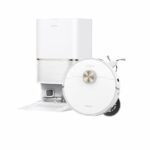
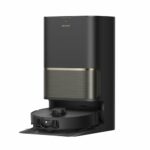
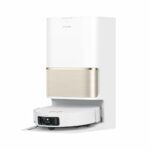
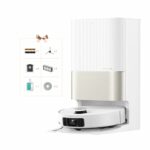
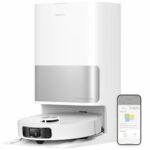
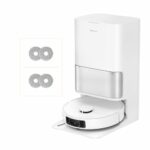
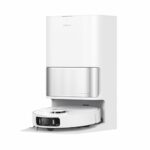
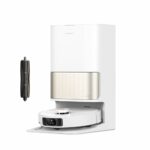
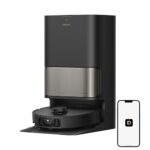
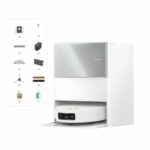
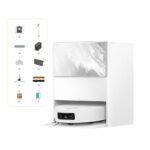
The Dreame L50s Pro Ultra and Roborock Qrevo Curv are two high-end options in the world of robot vacuum cleaners with multifunction docks. Dreame's model arrives in 2026 with a focus on innovations in suction power and cleaning capability, while the Roborock was launched in 2024, building on the experience of a brand recognised worldwide for its reliability and refined software.
Both models are designed for users looking for complete automation: they vacuum, mop, wash their own mops and dry them with hot air. However, each takes a different technical approach to suction power, tank capacity, navigation and mopping. Differences in height, obstacle-climbing ability and brush systems also make them better suited to different types of homes.
Suction Power and Vacuuming
Suction power is one of the biggest differences between these two models. The Dreame robot vacuum reaches 30,000 Pa, considerably higher than the 18,500 Pa offered by the Roborock robot vacuum. In practice, this gives it greater potential to remove embedded dirt from carpets or pick up heavier debris in a single pass.
The brush systems also take different approaches. The Dreame L50s Pro Ultra features a dual HyperStream anti-tangle brush designed to minimise hair tangles thanks to its single-sided mounting system. The Roborock Qrevo Curv uses the DuoDivide anti-tangle brush, which guides hair towards the central opening to make it easier to vacuum up. Both systems are effective against hair and pet fur, although they achieve this in different ways.
Both robot vacuums lift the main brush while mopping to prevent moisture from affecting it. However, only the Dreame also lifts the side brush in this situation, which can help keep the mechanism cleaner. Both models feature an extendable side brush for reaching corners as well as anti-tangle technology in this component.
Mopping
Both models mop using two rotating mop pads, although they operate at different speeds: 180 RPM on the Dreame compared with 200 RPM on the Roborock. The difference of 20 revolutions per minute may be noticeable on particularly dirty floors, where the Roborock applies greater mechanical scrubbing action.
The Dreame L50s Pro Ultra features the RoboSwing system, which moves the mop sideways to reach underneath overhangs and low furniture. The Roborock Qrevo Curv extends its mop to clean along edges, but without this additional movement. In homes with a lot of furniture positioned close to walls, RoboSwing can make a noticeable difference.
Mop lifting reaches 10.5 mm on the Dreame and 10 mm on the Roborock, although the latter can lift its entire chassis to achieve up to 20 mm of clearance when it detects carpets or surfaces requiring greater separation. This additional capability makes the Qrevo Curv particularly useful in homes with medium-pile carpets.
Both robots wash their mop pads with hot water in the dock, but the Dreame reaches 100°C while the Roborock reaches 75°C. The higher temperature used by the Dreame may help remove grease and bacteria more effectively. Both models dry their mop pads with hot air at 45°C to help prevent unpleasant odours.
Wash tray self-cleaning is available on both models, although Dreame uses a third-generation system compared with Roborock's 2.0 version. Only the Dreame includes a detergent tank in the dock, allowing the mopping process to be fully automated without manually adding cleaning solution.
Both robot vacuums detect dirt on the mop pads and on the floor, adjusting the cleaning process when necessary. However, the Dreame L50s Pro Ultra goes a step further by recognising stains with AI, allowing it to focus on specific areas without user intervention.
Navigation System
Both the Dreame L50s Pro Ultra and Roborock Qrevo Curv use a 360° LiDAR turret to map the home, dual AI cameras and a front-facing 3D laser sensor for obstacle avoidance. Both provide remote camera access and feature an LED for night vision.
The most striking difference is the number of obstacles they can recognise: 220 on the Dreame compared with 62 on the Roborock. This broader recognition capability may allow the Dreame to identify smaller or less common objects more effectively, although both robots are capable of avoiding the usual household obstacles in everyday use.
Only the Dreame L50s Pro Ultra detects curtains and can clean behind them, a feature not included on the Qrevo Curv. In homes with long curtains that reach the floor, this can prevent areas from being left uncleaned.
The Dreame uses CleanGenius 3.0 as its intelligent cleaning system, while the Roborock uses SmartPlan 2.0. Both adjust cleaning routes and power according to floor type and dirt levels. Roborock uses the RR Mason 11.0 algorithm, developed over several generations, while Dreame does not specify a particular name for its CPU.
Battery Life and Battery
The Roborock Qrevo Curv is equipped with a 6,400 mAh battery and a claimed runtime of 240 minutes, making it suitable for large homes without requiring intermediate recharging. The Dreame L50s Pro Ultra has a 5,200 mAh battery with no stated runtime in minutes, but compensates with fast charging, a feature not offered by the Roborock.
In practice, the Roborock's higher battery capacity may be advantageous in homes larger than 150 m², where the robot can potentially complete the entire cleaning cycle in one session. The Dreame, thanks to fast charging, can recover energy more quickly if it needs to return to the dock midway through a cleaning cycle.
Smart Features
Their obstacle-climbing capability also differs. The Dreame L50s Pro Ultra can handle single thresholds of 22 mm and double thresholds of 40 mm. The Roborock Qrevo Curv reaches 30 mm on single thresholds and 40 mm on double thresholds. For homes with pronounced floor transitions or small steps, the Roborock has the advantage.
Both robots include their own voice assistant and are compatible with Alexa and Google Home. Both also support Matter, making them easier to integrate into smart-home ecosystems.
Multifunction Cleaning Dock
Both docks automatically empty the robot's dustbin, wash the mop pads and dry them with hot air. However, the Dreame L50s Pro Ultra offers greater capacity: a 3.2-litre dust bag compared with 2.5 litres on the Roborock, a 4.5-litre clean-water tank compared with 4 litres, and a 4-litre dirty-water tank compared with 3 litres.
These differences affect maintenance requirements. With the Dreame, the intervals between replacing the dust bag and filling or emptying the water tanks are longer, which can be especially useful in large homes or households with pets that generate a lot of dirt and hair.
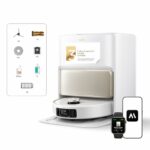
The Dreame includes a detergent tank in the dock, allowing the robot to automatically add cleaning solution while washing its mop pads without manual intervention. The Roborock does not have this tank, although it can still wash the mop pads effectively using hot water alone.
Only the Dreame offers an optional kit for connecting the dock directly to household plumbing, eliminating the need to manually fill and empty the water tanks. The kit is sold separately and is not included as standard, but it may appeal to users looking for maximum automation.
Dimensions
The robots themselves are very similar in size. The Dreame L50s Pro Ultra measures 350 mm in diameter and 103.8 mm in height. The Roborock Qrevo Curv measures 352 mm in diameter and 103 mm in height. The 0.8 mm difference in height is irrelevant in practice, and both can fit underneath most low furniture.
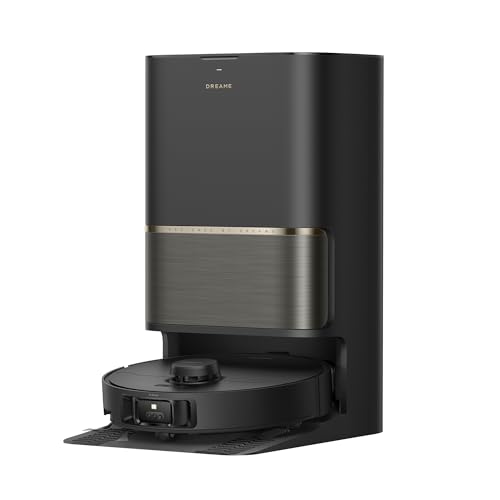
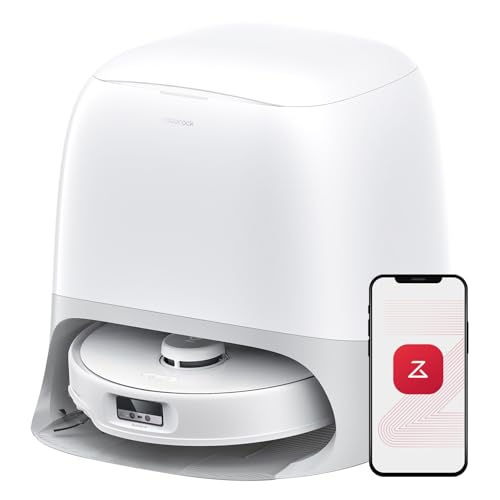
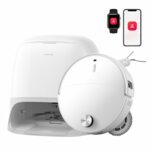
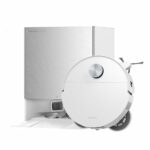
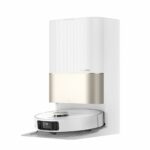
The docks, however, differ considerably. Dreame's dock measures 340 mm wide, 590 mm high and 457 mm deep. Roborock's dock has a more compact, cube-shaped design measuring 450 x 450 x 450 mm. The Roborock dock may be easier to fit into compact spaces, while the taller and narrower Dreame dock may work better in narrower gaps.
Real-world user experience
The Dreame L50s Pro Ultra stands out in homes where suction power matters most: households with short-pile carpets, pets that shed heavily or areas with heavier dirt. Its 30,000 Pa suction power, combined with the dual HyperStream brush, helps minimise tangles and improve debris pickup in a single pass.
The RoboSwing system and extendable mop are useful in homes with furniture positioned close to walls or narrow spaces that other robot vacuums may struggle to reach. The detergent tank in the dock and larger water and dust capacities also reduce maintenance, which is particularly useful in larger homes or busy households.
The Roborock Qrevo Curv is well suited to homes with difficult floor transitions thanks to its ability to climb single thresholds of up to 30 mm. Its 6,400 mAh battery and claimed 240-minute runtime allow it to clean large areas without intermediate charging. The more compact dock is also easier to position in smaller spaces.
The 200 RPM mop speed and 75°C hot-water washing provide effective mopping performance, although there is no automatic detergent tank. Roborock's established reliability and mature app are additional advantages for users who value software stability and long-term support.
Conclusion: Which one should you choose?
Choose the Dreame L50s Pro Ultra if: you want the higher suction figure of 30,000 Pa, have carpets or pets that shed a lot of hair, value the RoboSwing system for better edge cleaning, want an automatic detergent tank in the dock, prefer larger water and dust capacities to reduce maintenance, or are interested in connecting the dock directly to plumbing using the optional kit. It is also the better choice if you value recognition of up to 220 objects, curtain detection and AI stain recognition.
Choose the Roborock Qrevo Curv if: you need to cross thresholds of up to 30 mm, prefer a higher-capacity battery with a claimed runtime of 240 minutes, value Roborock's reliability and experience in the robot vacuum market, want a more compact dock that is easier to fit into smaller spaces, or prefer the higher 200 RPM mopping speed. It is also worth considering if you prioritise a larger onboard dustbin (325 ml versus 250 ml) and the ability to lift the entire chassis to achieve up to 20 mm of clearance over medium-pile carpets.