✨ VS Analyses · VacuumSpain comparison technology. Explanation created with AI from verified technical data.
Introduction
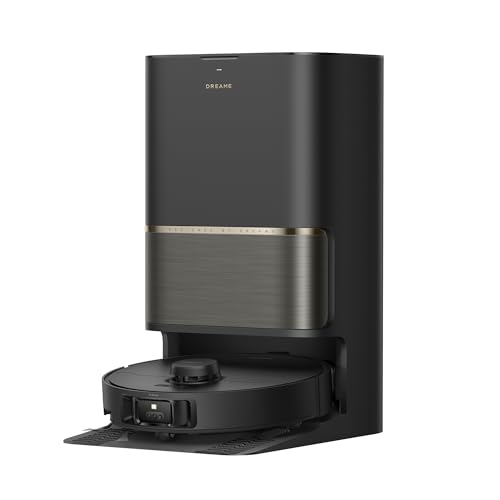
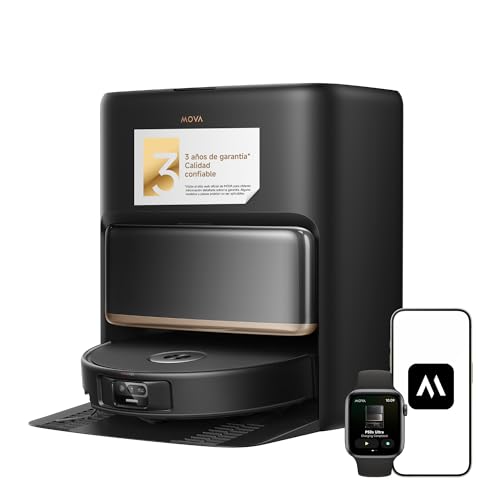
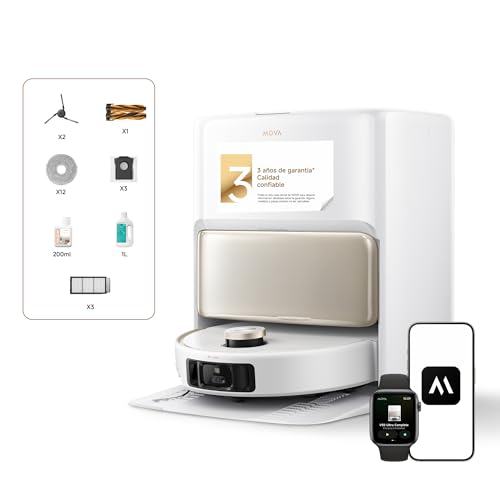
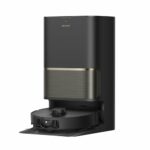
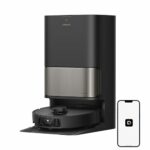
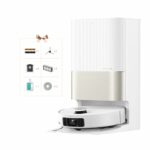
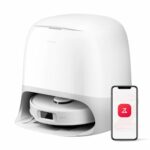
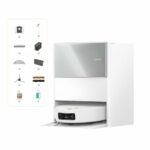
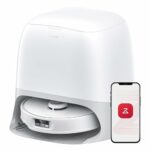
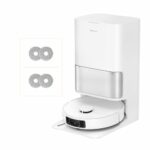
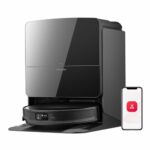
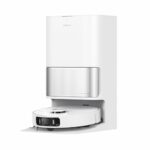
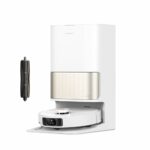
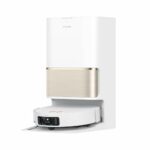
The Dreame L50s Pro Ultra and the two Mova models we're analysing here represent three high-end propositions within the universe of robot vacuum cleaners with multifunction base stations. The first belongs to Dreame's 2026 line, whilst the Mova P50s Ultra and the Mova V50 Ultra are 2025 models. All three share a similar philosophy: powerful suction, mopping with extendable rotating mops and bases that wash, dry and auto-empty.
These robots are designed for users seeking to maximise home cleaning automation, with the capacity to manage pet hair, carpets and hard floors without constant intervention. The difference lies in the nuances: suction power, robot height, tank capacity and some specific functions that may influence the choice depending on the type of home.
Power and Suction
Suction power is one of the points where the Dreame L50s Pro Ultra sets itself apart. With 30,000 Pa, it exceeds the two Mova models by 6,000 Pa, which remain at 24,000 Pa. In practice, this translates to better capacity for thick carpets and for picking up heavier or embedded particles.
All three units feature the HyperStream dual brush system, specifically designed to prevent hair tangles. This type of brush has two elements anchored at one end that rotate independently, which facilitates cleaning in homes with pets. All include a main brush that lifts during mopping and an extendable side brush, also liftable and anti-tangle.
There are no differences in the brushing system between the three models, so the Dreame L50s Pro Ultra's advantage lies solely in raw suction power.
Mopping
The mopping system is very similar across all three: two rotating mops with side extension and Roboswing movement to reach edges and get slightly under furniture. Mop lift is identical in all three cases: 10.5 mm, sufficient to pass over carpets without wetting them.
The most relevant difference here is marked by the Mova V50 Ultra, which incorporates hot water for mopping the floor. The Dreame L50s Pro Ultra and the Mova P50s Ultra use cold water. Mopping with hot water improves the dissolution of grease and adhered dirt, especially in kitchens.
All wash the mops with hot water in the base and dry them with hot air, which helps keep them hygienic and odour-free. All three detect dirt both on the mops and on the floor, adjusting the scrubbing when necessary. They also allow automatic mop removal at the base if you only want to vacuum.
Navigation System
The Dreame L50s Pro Ultra uses a traditional LiDAR turret, whilst the Mova P50s Ultra features FlashPulse and the Mova V50 Ultra carries retractable LiDAR. Beyond the physical system, all three share the same sensor equipment: dual camera with artificial intelligence, front 3D laser sensor and LED for night vision.
The Dreame L50s Pro Ultra recognises up to 220 different obstacles, compared to the 200 of the Mova models. This difference may be noticeable in homes with many objects on the floor or with young children, where the robot must avoid toys, cables or slippers with greater precision.
All recognise pets, curtains and allow remote access to the camera from the app. CleanGenius intelligent cleaning is present in all three, automatically adapting power and mopping according to floor type and detected dirt level.
Autonomy and Battery
Here the two Mova models have an advantage in capacity: 6,400 mAh versus the 5,200 mAh of the Dreame L50s Pro Ultra. However, we only know the autonomy of the Mova V50 Ultra: 220 minutes. We don't have the data for the Dreame or the Mova P50s Ultra, although it's reasonable to expect that the Mova models' larger battery translates to more continuous working time.
For homes over 150 m², it's worth considering the available autonomy. The Mova V50 Ultra, with its 220 minutes, can cover large surfaces without needing an intermediate recharge.
Smart Functions
All three robots can overcome simple steps, which facilitates passage between rooms with small level changes or thick carpets. None incorporates a robotic arm, but all include their own voice assistant in addition to compatibility with Alexa and Google Home.
The robot's dust bin capacity varies slightly: the Dreame L50s Pro Ultra has 250 ml, whilst the two Mova models reach 300 ml. The water tank is 80 ml in all three cases.
Multifunction Cleaning Base
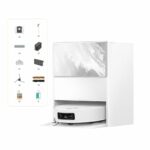
All three bases are complete multifunction units: they auto-empty dust, wash and dry the mops with hot water and air, and feature third-generation tray self-cleaning. The dust bag capacity is identical: 3.2 litres.
The Dreame L50s Pro Ultra has more generous water tanks: 4.5 litres of clean water and 4 litres of dirty water. The two Mova models carry 4 litres of clean water and 3.5 litres of dirty. This can make a difference in large homes, where the robot needs more water to complete mopping without refilling.
The Mova models integrate UV disinfection in the base, something the Dreame L50s Pro Ultra doesn't offer. This function helps reduce bacteria in the water and in the washing tray.
The Mova V50 Ultra has a dual detergent tank, useful if you want to use different products depending on floor type or alternate between intensive cleaning and daily maintenance. The Dreame L50s Pro Ultra and the Mova P50s Ultra have a single detergent tank.
Only the Dreame L50s Pro Ultra offers a plumbing connection kit as an optional accessory. It's a separate purchase and doesn't come integrated, but may interest those who want to forget about manually refilling and emptying tanks.
Dimensions
The diameter is identical across all three: 350 mm. Height is where important differences appear. The Mova P50s Ultra measures only 82.5 mm, which makes it the lowest of the three and allows it to slip under low furniture, sofas or beds with little clearance from the floor. The Mova V50 Ultra reaches 89.5 mm, and the Dreame L50s Pro Ultra reaches 103.8 mm.
If you have low furniture at home, it's worth measuring beforehand. The Dreame L50s Pro Ultra may have problems accessing spaces where the other two enter without difficulty.
The Mova models' bases are wider (420 mm) than the Dreame's (340 mm), although they have less height: 470 mm versus 590 mm. Depth is practically the same in all three cases, around 457-458 mm. This can influence where to place the base, especially in narrow spaces or corners.
Real-World Usage Experience
For large homes, the Dreame L50s Pro Ultra offers greater suction power and larger water tanks, which reduces interruptions. However, the Mova models have greater battery capacity, especially useful on extensive surfaces.
If you have pets, all three units are well equipped with anti-tangle brushes and sufficient power. The Dreame L50s Pro Ultra can better manage hair embedded in carpets thanks to its 30,000 Pa.
In homes with low furniture, the Mova P50s Ultra is the most practical option. Its 82.5 mm height allows it to access spaces where the Dreame L50s Pro Ultra cannot enter.
The Mova V50 Ultra stands out if you're seeking the best possible mopping: hot water on the floor, dual detergent tank and UV disinfection in the base. For kitchens with grease or floors requiring deeper cleaning, this combination makes a difference.
Conclusion: Which to Choose?
Choose the Dreame L50s Pro Ultra if you're seeking maximum suction power and have thick carpets or pets that shed a lot of hair. Its 30,000 Pa and larger water tanks make it ideal for spacious homes where cleaning autonomy without intervention is a priority. It's also the only option with a plumbing connection kit available.
Choose the Mova P50s Ultra if you need a robot that passes under low furniture. At only 82.5 mm in height, it's the most compact of the three. It offers UV disinfection in the base and a 6,400 mAh battery, suitable for medium-sized homes where robot height is a limiting factor.
Choose the Mova V50 Ultra if you prioritise mopping with hot water and want maximum hygiene on floors. Its dual detergent tank, UV disinfection and hot water for mopping make it the best option for kitchens, bathrooms or homes where mopping is as important as vacuuming. Additionally, with 220 minutes of confirmed autonomy, it can cover large surfaces without recharging.