✨ VS Analyses · VacuumSpain comparison technology. Explanation created with AI from verified technical data.
Introduction
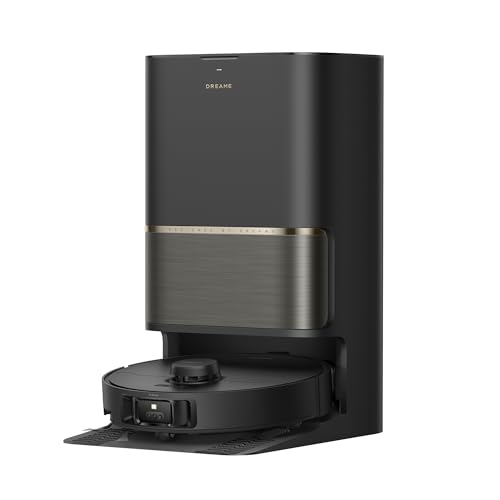
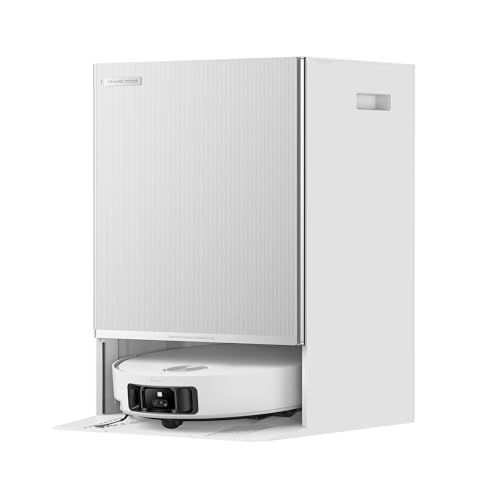
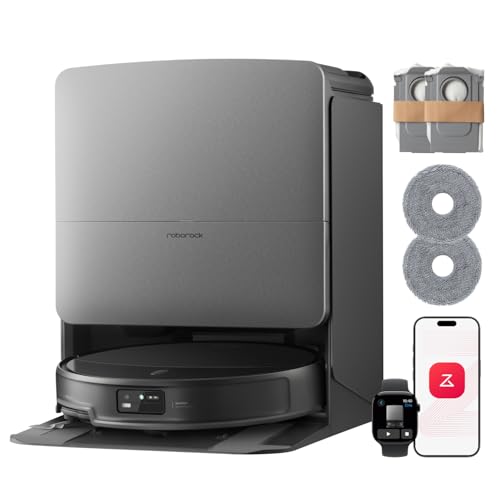
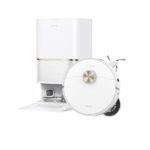
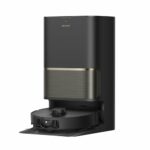
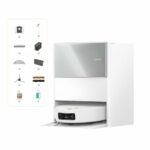
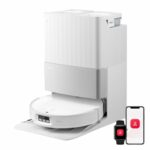
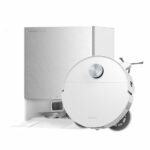
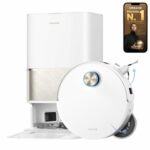
This comparison pits three high-end robots launched in 2025 and 2026 against each other: the Dreame L50s Pro Ultra, the Dreame Matrix10 Ultra and the Roborock Saros 20. All three units feature a complete multifunction base station, advanced navigation systems with artificial intelligence and rotating mopping functions with extendable mops. We're talking about models designed for users seeking maximum automation in medium or large homes, with particular attention to edge cleaning, object recognition and minimal maintenance.
The Dreame L50s Pro Ultra arrives in 2026 with a balanced configuration. The Matrix10 Ultra, introduced in 2025, stands out for incorporating an automatic mop changing system and triple detergent tank. The Roborock Saros 20, launched in February 2026, opts for the highest suction power in the group and an especially low-profile design.
Power and Suction
Suction power marks a notable difference. The Roborock Saros 20 offers 36,000 Pa, which represents 20% more than the 30,000 Pa of the Dreame L50s Pro Ultra and the Dreame Matrix10 Ultra. In practice, this advantage is particularly noticeable on medium or long pile carpets and in grooves of wooden floors.
All three robots feature dual anti-tangle brush systems. The L50s Pro Ultra and the Matrix10 Ultra integrate Dreame's HyperStream design, with two brushes anchored at one end that minimise hair tangles. The Saros 20 uses Roborock's DuoDivide system, which pushes hairs towards the centre to facilitate direct suction. All lift the main brush during mopping to avoid dragging wet dirt.
The side brush is extendable on all three models, improving corner cleaning. They also lift automatically during mopping and feature anti-tangle technology. This configuration is especially useful in homes with long-haired pets.
Mopping
All three units mop with two rotating mops that extend to reach edges. The L50s Pro Ultra and the Matrix10 Ultra also incorporate Dreame's Roboswing system, which performs a lateral movement to slightly introduce the mop under overhangs and furniture.
Mop lift varies significantly. The Roborock Saros 20 can lift them between 12 and 22 mm, which allows it to pass over thick carpets without wetting them. The two Dreame models remain at 10.5 mm, sufficient for thin carpets but more limited on high-pile carpets.
Mopping water temperature marks another important difference. The Dreame Matrix10 Ultra heats water up to 80°C inside the tank, which helps to better dissolve grease and stuck-on stains. The Roborock Saros 20 uses warm water, whilst the L50s Pro Ultra works with cold water. This can be particularly noticeable in kitchens or areas with greasy dirt.
All three robots automatically remove the mops at the base station when they only need to vacuum, avoiding dragging dry mops across the floor. They also detect dirt both on the mops themselves and on the floor, adjusting the number of passes or returning to the base station to wash the mops when necessary.
Navigation System
The Dreame L50s Pro Ultra features a traditional LiDAR turret, whilst the Matrix10 Ultra incorporates a retractable LiDAR that reduces the robot's overall height. The Roborock Saros 20 uses the StarSight 2.0 system, which combines LiDAR with advanced image processing.
All three units integrate dual cameras with artificial intelligence. The Matrix10 Ultra specifies that they are dual-lens RGB cameras, which improves object recognition accuracy. The number of recognised objects varies: 220 on the L50s Pro Ultra, 240 on the Matrix10 Ultra and 300 on the Roborock Saros 20. This difference is useful in homes with many small objects on the floor or with children.
All include a front 3D laser sensor, pet recognition and specific curtain detection to avoid tangles. Remote camera access is available on all three models, allowing you to monitor the home from the app. The front LED facilitates night-time navigation without relying solely on sensors.
Autonomy and Battery
The Dreame L50s Pro Ultra is equipped with a 5,200 mAh battery, whilst the Matrix10 Ultra and the Roborock Saros 20 increase to 6,400 mAh. We only know the autonomy of the Matrix10 Ultra: 260 minutes in standard mode, sufficient for homes of up to 250-300 m² without intermediate recharges.
The greater battery capacity of the Matrix10 and the Saros 20 offers more margin in intensive cleaning or in maximum power mode, although in practice all three robots automatically manage recharges during long cleaning sessions.
Smart Features
All three robots overcome simple thresholds of up to 2-2.5 cm, which allows them to pass without problems between rooms with small level differences or over sliding door rails.
Each model integrates its own voice assistant. This allows you to give commands directly to the robot without going through the app, in addition to standard compatibility with Alexa and Google Home. The Matrix10 Ultra specifies that it uses the AI Sage 15.0 algorithm with a dedicated chip, although we don't have equivalent information for the other two models.
Multifunction Cleaning Base Station
All three base stations perform auto-emptying of the dust bin, mop washing and drying with hot air. Mop washing is done with hot water in all three cases, although the Matrix10 Ultra stands out for also heating the mopping water for the floor.
Auto-cleaning of the washing tray is present in all. The L50s Pro Ultra features a third-generation system, the Matrix10 Ultra boasts a 3.5 version and the Saros 20 uses hot water for this process. None incorporates UV disinfection.
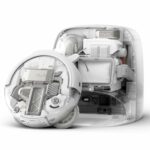
The Dreame Matrix10 Ultra introduces a unique function: automatic mop changing with three pairs available in the base station. When it detects that the mops are very dirty or worn, it returns to the base station and fits a new pair. This significantly reduces manual maintenance.
Regarding detergent tanks, the Matrix10 Ultra is equipped with a triple system that allows you to use different products depending on the type of floor or area of the house. The L50s Pro Ultra and the Saros 20 have a single detergent tank.
The dust bag capacity reaches 3.2 litres in the two Dreame models, compared to 2.5 litres in the Roborock. The clean water tank varies: 4.5 litres in the L50s Pro Ultra, 5.5 litres in the Matrix10 Ultra and 4 litres in the Saros 20. Dirty water is stored in 4 litres in the Dreame models and 3 litres in the Roborock.
The two Dreame models offer an optional kit to connect the base station directly to water pipes, avoiding manually refilling and emptying tanks. This kit is purchased separately. The Roborock Saros 20 doesn't have this option available.
Dimensions
The robot's height is crucial for passing under furniture. The Roborock Saros 20 measures just 79.8 mm, which allows it to slip under most sofas and beds without problem. The Dreame Matrix10 Ultra reaches 89 mm, still acceptable for many pieces of furniture. The L50s Pro Ultra, at 103.8 mm, may have difficulties with low furniture.
The diameter is practically identical: 350 mm in the two Dreame models and 353 mm in the Roborock. This difference doesn't affect behaviour in tight spaces.
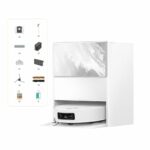
The base stations also vary in size. The L50s Pro Ultra and the Matrix10 Ultra share height (590 mm) and depth (457 mm), but the Matrix10 is wider (416 mm compared to 340 mm) due to the mop changing system. The Roborock Saros 20 has the most compact base station in height (488 mm) but deeper (475 mm). It's advisable to measure the available space before deciding.
Real-world user experience
For large homes, the Dreame Matrix10 Ultra offers the highest confirmed autonomy (260 minutes) and the most generous water tanks. Automatic mop changing reduces maintenance in homes where mopping is done daily.
In homes with pets, all three robots work well thanks to the anti-tangle brushes and suction power. The Roborock Saros 20 has an advantage with its 36,000 Pa, especially useful with hair embedded in carpets. Pet recognition prevents the robot from disturbing them or getting tangled with toys.
If the home has low furniture, the Roborock Saros 20 is the best option with its 79.8 mm height. It will access areas that the other two cannot reach, reducing the need to manually clean under sofas or beds.
For floors with difficult stains or grease, the Dreame Matrix10 Ultra makes the difference with hot water at 80°C both in mop washing and floor mopping. The triple detergent tank also allows you to use specific products for each type of surface.
All three robots minimise maintenance thanks to the complete multifunction base stations. The Matrix10 Ultra takes this further with automatic mop changing, although it requires a wider base station. The plumbing connection kit available for the Dreame models (additional purchase) may interest those who want to completely forget about refilling tanks.
Conclusion: Which one to choose?
Choose the Dreame L50s Pro Ultra if you're looking for a complete 2026 robot with a multifunction base station and a tight budget within the high-end range. It offers all the essential functions (extendable mopping, Roboswing, AI navigation, hot air drying) without extras such as mop changing or hot mopping water. Suitable for medium-sized homes without very low furniture.
Choose the Dreame Matrix10 Ultra if you want maximum automation and convenience. The automatic changing of three pairs of mops, hot water at 80°C for mopping the floor, the triple detergent tank and 260 minutes of autonomy make it the most complete option for large homes with intensive use. The wider base station requires additional space. Ideal for those who prioritise minimal maintenance and have floors that require frequent deep cleaning.
Choose the Roborock Saros 20 if you need the highest suction power (36,000 Pa) and the lowest robot on the market (79.8 mm). Perfect for homes with lots of low furniture, thick carpets or pets with abundant hair. The mop lift of up to 22 mm far exceeds the competition. The recognition of 300 objects and the StarSight 2.0 system offer the most precise navigation in the group. The more compact base station in height facilitates installation in reduced spaces.