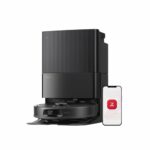
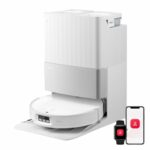
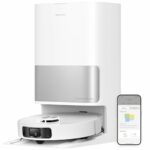
✨ VS Analyze · VacuumSpain comparison technology. AI-generated explanation based on verified technical data.
Introduction
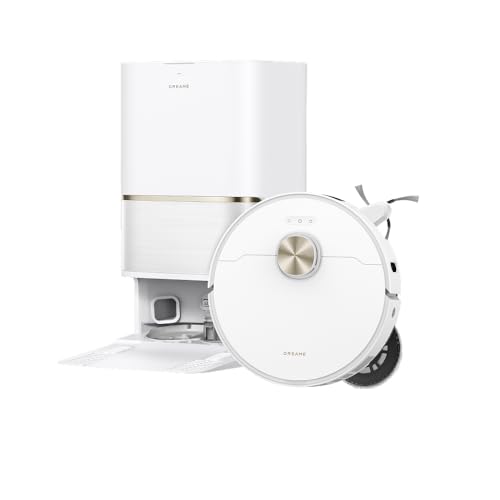
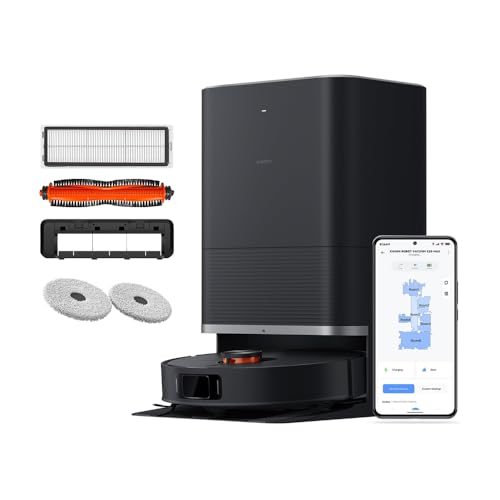
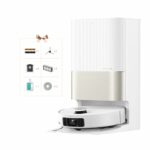
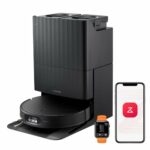
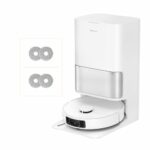
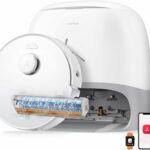
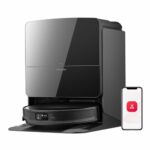
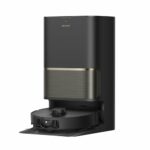
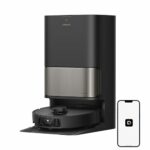
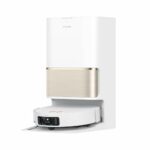
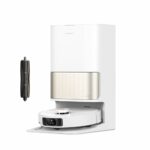
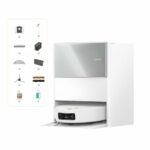
The Dreame L50 Ultra AE and the Xiaomi X20 Max represent two propositions within the robot vacuum segment with multifunction base. The Dreame model arrives in 2026 with an approach clearly oriented towards raw power and cleaning autonomy, whilst the Xiaomi X20 Max, available since 2024, opts for artificial intelligence to optimise its cleaning processes.
Both units share quite a few technical elements in terms of design and structure, but the differences in power, base functions and intelligent systems mark distinct usage profiles. The Dreame targets users who value extreme suction capacity and maximum autonomy between maintenance, whilst the Xiaomi is aimed at those who prefer a robot that learns and adjusts its cleaning automatically.
Power and Suction
The most notable difference between these robots lies in suction power. The Dreame L50 Ultra AE develops 28,000 Pa, a figure that more than triples the Xiaomi X20 Max's 8,000 Pa. This difference translates into greater capacity for thick carpets, embedded pet hair and adhered dirt. For homes with pets that shed a lot of hair or carpeted areas, this advantage proves decisive.
Regarding the brushing system, both mount the same TriCut 3.0 main brush, which combines bristles with blades to reduce hair tangles. However, the Dreame adds the ability to lift this brush during mopping, something the Xiaomi doesn't offer. This allows the Dreame to alternate better between vacuuming and mopping without dragging wet dirt.
The side brush marks another important difference. The Dreame incorporates an extendable and anti-tangle side brush, features absent in the Xiaomi. The extension allows better reach into corners and edges, whilst the anti-tangle design facilitates maintenance. In practice, this is especially noticeable in homes with long hair or pets, where side brush maintenance can become a frequent task.
Mopping
Both robots use a two rotating mop system for mopping, and both include mop extension to reach edges. The Dreame also adds the Roboswing system, which performs an oscillating movement to get the mop under furniture and overhangs. This function can make the difference in kitchens with low furniture or in bathrooms with hard-to-reach sanitary ware.
Mop lifting is very similar: 10.5 mm on the Dreame versus 10 mm on the Xiaomi. Half a millimetre difference that in practice proves irrelevant, although both exceed a centimetre in height, sufficient to pass over thin carpets without wetting them.
An exclusive Dreame function is automatic mop removal at the base. This means that when you schedule a vacuum-only session, the robot leaves the mops at the base and goes out without them. The Xiaomi, without this capability, must carry the mops lifted throughout the entire process, which can slightly affect pure vacuuming efficiency.
Both bases wash the mops with hot water and dry them with hot air, guaranteeing hygiene and preventing bad odours. Here there are no relevant functional differences.
Navigation System
Both robots mount third-generation LiDAR turret and front 3D laser sensor to avoid obstacles. Basic navigation is equivalent in both cases, with precise mapping and real-time object detection.
The difference lies in the intelligent functions. The Xiaomi X20 Max incorporates intelligent AI cleaning that automatically adjusts power and cleaning pattern according to floor type and detected dirt level. It also includes night vision LED to improve detection in dark spaces. The Dreame dispenses with these functions, opting for a more traditional approach where the user manually configures the parameters.
For users who prefer to automate to the maximum and let the robot decide, the Xiaomi offers a clear advantage. Those who prefer total control over every aspect of cleaning won't miss these functions on the Dreame.
Autonomy and Battery
Both robots are equipped with 5,200 mAh batteries, a generous capacity that guarantees sufficient autonomy for medium-large sized homes. The Xiaomi X20 Max specifies 120 minutes of autonomy, whilst the Dreame doesn't provide this data. Considering they share battery capacity, autonomy should be similar, although the Dreame's greater suction power could slightly reduce operating time at maximum power.
Intelligent Functions
Both models overcome obstacles up to 20 mm in height, sufficient to pass over most thresholds and small level changes without getting stuck. Neither incorporates a robotic arm nor its own voice assistant, although both are compatible with Alexa and Google Home for external voice control.
Multifunction Cleaning Base
The Dreame L50 Ultra AE's base stands out for its greater capacity and additional functions. The dust bag reaches 3.2 litres compared to the Xiaomi's 2.5, which translates into fewer manual emptying. The water tanks are also more generous: 4.5 litres of clean water and 4 of dirty water, compared to the Xiaomi's 4 and 3.8 litres respectively. For large homes or frequent mopping, this difference can mean one less emptying every two or three weeks.
The Dreame incorporates third-generation washing tray self-cleaning, a function that keeps the base itself hygienic without manual intervention. The Xiaomi lacks this function, which requires manually cleaning the tray from time to time to avoid dirt accumulation and bad odours.
Another Dreame advantage is the integrated detergent tank, which automatically dispenses cleaning product during mop washing. The Xiaomi doesn't include this option, limiting itself to water use. For those seeking deeper mopping results, detergent makes a difference on adhered stains and disinfection.
The Dreame also offers an optional plumbing connection kit, which is purchased separately and allows connecting the base directly to water supply and drainage. This completely eliminates tank maintenance, although it requires installation and is an additional accessory. The Xiaomi doesn't contemplate this possibility.
Dimensions
The robots share diameter (350 mm) and height (97 mm), standard dimensions that allow passing under most furniture and sofas with legs over 10 cm. Here there are no differences that affect daily use.
The bases present slight variations. The Dreame measures 590 mm high and 457 mm deep, whilst the Xiaomi reaches 563 mm high and 420 mm deep. The Dreame's base is slightly taller and deeper, something to consider if available space is limited. Width is identical in both cases: 340 mm.
Real-World Usage Experience
The Dreame L50 Ultra AE is oriented towards users who prioritise raw power and autonomy between maintenance. The 28,000 Pa suction makes it a capable option for homes with pets, thick carpets or floors that accumulate a lot of dirt. The base's larger tanks and tray self-cleaning reduce maintenance tasks, whilst automatic mop removal and extendable side brush add versatility.
The Xiaomi X20 Max opts for artificial intelligence to optimise cleaning without user intervention. Intelligent AI cleaning automatically adjusts parameters according to detected needs, ideal for those who prefer to configure little and let the robot decide. The night vision LED improves navigation in dark spaces, although its base requires more manual maintenance as it lacks tray self-cleaning and detergent tank.
For large homes, the Dreame offers clear advantages in tank capacity and power. In smaller homes where artificial intelligence can better optimise resources, the Xiaomi proves a more balanced option. Both handle thin carpets well thanks to mop lifting, although the Dreame surpasses the Xiaomi on thick carpets due to its greater power.
Conclusion: Which to Choose?
Choose the Dreame L50 Ultra AE if: You're looking for maximum suction power for thick carpets or pet hair. You value autonomy between maintenance thanks to larger tanks and tray self-cleaning. You need automatic mop removal for vacuum-only sessions. You want the option to add plumbing connection in the future. You prefer manual control over the robot's functions.
Choose the Xiaomi X20 Max if: You prioritise artificial intelligence for the robot to automatically adjust cleaning. You're looking for a model available since 2024 with proven technology. You value night vision LED for dark spaces. You don't need a detergent tank or tray self-cleaning. You prefer a somewhat more compact base in height and depth. Your budget is tighter and you don't need the Dreame's 28,000 Pa of power.