✨ VS Analyze · VacuumSpain comparison technology. AI-generated explanation based on verified technical data.
Introduction
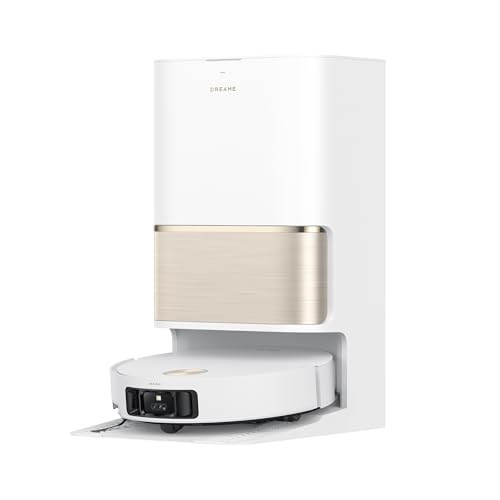
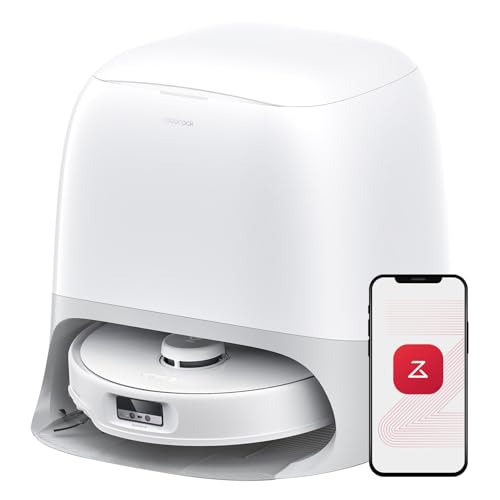
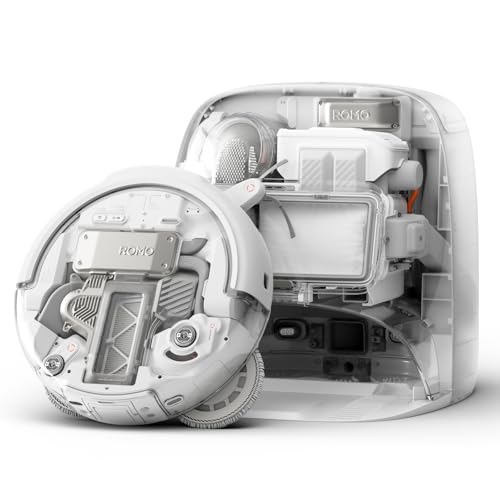
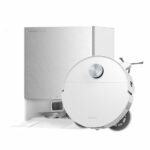
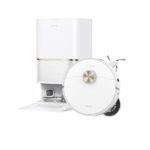
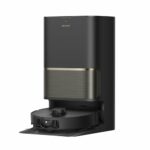
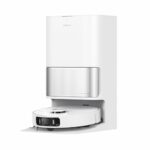
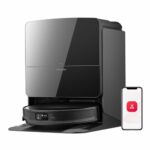
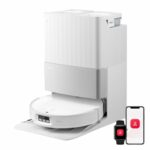
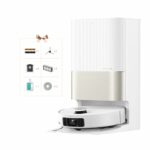
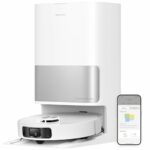
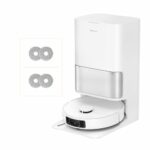
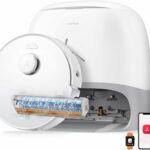
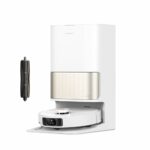
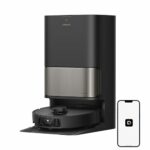
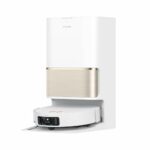
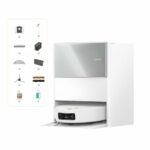
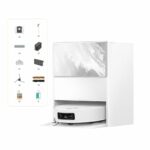
The Dreame L50 Pro Ultra, the Roborock Qrevo Curv and the DJI Romo P represent three very recent offerings in the premium segment of robot vacuum cleaners with multifunctional bases. We're talking about launches from 2024 and 2025, which means they incorporate the most current technologies on the market. All three models combine powerful suction, mopping with dual rotating mops and bases that take care of washing, drying the mops and emptying the dust bin automatically.
The Dreame L50 Pro Ultra arrives in 2025 with a focus on versatility and intelligent mopping management. The Roborock Qrevo Curv, from 2024, opts for extended autonomy and the DuoDivide system to prevent hair tangles. The DJI Romo P, also from 2025, enters with the highest suction power of the trio and some exclusive functions in its base. Each one is designed for demanding homes where maximum automation of daily cleaning is sought.
Power and Suction
In suction power, the DJI Romo P sets itself apart with 25,000 Pa, a striking figure even for 2025. The Dreame L50 Pro Ultra sits at 19,500 Pa and the Roborock Qrevo Curv at 18,500 Pa. This difference can be particularly noticeable on medium or long pile carpets, where the capacity to extract embedded dirt improves with each power increase.
All three models raise the main brush during mopping to avoid dragging wet dirt. The Dreame employs a dual anti-tangle brush, the Roborock its DuoDivide system that pushes hairs towards the centre for direct suction, and the DJI incorporates a split brush also designed to minimise tangles. In practice, any of these designs significantly reduces maintenance in homes with long hair or pets.
All three feature an extendable side brush to better reach corners. However, only the Dreame L50 Pro Ultra also raises the side brush during mopping, which prevents the mop from colliding with it or getting unnecessarily wet. It's a detail that provides edge cleaning without interference.
Mopping
All employ a dual rotating mop system, with extension to better reach edges. The Dreame L50 Pro Ultra adds Roboswing movement, a system that slightly shifts the robot's body to get the mop under overhangs or furniture. The Roborock and the DJI don't incorporate this movement, although their extendable mops cover skirting boards well.
In mop lifting, the Roborock Qrevo Curv stands out with a range of 10 to 20 mm, the widest of the group. The Dreame reaches 10.5 mm and the DJI also lifts the mops, although without specifying exact height. This lifting is useful when climbing thick carpets or avoiding wetting areas that shouldn't be mopped.
The bases of all three wash the mops with hot water and dry them with hot air, guaranteeing hygiene and preventing bad odours. The Dreame incorporates third-generation tray self-cleaning, the Roborock version 2.0 and the DJI a system with high-pressure nozzle. All three detect dirt both on the mops and on the floor to reinforce washing or scrubbing when necessary.
The Dreame L50 Pro Ultra can automatically detach the mops at the base, allowing vacuum-only sessions without needing to manually remove anything. Neither the Roborock nor the DJI offer this function, which requires removing the mops by hand if you only want to sweep.
Navigation System
All three models integrate LiDAR, dual AI camera, front 3D laser sensor and LED for night vision. The Dreame L50 Pro Ultra mounts a retractable LiDAR that reduces the robot's total height, facilitating passage under furniture. The Roborock uses a traditional LiDAR turret and the DJI a solid-state LiDAR.
In recognition capability, the Dreame identifies up to 180 different types of obstacles, a figure well above the Roborock's 62. This translates into greater precision when avoiding small or uncommon objects. The DJI doesn't specify exact number of recognised obstacles.
The Dreame detects curtains, avoiding wetting them during mopping. Neither the Roborock nor the DJI include this function, which may result in some unwanted contact in homes with long curtains. All three allow remote camera access for surveillance and all recognise pets, although the DJI doesn't detail this aspect with complete clarity.
Autonomy and Battery
The Roborock Qrevo Curv leads in autonomy with 240 minutes thanks to its 6,400 mAh battery. The Dreame L50 Pro Ultra, with the same battery capacity, reaches 200 minutes. The DJI Romo P, with 5,000 mAh, offers 180 minutes. These differences matter in large homes where completing all the cleaning without intermediate recharges is needed.
For large surfaces or multiple floors, the Roborock offers greater margin. The Dreame balances autonomy with other features, whilst the DJI compensates with superior suction power. In practice, all three manage medium-sized homes well, but the Roborock prevails in spaces over 150 m².
Smart Functions
All three overcome simple steps. The DJI specifies 20 mm capacity, whilst the Dreame and the Roborock also navigate level differences of that order. This capability facilitates passage between rooms with small steps or thick carpets.
The Dreame L50 Pro Ultra and the Roborock Qrevo Curv integrate their own voice assistant, in addition to compatibility with Alexa and Google Home. The DJI doesn't detail whether it includes its own assistant, although it does confirm compatibility with external assistants. None of the three incorporates a robotic arm.
Multifunctional Cleaning Base
All three bases empty the dust bin, wash and dry the mops with hot water and air. The Dreame L50 Pro Ultra has a single detergent tank, the DJI has a dual tank (useful for alternating products according to floor type) and the Roborock dispenses with this function.
Only the DJI Romo P incorporates UV disinfection in the base, adding an extra level of hygiene after mop washing. None offer integrated connection to water pipes, although the Dreame has an optional kit that's purchased separately for those who prefer to avoid manually refilling tanks.
In dust bag capacity, the Dreame reaches 3.2 litres, the Roborock 2.5 litres and the DJI 2.4 litres. The Dreame also leads in water tanks: 4.5 litres of clean water and 4 litres of dirty water, compared to 4 and 3 litres for the Roborock, and 4 and 3.2 litres for the DJI. Greater capacity means fewer refills and emptying, especially useful in large homes or with frequent mopping.
Dimensions
The Dreame L50 Pro Ultra measures 89 mm in height, the lowest of the group. This allows it to slip under furniture, beds or sofas with little clearance from the floor. The DJI reaches 98 mm and the Roborock 103 mm, limiting access to tight spaces somewhat more.
In diameter, all three are around 350 mm, with minimal differences that don't affect manoeuvrability. As for the bases, the Dreame has the tallest (590.5 mm) and narrowest (340 mm wide), occupying less horizontal space but more vertical. The Roborock and the DJI present wider bases (450 and 453 mm) but lower (450 and 440 mm), facilitating their placement under shelves or worktops.
Real-world user experience
For homes with pets or long hair, all three models offer effective anti-tangle brushes. The DJI provides an advantage in raw suction, useful if there are medium pile carpets. The Dreame stands out for broad obstacle recognition and curtain detection, ideal in homes with varied décor or young children who leave toys scattered about.
In large homes, the Roborock Qrevo Curv prevails due to autonomy. Its 240 minutes allow completing large surfaces without interruptions. The Dreame balances well with 200 minutes and greater capacity in the base's tanks, reducing manual maintenance. The DJI, with 180 minutes, suits medium-sized flats better where suction power compensates.
The Dreame's automatic mop detachment function is convenient if alternating vacuum-only sessions with complete mopping. The DJI's dual detergent tank and its UV disinfection add value in homes where extreme hygiene is prioritised. The Roborock's compact base facilitates installation in tight spaces.
Conclusion: Which one to choose?
Choose the Dreame L50 Pro Ultra if you're looking for the lowest robot on the market to pass under furniture, you value automatic mop detachment, you need greater capacity in water and dust tanks, and you want curtain recognition along with the most complete obstacle system (180 types). Also if you prefer the option of installing a pipe connection kit in the future.
Choose the Roborock Qrevo Curv if you have a large home where the 240-minute autonomy makes a difference, you prefer a more compact base in height, and you trust in Roborock's established track record. Its DuoDivide system works very well with hair and the mop lifting of up to 20 mm offers flexibility on thick carpets.
Choose the DJI Romo P if maximum suction power (25,000 Pa) is a priority, you value UV disinfection in the base, you need a dual detergent tank to alternate cleaning products, and you want to explore the offering from a brand that has just entered the sector with cutting-edge technology. Ideal for those who prioritise extreme hygiene and raw power over extended autonomy.