✨ VS Analyses · VacuumSpain comparison technology. Explanation created with AI from verified technical data.
Introduction
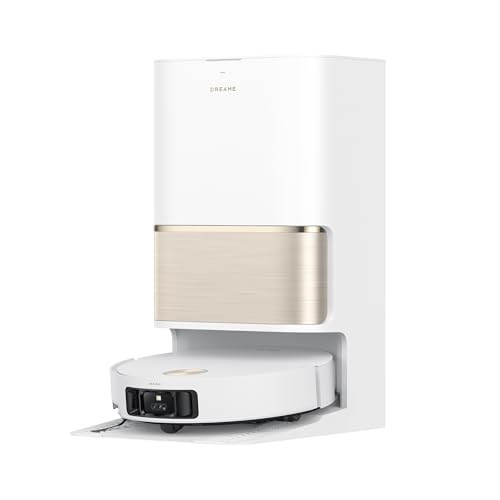
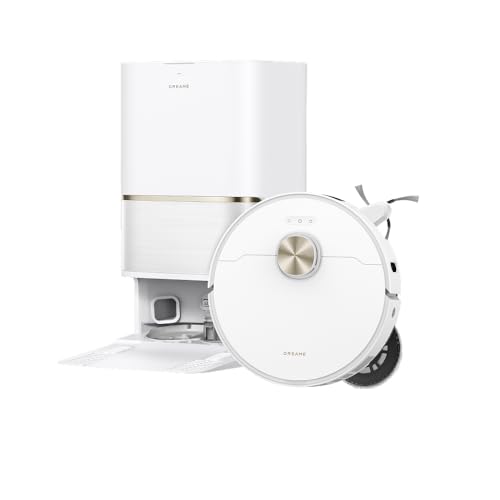
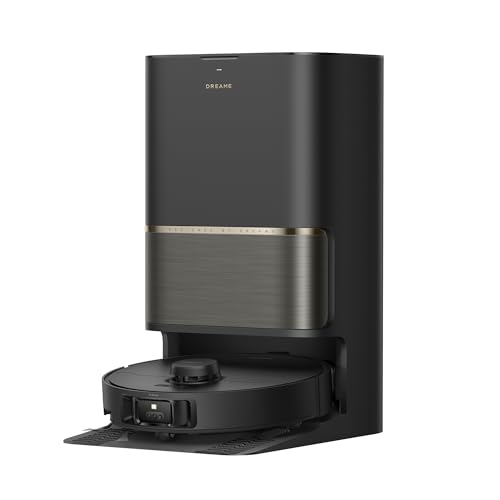
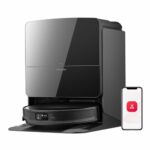
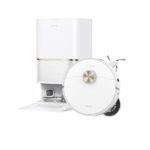
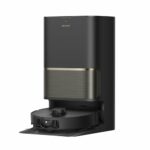
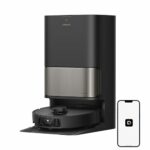
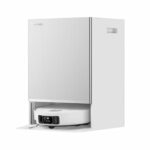
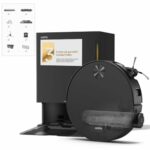
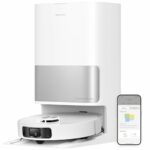
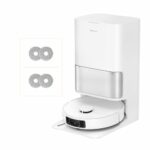
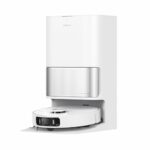
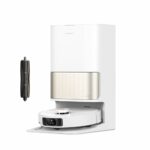
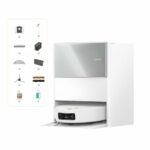
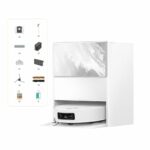
The Dreame L50 series represents three distinct approaches to premium robotic cleaning, all launched between 2025 and early 2026. The Dreame L50 Pro Ultra arrived first in 2025, establishing a high-performance baseline with advanced AI capabilities. Dreame followed up in March 2026 with the L50 Ultra AE, a streamlined variant that strips back certain features whilst maintaining core cleaning performance. The Dreame L50s Pro Ultra, also from 2026, pushes specifications even further with enhanced suction and obstacle recognition.
These models share the same multifunctional base design and similar physical dimensions, yet differ significantly in their intelligence systems, suction power, and user experience features. Understanding these distinctions helps match each robot to specific household needs, whether that's maximum automation, budget consciousness, or raw cleaning power.
Power and Suction
Suction performance separates these three models more than any other specification. The Dreame L50 Pro Ultra starts at 19,500 Pa, already respectable for most homes. The L50 Ultra AE jumps to 28,000 Pa, a substantial 44% increase that translates to better deep-carpet cleaning and more effective debris extraction from textured floors. The L50s Pro Ultra takes this further still with 30,000 Pa, making it one of the most powerful consumer robot vacuums available in 2026.
Brush design also varies. The L50 Pro Ultra and L50s Pro Ultra both use Dreame's dual HyperStream brush system, where two independent brushes anchor at one end to minimise hair tangling. The L50 Ultra AE opts for TriCut 3.0 instead, combining bristles with integrated cutting blades to slice through entangled hair. Both approaches reduce maintenance, though the HyperStream design typically requires even less intervention.
All three models lift their main brush during mopping to avoid dragging dirt across wet floors. The side brush also extends to reach into corners and edges, with anti-tangle features across the range. However, only the L50 Pro Ultra and L50s Pro Ultra can elevate the side brush when mopping, preventing it from flicking water onto carpets or skirting boards. The L50 Ultra AE keeps its side brush at a fixed height throughout all cleaning modes.
Mopping
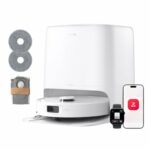
Each robot uses dual rotating mops with extension capabilities and the RoboSwing feature, allowing them to reach into edges and slightly under furniture overhangs. All three lift their mops 10.5 mm when crossing carpets or rugs, sufficient for most low-pile surfaces.
The bases wash mops with hot water and dry them using warm air, with third-generation automatic tray cleaning to maintain hygiene. Cold water is used for actual floor mopping across all models. Each can automatically detach its mops at the base when you want vacuum-only operation, a practical touch for homes with mostly hard floors but occasional carpet areas.
Where the L50 Ultra AE falls behind is in dirt detection. The L50 Pro Ultra and L50s Pro Ultra both monitor mop cleanliness and floor soil levels, automatically re-washing mops or re-mopping areas when sensors detect remaining dirt. This closed-loop cleaning ensures genuinely clean results rather than just going through the motions. The L50 Ultra AE lacks these sensors entirely, relying instead on pre-programmed routines without adaptive feedback.
Navigation System
Navigation architecture reveals the most significant divide in this comparison. The Dreame L50 Pro Ultra uses a retractable LiDAR turret combined with dual AI cameras, LED lighting for low-light conditions, and laser 3D sensors. This setup recognises 180 different obstacle types, identifies pets, detects curtains to avoid entanglement, and allows remote camera access through the app.
The L50s Pro Ultra builds on this foundation with the same dual-camera system but improves obstacle recognition to 220 types. It retains pet recognition, curtain detection, LED lighting, and remote camera viewing, making it the most perceptive model in the range.
The L50 Ultra AE strips things back dramatically. It still has a LiDAR turret and 3D laser sensors for mapping and obstacle avoidance, but removes all cameras, LED lighting, and advanced recognition features. It can navigate competently and avoid collisions, but it won't identify what objects are, adjust behaviour for pets, or let you check on your home remotely. For homes without pets or complex floor layouts, this simplification may be perfectly adequate.
Battery and Autonomy
The Dreame L50 Pro Ultra packs a 6,400 mAh battery delivering approximately 200 minutes of runtime. The newer L50 Ultra AE and L50s Pro Ultra both use smaller 5,200 mAh batteries, though specific runtime figures aren't provided for these models. Given their higher suction power, actual operating time per charge may be shorter despite similar battery chemistry.
In practice, all three models will comfortably handle typical homes in a single session, returning to base for mop washing as needed during mopping cycles. The larger battery in the L50 Pro Ultra offers more buffer for very large properties or extended cleaning without recharge interruptions.
Smart Features
All three robots can climb obstacles up to 20 mm, though the L50 Pro Ultra and L50s Pro Ultra describe this as "simple step" capability whilst the L50 Ultra AE lists a flat 20 mm measurement. This allows them to transition between rooms with raised thresholds or mount thick rugs without getting stuck.
The L50 Pro Ultra and L50s Pro Ultra include Dreame's proprietary voice assistant alongside standard Alexa and Google Home compatibility. The L50 Ultra AE supports only external voice assistants, removing the built-in option. This matters less for most users who already rely on established smart home ecosystems.
AI-driven cleaning intelligence appears only on the L50 Pro Ultra and L50s Pro Ultra, using their CleanGenius systems to analyse room types, adjust suction and water flow automatically, and recognise specific stain types for targeted treatment. The L50 Ultra AE cleans effectively but requires more manual configuration to optimise settings for different spaces.
Multifunction Base
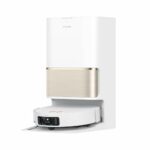
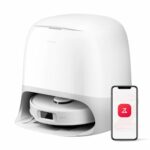
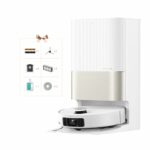
All three models share identical base specifications: 3.2-litre dust bags, 4.5-litre clean water tanks, and 4-litre dirty water tanks. Each base auto-empties the robot's dust bin, washes and hot-air-dries the mops, includes a detergent dispenser, and features third-generation self-cleaning for the wash tray.
None offers integrated plumbing connection, though optional kits are available for purchase separately if you want to eliminate manual water tank refilling. This accessory is worth mentioning but doesn't differentiate the models since all support it equally.
Base dimensions are virtually identical: 340 mm wide, 590–590.5 mm tall, and 456.7–457 mm deep. You'll need the same floor space regardless of which model you choose.
Dimensions
All three robots measure 350 mm in diameter, but height varies meaningfully. The Dreame L50 Pro Ultra stands just 89 mm tall, making it the slimmest option and best suited for sliding under low-clearance furniture. The L50 Ultra AE grows to 97 mm, whilst the L50s Pro Ultra reaches 103.8 mm.
That 14.8 mm difference between the shortest and tallest model determines whether the robot can access under sofas, bed frames, or kitchen cabinets. If you have furniture with tight clearances, the L50 Pro Ultra's lower profile becomes a practical advantage despite its lower suction power.
Real-World Use Experience
For homes with pets, the dual-camera models (L50 Pro Ultra and L50s Pro Ultra) deliver noticeably better experiences. Their ability to recognise animals, avoid pet bowls and toys, and adjust cleaning patterns around pets reduces intervention and prevents accidents. The HyperStream brushes on these models also handle pet hair more gracefully than the TriCut system, requiring less frequent manual cleaning.
Larger properties benefit from the L50 Pro Ultra's extended battery life and the L50s Pro Ultra's superior obstacle recognition. The latter's ability to identify 220 obstacle types means fewer stuck incidents in cluttered spaces. Smaller flats or simpler layouts suit the L50 Ultra AE well, where its reduced intelligence matters less and the higher suction power compensates for fewer adaptive features.
Households with varied floor types—hard floors, rugs, and carpets—will appreciate the dirt detection on the L50 Pro Ultra and L50s Pro Ultra. These models automatically intensify cleaning when sensors detect remaining soil, whilst the L50 Ultra AE follows fixed routines that may over-clean some areas and under-clean others.
The lower profile of the L50 Pro Ultra makes daily cleaning more thorough in homes with standard furniture heights, reaching dust accumulation that taller robots simply can't access.
Conclusion: Which to Choose?
Choose the Dreame L50 Pro Ultra if you want the slimmest robot for maximum under-furniture access, value AI-driven adaptive cleaning, need remote camera monitoring, and don't require the absolute highest suction power. It suits pet owners with furniture clearances below 100 mm and those who prefer comprehensive automation over raw power.
Choose the Dreame L50 Ultra AE if you prioritise strong suction in a simplified package, don't have pets requiring special recognition, want to save money by forgoing camera features you won't use, and have furniture with adequate clearance. It's ideal for straightforward floor plans without complex obstacle arrangements.
Choose the Dreame L50s Pro Ultra if you want the most powerful suction available in this range, need the most advanced obstacle recognition for cluttered or complex homes, value AI cleaning intelligence, have pets, and don't mind the taller profile. It represents the pinnacle specification for demanding households willing to sacrifice a bit of under-furniture access for maximum capability elsewhere.