✨ VS Analyze · VacuumSpain comparison technology. AI-generated explanation based on verified technical data.
Introduction
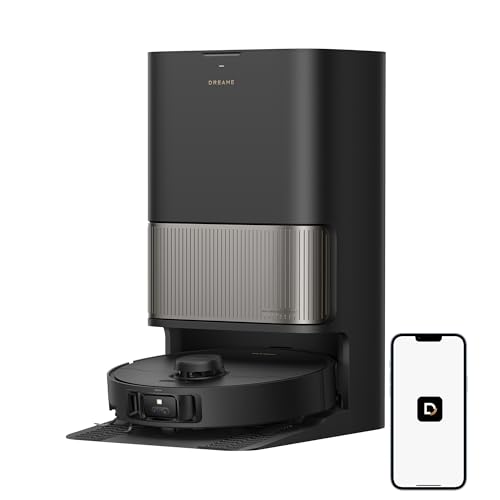
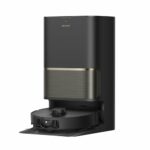
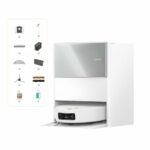
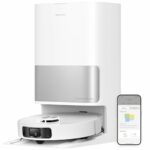
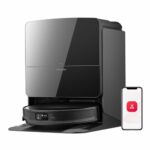
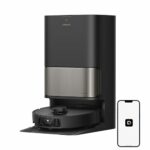
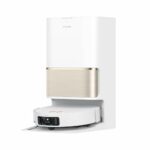
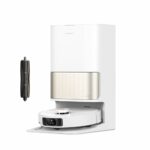
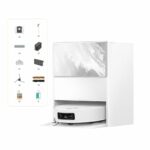
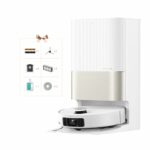
The Dreame L40s Pro Ultra and the Roborock Saros Z70 represent the latest generation of robot vacuum cleaners for 2025, designed for those seeking to fully automate home cleaning. Both units belong to the premium range of their respective brands, with multifunctional bases that wash and dry mops automatically, advanced navigation with artificial intelligence and the ability to overcome significant obstacles.
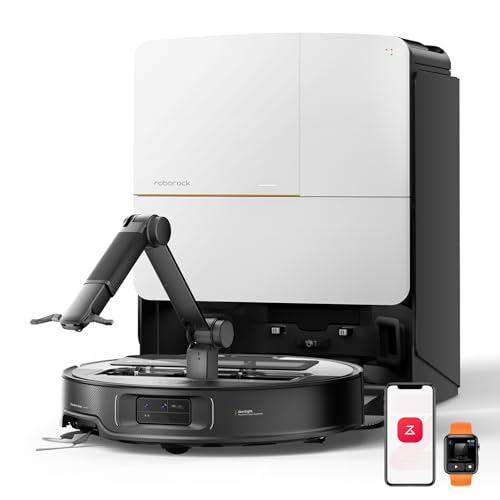
Dreame opts for a model with dual anti-tangle brush and a suction power of 19000 Pa, whilst Roborock raises the stakes to 22000 Pa and incorporates a striking innovation: a robotic arm capable of manipulating small objects. These are two proposals designed for large homes with pets, varied flooring and users who value total autonomy in maintenance.
Power and Suction
Suction power marks a first significant difference. The Roborock Saros Z70 develops 22000 Pa, exceeding the Dreame L40s Pro Ultra by 3000 Pa. This advantage translates into greater capacity to extract embedded dust from carpets and vacuum heavier particles.
Where the Dreame takes the lead is in the main brushing system. It incorporates a dual HyperStream anti-tangle brush, specifically designed to prevent hair from tangling. The Roborock features a conventional anti-tangle brush, also effective but with a different design. In homes with long-haired pets, the dual brush system can reduce manual maintenance.
Both models lift the main brush during mopping to avoid dragging wet dirt. The side brushes also lift and extend to reach corners, as well as incorporating anti-tangle technology. In practice, this means that neither requires constantly cleaning tangled hair.
Mopping
Both robots use two rotating mops, the current standard in the premium range. The difference lies in the system details. The Dreame L40s Pro Ultra incorporates mop extension 3.0 with Roboswing, a lateral movement that allows the robot to slightly introduce the mop under furniture or overhangs. The Roborock responds with its FlexiArm system, also designed to reach edges.
Mop lifting is more generous on the Roborock: it can raise them between 12 and 22 mm, adapting to the type of surface. The Dreame reaches 10.5 mm, sufficient for medium-thickness carpets but with less adjustment margin. This difference matters especially if you have thick carpets you don't want to wet.
Mop washing in the base presents different temperatures. The Roborock heats water up to 80°C, five degrees more than the Dreame. For drying, the Roborock also exceeds the Dreame: 55°C compared to 45°C. Higher temperatures contribute to better bacteria elimination and odour reduction, although both systems guarantee clean and dry mops after each cycle.
Both models leave the mops at the base when you only need to vacuum, detect dirt on the mops to rewash them and recognise stains on the floor for automatic scrubbing. The mopping experience is, in essence, comparable.
Navigation System
The Dreame L40s Pro Ultra recognises up to 180 different objects thanks to its CleanGenius system, whilst the Roborock Saros Z70 with SmartPlan 2.0 identifies 108. This numerical difference may seem decisive, but in day-to-day use what matters is that both avoid common obstacles such as cables, slippers or toys.
A particular feature of the Dreame is specific curtain detection, something the Roborock doesn't specify. This prevents the robot from getting tangled or pulling hanging fabrics. Both units recognise pets, incorporate dual camera with artificial intelligence, front 3D laser sensor and LED for night vision. They also allow remote camera access from your mobile.
The Roborock uses the RR Mason 12.0 algorithm, whilst the Dreame doesn't specify its CPU name in the table. What is clear is that both navigation systems are latest generation, with LIDAR turret and the ability to map complex homes with millimetre precision.
Autonomy and Battery
The Roborock Saros Z70's battery reaches 6400 mAh, exceeding the Dreame L40s Pro Ultra by 1200 mAh. This translates into greater theoretical autonomy, although only the Dreame specifies its duration: 220 minutes. In very large homes, that capacity difference can determine whether the robot completes cleaning in a single run or needs to return to charge.
The Dreame has slightly more generous tanks in the robot: 300 ml for dust compared to the Roborock's 180 ml, and 80 ml of water versus 69 ml. More internal capacity means fewer interruptions to empty or refill during extensive cleaning sessions.
Smart Functions
The Roborock Saros Z70 introduces a unique function on the market: the OmniGrip Arm robotic arm, capable of picking up small objects from the floor such as socks or towels. The Dreame L40s Pro Ultra doesn't incorporate this technology. It's a striking innovation, useful for keeping the floor clear before vacuuming without human intervention.
Regarding obstacle overcoming, the Dreame specifies a capacity of 22-40 mm with its extra system, whilst the Roborock reaches 30-40 mm. Both can navigate thick cables, door thresholds or small level changes without getting stuck. This is especially practical in homes with different floor types or transitions between rooms.
Both models include simple voice assistant, without reaching the complexity level of dedicated smart speakers, but sufficient for basic commands.
Multifunctional Cleaning Base
The multifunctional bases of both robots perform self-cleaning of the washing tray. The Dreame boasts its third generation of this system, whilst the Roborock is on version 2.0. Both solutions prevent you from having to manually clean the tray where mops are washed, a maintenance point that in previous models generated complaints.
The Dreame offers a plumbing connection kit as an optional accessory, allowing the base to be connected to water supply and drainage. The Roborock doesn't mention this possibility. Although it's an additional purchase, for those seeking to completely forget about maintenance it may be interesting.
The Dreame's dust bag has greater capacity: 3.2 litres compared to 2.5 litres. The clean and dirty water tanks are also more generous on the Dreame: 4.5 L and 4 L respectively, versus the Roborock's 4 L and 3 L. This means fewer trips to empty or refill the base, especially relevant in large homes.
Neither incorporates UV disinfection nor automatic mop changing. Both include a detergent tank to add cleaning product to the mop washing water.
Dimensions
The most striking difference is in height. The Roborock Saros Z70 measures just 79.8 mm, whilst the Dreame L40s Pro Ultra reaches 103.8 mm. That's more than two centimetres that can make the difference between passing or not under certain furniture, sofas or low beds. If you have furniture with little clearance, the Roborock has a clear advantage.
The diameter is practically identical: 353 mm for the Roborock, 350 mm for the Dreame. Both navigate narrow spaces with ease.
The bases present different proportions. The Dreame's is taller (590.5 mm compared to 488 mm) but less wide (340 mm versus 381 mm). The depth is similar: 456.7 mm for the Dreame, 475 mm for the Roborock. It's advisable to measure the space where you'll place the base before deciding.
Real-world user experience
For large homes, the Roborock Saros Z70 offers greater battery and suction power, which translates into faster and more complete cleaning without intermediate recharges. The Dreame compensates with larger tanks in the base, reducing maintenance frequency.
If you have pets, the Dreame's dual HyperStream brush may be more convenient to maintain, although both anti-tangle systems work well. The Roborock's greater power helps extract embedded hair from carpets.
In homes with low furniture, the Roborock slips under spaces where the Dreame can't reach. Those 24 mm difference in height are decisive for cleaning under certain sofas or beds.
The Roborock's robotic arm adds an extra level of autonomy: it can remove small objects from the floor before cleaning. The Dreame doesn't offer this function, but its ability to recognise 180 objects helps avoid jams.
For those seeking maximum temperature in mop washing and drying, the Roborock exceeds the Dreame in both parameters. If you value the possibility of connecting the base to plumbing in the future, only the Dreame offers that optional kit.
Conclusion: Which to choose?
Choose the Dreame L40s Pro Ultra if you're looking for greater capacity in base and robot tanks, reducing maintenance frequency. Its dual anti-tangle brush is especially practical with long-haired pets, and the ability to recognise up to 180 different obstacles minimises jams. The option to add the plumbing connection kit may be decisive if you want total automation. It's an excellent choice for large homes where the autonomy of the maintenance system matters as much as the cleaning itself.
Choose the Roborock Saros Z70 if robot height is critical because you need to clean under low furniture, as at 79.8 mm it accesses spaces impossible for the Dreame. Its greater suction power (22000 Pa) and larger battery (6400 mAh) make it the best option for extensive homes with thick carpets. The OmniGrip Arm robotic arm provides a unique autonomy bonus on the market. Higher temperatures in mop washing and drying guarantee greater hygiene. It's the ideal choice for those seeking the most advanced technology and have no height restrictions on furniture.