✨ VS Analyses · VacuumSpain comparison technology. Explanation created with AI from verified technical data.
Introduction
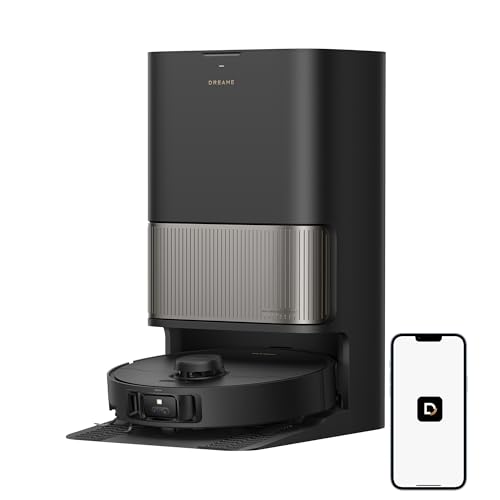
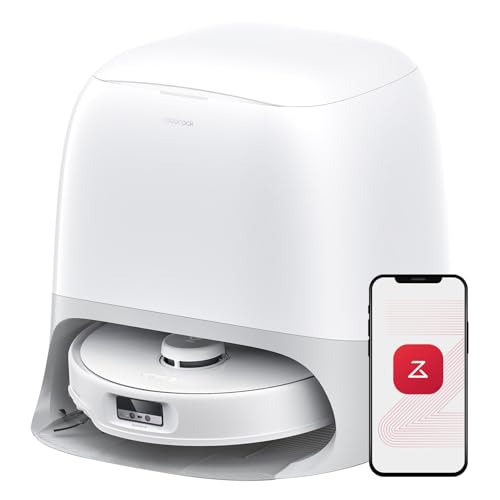
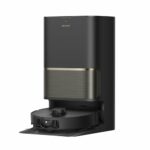
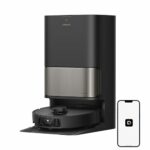
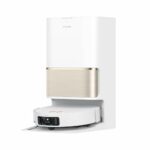
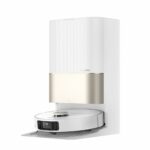
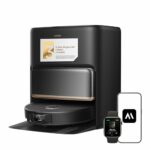
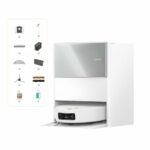
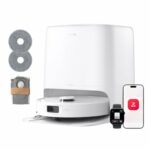
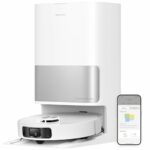
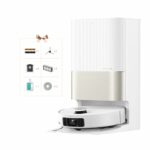
The Dreame L40s Pro Ultra and Roborock Qrevo Curv represent two flagship models from leading manufacturers in the robot vacuum market. Launched in 2025 and 2024 respectively, both devices feature comprehensive multifunctional bases that handle everything from automatic emptying to mop washing and drying. These aren't entry-level models—they're designed for users who want minimal maintenance and maximum automation.
Both robots deliver impressive suction power exceeding 18,000 Pa and include advanced AI navigation systems with dual cameras and 3D laser sensors. The multifunctional bases mean they can tackle both vacuuming and mopping without constant user intervention, making them suitable for larger homes where convenience matters as much as cleaning performance.
Power and Vacuuming
The Dreame L40s Pro Ultra edges ahead with 19,000 Pa suction power, whilst the Roborock Qrevo Curv delivers 18,500 Pa. In practical terms, this 500 Pa difference won't dramatically change everyday cleaning, but it might show up when dealing with deeply embedded dirt in carpets or textured flooring.
Where the brush systems diverge is in their approach to hair management. The Dreame employs its HyperStream dual brush configuration, designed to prevent hair from wrapping around the roller. Roborock counters with its DuoDivide anti-tangle system, which pushes hair towards the central suction opening. Both manufacturers claim excellent anti-tangle performance, though the mechanisms differ fundamentally.
Both models elevate their main brushes during mopping to avoid cross-contamination. The side brush situation is more interesting: the Dreame includes an elevating side brush alongside the extensible design, whilst the Roborock only offers extension without elevation. This means the Dreame can lift its side brush completely when mopping, potentially reducing streaking on hard floors. Both feature anti-tangle side brushes and extensible designs for better edge cleaning.
Mopping
Both robots use dual rotating mops for floor cleaning, but their edge-cleaning approaches differ. The Dreame incorporates RoboSwing, a system that adds a swaying motion to push the mop slightly under furniture edges and skirting boards. The Roborock extends its mops outward but without this additional movement.
Mop elevation reveals another distinction. The Dreame lifts its mops 10.5 mm, whilst the Roborock manages between 10-20 mm depending on the surface. That extra lift height on the Roborock could prove useful for medium-pile rugs, allowing the robot to transition without dampening carpet fibres.
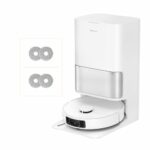
A standout feature on the Dreame is automatic mop removal at the base. When you want the robot to vacuum only—perhaps for a quick clean of carpeted areas—the L40s Pro Ultra can detach its mops entirely at the docking station. The Roborock Qrevo Curv lacks this capability, though its greater mop lift partially compensates.
Both bases wash mops with hot water and dry them using heated air, essential for preventing odours and bacterial growth. The Dreame employs third-generation autoclean technology for its washing tray, whilst Roborock uses version 2.0. Both detect dirt on mops and floors, triggering additional cleaning passes when needed.
Navigation System
Navigation hardware looks similar on paper: both feature 3D LiDAR towers, dual AI cameras, and frontal 3D laser sensors. LED lighting enables night vision for obstacle detection in low light. Remote camera access is available on both models, useful for checking on pets or monitoring your home.
The difference emerges in object recognition capability. The Dreame identifies 180 different objects compared to 62 on the Roborock. This broader recognition database means the L40s Pro Ultra should navigate more reliably around varied household items, from shoes to charging cables to children's toys.
Curtain detection appears exclusively on the Dreame. The robot recognises hanging fabric and adjusts its cleaning pattern to avoid tangling. The Roborock lacks this specific detection feature. Additionally, the Dreame includes AI-powered stain recognition, automatically intensifying cleaning when it spots marks on the floor—something absent from the Roborock.
Both manufacturers include proprietary AI cleaning systems: CleanGenius on the Dreame and SmartPlan 2.0 on the Roborock. The Roborock specifies its RR Mason 11.0 algorithm, though comparable technical details weren't provided for the Dreame's processing system.
Battery and Autonomy
Battery specifications favour the Roborock Qrevo Curv with its 6,400 mAh capacity versus 5,200 mAh in the Dreame L40s Pro Ultra. This translates to 240 minutes runtime for the Roborock compared to 220 minutes for the Dreame—a 20-minute advantage that could matter in larger properties.
That said, 220 minutes still represents substantial coverage. For most homes under 200 square metres, either robot should complete a full clean on a single charge. The Roborock's extra capacity provides additional buffer for particularly large spaces or homes with complex layouts that require more navigation time.
Smart Functions
Both robots can climb single-step obstacles, useful for navigating minor thresholds or transitioning between rooms with slight level changes. Neither model includes a robotic arm attachment.
Voice assistant support is comprehensive on both devices. Each robot features its own built-in voice assistant whilst also integrating with external systems like Alexa and Google Home. This flexibility lets you control the robots through your existing smart home ecosystem or use their native assistants independently.
Multifunctional Cleaning Base
Both bases handle the essential tasks: automatic dust emptying, hot water mop washing, and heated air drying. These features transform maintenance from a daily chore into an occasional task.
The Dreame distinguishes itself with a built-in detergent dispenser. This automatically adds cleaning solution during mop washing, potentially improving mopping results without manual intervention. The Roborock Qrevo Curv doesn't include this feature—you'd need to add detergent manually to the clean water tank if desired.
Dust bag capacity reaches 3.2 litres on the Dreame versus 2.5 litres on the Roborock. That 0.7-litre difference means less frequent bag changes, though both should last several weeks in typical households. Water tank sizes also favour the Dreame: 4.5 litres for clean water and 4 litres for dirty water, compared to 4 litres and 3 litres respectively on the Roborock. Larger tanks mean fewer refills during extended cleaning sessions.
The Dreame offers an optional plumbing connection kit, sold separately, that would allow direct water supply and drainage. The Roborock doesn't provide this option. Neither base includes UV disinfection or automatic mop replacement systems.
Dimensions
The robots themselves are virtually identical in size. The Dreame measures 350 mm diameter and 103.8 mm height, whilst the Roborock spans 352 mm diameter and 103 mm height. That 0.8 mm height advantage on the Roborock is negligible—both should fit under furniture around 11-12 cm clearance.
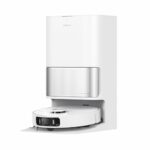
Base dimensions tell a different story. The Dreame's base stands notably taller at 590.5 mm versus 450 mm for the Roborock, though it's narrower at 340 mm width compared to 450 mm. The Dreame base is 456.7 mm deep whilst the Roborock forms a more cubic 450 mm × 450 mm × 450 mm footprint. In practical terms, the Roborock base occupies more floor space but fits under lower shelves or counters, whilst the Dreame requires more vertical clearance but takes up less floor area.
Real-world Usage Experience
For larger homes, the Roborock's extended battery life and greater mop lift provide tangible advantages. The 240-minute runtime ensures complete coverage even in sprawling layouts, whilst the 10-20 mm mop elevation handles medium-pile rugs more confidently. The compact base footprint also helps in tighter utility spaces.
Households with pets might appreciate the Dreame's broader object recognition and superior dust bag capacity. Recognising 180 objects means better navigation around pet toys, bowls, and bedding. The larger 3.2-litre dust bag reduces maintenance frequency when dealing with pet hair accumulation.
The Dreame's automatic mop removal proves valuable for homes mixing hard floors and carpets. Rather than relying solely on mop elevation, the robot can vacuum carpeted areas with mops completely detached, eliminating any moisture transfer risk. The detergent dispenser and larger water tanks suit users who want truly hands-off mopping.
Both robots handle the fundamentals well: powerful suction, hot water mop washing, heated drying, and intelligent navigation. The HyperStream and DuoDivide brush systems should both manage hair effectively, though their mechanisms differ. For homes with varied flooring and furniture, the Dreame's curtain detection and stain recognition add useful refinement.
Conclusion: Which to Choose?
Choose the Dreame L40s Pro Ultra if you want maximum automation with features like automatic mop removal and detergent dispensing. The broader object recognition suits homes with children or pets where floor clutter varies daily. Larger water and dust capacity means less frequent maintenance, ideal for busy households or larger properties where you want extended autonomous operation. The narrower base footprint works better in tight spaces, though you'll need adequate vertical clearance.
Choose the Roborock Qrevo Curv if battery life and runtime matter most, particularly in homes exceeding 150 square metres. The greater mop lift handles medium-pile rugs more effectively, whilst the compact cubic base fits neatly in utility cupboards or under counters. Roborock's established reputation for reliability and app performance appeals to users prioritising proven track record over cutting-edge features. The device suits straightforward cleaning needs without requiring detergent automation or mop removal systems.
For homes with multiple floor types and complex layouts, the Dreame offers more specialised features. For larger spaces prioritising runtime and simpler operation, the Roborock delivers solid performance with excellent battery endurance.