✨ VS Analyses · VacuumSpain comparison technology. Explanation created with AI from verified technical data.
Introduction
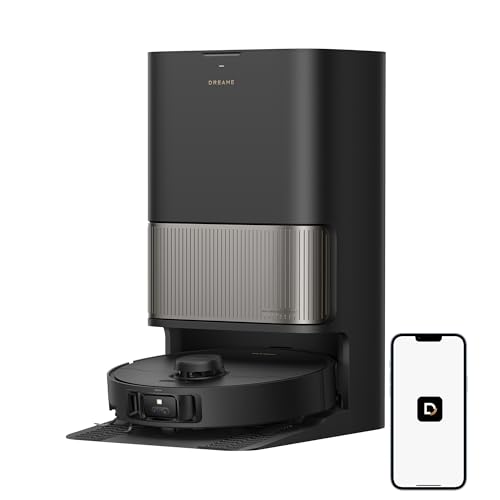
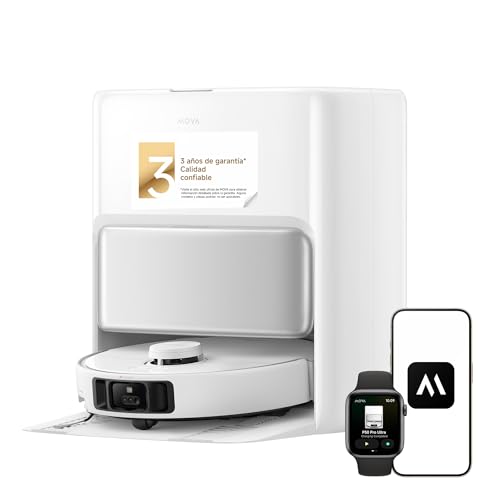
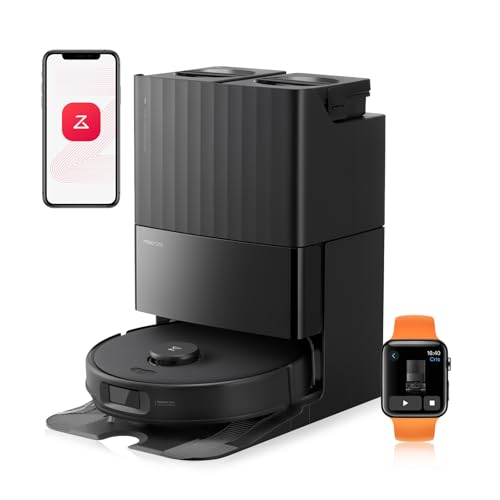
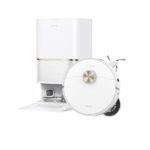
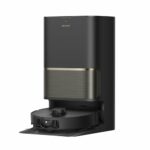
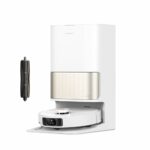
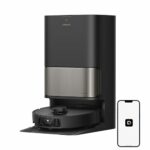
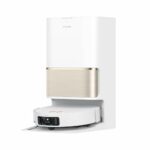
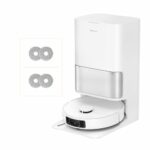
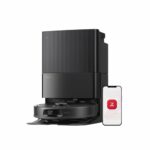
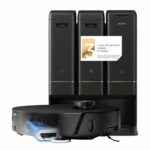
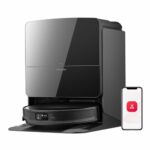
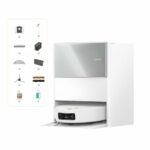
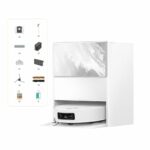
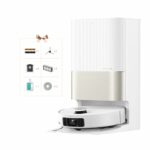
The Dreame L40s Pro Ultra and Mova P50 Pro Ultra represent the 2025 generation of premium robot vacuums, whilst the Roborock Qrevo Edge S5A arrived in 2024 as part of the brand's high-end range. All three sit firmly in the flagship category, equipped with multifunctional bases that handle everything from self-emptying to mop washing and drying. These aren't entry-level machines—they're designed for users who want minimal intervention and maximum cleaning performance across mixed floor types.
What makes this comparison particularly interesting is that Dreame and Mova share the same parent company, which explains certain similarities in their specifications. Roborock, meanwhile, maintains its position as the global leader in robot vacuum technology, bringing a different engineering approach to the table.
Power and Suction
The Dreame L40s Pro Ultra and Mova P50 Pro Ultra both deliver 19,000 Pa of suction, giving them a slight edge over the Roborock Qrevo Edge S5A's 18,500 Pa. In practical terms, this 500 Pa difference might be negligible on hard floors but could matter when dealing with embedded dirt in carpets or textured tiles.
Where things get more interesting is the brush configuration. Dreame opts for a dual brush system, which typically means two counter-rotating rollers working together to agitate and lift debris. The Mova P50 Pro Ultra uses TriCut 3.0, combining bristles with cutting blades to slice through tangled hair before it becomes a problem. Roborock's DuoDivide anti-tangle brush pushes hair towards the central suction channel, minimising wrap-around on the roller itself.
Both the Dreame and Mova can lift their main brushes when mopping, preventing the roller from dragging across wet floors or spreading dirt from carpeted areas onto hard surfaces. The Roborock lacks this feature, which means the brush remains in contact with the floor throughout mopping cycles. All three models feature extendable side brushes for corner cleaning, and all can lift their side brushes during mopping. They also incorporate anti-tangle technology in the side brush design.
Mopping
Each model uses dual rotating mops, and all three can extend their mops to reach edges more effectively. The Dreame L40s Pro Ultra and Mova P50 Pro Ultra take this further with Roboswing, a movement pattern that allows the robot to nudge mops slightly under furniture edges and skirting boards. The Roborock simply extends without this swivelling action.
Mop lift height differs marginally: Dreame and Mova manage 10.5mm, whilst Roborock achieves 10mm. That half-millimetre might seem trivial, but it can determine whether the robot successfully clears certain low-pile rugs without dragging wet mops across them.
All three bases wash mops with hot water and dry them using warm air, which accelerates drying times and helps prevent bacterial growth. The Dreame and Mova both feature third-generation automatic tray cleaning, whilst Roborock uses version 2.0. Both systems clean the washing tray after each cycle, but newer generations typically improve water distribution and residue removal.
A useful feature exclusive to Dreame and Mova is the ability to automatically dismount mops at the base when you only want to vacuum. The Roborock requires manual mop removal for vacuum-only sessions. All three detect dirt on mops and floors, adjusting cleaning intensity accordingly.
Navigation System
This is where the Dreame L40s Pro Ultra and Mova P50 Pro Ultra pull ahead in terms of raw sensor hardware. Both include dual AI cameras, 3D laser sensors, LED lighting for night vision, and remote camera access. The Dreame recognises up to 180 different obstacle types, whilst the Mova identifies 160. Both can detect pets and curtains, adjusting their behaviour to avoid tangling or startling animals.
The Roborock Qrevo Edge S5A takes a more traditional approach, relying on LiDAR mapping and obstacle avoidance without the dual camera setup or 3D laser sensors. It doesn't offer remote camera viewing, pet recognition, or curtain detection. This doesn't mean it navigates poorly—Roborock's mapping algorithms are highly refined—but it lacks the visual intelligence layer that Dreame and Mova provide.
For homes with pets, the camera-based systems can be genuinely useful. They allow you to check in remotely and see what the robot is encountering. The LED night vision means the cameras remain functional even in dim conditions.
Battery and Autonomy
All three models use 5,200 mAh batteries, but runtime varies. The Dreame L40s Pro Ultra lasts 220 minutes on a single charge, the Mova P50 Pro Ultra manages 210 minutes, and the Roborock Qrevo Edge S5A runs for 180 minutes. That's a 40-minute gap between the Dreame and Roborock, which could mean the difference between completing a large home in one session or needing to recharge mid-clean.
In practice, actual runtime depends on floor type, suction level, and whether you're vacuuming, mopping, or doing both. Still, the Dreame's extra endurance provides more headroom for extensive cleaning cycles.
Smart Functions
The Dreame L40s Pro Ultra can climb single-step obstacles, though the exact height isn't specified. The Mova P50 Pro Ultra manages 22mm, and the Roborock Qrevo Edge S5A handles 20mm. These figures refer to thresholds, cable bundles, or low transitions between rooms. A couple of millimetres can determine whether the robot smoothly crosses or gets stuck.
Both Dreame and Mova include their own voice assistants, allowing you to issue commands directly without relying solely on Alexa or Google Assistant. All three models support external voice assistants as well.
Multifunctional Base
Each base automatically empties the robot's dustbin, washes and dries mops, and stores dirty water separately from clean water. The Dreame L40s Pro Ultra and Mova P50 Pro Ultra both feature detergent tanks, which dispense cleaning solution during mop washing. The Roborock doesn't include this, so you'd need to add detergent manually to the clean water tank if desired.
Dust bag capacity is 3.2 litres for both Dreame and Mova, compared to 2.7 litres for the Roborock. Clean water tanks measure 4.5 litres (Dreame), 4 litres (Mova), and 4 litres (Roborock). Dirty water tanks are 4 litres (Dreame), 3.5 litres (Mova), and 3.5 litres (Roborock). Larger tanks mean fewer refills and emptying sessions, particularly useful in bigger homes.
The Dreame offers an optional plumbing connection kit, sold separately, which allows you to connect the base directly to water and drainage pipes. Neither Mova nor Roborock provides this option. It's not a built-in feature, but it does exist for users who want truly hands-off operation.
Dimensions
The Roborock Qrevo Edge S5A stands 98mm tall, making it the lowest of the three. Both the Dreame L40s Pro Ultra and Mova P50 Pro Ultra measure 103.8mm. That 5.8mm difference can matter if you have low-clearance furniture—sofas, beds, or cabinets with tight gaps underneath. The Roborock is more likely to slip beneath and clean areas the others can't reach.
Diameter is nearly identical: 350mm for Dreame and Mova, 352mm for Roborock. Base footprints vary more noticeably. The Mova base is 420mm wide, whilst Dreame and Roborock both measure 340mm. The Dreame base is tallest at 590.5mm, compared to Roborock's 521mm and Mova's 470mm. Depth ranges from 456.7mm (Dreame) to 487mm (Roborock).
If floor space is tight, the Mova's shorter, wider base might suit certain layouts better, whilst the Dreame's taller, narrower profile could fit into corners or alongside furniture more easily.
Real-World Use
For larger homes, the Dreame L40s Pro Ultra's 220-minute runtime and 4.5-litre clean water tank give it an edge in covering extensive floor areas without interruption. The larger dust bag also means less frequent maintenance.
If you have pets, the dual cameras, LED night vision, and pet recognition on both Dreame and Mova add genuine value. You can monitor the robot remotely and see how it interacts with animals or obstacles. The anti-tangle brushes across all three models help, but Mova's TriCut 3.0 and Roborock's DuoDivide are specifically engineered to handle hair.
For homes with low furniture, the Roborock's 98mm height is the clear winner. It'll clean under more items and reach spaces the others simply can't access.
The detergent tanks on Dreame and Mova simplify mopping by automatically dosing cleaning solution during mop washing. The Roborock requires manual addition, which isn't a dealbreaker but does add a small maintenance step.
Conclusion: Which to Choose?
Choose the Dreame L40s Pro Ultra if you want the longest battery life, largest clean water tank, and the option to add plumbing connectivity later. It's ideal for large homes where runtime and tank capacity matter most, and the dual cameras with remote access appeal if you want visual monitoring.
Choose the Mova P50 Pro Ultra if you prioritise hair management with TriCut 3.0, appreciate the dual camera system and pet recognition, but prefer a shorter, wider base that might fit your space better. It offers nearly identical features to the Dreame but with a different base footprint and slightly smaller tanks.
Choose the Roborock Qrevo Edge S5A if you need a robot that fits under low furniture, value Roborock's proven reliability and refined mapping algorithms, and don't require dual cameras or remote viewing. It's the best option for homes with tight clearances and users who prefer a more traditional navigation approach without compromising on mopping performance.