✨ VS Analyze · VacuumSpain comparison technology. AI-generated explanation based on verified technical data.
Introduction
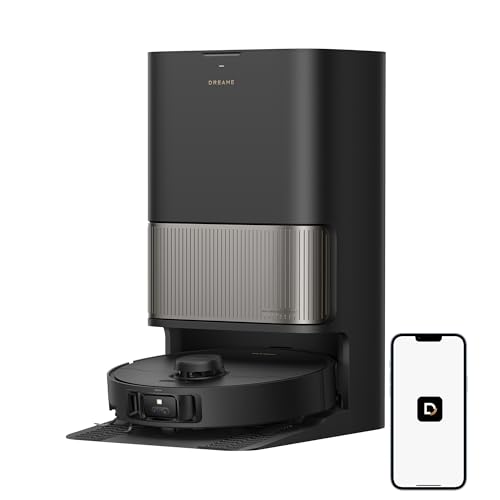
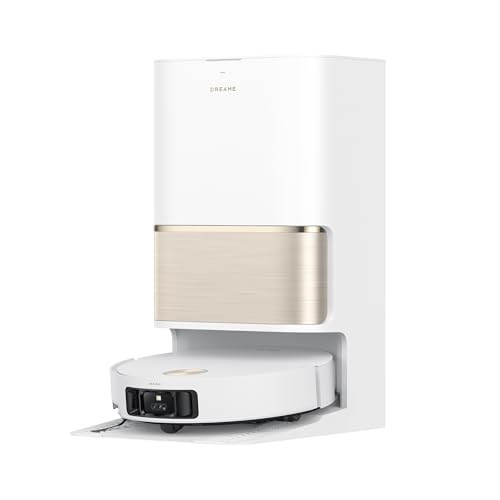
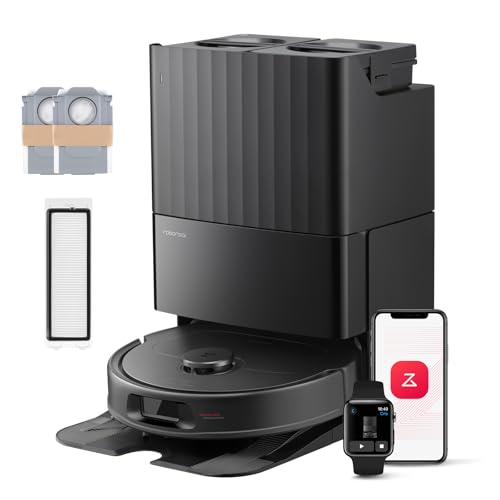
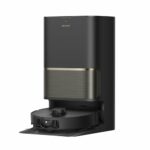
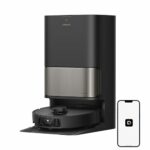
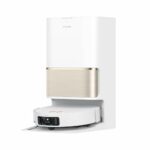
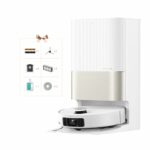
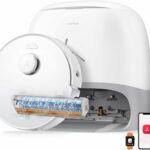
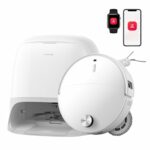
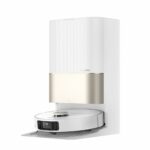
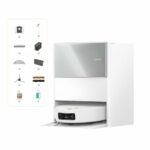
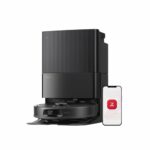
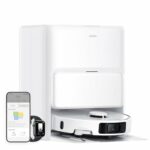
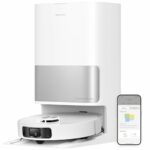
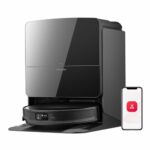
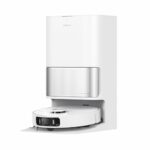
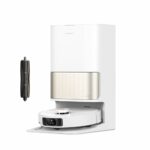
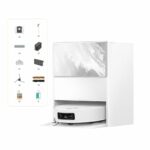
These three models represent the latest generation of premium robot vacuum cleaners launched in 2025, each bringing distinct capabilities to the table. The Dreame L40s Pro Ultra and Dreame L50 Pro Ultra share the same manufacturer but target slightly different user needs, whilst the Roborock QV 35S offers a contrasting approach from one of the industry's most established brands.
The Dreame duo sits at the higher end of the spectrum with advanced AI systems and dual camera setups, whilst Roborock's offering focuses on proven reliability with a more streamlined feature set. All three include multifunctional bases that handle mop washing and drying, making them suitable for homes where mopping performance matters just as much as vacuuming power.
Suction Power and Brushwork
The Dreame L50 Pro Ultra delivers 19,500Pa of suction, edging slightly ahead of the L40s Pro Ultra's 19,000Pa. This difference might seem marginal on paper, but in practice it can make a noticeable impact when tackling deeply embedded dirt in carpets or thick rugs. The Roborock QV 35S operates at 10,000Pa, which is substantially lower yet still adequate for most hard floors and low-pile carpets.
All three models use dual rotating mops for wet cleaning, but the brush configurations differ considerably. The Dreame pair features the HyperStream double brush system, which reduces hair tangles by anchoring two brushes at one end only. The Roborock employs a simpler single brush design. What sets the Dreame models apart is their ability to lift both the main brush and side brush during mopping, preventing wet brushes from dragging across already-cleaned floors.
The side brush on both Dreame units extends outwards to reach into corners more effectively, a feature the QV 35S doesn't offer. This extensible design helps capture debris along skirting boards and tight angles that standard side brushes often miss.
Mopping Capabilities
Mop extension makes a tangible difference when cleaning along edges and under furniture lips. The Dreame L40s Pro Ultra and L50 Pro Ultra both extend their mops outwards and incorporate the RoboSwing movement, which shifts the robot's body slightly to push mops further under overhangs. The Roborock QV 35S lacks this extension mechanism entirely.
Mop lifting reaches 10.5mm on the Dreame models and 10mm on the Roborock. That extra half-millimetre might sound trivial, but combined with the automatic mop removal feature on the Dreame units, it means you can transition from mopping to vacuuming without manually detaching anything. The QV 35S requires you to handle mop removal yourself if you want to vacuum without dragging wet pads across carpets.
Dirt detection technology appears only on the Dreame robots. These models can identify heavily soiled areas on the floor and dirty mops, triggering additional cleaning passes or mop rewashes as needed. The Roborock relies on pre-programmed cleaning patterns without adaptive adjustments based on real-time dirt levels.
Navigation Systems
The navigation setup reveals some of the starkest contrasts in this comparison. Both Dreame models use dual cameras paired with 3D laser sensors, enabling them to recognise up to 180 different obstacle types. This includes specific detection for pets and curtains, allowing the robot to adjust its behaviour accordingly—slowing near pets or avoiding fabric that could snag.
The L50 Pro Ultra distinguishes itself with a retractable LiDAR turret, which contributes to its lower 89mm profile. The L40s Pro Ultra uses a traditional fixed turret, adding height but maintaining robust mapping capabilities. The Roborock QV 35S employs a standard LiDAR turret without the dual camera system or 3D laser sensors, relying on obstacle avoidance without the granular object recognition the Dreame units provide.
Remote camera access works on both Dreame models, letting you check on your home through the robot's front-facing cameras via the app. LED lighting assists with low-light navigation on these units. The Roborock doesn't include camera access or LED illumination.
Battery Life and Coverage
The Dreame L50 Pro Ultra packs a 6,400mAh battery, the largest in this group, yet delivers 200 minutes of runtime—20 minutes less than the L40s Pro Ultra's 220 minutes from its 5,200mAh cell. This suggests the retractable LiDAR and possibly more intensive processing draw additional power. The Roborock QV 35S offers 180 minutes from its 5,200mAh battery, which is the shortest runtime here but still sufficient for most homes under 200 square metres.
In practical terms, the L40s Pro Ultra's extended runtime suits larger properties or homes with complex layouts requiring multiple rooms and zones. The L50 Pro Ultra balances capacity with its lower profile, making it better for homes with low-clearance furniture where every millimetre counts.
Smart Features
All three robots can climb obstacles, but their capabilities differ. The Dreame models handle simple steps whilst the Roborock specifies a 20mm threshold clearance. This matters when moving between rooms with raised door frames or transitioning onto thick rugs.
Voice assistant integration varies. The Dreame L40s Pro Ultra and L50 Pro Ultra include their own built-in voice assistants alongside compatibility with Alexa and Google Home. The Roborock QV 35S supports external assistants but doesn't have its own onboard voice system. Whether this matters depends on how you prefer to control your devices—some users appreciate having one less ecosystem to manage.
Multifunctional Base Station
All three bases handle automatic dust emptying, mop washing with hot water, and mop drying with heated air. The Dreame stations wash mops at 80°C and dry them with 65°C air, whilst the Roborock uses 60°C water and 45°C air. Higher temperatures generally mean better sanitisation and faster drying, reducing the risk of mildew and odours.
The Dreame bases feature third-generation self-cleaning for the washing tray, scrubbing the tray itself after mop cleaning to prevent grime buildup. The Roborock lacks this automatic tray maintenance. Over weeks of use, this difference becomes noticeable—the Dreame bases require less manual intervention to stay hygienic.
Detergent dispensing appears only on the Dreame models, with dedicated tanks that release cleaning solution during mop washing. The Roborock requires you to add detergent manually to the clean water tank if you want to use it. Both Dreame stations also offer optional plumbing connection kits sold separately, allowing continuous water supply and drainage without refilling or emptying tanks. The Roborock doesn't support this option.
Storage capacity favours the Dreame units: 3.2-litre dust bags versus 2.7 litres on the Roborock, 4.5 litres of clean water versus 4 litres, and 4 litres of dirty water versus 3.5 litres. For larger homes or less frequent maintenance, these extra capacities reduce how often you need to service the base.
Size and Clearance
The Dreame L50 Pro Ultra's 89mm height makes it the slimmest option here, able to slip under furniture that the 103.8mm L40s Pro Ultra and 96.5mm Roborock QV 35S cannot reach. If your sofas, beds, or cabinets sit low to the ground, this difference determines whether the robot can clean underneath or has to navigate around.
Diameter remains nearly identical across all three—350mm for the Dreame pair and 353mm for the Roborock. Base dimensions show the Dreame stations measuring 340mm wide, 456.7mm deep, and 590.5mm tall, whilst the Roborock base sits shorter at 521mm but extends deeper to 487mm. Consider your available floor space when deciding where to position the base.
Real-World Performance
For homes with pets, the Dreame models' dual cameras and pet recognition technology help avoid startling animals or getting tangled in leads and toys. The HyperStream brush design also handles pet hair more effectively than single-brush systems. The Roborock remains capable but lacks the AI-driven awareness to adapt behaviour around pets.
In larger properties, the L40s Pro Ultra's 220-minute runtime and 300ml onboard dust bin provide slightly better coverage between base returns. The L50 Pro Ultra counters with its larger 395ml dust capacity and lower profile, making it ideal for homes with extensive under-furniture areas. The Roborock's 330ml bin and 180-minute battery suit medium-sized homes without excessive low-clearance zones.
Households prioritising mopping performance will find the Dreame units' dirt detection, mop extension, and automatic mop removal deliver a more hands-off experience. The base tray self-cleaning and detergent dispensing reduce maintenance frequency. The Roborock requires more manual involvement but still delivers competent mopping for those willing to handle occasional mop removal and tray cleaning themselves.
Conclusion: Which to Choose?
Choose the Dreame L40s Pro Ultra if you need maximum runtime and don't mind the taller profile. It suits larger homes where extended battery life matters more than fitting under every piece of furniture. The fixed LiDAR turret provides reliable mapping without the complexity of retractable mechanisms.
Choose the Dreame L50 Pro Ultra if low-clearance access is essential. Its 89mm height opens up cleaning areas the other models can't reach, whilst the larger battery capacity and dust bin balance the slightly shorter runtime. The AI Sage 13.0 processor and retractable LiDAR represent the cutting edge of current technology.
Choose the Roborock QV 35S if you prefer proven reliability without the complexity of dual cameras and extensive AI features. It delivers solid fundamentals—effective vacuuming, competent mopping, and a reputable brand—at what will likely be a more accessible price point. It works well for medium-sized homes where advanced object recognition and automatic mop removal aren't priorities.
Homes with multiple pets, complex layouts, or a preference for minimal intervention lean towards the Dreame options. Those seeking straightforward operation with established brand support will find the Roborock a sensible choice. The decision ultimately rests on whether you value cutting-edge AI and automation or prefer time-tested simplicity.