✨ VS Analyses · VacuumSpain comparison technology. Explanation created with AI from verified technical data.
Introduction
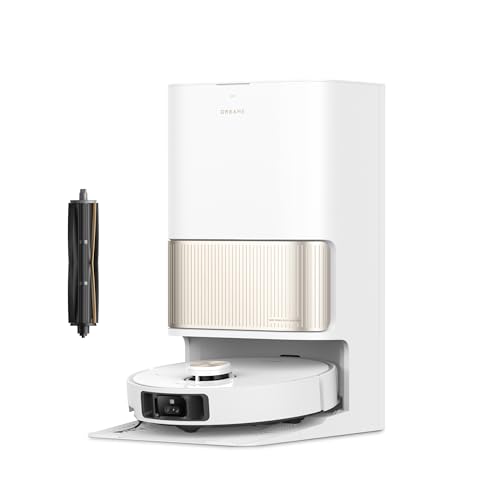
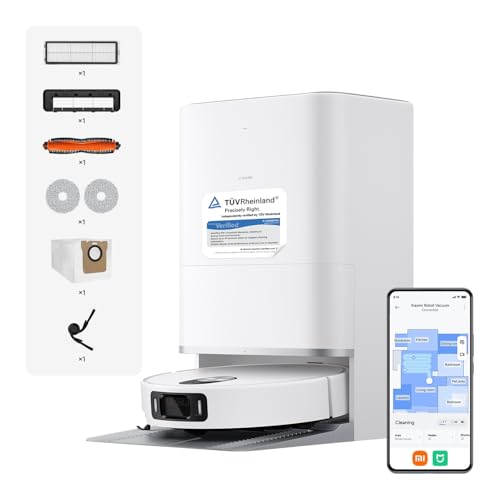
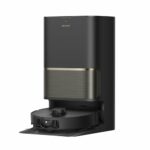
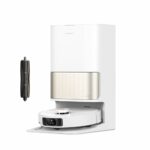
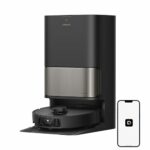
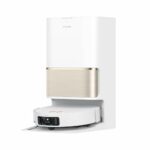
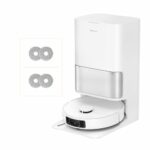
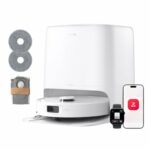
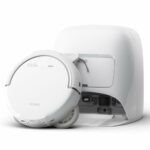
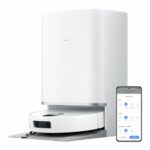
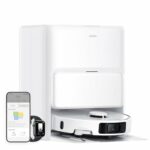
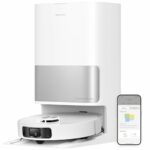
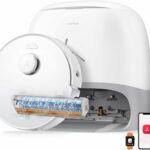
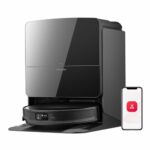
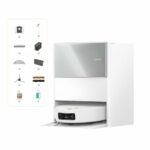
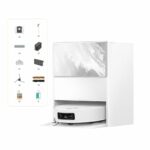
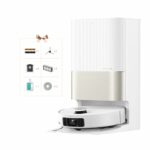
The Dreame L40 Ultra and the Xiaomi Robot Vacuum 5 Pro represent two high-end propositions in the world of robot vacuum cleaners with multifunctional base stations. The former arrived on the market in 2024, whilst the Xiaomi model is from 2025. Both devices are designed for users seeking total automation in home cleaning, with powerful suction capacity and a mopping system with rotating mops that wash and dry automatically in the base.
We're looking at robots designed for medium and large homes, with advanced navigation technology and obstacle recognition. The differences between them focus mainly on suction power, navigation systems, mop management and some specific functions that may tip the balance depending on each household's needs.
Power and Suction
Here we find one of the most significant differences in this robot vacuum cleaner comparison. The Xiaomi Robot Vacuum 5 Pro reaches 20,000 Pa of suction power, practically double the Dreame L40 Ultra's 11,000 Pa. This difference translates into greater capacity to lift ingrained dirt and work on medium-pile carpets.
As for the brushing system, both feature the TriCut 3.0 main brush, which combines bristles with blades to cut tangled hair. Both models can lift this brush during mopping, preventing it from getting unnecessarily wet. They also share an extendable and anti-tangle side brush, useful for better reaching corners.
The Dreame L40 Ultra's advantage lies in its liftable side brush. This means that during mopping it can raise the side brush to prevent it from dragging dirty water or interfering with the mops. The Xiaomi doesn't have this function.
Mopping
Both the Dreame and Xiaomi robot vacuum cleaners use two rotating mops for mopping. The Dreame L40 Ultra spins them at 180 RPM, whilst the Xiaomi doesn't specify the rotation speed. Both extend the mops to better reach edges, although the Dreame adds the RoboSwing system, a back-and-forth movement that allows the mops to slide slightly under furniture or ledges.
Mop lifting favours the Xiaomi, which reaches 15 mm compared to the Dreame's 10.5 mm. This is practical when passing over carpets or mats, although in practice both heights are sufficient for most domestic situations.
An important difference: only the Dreame L40 Ultra can automatically remove the mops at the base when you only want to vacuum. The Xiaomi requires you to remove them manually if you don't wish to mop. Both models detect dirt on both the mops and the floor, adjusting the cleaning intensity as necessary.
Navigation System
The Dreame L40 Ultra features a traditional 360° LiDAR turret, whilst the Xiaomi Robot Vacuum 5 Pro uses a retractable LiDAR. This difference partially explains the Xiaomi's lower height. Both systems are precise and efficient for mapping the home.
In obstacle recognition, the Xiaomi robot vacuum cleaner has the advantage by identifying up to 200 different objects, double the Dreame's 100. However, the Dreame L40 Ultra includes specific pet recognition and curtain detection, functions that the Xiaomi doesn't offer. This may be relevant in homes with animals or where you want to prevent the robot from getting tangled with hanging fabrics.
Both models incorporate dual cameras (the Dreame specifies that it's dual) with remote access, LED for night vision and a front 3D laser sensor. The Dreame uses the AI Sage 11.0 Quad-core processor and its CleanGenius 2.0 system to optimise cleaning through artificial intelligence.
Autonomy and Battery
Both robots feature 5,200 mAh batteries, but the performance is different. The Dreame L40 Ultra achieves 194 minutes of autonomy, whilst the Xiaomi Robot Vacuum 5 Pro reaches 140 minutes. This difference of almost an hour can be explained by the Xiaomi's greater suction power, which consumes more energy.
For large homes, the Dreame's autonomy is more generous. In practice, 194 minutes allow covering large surfaces without needing to recharge mid-clean, although both robots automatically return to the base if they need more battery.
Smart Functions
The Dreame L40 Ultra can overcome obstacles up to 22 mm, compared to the Xiaomi's 20 mm. These are very similar values, sufficient for passing over cables, small uneven surfaces or carpet edges without problems.
A relevant difference: only the Dreame L40 Ultra includes its own voice assistant, in addition to compatibility with Alexa and Google Home. The Xiaomi only works with external assistants. This can simplify some tasks if you prefer to give commands directly to the robot without depending on other devices.
Multifunctional Cleaning Base
Both bases perform auto-emptying of the dust bin, washing and drying of mops with hot air. The difference lies in the temperatures: the Xiaomi washes the mops at 80°C compared to the Dreame's 65°C, which may improve the elimination of bacteria and grease. The Dreame dries the mops at 45°C, whilst the Xiaomi doesn't specify the drying air temperature.
Only the Dreame L40 Ultra incorporates a detergent tank in the base, which dispenses product during mop washing. This improves mopping effectiveness without needing to manually add cleaning products. The Xiaomi doesn't include this function.
In capacities, the Dreame has the advantage: 3.2-litre dust bag compared to the Xiaomi's 2.5, 4.5-litre clean water tank compared to 4, and 4-litre dirty water tank compared to 3.8. Small differences, but which mean slightly less maintenance on the Dreame model.
The Dreame L40 Ultra offers a plumbing connection kit that's purchased separately. The Xiaomi doesn't have this option. Both include self-cleaning of the washing tray, although the Dreame specifies that it's second generation.
Dimensions
Both robots have the same diameter: 350 mm. The difference lies in the height. The Xiaomi Robot Vacuum 5 Pro measures 88 mm, whilst the Dreame L40 Ultra reaches 103.8 mm. Those almost 16 mm of difference can be decisive in homes with low furniture or beds with little clearance.
The bases have similar sizes. The Dreame's measures 340 mm wide, 590.5 mm high and 456.7 mm deep. The Xiaomi's is slightly wider (360 mm) and deeper (470 mm), but somewhat less tall (572 mm). It's advisable to measure the available space before deciding, although the differences aren't dramatic.
Real-World Usage Experience
The best robot vacuum cleaner depends on the type of home and specific needs. The Xiaomi Robot Vacuum 5 Pro excels in homes with carpets or where maximum suction power is needed. Its 20,000 Pa makes a difference with ingrained dirt and pet hair, although it doesn't include specific animal recognition.
The Dreame L40 Ultra is more complete in total automation. The detergent tank, automatic mop removal and pet and curtain recognition simplify day-to-day life. Its greater autonomy also favours large homes where the Xiaomi's 140 minutes may fall short.
For houses with low furniture, the Xiaomi has a clear advantage with its 88 mm height. It can access spaces where the Dreame can't enter. This can be decisive if you have sofas, beds or wardrobes with little clearance underneath.
In homes with pets, the Dreame offers specific animal recognition, although the Xiaomi compensates with greater suction power for picking up hair. Both have TriCut anti-tangle brushes, which work well with long hair.
Conclusion: Which to Choose?
Choose the Dreame L40 Ultra if… you're looking for maximum automation with automatic mop removal, integrated detergent tank and greater autonomy. It's ideal for large homes where you value not having to intervene manually, especially if you have pets or curtains that you want the robot to recognise and avoid. Also if you prefer your own voice assistant without depending on external devices.
Choose the Xiaomi Robot Vacuum 5 Pro if… suction power is your priority. With 20,000 Pa, this Xiaomi robot vacuum cleaner is more effective on carpets and difficult dirt. Its lower height makes it the best option for passing under low furniture, and the 80°C mop washing offers greater disinfection. It's a balanced option if you don't need a detergent tank or specific pet recognition, but you do want a powerful and compact 2025 model.