✨ VS Analyze · VacuumSpain comparison technology. AI-generated explanation based on verified technical data.
Introduction
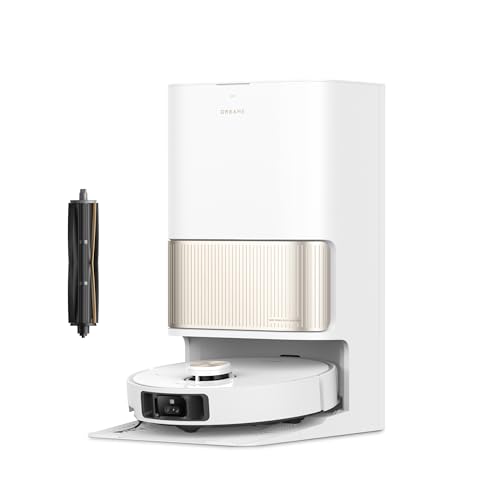
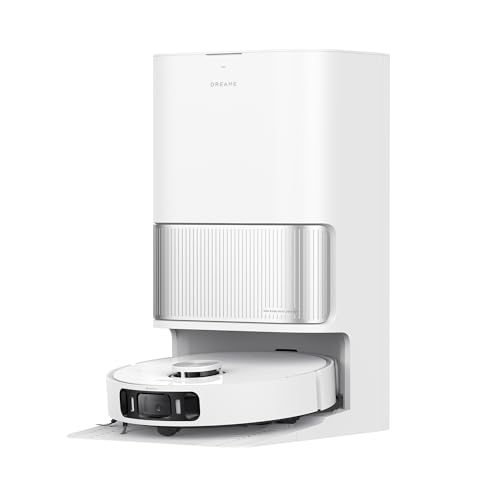
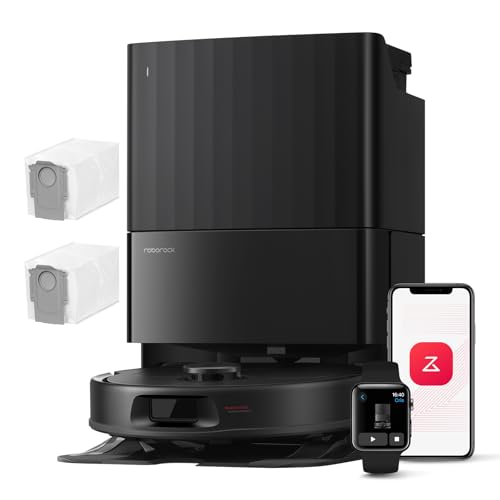
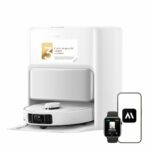
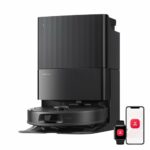
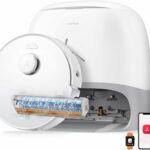
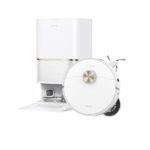
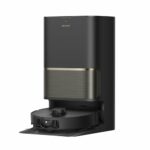
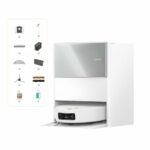
The Dreame L40 Ultra and L40 Ultra AE represent two iterations of Dreame's premium cleaning technology, whilst the Roborock QV 35A offers an alternative approach from the world's leading robot vacuum manufacturer. The original L40 Ultra arrived in 2024, followed by both the AE variant and the Roborock model in 2025. All three are flagship-level machines equipped with multifunctional bases that handle automatic emptying, mop washing, and drying—features that transform these from simple vacuums into comprehensive floor care systems.
These models suit larger homes where autonomous cleaning matters. The Dreame options push boundaries with enhanced suction power and advanced AI capabilities, whilst Roborock maintains its reputation for reliable performance with a slightly more streamlined feature set. Understanding the differences helps match each robot to specific household needs.
Power and Suction
The L40 Ultra AE dominates this category with 19,000 Pa of suction—a substantial leap from the original L40 Ultra's already respectable 11,000 Pa. The Roborock QV 35A sits at 8,000 Pa, which still handles most household debris effectively but lacks the raw power for deeply embedded dirt in carpets or stubborn particles.
All three share identical 5,200 mAh batteries. The L40 Ultra delivers 194 minutes of runtime, whilst the Roborock manages 180 minutes. Battery data for the AE variant wasn't specified, though the identical capacity suggests similar performance to its predecessor.
Brush systems reveal meaningful differences. Both Dreame models use the TriCut 3.0 main roller, combining bristles with integrated cutting blades that slice through tangled hair. The Roborock employs its simpler brush design. What sets the original L40 Ultra apart is its extendable side brush that reaches into corners more effectively, plus the ability to lift this brush during mopping to prevent streaking on wet floors. The AE variant omits these features entirely. Interestingly, the Roborock includes anti-tangle technology in its side brush despite lacking the extension mechanism.
Main brush elevation during mopping appears in both Dreame models at 10.5 mm, preventing the roller from dragging across wet surfaces. The Roborock cannot raise its main brush, which may affect cleaning efficiency when switching between tasks.
Mopping
All three robots deploy dual rotating mops, but execution varies considerably. The L40 Ultra offers RoboSwing technology—a swaying motion that extends mops under furniture edges and skirting boards. This same model also features mop extension for thorough edge cleaning. The AE variant retains the extension capability but drops RoboSwing entirely. Roborock provides neither enhancement.
Mop lifting reaches 10.5 mm on Dreame models and 10 mm on the Roborock, sufficient clearance for low-pile rugs. All three mop with cold water during actual floor cleaning.
The original L40 Ultra stands alone with automatic mop removal at the base station. When you need pure vacuuming without any mopping, the robot detaches its pads automatically—eliminating manual intervention. Neither the AE nor the Roborock offers this convenience.
Dirt detection technology appears in both Dreame models, monitoring both mop cleanliness and floor soiling to trigger additional cleaning passes when needed. The Roborock lacks this intelligence, following predetermined patterns regardless of actual dirt levels.
Base stations wash mops with hot water at 60°C across all three models, then dry them with heated air—also at 60°C—to prevent bacterial growth and odours. The Dreame bases include second-generation self-cleaning trays that automatically rinse themselves after washing the robot's mops, reducing maintenance considerably. Roborock's base requires manual tray cleaning.
Detergent dispensers feature in both Dreame models, automatically adding cleaning solution during mop washing. The Roborock omits this, relying solely on water. Both manufacturers offer optional plumbing connection kits purchased separately, though this accessory matters less than the core cleaning capabilities already built in.
Navigation System
LiDAR turrets handle primary mapping across all three robots, building accurate floor plans for systematic coverage. Differences emerge in obstacle avoidance sophistication.
The L40 Ultra combines dual AI cameras with 3D laser sensors, recognising 100 different obstacle types including pets. It detects curtains specifically—useful for preventing entanglement—and provides remote camera access for home monitoring. LED lighting enables navigation in darkness. The AI Sage 11.0 processor powers these capabilities.
The AE variant upgrades obstacle recognition to 120 types and retains the AI camera, 3D sensors, LED lighting, and remote viewing. It drops curtain-specific detection and dual camera configuration, though practical impact seems minimal given the expanded object library.
Roborock takes a fundamentally different approach. The QV 35A relies purely on LiDAR and basic obstacle avoidance without AI cameras, 3D sensors, LED lighting, or remote access. It cannot identify pets specifically or distinguish between object types. For homes wanting video monitoring or precise object recognition, this represents a significant limitation. For straightforward cleaning without those extras, the simpler system still navigates competently using SmartPlan AI for route optimisation.
Battery and Autonomy
Identical 5,200 mAh batteries power all three models. The L40 Ultra manages 194 minutes per charge, whilst the Roborock achieves 180 minutes. These figures support homes up to approximately 200-250 square metres depending on floor type and cleaning mode intensity.
In practice, battery capacity matters less than it once did. All three robots return to base automatically when depleted, recharge, then resume cleaning exactly where they stopped. Large homes benefit more from efficient navigation algorithms than raw runtime.
Intelligent Features
Obstacle climbing capability varies slightly. The L40 Ultra clears 22 mm thresholds—useful for certain doorway transitions and thick carpet edges. Both the AE variant and Roborock manage 20 mm, still adequate for most household obstacles but potentially problematic with unusually tall thresholds.
The original L40 Ultra includes its own voice assistant, allowing direct commands without external smart speakers. The AE removes this feature, though all three models integrate with Alexa and Google Home for voice control through those platforms.
None of these robots incorporate robotic arms or other mechanical appendages beyond their standard brush systems.
Multifunctional Base Station
All three bases handle automatic dust emptying, mop washing with 60°C water, and mop drying with 60°C heated air. Differences appear in capacity and maintenance requirements.
Dreame bases hold 3.2-litre dust bags versus 2.7 litres in the Roborock—roughly 18% more capacity before replacement becomes necessary. Clean water tanks measure 4.5 litres in Dreame models and 4 litres in Roborock; dirty water containers hold 4 litres and 3.5 litres respectively. These differences extend maintenance intervals modestly.
The second-generation self-cleaning tray in Dreame bases automatically rinses the washing platform after cleaning the robot's mops. This prevents residue buildup that otherwise requires manual scrubbing every few weeks. Roborock's base lacks this automation, adding a recurring maintenance task.
Detergent dispensers in Dreame models automatically dose cleaning solution during mop washing. The Roborock requires manual addition if you want anything beyond plain water.
Optional plumbing connection kits exist for both brands, purchased separately. These allow permanent water supply and drainage connections, eliminating tank refilling and emptying. Useful for those wanting maximum autonomy, though not essential for typical use.
Dimensions
Robot height proves most significant here. The L40 Ultra measures 103.8 mm tall—noticeably bulkier than the AE variant at 97 mm and the Roborock at 96.5 mm. Those extra millimetres prevent the original model from accessing furniture that the other two navigate beneath comfortably. Homes with low-clearance sofas or beds should consider this carefully.
Diameter remains essentially identical: 350 mm for Dreame models, 353 mm for Roborock. This similarity means all three navigate doorways and tight spaces comparably.
Base stations share 340 mm width but differ in other dimensions. Dreame bases stand 590.5 mm tall and extend 456.7 mm deep. The Roborock base measures 521 mm tall but requires 487 mm depth—lower profile but deeper footprint. Neither configuration offers overwhelming advantages; placement depends on available floor space configuration.
Real-World Use
Larger homes benefit from the Dreame models' superior tank capacities and dust bag volume, reducing refill frequency. The L40 Ultra AE's exceptional 19,000 Pa suction handles homes with thick carpets or multiple pets more effectively than the other options.
Pet owners should note the TriCut 3.0 brush in Dreame models actively cuts tangled hair, whilst the Roborock's simpler design requires more frequent manual cleaning. Both Dreame robots identify pets and adjust behaviour accordingly; the Roborock cannot.
Homes with furniture clearance below 100 mm must choose the AE variant or Roborock—the original L40 Ultra simply won't fit. This single dimension eliminates it from consideration for many households regardless of other capabilities.
The L40 Ultra's automatic mop removal suits homes where mopping isn't always needed. Running vacuum-only sessions becomes genuinely hands-free rather than requiring manual pad removal beforehand.
Maintenance effort differs notably. Dreame's self-cleaning base tray reduces manual intervention, whilst Roborock owners face regular tray scrubbing. The detergent dispenser similarly automates what otherwise requires remembering to add solution manually.
Remote camera access in Dreame models adds home monitoring functionality beyond cleaning. Whether this matters depends entirely on individual priorities—it's genuinely useful for some, completely irrelevant to others.
Conclusion: Which to Choose?
Choose the Dreame L40 Ultra if furniture clearance exceeds 105 mm and you want the most comprehensive feature set available. The extendable side brush, RoboSwing technology, automatic mop removal, and built-in voice assistant create the most autonomous cleaning experience. Homes with complex layouts, numerous obstacles, and varied furniture benefit most. The dual AI cameras and curtain detection add layers of intelligence that prevent problems before they occur.
Choose the Dreame L40 Ultra AE if maximum suction power matters most and furniture sits low enough to accommodate the slimmer 97 mm profile. The 19,000 Pa performance tackles embedded dirt and pet hair more aggressively than alternatives, whilst the 120-object recognition library handles obstacle avoidance superbly. Losing RoboSwing, automatic mop removal, and the voice assistant represents genuine compromise, but the core cleaning capability exceeds its predecessor where it counts most—actual dirt removal.
Choose the Roborock QV 35A if straightforward cleaning without AI cameras or advanced sensors suits your needs. The simpler navigation system still maps accurately and cleans systematically, just without object identification or remote monitoring. Lower suction at 8,000 Pa handles hard floors and low-pile carpets adequately, though thick carpets or heavy pet hair may challenge it. The slimmer 96.5 mm height accesses tight spaces well, and Roborock's reputation for reliability and excellent app experience brings genuine value. This option makes sense for homes wanting capable automated cleaning without paying for features they won't use.