✨ VS Analyses · VacuumSpain comparison technology. Explanation created with AI from verified technical data.
Introduction
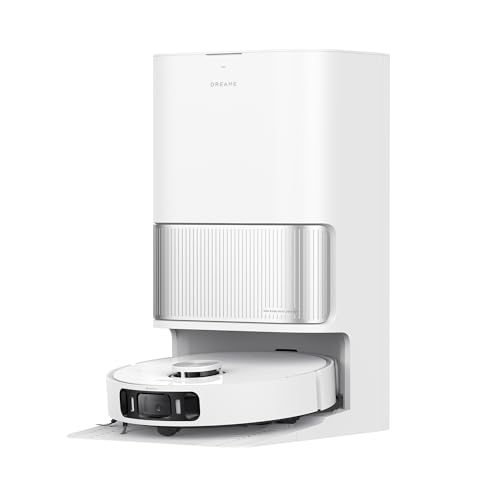
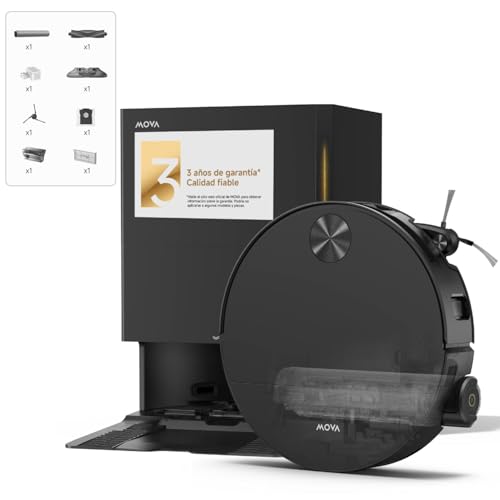
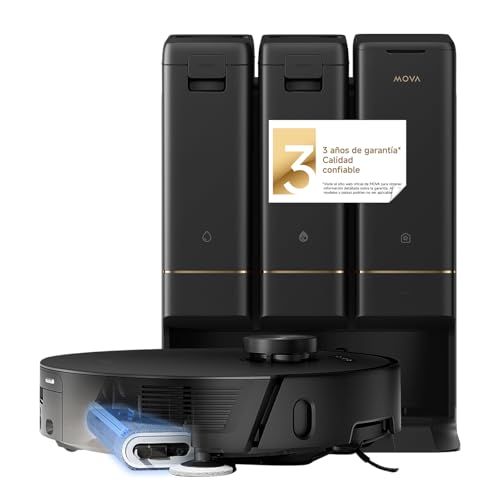
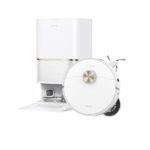
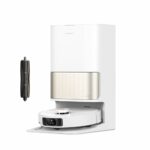
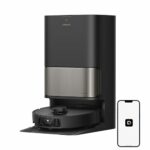
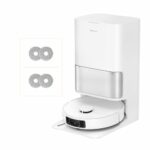
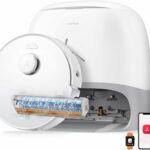
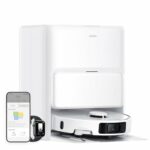
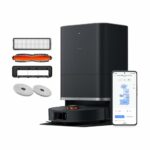
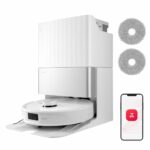
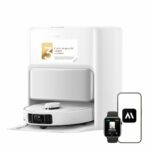
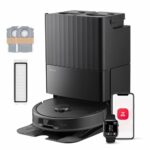
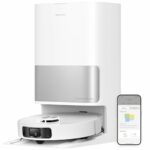
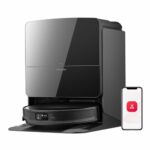
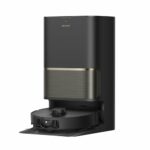
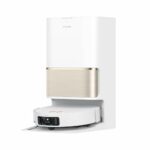
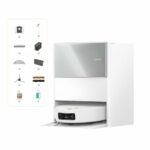
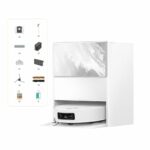
When it comes to choosing a high-end robot vacuum in 2025, the Dreame L40 Ultra AE and the two Mova models—the S70 Roller and Z50 Ultra—represent three distinct approaches to automated cleaning. The Dreame L40 Ultra AE arrived in 2025 as a well-rounded option from a brand known for competitive pricing without sacrificing features. The Mova S70 Roller, launching in March 2026, introduces an innovative roller mopping system with impressive suction power. Meanwhile, the Mova Z50 Ultra, also from 2025, positions itself as the most feature-rich option with enhanced AI capabilities and a larger battery.
These aren't entry-level devices. Each comes equipped with a multifunctional base station that handles dust emptying, mop washing, and drying—essential for anyone seeking genuinely hands-off floor maintenance. The differences lie in how they approach mopping, navigation intelligence, and physical design. Understanding these distinctions helps match the right robot to your home's specific needs, whether that's navigating under low furniture, handling pet hair, or managing larger floor areas.
Suction Power and Brushing Systems
The suction power gap is immediately apparent. The Mova S70 Roller pushes 28,000 Pa—nearly 50% more than the 19,000 Pa offered by both the Dreame L40 Ultra AE and the Mova Z50 Ultra. In practical terms, this translates to better performance on carpets and more effective pickup of embedded debris in textile fibres.
Where the brush systems diverge is equally telling. The Dreame L40 Ultra AE and Mova Z50 Ultra both employ TriCut 3.0 main brushes, which combine bristles with integrated blades designed to slice through tangled hair. The S70 Roller takes a different path with its SimpliRoller brush—a design that typically relies on silicone fins rather than traditional bristles, reducing hair entanglement from the outset.
Main brush elevation during mopping appears on the Dreame and Z50 Ultra, lifting 10.5mm and 7mm respectively to avoid rewetting cleaned floors. The S70 Roller lacks this feature but compensates with its roller mopping system that doesn't require brush elevation in the same way.
The side brush story reveals another clear split. Both Mova models feature extendable side brushes that reach further into corners, and they can lift these brushes during mopping to prevent flinging water droplets. They also incorporate anti-tangle technology in the side brushes. The Dreame L40 Ultra AE uses a conventional fixed side brush without these refinements. For homes with intricate floor plans or abundant corner debris, the Mova approach offers tangible advantages.
Mopping Performance
Three fundamentally different mopping philosophies emerge here. The Dreame L40 Ultra AE uses dual rotating mopas with RoboSwing—a system where the robot performs subtle swaying movements to push the mopas slightly under furniture edges and kickboards. The mopas extend to reach closer to walls, and they lift 10.5mm when encountering carpets.
The Mova S70 Roller abandons traditional mopas entirely for a 270mm roller that continuously rotates against the floor. This roller extends to clean edges and lifts 12mm—the highest clearance of the three. Roller systems excel at consistent pressure and can handle stubborn dried-on marks more effectively than flat mopas, though they require different maintenance routines.
The Mova Z50 Ultra combines a wide roller with a mini lateral mopa for edge cleaning, lifting 7mm when needed. What sets this model apart is hot water mopping at 60°C, whilst the other two rely on cold water. The Z50 Ultra also detects dirty mopas and soiled floors, adjusting its cleaning intensity accordingly—a feature shared with the Dreame but absent from the S70 Roller.
All three wash their mopas with hot water at the base station and dry them using warm air, preventing bacterial growth and odours. The Dreame L40 Ultra AE and S70 Roller both feature second-generation automatic tray cleaning systems; the Z50 Ultra requires manual tray maintenance. The Dreame and Z50 Ultra include detergent dispensers in their bases, whilst the S70 Roller does not.
Navigation and Intelligence
Navigation hardware varies more than you might expect. The Dreame L40 Ultra AE and Mova Z50 Ultra use traditional LiDAR turrets—those distinctive raised bumps on top—combined with AI cameras and frontal 3D laser sensors. The S70 Roller employs CovertSense dToF technology, which achieves accurate mapping without a protruding turret, contributing to its lower profile.
AI capabilities show the widest spread. The Dreame recognises 120 different objects and includes pet recognition, remote camera access, and night vision LED. The Mova Z50 Ultra raises this to 160 recognised objects, adds dual AI cameras, detects curtains to avoid entanglement, and incorporates its own voice assistant alongside standard Alexa and Google Home compatibility. Both models use CleanGenius AI for intelligent cleaning routines.
The S70 Roller strips back these smart features considerably. It lacks AI cameras, pet recognition, remote viewing, and night vision. For households prioritising privacy or simply wanting straightforward cleaning without connectivity bells and whistles, this simplification might appeal. For those with pets who want video monitoring or advanced object avoidance, it's a notable omission.
Battery and Autonomy
Battery capacity tells part of the endurance story. The Mova Z50 Ultra carries a 6,400 mAh battery, whilst both the Dreame L40 Ultra AE and Mova S70 Roller use 5,200 mAh cells. That 23% capacity advantage should translate to longer cleaning sessions before returning to base, particularly relevant for larger homes or when running intensive mopping cycles that drain batteries faster than vacuuming alone.
Specific runtime figures aren't available for these models, but battery size combined with suction power gives clues. The S70 Roller's higher suction will consume more power per minute, potentially offsetting some efficiency gains from its smaller battery. The Z50 Ultra's larger cell should provide the longest single-session coverage, especially useful in homes exceeding 150 square metres.
Smart Features
Obstacle climbing ability sits between 20mm and 22mm. The Dreame L40 Ultra AE manages 20mm thresholds, whilst both Mova models clear 22mm obstacles—enough for most door thresholds and thick rugs. This 2mm difference rarely matters in real-world use, but homes with unusually tall transitions might notice.
The Mova Z50 Ultra stands alone with its integrated voice assistant, allowing direct voice commands without relying on external smart home ecosystems. All three support Alexa and Google Home for those preferring established platforms.
Multifunctional Base Station
Base station configurations share core functions but differ in details. All three automatically empty dust into bags—3.2 litres for the Dreame and S70 Roller, expanding to 4 litres in the Z50 Ultra. Clean water tanks hold 4.5 litres in the Dreame and Z50 Ultra versus 5 litres in the S70 Roller. Dirty water capacity runs 4 litres for the Dreame and Z50 Ultra, slightly more at 4.5 litres for the S70 Roller.
These similar capacities mean comparable intervals between manual refilling and emptying—typically one to two weeks for average-sized homes. The Dreame L40 Ultra AE offers an optional plumbing connection kit (purchased separately) for permanent water supply and drainage, eliminating tank maintenance entirely for those willing to invest in installation.
The compact base of the S70 Roller measures 340mm wide, 503mm tall, and just 255mm deep—substantially shallower than the Dreame's 456.7mm or Z50 Ultra's 463.3mm depth. This makes a genuine difference in tighter spaces or when positioning the base in cupboards or alcoves.
Physical Dimensions
Robot height proves critical for furniture clearance. The Mova S70 Roller sits lowest at 90mm, followed by the Dreame L40 Ultra AE at 97mm, with the Mova Z50 Ultra tallest at 111mm. That 21mm gap between the S70 Roller and Z50 Ultra determines whether the robot fits under sofas, beds, and kitchen cabinets. Measure your lowest furniture clearances before deciding—many sofas sit around 95-100mm from the floor.
All three share a 350mm diameter, standard for this robot class. The height differences stem from internal component arrangements and the presence or absence of LiDAR turrets.
Base station footprints matter when floor space is limited. The S70 Roller's shallow 255mm depth versus the others' 456-463mm depth could mean the difference between fitting in a utility room corner or needing a more prominent position. Width stays consistent at 340mm for the Dreame and S70 Roller, expanding to 390mm for the Z50 Ultra.
Real-World Usage Scenarios
For larger homes, the Mova Z50 Ultra's 6,400 mAh battery and 4-litre dust bag provide extended coverage between interventions. Its hot water mopping tackles kitchen grime more effectively, whilst dual AI cameras navigate complex layouts with greater precision. The trade-off is height—verify it fits under your furniture first.
Pet owners face interesting choices. The Dreame L40 Ultra AE and Z50 Ultra both recognise pets and adjust behaviour accordingly, with TriCut brushes handling hair reasonably well. The S70 Roller's SimpliRoller brush may reduce hair tangles further, and its 28,000 Pa suction pulls more embedded fur from carpets, but it lacks pet-specific AI features.
Homes with low-clearance furniture suit the Mova S70 Roller's 90mm profile. Its compact base fits tighter spaces, and the roller mopping system requires less vertical clearance than dual rotating mopas. The absence of AI cameras and remote viewing may actually appeal to privacy-conscious users.
For those wanting comprehensive automation with minimal manual intervention, the Dreame L40 Ultra AE offers optional plumbing connectivity. Combined with detergent dispensing and second-generation tray cleaning, it approaches true set-and-forget operation. Its RoboSwing mopping reaches under furniture edges that other systems miss.
The Z50 Ultra suits tech enthusiasts who value cutting-edge AI, extensive object recognition, and integrated voice control. Hot water mopping delivers superior results on tiles and hard floors, particularly in kitchens and bathrooms. The larger battery supports bigger homes or multiple daily cleaning sessions.
Conclusion: Which Should You Choose?
Choose the Dreame L40 Ultra AE if you want solid all-round performance with the option to add plumbing connectivity later. It suits medium to large homes where RoboSwing mopping can exploit furniture edges and kickboards. The detergent dispenser and second-generation tray cleaning reduce maintenance, whilst AI cameras provide useful remote monitoring. It represents balanced capability without extreme specialisation.
Choose the Mova S70 Roller if low furniture clearance is your primary concern—that 90mm height opens access other robots can't reach. The 28,000 Pa suction excels on carpets and with pet hair, whilst the roller mopping system handles stubborn marks effectively. Its compact base fits restricted spaces, and the absence of cameras suits privacy preferences. Best for homes prioritising raw cleaning power and physical access over advanced AI features.
Choose the Mova Z50 Ultra if you want the most advanced robot aspirador Mova offers in 2025. The 6,400 mAh battery supports extensive cleaning sessions, hot water mopping delivers superior results on hard floors, and dual AI cameras with 160 object recognition navigate complex environments intelligently. The integrated voice assistant and curtain detection add convenience. Ideal for larger homes, tech-forward users, and anyone who values cutting-edge features—provided your furniture clearances accommodate its 111mm height.
Each represents a different philosophy in this comparativa de robots aspiradores. The Dreame balances features and practicality, the S70 Roller prioritises access and suction power, and the Z50 Ultra pushes technological boundaries. Your home's layout, furniture heights, and whether you value AI sophistication over physical compactness will guide the right choice amongst these capable robot aspirador options for 2025 and beyond.