✨ VS Analyses · VacuumSpain comparison technology. Explanation created with AI from verified technical data.
Introduction
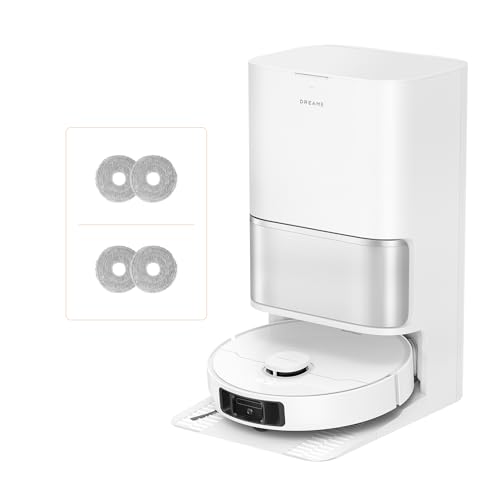
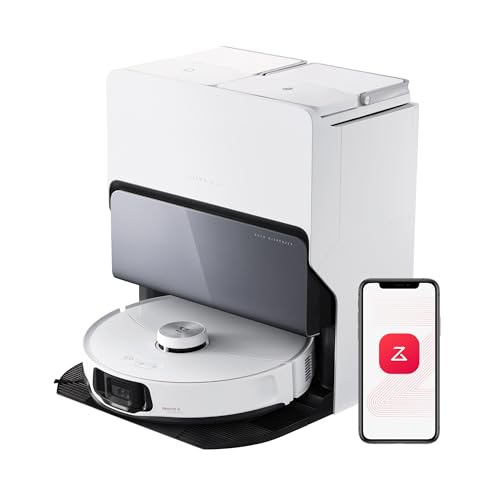
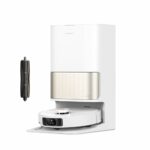
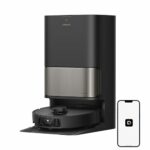
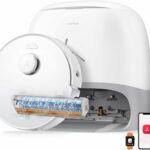
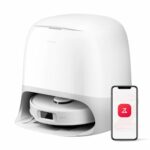
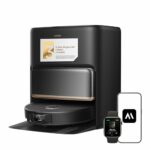
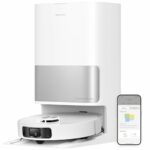
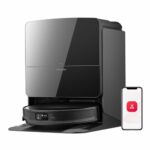
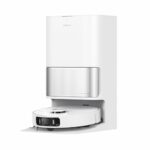
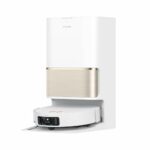
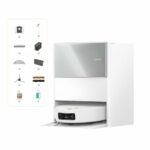
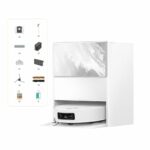
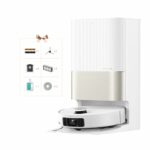
The Dreame L10s Ultra Gen 3 arrives in November 2025 as one of the manufacturer's most ambitious proposals to date, whilst the Roborock S8 MaxV Ultra has been consolidating its position since 2024 as one of the brand's flagship models. Both incorporate multifunction bases that handle everything from emptying dust to washing and drying mops, making them suitable for users who want minimal intervention in their day-to-day cleaning.
We're looking at two high-end models designed for medium to large homes where a combination of vacuuming and mopping is needed regularly. The Dreame stands out with its third-generation technology and certain improvements in capacity, whilst the Roborock brings its dual AI camera system and hot water mop washing. Each takes a different approach to achieving thorough cleaning with maximum autonomy.
Power and suction
The difference in raw power is striking. The Dreame L10s Ultra Gen 3 delivers 25,000 Pa of suction, which more than doubles the 10,000 Pa offered by the Roborock S8 MaxV Ultra. In practical terms, this translates into greater capacity to extract embedded dirt from carpets and rugs, as well as more efficient pick-up of larger debris on hard floors.
The main brush design differs substantially between the two models. The Dreame uses a simple brush system, whilst the Roborock incorporates its DuoDivide dual brush, specifically designed to push hair towards the central suction gap and reduce tangling. For homes with pets or long-haired residents, the DuoDivide system typically requires less frequent maintenance.
Another relevant aspect is that the Roborock S8 MaxV Ultra can lift its main brush during mopping, preventing the damp brush from dragging across already cleaned floors. The Dreame doesn't include this function. Both models feature an extendable side brush to improve corner cleaning, though neither lifts the side brush during mopping nor includes anti-tangle technology on it.
Mopping
The mopping approach differs considerably. The Dreame L10s Ultra Gen 3 uses dual rotating mops that spin to scrub the floor, combined with a side swing movement (similar to Roboswing technology) that extends the mops outward to reach edges and slightly under furniture. The Roborock S8 MaxV Ultra opts for a single vibrating mop with a mini side mop that extends to clean edges more effectively.
Mop lift height varies significantly: 10.5 mm in the Dreame versus 20 mm in the Roborock. This means the Roborock can better handle medium-pile rugs without getting them wet, whilst the Dreame's more limited lift is better suited to homes with only hard floors or very low-pile rugs.
The Roborock incorporates dirt detection on both mops and floors, allowing it to identify particularly dirty areas and go over them again or increase cleaning intensity. The Dreame lacks this feature, operating with pre-set patterns without adapting to real-time floor conditions.
Regarding mop maintenance at the base, the Roborock washes mops with hot water, which helps dissolve grease and stubborn stains more effectively. The Dreame uses cold water. Both dry the mops with hot air to prevent odours and bacterial growth. A noteworthy feature of the Dreame is its third-generation self-cleaning tray, which automatically cleans the washing area within the base itself—something the Roborock doesn't offer, requiring more frequent manual cleaning of the base.
Navigation system
Both models use 3D LiDAR navigation with front-mounted laser sensors for obstacle avoidance. The key difference lies in the AI camera system. The Roborock S8 MaxV Ultra features dual AI cameras capable of recognising up to 73 different types of objects, whilst the Dreame L10s Ultra Gen 3 doesn't include any camera.
This has several practical implications. The Roborock allows remote camera access from the app, turning the robot into a kind of mobile surveillance device—useful for checking on pets or monitoring the home whilst away. It also includes LED lighting for night vision. The Dreame doesn't offer any of these capabilities.
Both recognise pets and can adjust their behaviour accordingly, though the Roborock does so with greater precision thanks to its visual system. Neither detects curtains specifically. The Roborock runs on RR Mason 11.0 processing and SmartPlan 1.0 intelligent cleaning, whilst the Dreame uses CleanGenius AI, though specific processor details aren't available.
Battery and autonomy
Battery capacity is identical: 5,200 mAh in both models. However, runtime differs notably. The Dreame L10s Ultra Gen 3 achieves 231 minutes of operation, whilst the Roborock S8 MaxV Ultra reaches 180 minutes. This 51-minute difference can be decisive in larger homes or properties with multiple floors requiring a single cleaning cycle.
The Dreame's greater efficiency likely stems from optimised power management, though its lack of camera also means less energy consumption compared to the Roborock's dual visual system and more complex processing. Charging time isn't specified for either model.
Smart features
Both models can climb obstacles up to 20 mm high, allowing them to move between rooms with different floor levels or cross door thresholds without getting stuck. Neither includes a robotic arm for additional tasks.
A distinctive feature of the Roborock S8 MaxV Ultra is its own integrated voice assistant, allowing direct voice commands to the robot without relying on external ecosystems. The Dreame doesn't have a proprietary assistant, though both are compatible with Alexa and Google Home for integration into existing smart home setups.
Multifunction cleaning base
Both bases handle automatic dust emptying, mop washing and hot-air drying. They also include detergent dispensers. Neither offers automatic mop changing or UV disinfection, nor do they come with integrated plumbing connections.
The Dreame offers a plumbing connection kit as an optional purchase, allowing the base to connect directly to water supply and drainage—eliminating the need to manually refill clean water or empty dirty water. This kit isn't available for the Roborock.
Regarding capacity, the Dreame has a clear advantage. Its dust bag holds 3.2 litres versus 2.5 litres in the Roborock. The clean water tank is 4.5 litres compared to 4 litres, and the dirty water tank is 4 litres versus 3.5 litres. These differences mean less frequent maintenance—particularly relevant in homes with pets or high daily dirt accumulation.
The third-generation self-cleaning tray in the Dreame automatically cleans the area where mops are washed, reducing manual intervention and keeping the base in better condition. The Roborock requires periodic manual cleaning of this area.
Dimensions
The robots are very similar in size. The Dreame measures 350 mm in diameter and 97 mm in height, whilst the Roborock is 353 mm in diameter and 103 mm tall. That 6 mm height difference could be relevant for passing under certain low furniture, giving the Dreame a slight edge in accessing tight spaces.
Base dimensions vary more significantly. The Dreame base is 340 mm wide, 457 mm deep and 590 mm tall—a notably vertical design. The Roborock base is 409 mm wide, 419 mm deep and 470 mm tall—wider but lower. The Dreame's footprint is more compact horizontally but requires more vertical clearance, whilst the Roborock takes up more floor space but fits under lower shelves or counters.
Real-world experience
For large homes, the Dreame L10s Ultra Gen 3 offers clear advantages: greater runtime, larger base tanks requiring less frequent emptying and refilling, and the option to add a plumbing kit for near-total autonomy. Its 25,000 Pa suction is particularly effective on carpets and in homes with pets that shed heavily.
The Roborock S8 MaxV Ultra is better suited to homes needing more precise navigation and real-time adaptability. Its dual camera system and dirt detection make it ideal for complex environments with many obstacles or areas requiring variable cleaning intensity. Hot water mop washing is more effective on greasy kitchen floors or sticky spills.
The DuoDivide brush in the Roborock requires less maintenance in homes with long hair or pets, whilst the Dreame's simple brush may need more frequent cleaning. The Roborock's 20 mm mop lift handles medium-pile rugs better, whereas the Dreame is more limited in this regard.
For users wanting remote monitoring or who value having a voice assistant built into the robot itself, the Roborock is the only option. The Dreame focuses on cleaning power and capacity rather than advanced connectivity features.
Conclusion: which one to choose?
Choose the Dreame L10s Ultra Gen 3 if: you have a large home and want maximum runtime without recharging; you prioritise raw suction power, especially for deep carpet cleaning; you prefer larger base tanks to reduce maintenance frequency; you're interested in the optional plumbing kit for near-complete autonomy; you want a self-cleaning base tray; and you don't need camera-based features or remote monitoring.
Choose the Roborock S8 MaxV Ultra if: you need precise navigation with AI cameras and recognition of multiple object types; you want remote camera access to monitor your home or pets; hot water mop washing is important for tackling greasy or sticky floors; you have medium-pile rugs requiring greater mop lift; dirt detection for adaptive cleaning is a priority; you value having an integrated voice assistant; and you prefer a brush system requiring less maintenance with pet hair.
In essence, the Dreame offers greater capacity and power at a typically more competitive price point, whilst the Roborock delivers more sophisticated intelligence and advanced features that justify its premium positioning as the world's leading robot vacuum brand.