✨ VS Analyses · VacuumSpain comparison technology. Explanation created with AI from verified technical data.
Introduction
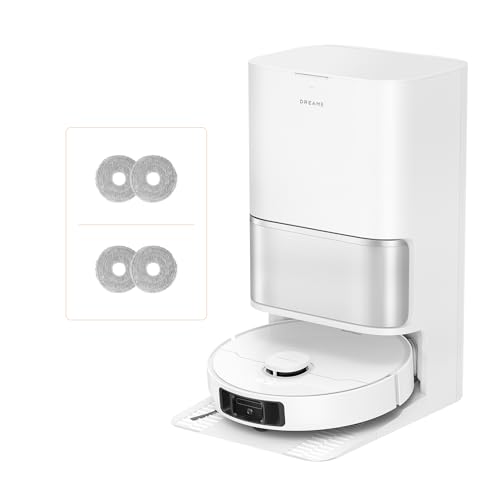
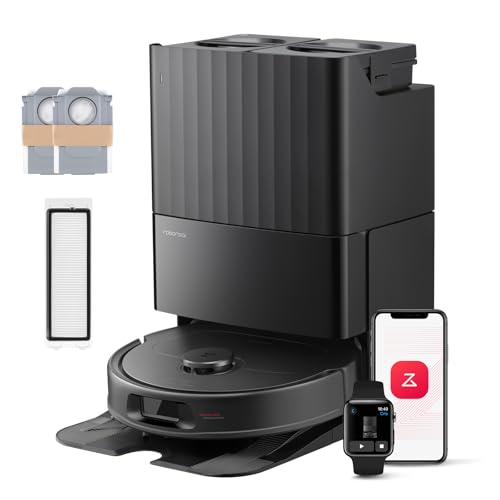
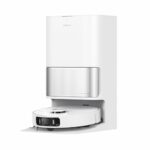
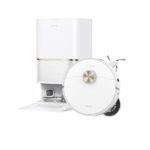
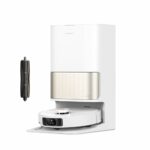
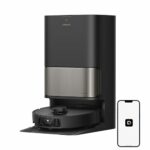
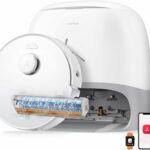
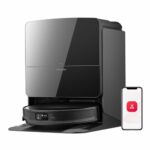
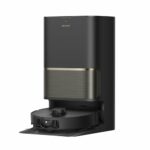
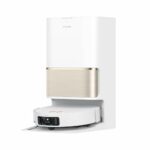
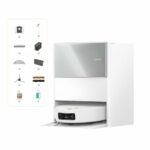
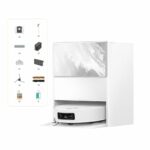
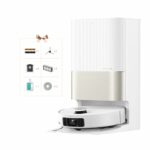
The Dreame L10s Ultra Gen 3 and the Roborock QV 35S represent two distinct approaches to automated home cleaning in 2025. The Dreame model, launched in November 2025, positions itself as a high-performance option with advanced features, whilst the Roborock entry brings the brand's renowned reliability to a more accessible price point. Both robots feature multifunctional bases with self-emptying, mop washing, and drying capabilities, making them suitable for households seeking minimal maintenance intervention.
The Dreame L10s Ultra Gen 3 targets users who prioritise maximum suction power and advanced navigation, particularly in larger homes with mixed flooring. The Roborock QV 35S appeals to those who value brand reputation and straightforward functionality without unnecessary complexity. Understanding the technical differences between these models helps determine which better suits specific cleaning requirements.
Power and Suction
The suction differential between these models is substantial. The Dreame L10s Ultra Gen 3 delivers 25,000 Pa, which represents more than double the 10,000 Pa offered by the Roborock QV 35S. In practical terms, this translates to noticeably improved performance on carpets, rugs, and textured flooring where embedded debris requires greater extraction force. For homes with pets or high-traffic areas, this difference becomes particularly relevant.
Both robots employ a simple main brush design without anti-tangle features, meaning neither offers specific advantages for homes with long hair or pet fur in terms of the central roller. The main brush remains fixed during mopping on both models, without elevation capability.
The side brush configuration reveals contrasting priorities. The Dreame includes an extensible side brush that reaches further into corners and along edges, improving coverage in challenging areas. The Roborock counters with an anti-tangle side brush design that reduces maintenance frequency by minimising hair wrap. Neither model elevates the side brush during mopping, though this function remains relatively uncommon across the market.
Battery capacity matches at 5,200 mAh for both robots, yet the Dreame achieves 231 minutes of autonomy compared to 180 minutes on the Roborock. This extended runtime proves valuable in larger properties where completing a full cleaning cycle without recharging becomes essential.
Mopping
Both robots utilise dual rotating mops for floor cleaning, providing consistent coverage across hard surfaces. The Dreame L10s Ultra Gen 3 incorporates mop extension combined with Roboswing movement, allowing the pads to reach closer to baseboards and partially under furniture edges. The Roborock QV 35S lacks this extension capability, maintaining a standard mopping width throughout operation.
Mop elevation differs marginally: 10.5 mm on the Dreame versus 10 mm on the Roborock. Whilst this half-millimetre variation seems negligible, both heights sufficiently protect carpets and rugs during mixed-floor cleaning sessions. Neither model offers heated water for floor mopping, relying instead on cold water application.
The base stations handle mop washing with cold water on both models. However, drying methods diverge significantly. The Dreame employs hot air drying, which accelerates the process and reduces bacterial growth and odour development. The Roborock uses cold air drying, which takes longer and may occasionally leave mops slightly damp if ambient humidity is high.
Neither robot automatically detaches mops at the base for vacuum-only operation, nor do they incorporate dirt detection in mops or floors for adaptive cleaning intensity. These remain premium features reserved for higher-tier models in both manufacturers' ranges.
Navigation System
Both robots employ 3D LiDAR turret navigation, ensuring accurate mapping and efficient route planning. The Dreame L10s Ultra Gen 3 supplements this with a frontal 3D laser sensor, enhancing obstacle detection precision and reducing collision risk with low-profile objects like furniture legs or cables. The Roborock QV 35S relies solely on the LiDAR turret without additional frontal sensors.
Pet recognition appears exclusively on the Dreame, allowing the robot to identify and navigate around animals with greater caution. This proves particularly useful in households with cats or small dogs that may rest on the floor during cleaning cycles. The Roborock lacks this specific recognition capability.
Neither model includes an AI camera, LED lighting for low-light operation, or remote camera access. Curtain detection is also absent on both robots. Intelligent cleaning features appear on both: CleanGenius on the Dreame and SmartPlan 1.0 on the Roborock, though specific implementation details differ between manufacturers.
Autonomy and Battery
With identical 5,200 mAh battery capacity, the difference in runtime stems from efficiency variations. The Dreame achieves 231 minutes of operation, suitable for cleaning approximately 250-300 square metres in a single session depending on floor type and cleaning mode. The Roborock provides 180 minutes, adequate for most homes up to 200 square metres.
For larger properties or those with complex layouts requiring multiple rooms across several floors, the extended autonomy of the Dreame reduces the likelihood of mid-cycle recharging interruptions. In smaller flats or apartments, the Roborock's runtime proves entirely sufficient.
Smart Functions
Both robots manage 20 mm obstacles, allowing them to traverse standard door thresholds and minor floor transitions without assistance. This capability ensures uninterrupted cleaning across typical household environments.
External voice assistant compatibility exists on both models, enabling control through Alexa or Google Home ecosystems. Neither robot incorporates a proprietary voice assistant or robotic arm functionality.
Multifunctional Cleaning Base
The base stations share core functionality: automatic dust emptying, mop washing, and drying. The Dreame's base includes third-generation self-cleaning for the washing tray, automatically maintaining hygiene in the component that contacts dirty mops. The Roborock base requires manual tray cleaning, adding a maintenance task every few weeks.
The detergent tank on the Dreame base dispenses cleaning solution during mop washing, improving cleaning effectiveness without requiring manual addition of product to the water tank. The Roborock lacks this feature, relying solely on water for mop maintenance.
Dust bag capacity reaches 3.2 litres on the Dreame versus 2.7 litres on the Roborock, translating to approximately 60-70 days between bag changes compared to 50-60 days, depending on household conditions. Clean water tanks measure 4.5 litres and 4 litres respectively, whilst dirty water capacity stands at 4 litres and 3.5 litres. These differences mean slightly less frequent refilling and emptying on the Dreame.
The Dreame offers an optional pipe connection kit for purchase separately, allowing permanent plumbing integration for users seeking maximum automation. The Roborock provides no such option. Neither model includes integrated pipe connection as standard. UV disinfection is absent on both bases.
Dimensions
The robots measure very similarly: 350 mm diameter and 97 mm height for the Dreame, versus 353 mm diameter and 96.5 mm height for the Roborock. The half-millimetre height advantage on the Roborock makes no practical difference for navigating under furniture. Both robots access spaces with at least 10 cm clearance.
Base dimensions differ more noticeably. The Dreame base stands 590 mm tall, 340 mm wide, and 457 mm deep. The Roborock base measures 521 mm tall, 340 mm wide, and 487 mm deep. The Roborock base sits lower but extends further from the wall, whilst the Dreame requires more vertical clearance but occupies less floor depth. Consider available space configuration when selecting between models.
Real-World Usage Experience
In homes exceeding 150 square metres or with multiple levels, the Dreame L10s Ultra Gen 3 offers clear advantages. The extended autonomy, superior suction power, and larger tank capacities reduce intervention frequency. The extensible side brush and mop extension improve edge cleaning, particularly valuable in properties with substantial perimeter areas.
For households with pets, the Dreame's recognition capability and higher suction prove beneficial for managing fur and dander. The hot air drying prevents mop odours that can develop in homes where cleaning occurs daily. The self-cleaning tray reduces maintenance burden, relevant for busy households.
The Roborock QV 35S suits smaller homes under 120 square metres where maximum power and extended runtime prove unnecessary. The anti-tangle side brush reduces maintenance for users with long hair. The more compact base height fits better in spaces with limited vertical clearance, such as under counters or in cupboards.
Both robots handle hard floors, parquet, and low-pile rugs effectively. The Dreame's power advantage becomes apparent on thicker carpets or high-pile rugs where deeper suction is required. For predominantly hard floor homes, the Roborock's capabilities suffice.
Conclusion: Which to Choose?
Choose the Dreame L10s Ultra Gen 3 if: you have a large home exceeding 150 square metres, live with pets, require maximum suction power for carpets and rugs, value extended autonomy to complete full cleaning cycles without recharging, want hot air mop drying to prevent odours, prefer minimal maintenance with self-cleaning tray and detergent dispensing, need superior edge cleaning with extensible brushes and mops, or plan to eventually integrate pipe connections for complete automation.
Choose the Roborock QV 35S if: you have a smaller home under 120 square metres, prioritise brand reputation and reliability, prefer straightforward functionality without complex features, have limited vertical space for the base station, want anti-tangle side brush to reduce hair maintenance, or seek a more affordable robot aspirador with solid multifunctional base capabilities.
This comparativa de robots aspiradores reveals the Dreame as the more feature-rich option commanding a premium, whilst the Roborock delivers dependable performance with fewer advanced functions. The mejor robot aspirador 2025 for your household depends on property size, flooring types, pet presence, and desired automation level. The diferencias entre these models justify careful consideration of your specific cleaning requirements before purchase.