✨ VS Analyses · VacuumSpain comparison technology. Explanation created with AI from verified technical data.
Introduction
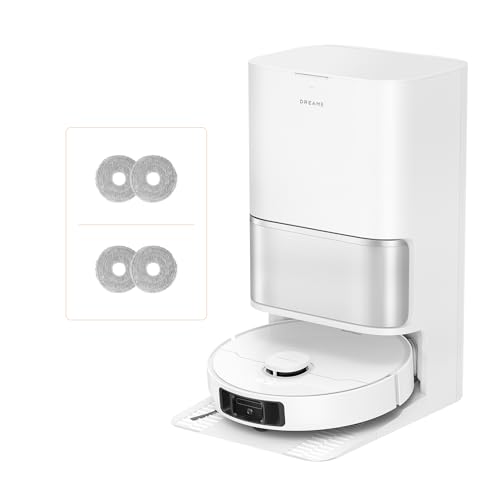
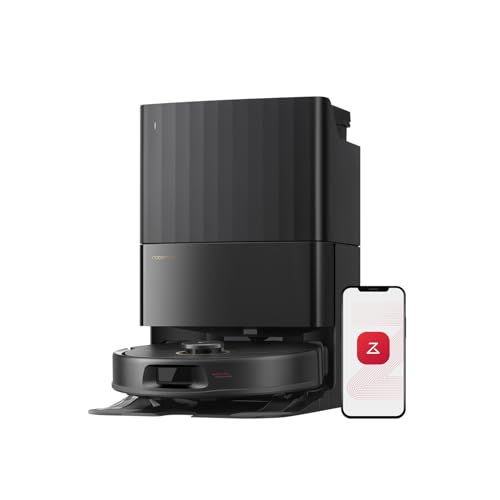
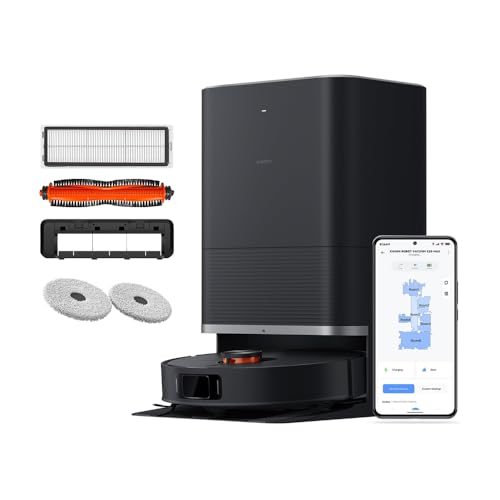
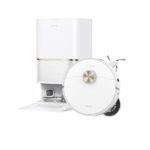
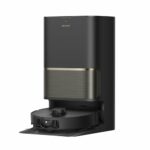
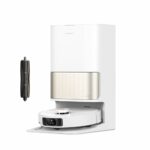
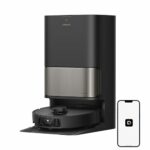
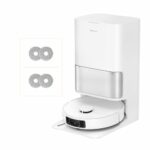
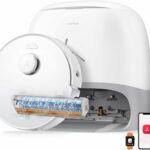
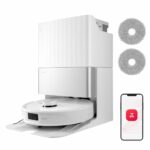
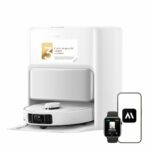
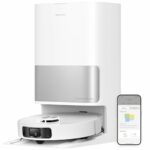
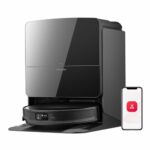
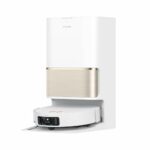
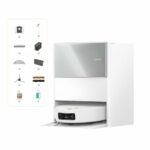
On this occasion, we're going to analyse three robot vacuum cleaners with multifunctional base stations that represent different approaches within the mid-to-high-end segment. The Dreame L10s Ultra Gen 3 arrived on the market in November 2025, whilst the Roborock Qrevo S5V was also launched during 2025 and the Xiaomi X20 Max is from 2024. All three units feature a vacuuming system, mopping with rotating mops and a base station that handles auto-emptying, mop washing and drying.
Each of these models is designed for users seeking complete automation in home cleaning, although with important nuances in power, battery life and advanced functions that are worth knowing before making a decision.
Power and Suction
Here we find one of the most significant differences. The Dreame robot vacuum cleaner reaches 25,000 Pa of suction, more than double the Roborock Qrevo S5V with its 12,000 Pa, and more than triple the Xiaomi X20 Max with 8,000 Pa. This difference is especially relevant on carpets or when there are pets at home that shed a lot of hair.
The brushing system also varies between the three. The Dreame L10s Ultra Gen 3 features a SimpliCut brush, designed to reduce tangles. The Roborock opts for its DuoDivide Antienredos brush, which pushes hairs towards the centre to facilitate suction. The Xiaomi, on the other hand, uses the TriCut 3.0 system that combines bristles with blades to cut tangled hairs.
As for the side brush, only the Dreame model incorporates an extension to better reach corners. This function can make a difference in homes with many nooks or skirting boards where dirt accumulates. The Roborock Qrevo S5V, however, is the only one equipped with an anti-tangle side brush, which makes maintenance easier if you live with long hair or pets.
None of the three robots lifts the main brush during mopping nor the side brush either, something common in these price segments.
Mopping
All three models use two rotating mops for mopping, a configuration that offers good results on hard floors. All extend the mops towards the edges to improve cleaning in perimeter areas, although the Dreame L10s Ultra Gen 3 also adds the Roboswing system, which performs a lateral movement to introduce the mop under furniture or protrusions.
Mop lifting is similar in all three: the Dreame reaches 10.5 mm, whilst the Roborock Qrevo S5V and the Xiaomi X20 Max remain at 10 mm. In practice, this half-millimetre difference is minimal, but it allows the Dreame robot to overcome slightly thicker carpets without wetting them.
All mop with cold water from the robot's tank, without the possibility of heating the water for deeper mopping. The base stations of all three units wash the mops with hot water and dry them with hot air, which helps keep them in good condition and prevents bad odours.
None automatically removes the mops at the base station to perform vacuum-only sessions, nor do they detect dirt on the mops or floor to adjust mopping intensity or perform additional passes.
Navigation System
All three robot vacuum cleaners use a LiDAR turret to map the home and plan efficient routes. All have obstacle avoidance systems, but with important differences in the sensors employed.
The Dreame L10s Ultra Gen 3 and the Xiaomi X20 Max incorporate a front 3D laser sensor, whilst the Roborock Qrevo S5V does without it. This sensor helps detect objects with greater precision and avoid them without the need for physical contact.
Only the Dreame robot vacuum cleaner specifically recognises pets, a useful function if you have dogs or cats and want the robot to adapt its behaviour or avoid disturbing them during cleaning. The Xiaomi X20 Max is the only one that includes night vision LED, which can improve obstacle detection in low-light conditions.
None of the three models incorporates a camera with remote access nor detects curtains to avoid tangles. All three offer intelligent cleaning systems: CleanGenius in the Dreame, SmartPlan in the Roborock and a similar function in the Xiaomi, although they don't specify stain recognition using artificial intelligence.
Battery Life and Battery
All three robots feature 5,200 mAh batteries, but actual battery life differs quite a bit. The Dreame L10s Ultra Gen 3 offers up to 231 minutes of operation, the Roborock Qrevo S5V reaches 180 minutes and the Xiaomi X20 Max remains at 120 minutes.
This difference can be explained by the Dreame's greater energy efficiency or more optimised power management. For large homes, the Dreame's battery life is more convenient, as it allows cleaning large surfaces without the need for intermediate recharges. The Xiaomi, with only two hours of battery life, may fall short in homes of more than 100 square metres if maximum power is used.
Smart Functions
All three models can overcome obstacles up to 20 mm in height, which allows them to pass over thick carpets or small uneven surfaces without problems. None incorporates a robotic arm or its own voice assistant, although all three are compatible with Alexa and Google Home for external voice control.
Multifunctional Cleaning Base Station
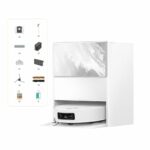
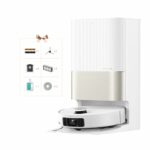
This is where the Dreame L10s Ultra Gen 3 sets itself apart. Its base station includes third-generation washing tray self-cleaning, a function that neither the Roborock Qrevo S5V nor the Xiaomi X20 Max offer. This significantly reduces manual maintenance, as the base station itself takes care of cleaning the area where it washes the mops.
Additionally, only the Dreame robot vacuum cleaner incorporates a detergent tank in the base station, which allows adding cleaning product that is automatically dispensed during mop washing. This improves mopping effectiveness without the need for manual intervention.
In terms of capacities, the Dreame also has an advantage over the other two. Its dust bag has 3.2 litres compared to 2.7 in the Roborock and 2.5 in the Xiaomi. The clean water tank reaches 4.5 litres in the Dreame, 4 litres in the Roborock and in the Xiaomi. The dirty water tank is 4 litres in the Dreame, 3.5 in the Roborock and 3.8 in the Xiaomi.
The Dreame L10s Ultra Gen 3 also offers an optional plumbing connection kit that is purchased separately, although none of the three models includes this connection as standard. None incorporates UV disinfection or automatic mop changing.
Dimensions
The diameter is practically identical: 350 mm in the Dreame and the Xiaomi, 353 mm in the Roborock. The height is also very similar: 97 mm in the Dreame and the Xiaomi, 96.5 mm in the Roborock. These differences are minimal and don't affect the ability to pass under furniture.
The base stations show more variations. The Dreame's measures 590 mm high, 457 mm deep and 340 mm wide. The Roborock's is lower (521 mm) but deeper (487 mm). The Xiaomi's is at a midpoint with 563 mm high and 420 mm deep. It's advisable to measure the available space before deciding, especially if you're planning to place the base station under furniture or in a corner.
Real-World User Experience
For large homes, the Dreame L10s Ultra Gen 3 offers clear advantages: greater battery life, more suction power and more generous tanks in the base station. This translates into fewer manual interventions and greater capacity to clean large surfaces in one go.
If you live with pets, the Dreame is also more comprehensive thanks to its specific animal recognition, its 25,000 Pa power and its SimpliCut brush. The Roborock Qrevo S5V, with its anti-tangle side brush, can also be a good option if the main problem is tangled hairs in the brush.
For users who value minimal maintenance, the Dreame's tray self-cleaning and its detergent tank considerably reduce base station cleaning tasks. The Roborock and Xiaomi require more manual attention in this regard.
The Xiaomi X20 Max may be suitable for small or medium-sized homes where 120 minutes of battery life is sufficient, although its lower suction power may be noticeable on carpets or with pets that shed a lot of hair. Its night vision LED is useful if the robot cleans at times with low light.
Conclusion: Which One to Choose?
Choose the Dreame L10s Ultra Gen 3 if... you're looking for the most comprehensive robot in this robot vacuum cleaner comparison. Its 25,000 Pa power, 231 minutes battery life, extendable side brush, third-generation tray self-cleaning and detergent tank make it the most advanced option. Ideal for large homes, users with pets and those seeking the least possible maintenance. Its greater capacities in dust bag and water tanks also make it more convenient for day-to-day use.
Choose the Roborock Qrevo S5V if... you prefer the reliability of Roborock, the world's leading brand in robot vacuum cleaners. Although it has less power than the Dreame, its 12,000 Pa is sufficient for most homes. Its anti-tangle side brush makes maintenance easier, and its lower base station may fit better in tight spaces. It's a balanced option for medium-sized homes without extreme battery life requirements.
Choose the Xiaomi X20 Max if... you have a small or medium-sized home where 120 minutes of battery life is sufficient, and you value the night vision LED for cleaning in low light. Its lower suction power may be limiting with pets or thick carpets, but it's suitable for hard floors and regular maintenance in not very large spaces.