✨ VS Analyze · VacuumSpain comparison technology. AI-generated explanation based on verified technical data.
Introduction
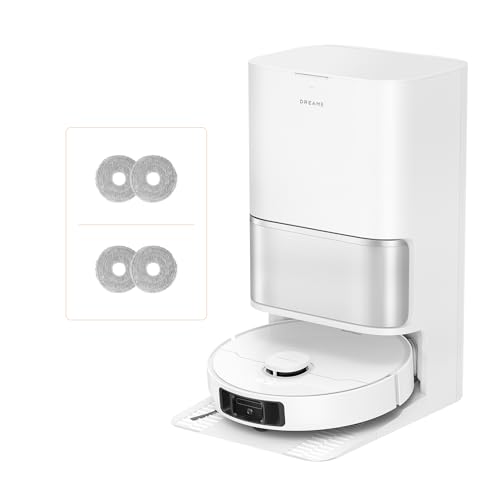
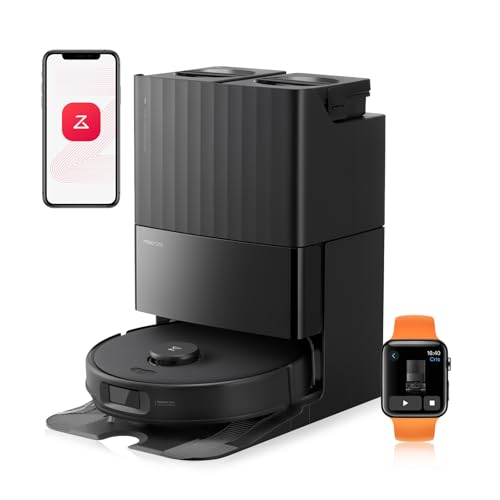
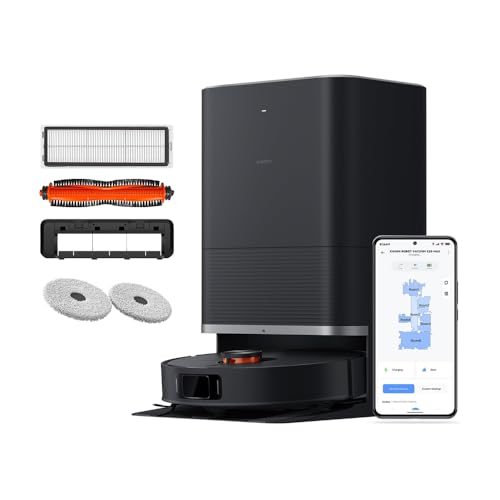
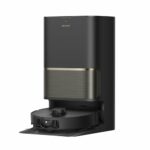
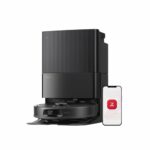
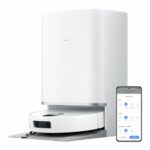
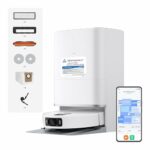
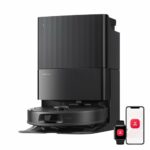
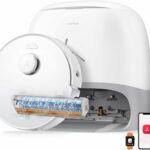
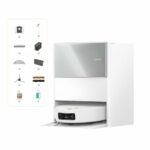
Choosing between the Dreame L10s Ultra Gen 3, the Roborock Qrevo Edge S5A and the Xiaomi X20 Max requires understanding what each user is looking for. The Dreame model arrived in November 2025 with a clear focus on maximum suction power and a third-generation base. The Roborock Qrevo Edge S5A, launched in 2024, opts for artificial intelligence applied to dirt detection and an anti-tangle brushing system. The Xiaomi X20 Max, also from 2024, positions itself as a more balanced option with specific features such as night vision LED.
All three integrate a multifunction base with mop washing and drying, but differences in power, battery life and cleaning systems define distinct usage profiles. We're talking about robots designed for medium and large homes, especially when there are pets or a need for frequent mopping.
Power and Suction
The most notable difference in this robot vacuum comparison is in suction power. The Dreame robot vacuum reaches 25,000 Pa, a figure that far exceeds the 18,500 Pa of the Roborock robot vacuum and the 8,000 Pa of the Xiaomi robot vacuum. This advantage translates into greater capacity to extract embedded dust from carpets and porous floors.
Regarding the brushing system, each manufacturer opts for different solutions. The Dreame L10s Ultra Gen 3 features a SimpleTangle brush designed to reduce tangles. The Roborock Qrevo Edge S5A incorporates the DuoDivide Antienredos system, which pushes hair towards the central suction gap, whilst the Xiaomi X20 Max uses the TriCut 3.0, which combines bristles with blades to cut hair.
The extendable side brush is present in the Dreame and the Roborock, which improves corner cleaning. The Xiaomi does not include this feature. Where the Roborock makes a difference is in its anti-tangle side brush, a characteristic not shared by the other two models. None of the three raises the main brush or side brush during mopping.
Mopping
All three robots use a two rotating mop system for mopping. All extend the mops to better reach edges, although the Dreame adds a specific movement (Roboswing) that allows the mop to slightly reach under furniture overhangs.
Mop lifting varies slightly: the Dreame lifts up to 10.5 mm, whilst the Roborock and Xiaomi reach 10 mm. It may seem like a minimal difference, but those extra millimetres help when passing over medium-pile carpets. All three mop with cold water, with no heating option on the floor.
Where the Roborock Qrevo Edge S5A stands out is in its ability to detect dirt both on the mops and on the floor. This function allows the robot to identify dirtier areas and automatically go over them again, something that neither the Dreame nor the Xiaomi incorporate. In practice, this means more efficient mopping without manual intervention.
Mop washing in the base is carried out with hot water in all three cases, and all dry with hot air. Washing tray self-cleaning is where differences appear: the Dreame boasts third generation, the Roborock features version 2.0 and the Xiaomi X20 Max does not include this function. This is worth considering if you're looking to reduce manual maintenance of the base.
Navigation System
All three models employ LiDAR turret with obstacle avoidance. None integrates a front camera with artificial intelligence. The front 3D laser sensor is present in the Dreame and Xiaomi, but not in the Roborock.
Pet recognition is exclusive to the Dreame L10s Ultra Gen 3, an advantage if you live with animals and want the robot to identify and avoid areas where they usually are. The Xiaomi X20 Max compensates with night vision LED, useful for scheduled cleaning at times without natural light.
Regarding intelligent cleaning using AI, the Dreame uses CleanGenius, the Roborock opts for SmartPlan with its RR Mason 11.0 algorithm, and the Xiaomi also incorporates intelligent functions without specifying a commercial name. None allows remote camera access or detects curtains.
Battery Life and Battery
All three robots feature 5,200 mAh batteries, but performance varies notably. The Dreame L10s Ultra Gen 3 achieves 231 minutes of battery life, the Roborock Qrevo Edge S5A reaches 180 minutes and the Xiaomi X20 Max stays at 120 minutes.
This difference is decisive in large homes. The Dreame can complete large surfaces without needing intermediate recharges, whilst the Xiaomi will have to return to the base more frequently. For flats of less than 100 square metres, any of the three performs without problems.
Smart Features
All three robots overcome obstacles up to 20 mm in height, sufficient to pass over cables, door joints or thin carpets. All are compatible with external voice assistants such as Alexa or Google Home, facilitating integration into home automation ecosystems.
Multifunction Cleaning Base
All three bases perform auto-emptying of the dust container, mop washing with hot water and drying with hot air. The dust bag capacity is largest in the Dreame (3.2 litres), followed by the Roborock (2.7 litres) and the Xiaomi (2.5 litres). This translates into fewer bag changes per year.
The clean water tanks also favour the Dreame with 4.5 litres, compared to 4 litres in the Roborock and Xiaomi. For dirty water, the Dreame stores 4 litres, the Roborock 3.5 litres and the Xiaomi 3.8 litres. Greater capacity means greater autonomy between manual emptying.
The Dreame L10s Ultra Gen 3 is the only one that includes an integrated detergent tank in the base, dispensing product during mop washing. It also offers an optional plumbing connection kit, although it must be purchased separately. Neither the Roborock nor the Xiaomi offer these options.
Dimensions
The diameter of the robots is practically identical: 350 mm in the Dreame and Xiaomi, 352 mm in the Roborock. The height is 97 mm in the Dreame and Xiaomi, and 98 mm in the Roborock. Minimal differences that don't affect the ability to pass under furniture.
The bases show greater variation. The Dreame's measures 590 mm in height, the Xiaomi's 563 mm and the Roborock's 521 mm. In depth, the Roborock occupies 487 mm, the Dreame 457 mm and the Xiaomi 420 mm. If space is limited, it's advisable to measure before deciding.
Real-world experience
In large homes, the Dreame L10s Ultra Gen 3 offers the best combination of power and battery life. Its 231 minutes allow covering more than 200 square metres without interruptions. The larger base tanks reduce manual interventions, and the detergent tank adds convenience to mopping.
For homes with pets, the Dreame is also more comprehensive thanks to specific animal recognition and its SimpleTangle brush. The Roborock Qrevo Edge S5A stands out in homes where more intelligent mopping is sought, with automatic dirt detection and going over problematic areas. Its anti-tangle side brush adds points if there's long hair.
The Xiaomi X20 Max fits in small or medium flats where the 120-minute battery life is sufficient. Its night vision LED is practical for night-time cleaning without disturbing, and its base is the most compact in depth. The absence of tray self-cleaning means somewhat more manual maintenance.
Conclusion: Which one to choose?
Choose the Dreame L10s Ultra Gen 3 if: you're looking for the best robot vacuum in suction power and battery life, you live in a large house, you have pets, you value the integrated detergent tank and prefer a base with third-generation self-cleaning that reduces maintenance to a minimum. Also if you're interested in the future option of connecting the base to plumbing via an optional kit.
Choose the Roborock Qrevo Edge S5A if: you prioritise intelligence applied to mopping with dirt detection on mops and floor, you need an anti-tangle side brush due to living with long hair at home, and you're looking for a more compact base in height. It's the most balanced option between features and base size.
Choose the Xiaomi X20 Max if: your home is small or medium (less than 100 square metres), you value the night vision LED for cleaning at times without light, you need a base with less depth for tight spaces, and you can take on somewhat more manual maintenance as it doesn't have tray self-cleaning. It's the most compact alternative in base dimensions.